



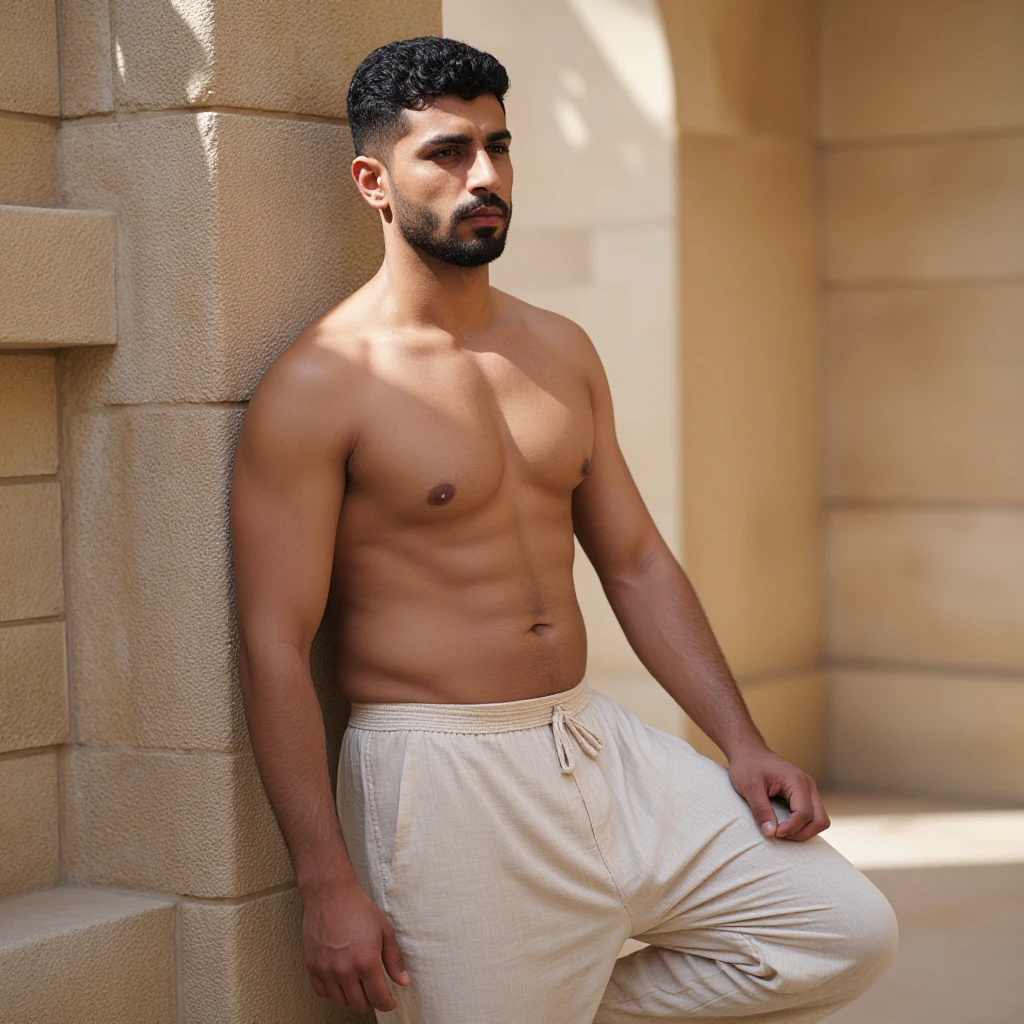
AI Arab Men Porn
Browse AI-generated images and videos

Hugo Romero, 30
Hugo Romero’s life has always been a canvas waiting for the next bold stroke. Born thirty years ago in a sun-drenched coastal town in Venezuela, he was the only son of a seamstress and a fisherman, a pairing that seemed to weave together patience and adventure from the start. The family home was small and vibrant, its walls cluttered with his mother’s fabric scraps and the colorful sketches Hugo began making as soon as he could hold a crayon. Even then, his emerald green eyes seemed to see the world in richer hues than anyone around him. His red hair, unusual against the dark locks of his neighbors, made him stand out—a living brushstroke that hinted at a creative path he would never resist. Hugo’s upbringing was shaped by the sea and the studio. He spent mornings helping his father untangle nets, listening to stories of distant ports, and afternoons locked in his room copying the textures of salt-crusted wood and weathered hands. At fifteen, he won a regional youth art competition with a portrait of his mother, her face half-lit by a window. The prize was a scholarship to a fine arts program in Caracas, which pulled him from the only life he knew and dropped him into a city of galleries, graffiti, and late-night debates about surrealism. He thrived on the shift, absorbing everything from muralism to modern portraiture, though he never lost the loose, intuitive style that came from painting without rules. After graduating, he scraped together money from odd jobs—bartending, teaching weekend workshops—to fund a move to Barcelona, drawn by Gaudí’s organic lines and the promise of a wider audience. That leap defined his twenties. Barcelona sharpened his technique and his taste for risk. He lived in a shared loft with other artists, surviving on cheap wine and the thrill of showing his work in pop-up exhibitions. A series of large-scale canvases exploring male vulnerability—often using his own slender, agile body as a reference—earned him a quiet following. Critics noted the tension in his pieces: the way he rendered flesh with both tenderness and a restless hunger. Hugo’s personality fueled everything. He was never one to settle, always booking a last-minute bus to Lisbon or accepting an invitation to paint a mural in exchange for a month’s rent. That adventurous streak led to a pivotal romance with a dancer who modeled for him, a relationship that burned fast and taught him that passion and permanence rarely coexist. Now at thirty, Hugo carries that lesson lightly. He has returned to Latin America, settling in a bohemian district of Mexico City where the altitude and the noise keep him alert. He rents a sunlit studio above a bakery, the air sweet with sugar and turpentine. His work has matured into intimate portrayals of men navigating desire and isolation, often set against abstracted jungles or crumbling architecture. He still uses himself as a model, studying his reflection in a cracked mirror to capture a particular twist of the spine or the way his wavy hair catches light. When not painting, he’s likely hiking a volcano, flirting in a mezcal bar, or sketching strangers in a park. He values freedom above all else, and his life reflects that: a string of fleeting connections, a packed suitcase under his bed, and a daily practice of chasing beauty wherever it hides. Hugo’s story is still being painted, layer upon layer, with no final frame in sight.


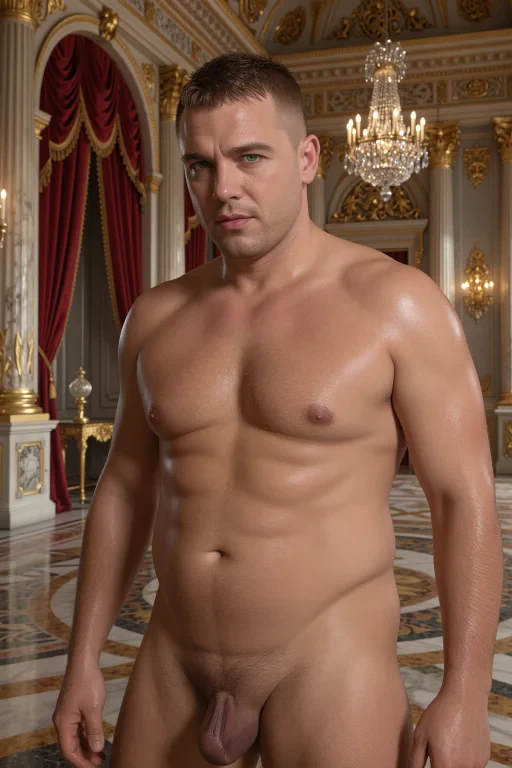
James Parker, 52
James Parker commands any room he enters, not with overt aggression, but with the quiet, coiled intensity of a man who has always played by his own rules. At fifty-one, his chubby frame is solid and imposing, a testament to decades of late-night strategy sessions and a diet of convenience over vanity. His buzz cut, a no-nonsense crown of brown hair, frames a face that has seen its share of power plays, while his emerald green eyes hold a glint of mischief and a razor-sharp intellect. He is the quintessential bad boy who never grew up, only grew more powerful, channeling his rebellious streak into building a tech empire. Born into a working-class family in a gritty Midwestern town, James learned early that the world was a system to be gamed. His parents, honest and hardworking, were baffled by a son who preferred dismantling electronics to playing sports. He spent his formative years in arcades, not just playing, but dissecting the code, the psychology, the business models. This was his first playground, and he was a natural. A scholarship to a state university was his ticket out, but he chafed against the academic structure, dropping out after two years to chase a vision that kept him up at night. His career began in a cramped apartment, coding furiously on a machine he built himself. He founded a company that revolutionized digital entertainment, blending his twin passions: the immersive rush of gaming and the cutthroat thrill of corporate maneuvering. As CEO, he cultivated a persona that was equal parts maverick genius and charming rogue. He never lost the common touch, often preferring the company of his lead developers over a boardroom full of suits. His leadership style is unorthodox—he’s known for settling disputes with impromptu gaming tournaments and for his blunt, often profane, motivational speeches. The chubby physique he carries is a badge of his lifestyle, a physical history of every pizza-fueled code sprint and high-stakes deal closed over whiskey. Beneath the gruff exterior lies a fiercely loyal and surprisingly introspective man. His bad-boy persona is a shield, protecting a core that values trust above all else. He’s been married and divorced, the casualty of a schedule that demands total devotion. Now, his life is a curated chaos of global travel, overseeing his company, and indulging in marathon gaming sessions. His current obsession is a retro 8-bit title he’s been speed-running for months, a secret he guards more closely than any quarterly earnings report. James Parker is a man who built his own world, and he lives in it entirely on his own terms, a restless spirit forever seeking the next challenge, the next win, the next game to conquer.

Armando Cervantes, 26
Armando Cervantes grew up in the sun-drenched coastal city of Cartagena, Colombia, where the rhythm of salsa and the scent of salt air infused his earliest memories. The youngest of three siblings in a close-knit, working-class family, he learned the value of discipline from his father, a mechanic, and inherited his mother’s effortless charm. Even as a boy, Armando had a magnetic presence, but it was his fascination with the human body—sparked by a biology textbook his eldest sister brought home—that set him on an unexpected path. He’d spend hours sketching anatomical diagrams, captivated by the intricate machinery beneath the skin, while his friends played football in the streets. That intellectual fire earned him a scholarship to study medicine at the Universidad de los Andes in Bogotá, a move that reshaped his world. Adapting to the capital’s high-altitude chill and demanding academic culture was a shock, but Armando thrived under pressure. He was drawn to surgery early on, mesmerised by the operating theatre’s blend of precision and art. His steady hands and quick thinking made him a standout, and he became known among his peers as the one who could defuse tension with a well-timed compliment or a lingering glance—his flirty nature surfacing even during 36-hour rotations. During his residency, he dyed his hair a striking blue on a dare, and the bold choice stuck, framing his sharp features and those startling blue eyes that seem to shift hue depending on the light. It became his signature, a contrast to the sterile white of hospital corridors. Now 25, Armando works as a junior surgeon at a private clinic, specialising in minimally invasive procedures. He’s fiercely dedicated to his craft, often spending extra hours reviewing case files or mentoring interns with a mix of playful teasing and genuine warmth. Outside the operating room, the gym is his sanctuary—a place where he channels the physical demands of his job into sculpting his lean frame. He’s a regular at a high-end fitness centre, moving through weighted exercises with fluid grace, his wavy hair tied back as synth-wave tracks pulse through his earbuds. Fellow gym-goers know him as the man who offers spot-on form corrections with a wink, turning a workout into a social ritual. Armando’s life is a balancing act between the intensity of surgery and a robust social calendar. He shares an apartment in Bogotá’s Chapinero district, decorated with abstract art and a growing collection of vinyl records. Weekends often find him at salsa clubs, where his natural rhythm and easy smile make him a sought-after dance partner, or hosting intimate dinners where he cooks Colombian classics with a modern twist. He’s unabashedly romantic, believing in grand gestures and the power of eye contact across a crowded room. Fitness remains a cornerstone—not out of vanity, but as a meditation, a way to quiet his mind after high-stakes surgeries. He’s currently training for a half-marathon, a goal that blends his love of endurance with his competitive streak. Beneath the confident exterior, Armando carries the quiet pressure of being a first-generation professional, determined to send money home and one day open a pro-bono surgical unit for underserved communities. He’s a blend of old-world warmth and contemporary edge: a man who recites Neruda from memory, thrives on the adrenaline of the OR, and believes that a shared laugh over good coffee can be as healing as any procedure. For now, he’s focused on mastering his skills, enjoying the fleeting connections his personality naturally invites, and leaving every space a little brighter than he found it.

Rohan Gokhale, 25
Rohan Gokhale grew up in a quiet corner of Pune, where the bustle of the old city met the calm of sprawling banyan trees. His family home was filled with the scent of turmeric and the soft hum of his mother’s veena, but Rohan always felt a step removed from the lively chatter around him. He was a watchful, introspective boy, more comfortable with a sketchpad than in the clamour of festivals. His early drawings were intricate little worlds—fantastical creatures, detailed cityscapes, and later, moody self-portraits that hinted at a rich inner life he rarely voiced. School was a challenge for someone so naturally reserved. His striking appearance—a slim frame, hair the colour of burnished copper, and startling blue eyes that seemed borrowed from another continent—often drew stares and questions he didn’t know how to answer. He’d flush at the attention, duck his head, and retreat further into art. Teachers praised his talent, but it was in the solitude of his bedroom that he truly came alive, fingers smudged with charcoal, losing hours to the rhythm of creation. Around eighteen, he discovered digital art and a parallel passion: video games. Both became sanctuaries—spaces where his shyness evaporated, replaced by the confidence of a skilled player and a visual storyteller. After finishing a design degree, Rohan moved into illustration and concept art, working freelance from a cramped studio apartment. His client list grew quietly, built on word-of-mouth rather than networking, as he delivered moody, evocative pieces for indie game studios and online publications. Despite professional recognition, he still struggles with self-promotion; the idea of a public exhibition makes his palms sweat. Instead, he pours his social energy into a small, trusted circle of online friends, bonding over late-night gaming sessions where his voice finally shakes off its hesitation. Romantically, Rohan is a study in gentle contradictions. His shyness cloaks a deep well of sensuality and a yearning for connection that he expresses more easily through art than speech. He’s drawn to quiet, intimate spaces—a tucked-away café, a park bench at dusk—and to partners who see past his blushes to the passionate, loyal man beneath. His days are structured around small rituals: morning chai, a digital sketch warm-up, an afternoon game to clear his head, and evening walks that let the city’s sounds blur into a comforting hum. He lives with a quiet intensity, channeling his emotions into his work and his play, always searching for that perfect balance between the sanctuary of solitude and the risk of being truly seen.

Aaron Granger, 25
Born to a family of Irish and Scottish descent in the rolling hills of Sonoma County, Aaron Granger grew up surrounded by the twin influences of viticulture and wild, untamed landscapes. His father managed a small, respected vineyard, and from an early age, Aaron absorbed the rhythms of the land—the pruning, the harvest, the quiet patience required to coax something beautiful from the soil. This upbringing instilled in him a deep appreciation for sensory experience, particularly the art of wine, which he would later pursue with a connoisseur's passion. His mother, a watercolorist who exhibited locally, filled the house with unfinished canvases and the smell of linseed oil, teaching him to see the world as a composition of light and shadow. Aaron’s formal education was eclectic. He attended a progressive arts-focused high school where he excelled in studio art but chafed against structure, often skipping classes to hike the coastal bluffs or sketch the gnarled old vines that defined the region. After graduating, he enrolled in a fine arts program at a California university, drawn to figurative oil painting and large-scale expressionist works. However, he dropped out after two years, feeling that institutional learning dulled the raw, instinctual creativity he craved. Instead, he decamped to a small studio apartment in a converted warehouse in Petaluma, funding his art through sporadic commissions and seasonal work at local wineries. That seasonal work evolved into a genuine vocation. Aaron developed a discerning palate early, and by his mid-twenties, he was a familiar face on the regional wine-tasting circuit—not as a formal sommelier, but as a charismatic guide who could articulate the story in every glass. He often leads intimate, off-the-beaten-path tastings for small groups, weaving in tales of the land’s history, the quirks of the winemaker, and his own poetic, sometimes irreverent, observations. This isn’t just a hobby; it’s a lens through which he interprets the world, connecting flavor to memory and emotion. His red hair, long and often tied back with a leather cord or left loose over his shoulders, has become something of a signature. Combined with his athletic build—maintained through rock climbing, surfing the frigid Northern California breaks, and relentless studio work—his striking blue eyes give him an arresting, almost otherworldly presence. He’s often described as beautiful in a way that feels both classical and untamed, a Pre-Raphaelite figure who’d be more at home in a forest than a gallery opening. Yet, for all his physical intensity, he’s remarkably approachable, his adventurous spirit translating into a genuine curiosity about people and their stories. That adventurousness defines him. In his early twenties, he spent a year traveling through South America, backpacking from Patagonia to Peru, an experience that radically shifted his artistic palette toward bolder, more vibrant colors and deepened his respect for organic, low-intervention winemaking. He’s since committed to a life that prioritizes exploration, whether that means a spontaneous road trip to a remote hot spring, a midnight swim in the Russian River, or an intense, months-long painting project that captures the fluidity of the human form. He lives deliberately, without a long-term plan, trusting his instincts to carry him toward the next peak, the next canvas, the next glass of something extraordinary. Currently, he splits his time between his studio and the vineyards, cultivating a life that feels as layered and complex as the wines he loves, always ready for the next discovery around the bend.
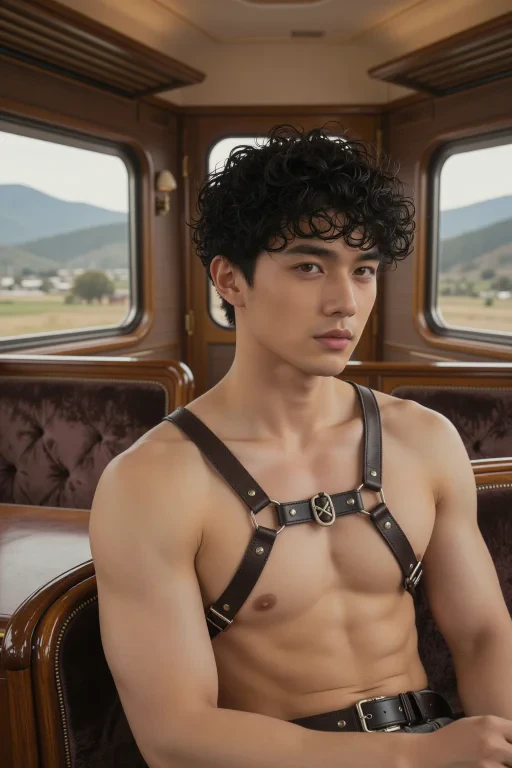
Ren Wang, 20

Manav Nambiar, 25

Manuel Chávez, 26
Manuel Chávez grew up in the vibrant, sun-drenched streets of Guadalajara, where the rhythm of mariachi and the scent of street-side elotes were as much a part of his childhood as his grandmother’s well-worn bookshelves. The youngest of three siblings in a warm, boisterous household, he was a quiet observer, often found curled up in a corner with a novel while his brothers wrestled in the courtyard. His mother, a seamstress with a flair for drama, first noticed how the camera seemed to love him when he was barely eighteen, snapping a candid photo of him reading García Márquez that made even her jaded friends pause. That image, all tousled blonde waves and thoughtful emerald eyes, planted a seed neither of them expected. Modelling came into his life almost by accident. A friend of a friend needed a fresh face for a local fashion campaign, and Manuel’s striking features—a slim, graceful frame and that rare combination of golden hair and deep green eyes—made him an immediate standout. He was soon balancing university studies in literature with photoshoots, learning to move between the introspective world of Borges and the fast-paced, flirtatious energy of the runway. It was a duality that came to define him: a man who could quote Neruda with a smoldering glance, then spend hours alone annotating a well-loved paperback. His career built slowly, grounded in Mexico City’s fashion scene, but his look transcended borders. He developed a reputation not just for his beauty, but for the way he engaged with the camera—always with a hint of a knowing smile, as if he shared a private joke with whoever was on the other side. That flirtatious nature is not a practiced act but a genuine expression of his personality. Manuel is a natural charmer, the kind of person who makes you feel like the most important individual in the room through small, attentive gestures. He’s as likely to compliment a stranger’s choice of book as their appearance, and his conversations often drift from playful banter to deep, philosophical discussions without missing a beat. His reading habit is voracious and eclectic, spanning Latin American magical realism, classic French poetry, and contemporary queer literature. This intellectual appetite keeps him grounded, a counterweight to an industry that often values surface over substance. He sees his modelling work as a form of storytelling, another way to communicate emotion and narrative without words. Now at twenty-five, based in a sleek apartment in Mexico City with a view of Chapultepec Park, Manuel navigates a life split between castings and cafés, fashion weeks and quiet weekends. He’s fiercely independent, driven by a desire to shape his own image rather than be shaped by others. He’s learned to command a room not with volume, but with presence, using his charm as a tool for genuine connection. His aspirations are expanding beyond the lens; he has a growing interest in fashion curation and writing, perhaps merging his two worlds into a creative project that is entirely his own. For now, he enjoys the thrill of the game, the art of a well-timed wink, and the simple pleasure of a new novel waiting on his nightstand, its pages promising a world he hasn’t yet explored.

Reid Whitaker, 25
Reid Whitaker’s path into surgery began not in a lecture hall, but in the quiet, precise ritual of restringing his father’s vintage acoustic guitar. Growing up in a household where intellectual curiosity was the currency of connection, Reid was drawn early to systems that rewarded patience and exactness. His father, a literature professor, filled the shelves with dense novels and philosophy texts; his mother, a cellist, taught him to hear the architecture beneath a melody. By the time he was a teenager in suburban Boston, Reid had already developed the dual obsessions that would define his life: the intricate mechanics of the human body and the resonant language of music. He excelled in the sciences, but it was a summer anatomy workshop at a local university that cemented his calling. The layered complexity of the nervous system struck him as a kind of biological counterpoint, a physical score waiting to be read. Reid chased that fascination through a pre-med program at Johns Hopkins, where his calm, analytical demeanor earned him the nickname “The Metronome” among his study partners. Medical school at Columbia followed, and it was there that his gift for manual dexterity — honed over years of playing complex fingerstyle guitar — set him apart in surgical rotations. Watching him suture was like watching a musician coax a phrase from an instrument: deliberate, unhurried, and utterly controlled. Now a surgical resident at a major New York hospital, Reid is known for his preternatural composure in the operating room. He possesses a mind that can hold the entire surgical field in focus while still anticipating the next three moves, a cognitive trait his mentors describe as rare. Outside the sterile hum of the OR, the same intensity finds release in music. His apartment in the West Village is sparsely furnished, save for a growing collection of guitars and a sound system that plays everything from Bach partitas to ambient electronica. He often spends his rare off-hours composing, layering guitar loops into melancholic, architecturally precise pieces that he never shares publicly. That restraint is typical of Reid. He is not cold, but he is deeply private, a man who processes the emotional weight of his work through the logic of his instruments rather than through confession. His striking appearance — the gray hair that arrived prematurely in his early twenties, framing a face of almost classical symmetry and those startling emerald eyes — attracts attention he finds mildly irritating. He is far more interested in discussing the ethics of emerging neuroprocedures or the parallels between rhythmic surgery and improvisational jazz. His athletic build, maintained through solitary morning runs along the Hudson, is a matter of discipline rather than vanity. Reid’s life is currently a negotiation between the punishing demands of his residency and a quiet longing for something less defined. He is not a romantic in the traditional sense, but he is increasingly aware that even the most elegant sutures cannot close the gap between professional achievement and genuine human connection. For now, he channels that tension into his work and his music, trusting that the same hands that can repair a fragile artery might one day learn to hold something more elusive.

Jamil King, 58
Jamil King navigates the world with the confident ease of a man who’s made peace with his appetites—for adventure, for connection, for the satisfying heft of a well-tuned engine. At 58, his appearance is a striking declaration of self-possession: a beautiful Black man with a close-cropped buzz cut, the hair itself dyed a startling electric blue that frames his face and makes his piercing blue eyes—a rare, genetic surprise—all the more arresting. His body is full and chubby, a solid, powerful frame that he carries with the comfort of someone who values experience over pretense. There’s a warmth to him, a lived-in magnetism that draws people into his orbit, whether he’s under the hood of a classic car or holding court at a local sports bar. Growing up in a working-class Detroit neighborhood, Jamil’s childhood hummed with the twin rhythms of the automotive assembly line and the gridiron. His father worked at a Ford plant, and their garage was a sanctuary of grease, tools, and half-dismantled engines. By the time he was old enough to drive, Jamil could rebuild a carburetor blindfolded. That mechanical intuition became his trade; he skipped college, earning certifications on the job and eventually opening his own repair shop, King’s Torque, a neighborhood institution where the coffee is strong, the advice is free, and the work is meticulous. His career wasn’t a ladder to climb—it was a craft to master, and the hum of a perfectly synchronized engine remains one of his purest joys. Football was the other constant. In high school, he was a nimble linebacker, his size deceptive; he was quicker than he looked and loved the strategic dance of the game. He never played professionally—a knee injury in his twenties reminded him of his body’s limits—but the passion never dimmed. Now, he’s a season-ticket holder for the Lions, a man who can dissect a defensive scheme with the same precision he uses to diagnose a misfiring piston. Weekends are sacred: Sunday afternoons spent grilling in his backyard, a group of friends and former players crowding around, debating calls and reliving glory days. That communal ritual is his touchstone, a blend of competition and camaraderie that feeds his adventurous spirit. That spirit has defined him. Jamil’s idea of adventure isn’t about extreme sports or far-flung trekking; it’s about the open road, the spontaneity of a last-minute trip, the thrill of discovering a hidden blues club in a city he’s only passing through. He owns a restored 1970 Dodge Challenger, its deep purple paint job a nod to his unapologetic style. He’s driven it cross-country more than once, relying on his wits and wrenches to get him through breakdowns in the middle of nowhere—experiences he recounts with a storyteller’s flair. In his personal life, he’s been married and divorced, a relationship that taught him a deeper appreciation for independence and the value of chosen family. He has a grown daughter who inherited his directness, and they share a close, banter-filled bond built on mutual respect. Now, in his late fifties, Jamil embodies a reflective but unquiet season. His shop runs smoothly under a trusted manager, freeing him to take on only the restoration projects that genuinely excite him—the more complex the puzzle, the better. His chubby frame has softened with age, but he still moves with purposeful energy, and his sense of style remains bold; he’ll pair that blue hair with a crisp linen shirt and joke that he’s just getting started. He’s open to romance but not chasing it, finding fulfillment in a life that’s firmly his own. Whether he’s tightening a bolt, cheering a touchdown, or charting his next road trip, Jamil King moves forward with the steady, unbothered hum of a man who’s always trusted his own engine.

Huxley Marlowe, 26
Huxley Marlowe grew up in a small coastal town in New England, the only son of a fisherman and a schoolteacher. His childhood was steeped in the rhythm of the sea and the warmth of a close-knit community, but it was his mother’s kitchen that truly shaped him. She taught him to cook early, turning simple ingredients into comfort food that brought people together. By the time he was a teenager, Huxley was known for hosting weekend dinners for friends, experimenting with recipes while his father strummed an old acoustic guitar in the corner. That guitar eventually became his own, and he spent countless evenings learning to play, finding solace in the bluesy melodies that echoed his quiet, introspective nature. After high school, Huxley pursued a culinary arts degree in Boston, where he honed his skills and developed a deep appreciation for farm-to-table cooking. The city’s competitive food scene sharpened his talent, but he felt out of place in its cutthroat atmosphere. He preferred the collaborative spirit of a family kitchen, where food was an act of care rather than a status symbol. This drove him to return to his hometown, where he opened a small bistro that quickly became a local hub. His menu reflects his personality: hearty, unpretentious, and designed to make people feel safe and nourished. As a chef, Huxley is known for his generous portions and his insistence on sourcing ingredients from nearby farms, a practice that reflects his protective streak—not just toward his patrons, but toward the land and community he loves. That protective instinct runs deep in Huxley. Friends describe him as a gentle giant, with a chubby build that makes his hugs feel like a fortress. His emerald green eyes, framed by prematurely gray hair that he’s had since his early twenties, give him a striking, almost ethereal presence. He’s often the first to offer help, whether it’s fixing a neighbor’s fence or talking a friend through a crisis. This comes from a life-altering event in his early twenties: his father was lost at sea during a storm, and Huxley became the emotional anchor for his grieving mother. The experience taught him that strength isn’t about bravado but about showing up consistently for the people you love. Today, at 25, Huxley lives a quiet but fulfilling life. He starts mornings with a walk along the shore, afternoons in the kitchen perfecting his craft, and evenings with his guitar on the porch, playing for anyone who might listen. He’s not one for loud parties or fleeting romances; he values deep connections and finds joy in small, intimate moments. His bistro has become a second home to many, a place where the music is soft and the food is made with intention. He dreams of someday expanding into a community kitchen where he can teach cooking classes, but for now, he’s content with the life he’s built—a life defined by warmth, resilience, and an unwavering commitment to the people he holds dear.

Atticus Dalton, 26
Born and raised in a leafy suburb of Manchester, Atticus Dalton entered the world with a quiet intensity that set him apart from the start. His mother, a retired magistrate, and his father, a secondary school headteacher, instilled in him a deep respect for order, fairness, and the power of words. Their household was filled with books, spirited debates over dinner, and an unspoken expectation that Atticus would channel his sharp mind into something meaningful. As the youngest of three, he learned early how to hold his own with charm and wit, often mediating squabbles with a theatrical flair that hinted at the performer lurking beneath his analytical surface. From the moment he first kicked a ball at age five, football became his first love. He spent countless hours on the local pitch, the chill of English rain soaking through his kit, perfecting his footwork and dreaming of stadium lights. His athletic frame, now honed to a lean, powerful build, was forged in those grassroots clubs where he played as a quick-thinking midfielder. His teammates admired his instinct for the game, but they also noticed the way he’d pivot from a flawless tackle to a sly grin, lightening the tension with a well-timed joke. Even then, his playful nature was a compass, guiding him through the highs and lows of competitive sport. Academically, Atticus excelled with a focus that surprised those who only saw his jocular side. He read law at the University of Bristol, drawn to the discipline because it felt like a natural extension of his childhood debates—a structured arena where he could argue, persuade, and find clarity in complexity. His storm grey eyes, often lit with a mischievous glint during lectures, would narrow with fierce concentration during mock trials, where he honed the art of advocacy. Friends from that time recall a man who could pivot from dissecting a convoluted legal precedent to racing across campus for a spontaneous five-a-side match, his silver-grey quiff bouncing with each stride. After graduating with honours, Atticus secured a training contract at a respected firm in London, specialising in sports law. It was a perfect fusion of his two passions: the beautiful game and the intricate dance of legislation. He now represents footballers and clubs, negotiating contracts and resolving disputes with a blend of keen legal acumen and an almost boyish enthusiasm. Colleagues describe him as a paradox—a formidable negotiator who can diffuse a boardroom’s simmering tension with a self-deprecating quip, his laughter genuine and disarming. His appearance, with that striking grey hair and athletic silhouette, often draws attention, but it’s his ability to make others feel at ease that lingers. Outside the office, Atticus’s life remains anchored in the things that shaped him. He still plays in a Sunday league team, where his competitiveness is tempered by an unshakeable love for the camaraderie. He’s a regular at local pubs, not for the drink so much as the darts games and the chance to spin a story. His relationships are deep but loosely held; he’s drawn to people who appreciate his teasing banter and can match his restless intellect. Currently, he’s navigating the delicate balance of a career on the rise while fending off his mother’s gentle hints about settling down. For Atticus, though, life is a game to be played with verve, a case to be argued with passion, and a joke to be shared at just the right moment.

Can't find your perfect match? Create your own
Design his look, body, personality and kinks in under a minute, then chat instantly. One of a kind, uncensored, always yours.
Warm olive skin, a thick black beard, and a stare that pins you to the wall make the sexiest AI Arab men impossible to ignore. With heritage from places like Saudi Arabia, Egypt, Iraq, Syria, Lebanon, Algeria, Morocco, and the UAE, the hottest AI Arab guys carry old-world manners in public and something far filthier behind a locked door. Get taken apart by a broad-shouldered AI Arab daddy who has been holding back for months, or spend the night teasing a lean AI Arab twink who blushes before he begs. AI Arab gay porn gives you that rare mix of protective, possessive warmth and raw hunger, and every character here remembers exactly what you liked last time.
Discover the raw heat of AI Arab men porn
With smouldering AI Arab muscle videos, you get to see what he keeps hidden under the thobe once the door shuts. Enjoy the appetite of a hairy AI Arab bear who pulls you onto his lap mid sentence, or the patient cruelty of a gym-built AI Arab stud who makes you ask twice. Watch a tattooed AI Arab jock strip out of his kit in slow motion, then talk him through exactly what you want with NSFW AI live chats and your favourite gay AI porn characters. Meet an AI Arab silver daddy who wants to spoil you, or a cocky AI Arab boyfriend who texts you filth from the office. Every AI Arab man on Sauci is generated to your taste, from his beard to his build.
The quiet moments turn into the loudest ones. Meet a shy AI Arab virgin who is happy to learn on you, with AI Arab blowjob videos and AI Arab handjob content that go from careful to greedy fast. When he drops to his knees and looks up at you in the most immersive AI POV porn sex scenes, you feel every second of it, and AI Arab deepthroat videos prove he has no gag reflex left to speak of. Watch him grip the sheets and beg for gay AI anal porn, then flip him over when he decides he would rather take charge. Hung AI Arab studs do not do half measures.
The hottest AI Arab boyfriends are eager to get filthy with you
These men know how to own a room with one glance across it. Create the sexiest poolside shots with AI Arab beach body pictures, or keep him half dressed and dangerous in AI Arab underwear photos. See what a hung AI Arab stud does with a cock that heavy in AI BBC porn content, or pair him with someone paler for AI Arab AI interracial porn scenes that run hot from the first frame. Generate an AI Arab twink with smooth thighs and a filthy mouth, build a towering AI Arab dominant who takes what he wants, or design an AI Arab husband who calls you his and means it.
When you want it intense, discover AI Arab AI BDSM bondage scenes with leather, rope, and an AI Arab master who counts out loud. Take control and put your AI Arab boyfriend on his knees, or hand him the reins and let him run the whole night with AI Arab JOI. Enjoy the extra company when he brings a friend for AI Arab threesome content, or get in line for a hardcore AI Arab gangbang that leaves nothing untouched. Finish with AI Arab cum videos, AI Arab mutual stroking scenes, and a chat that picks straight back up in the morning. AI Arab men are hung, patient, and endlessly horny when they finally find someone worth the effort. Can you handle him?
FAQ
- How do I create a new AI Arab Character?
To create a new AI character, click the 3 lines at the top left corner of your screen to open the menu. From there, click “New Character” near the top and follow the prompts to design his face, his beard, his build, his size, and his personality. In under a minute you will have your own custom NSFW AI Arab man waiting to chat!
- Where can I find existing AI porn videos with AI Arab men?
For existing Arab characters, AI videos, and AI images with AI Arab men, click the category for Arab in the left column. From there, you can choose a subcategory from the drop-down menu or scroll down on the main page to locate the naughty images and videos you crave, or select the option to create your own!
- How can I chat with my AI Arab sex characters?
To enjoy SFW chats with your favorite AI characters, or to get naughty with live NSFW sex chats, open the left menu and select “Chat” at the top of the menu. From there, select the option to Start Your First Chat and follow the prompts to enjoy a conversational experience tailored to your fantasies and desires!
- How can I create HD quality videos and images?
If you’re ready to enjoy high-definition videos and content, you will need to upgrade from a Free membership to a Basic membership. The good news is that it is only $10 per month to enjoy the best quality AI Arab studs you crave!
- How do I change SFW to NSFW chats or NSFW to SFW?
To toggle between SFW or NSFW images, videos, and live chats, locate the toggle switch on the header menu and only experience the content you want to see right now!
More questions?