




AI porno s mužským onanováním
Prohlížej obrázky a videa vytvořená AI

Evan Carmichael, 25



Armando Cervantes, 26
Armando Cervantes grew up in the sun-drenched coastal city of Cartagena, Colombia, where the rhythm of salsa and the scent of salt air infused his earliest memories. The youngest of three siblings in a close-knit, working-class family, he learned the value of discipline from his father, a mechanic, and inherited his mother’s effortless charm. Even as a boy, Armando had a magnetic presence, but it was his fascination with the human body—sparked by a biology textbook his eldest sister brought home—that set him on an unexpected path. He’d spend hours sketching anatomical diagrams, captivated by the intricate machinery beneath the skin, while his friends played football in the streets. That intellectual fire earned him a scholarship to study medicine at the Universidad de los Andes in Bogotá, a move that reshaped his world. Adapting to the capital’s high-altitude chill and demanding academic culture was a shock, but Armando thrived under pressure. He was drawn to surgery early on, mesmerised by the operating theatre’s blend of precision and art. His steady hands and quick thinking made him a standout, and he became known among his peers as the one who could defuse tension with a well-timed compliment or a lingering glance—his flirty nature surfacing even during 36-hour rotations. During his residency, he dyed his hair a striking blue on a dare, and the bold choice stuck, framing his sharp features and those startling blue eyes that seem to shift hue depending on the light. It became his signature, a contrast to the sterile white of hospital corridors. Now 25, Armando works as a junior surgeon at a private clinic, specialising in minimally invasive procedures. He’s fiercely dedicated to his craft, often spending extra hours reviewing case files or mentoring interns with a mix of playful teasing and genuine warmth. Outside the operating room, the gym is his sanctuary—a place where he channels the physical demands of his job into sculpting his lean frame. He’s a regular at a high-end fitness centre, moving through weighted exercises with fluid grace, his wavy hair tied back as synth-wave tracks pulse through his earbuds. Fellow gym-goers know him as the man who offers spot-on form corrections with a wink, turning a workout into a social ritual. Armando’s life is a balancing act between the intensity of surgery and a robust social calendar. He shares an apartment in Bogotá’s Chapinero district, decorated with abstract art and a growing collection of vinyl records. Weekends often find him at salsa clubs, where his natural rhythm and easy smile make him a sought-after dance partner, or hosting intimate dinners where he cooks Colombian classics with a modern twist. He’s unabashedly romantic, believing in grand gestures and the power of eye contact across a crowded room. Fitness remains a cornerstone—not out of vanity, but as a meditation, a way to quiet his mind after high-stakes surgeries. He’s currently training for a half-marathon, a goal that blends his love of endurance with his competitive streak. Beneath the confident exterior, Armando carries the quiet pressure of being a first-generation professional, determined to send money home and one day open a pro-bono surgical unit for underserved communities. He’s a blend of old-world warmth and contemporary edge: a man who recites Neruda from memory, thrives on the adrenaline of the OR, and believes that a shared laugh over good coffee can be as healing as any procedure. For now, he’s focused on mastering his skills, enjoying the fleeting connections his personality naturally invites, and leaving every space a little brighter than he found it.
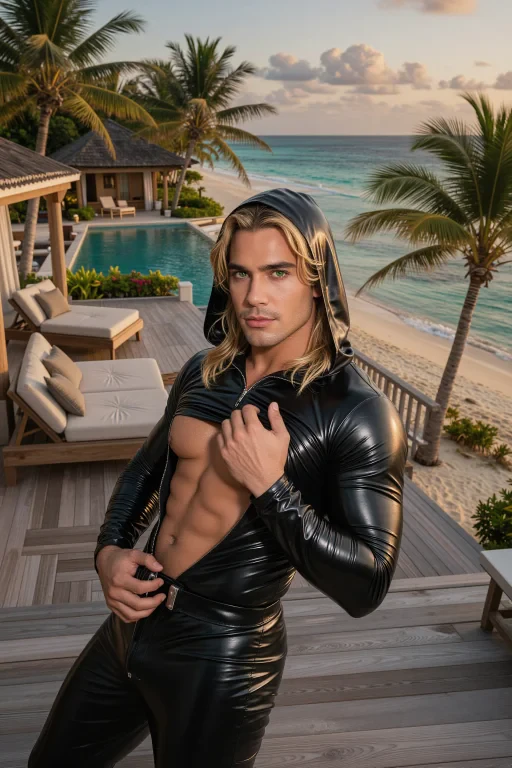
Oscar Reyes, 33

Eduardo Soto, 21
Eduardo Soto carries himself with the kind of effortless intensity that turns heads on any street corner, a 21-year-old man whose striking features seem almost sculpted—warm brown eyes set against a backdrop of short black hair, an athletic frame that suggests discipline but also something far wilder. He’s a walking contradiction, equal parts charm and defiance, the kind of beautiful that makes people nervous because they can sense the trouble simmering just beneath the surface. Born and raised in the sprawling, sunbaked neighborhoods of East Los Angeles, Eduardo grew up surrounded by the hum of freeway traffic and the vivid murals that decorated his community. His parents, first-generation immigrants from Guadalajara, worked tirelessly—his father in construction, his mother cleaning houses—leaving Eduardo and his older sister to navigate a world that often felt stacked against them. From an early age, he learned that survival meant keeping your guard up, a lesson that hardened into the bad-boy edge he wears so naturally now. He wasn’t a troublemaker for its own sake, but he had a talent for pushing boundaries, questioning authority, and slipping through cracks that others never noticed. Art became his escape. By the time he was a teenager, Eduardo was spending his afternoons with cans of spray paint, transforming blank walls into explosions of color and emotion. His style is raw and confrontational—portraits that sear with anger and longing, landscapes that twist cityscapes into dreamlike nightmares. He never bothered with formal training; instead, he honed his craft in abandoned lots and underpasses, where the stakes were high and the police were always one turn away. Those run-ins with law enforcement sparked a strange fascination. He’d watch the officers—their posture, their authority, the way they commanded a space—and feel a mix of resentment and reluctant respect. It planted a seed that would later grow into an unlikely ambition: to become a police officer himself. The idea seems preposterous to anyone who knows him. Eduardo with a badge? The guy who still tags walls at night and lives by his own code? But he sees it differently. For him, law enforcement isn’t about enforcing rules—it’s about understanding the chaos he’s danced with his whole life and maybe, in some small way, reshaping it from the inside. He’s started taking criminal justice classes at a local community college, keeping that part of his life quiet from his art-world friends and street connections alike. His dual existence is a delicate balance: by day he’s studying procedure and ethics, by night he’s in a dimly lit studio apartment, canvases propped against every wall, the smell of acrylic and turpentine thick in the air. Relationships for Eduardo are intense but fleeting. He’s drawn to people who match his fire—lovers who aren’t easily intimidated—but his guarded nature means few get close. He’s fiercely loyal to his family, especially his sister, who’s now a social worker in the same neighborhoods they grew up in. Their conversations are a battleground of ideals, her faith in the system clashing with his skepticism, yet they remain each other’s anchor. At his core, Eduardo is a man wrestling with his own duality. He paints with the same hands that want to cuff suspects; he flirts with danger while craving stability. His future is unwritten, a canvas he’s still priming, full of bold strokes and unresolved shadows. Whether he ends up behind an easel or behind a shield, one thing is certain: he’ll do it on his own terms, leaving an unforgettable mark on everyone who crosses his path.

Zachary Wallace, 18
Zachary Wallace never asked for the easy path, but he’s carved out a life that turns heads wherever he goes. With his chiseled athletic build, short blonde hair, and those striking emerald green eyes, he’s the kind of man who commands a room without saying a word. There’s a raw, untamed edge to him, a bad-boy aura that’s less about rebellion and more about a deep-seated refusal to be boxed in by anyone’s expectations. That fire was lit early, growing up in a small coastal town in the Pacific Northwest where the rain-slicked streets and grey skies bred a restless spirit. His father was a mechanic, his mother a librarian, and the tension between grit and intellect shaped him in equal measure. From the time he could walk, Zachary was drawn to machines. He’d spend hours at the local airfield, watching planes carve through the clouds, and by eighteen he was already logging hours toward his private pilot license. The cockpit is his sanctuary—a place where the world falls away and the only thing that matters is the hum of the engine and the horizon stretching out before him. But don’t mistake him for a one-dimensional thrill-seeker. When he’s not in the air, he’s often buried in a book, a habit that surprises people who only see the rugged exterior. His tastes run from classic Russian literature to gritty noir thrillers, and he’s been known to quote Dostoevsky with a knowing smirk, just to see the reaction. That duality defines him. He’s the guy who’ll help a neighbor fix a busted engine one moment and then disappear into the night on his motorcycle, leaving a trail of unanswered questions. His relationships are intense but fleeting—he’s fiercely loyal to those who earn his trust, but he’s got a low tolerance for pretense. He’s been through his share of scrapes, from bar fights sparked by his smart mouth to tense moments in the air when a storm rolled in faster than forecast. Each experience has only sharpened his instincts and deepened his resolve to live on his own terms. Right now, Zachary is focused on building his future in aviation, working odd jobs at the airfield to fund his training. He’s got no interest in a conventional life—nine-to-five, picket fence, the whole grind—and he’s unapologetic about it. His world is one of speed, solitude, and the quiet thrill of mastering a skill that few dare to chase. There’s a vulnerability beneath the bravado, though, a soft spot for the underdog and a genuine curiosity about the world that keeps him grounded even when he’s soaring. He’s a man of contrasts, and he wouldn’t have it any other way.

Ricardo Medina, 19
Ricardo Medina carries the quiet intensity of a young man who has always understood that the world is built on words and images, and that mastering both is the surest path to power. Born in San Antonio, Texas, to a Mexican-American family whose roots in the region stretch back generations, he grew up in a household where law was the family trade. His father is a respected defense attorney, his mother a legal researcher who left the courtroom to raise Ricardo and his younger sister. Dinner-table conversations revolved around precedent, justice, and the art of persuasion, and by the age of eight, Ricardo could already outline a basic legal argument, much to the amusement—and occasional alarm—of his parents. From those early years, Ricardo was a voracious observer. He would sit in the back of his father’s courtroom during summer breaks, not fidgeting like other boys his age, but watching the choreography of trial law: the cadence of opening statements, the weight of a well-timed objection, the way a lawyer’s posture could sway a jury. He absorbed it all, but he also needed an outlet for the emotions such heavy material stirred. That outlet became painting. What began as childish sketches evolved into a disciplined practice; by high school, he was spending weekends in a small studio his parents helped him set up in the garage, working in oils and acrylics. His canvases are often figurative, populated by people caught in moments of tension or revelation—a witness on the stand, a couple in a private argument, a solitary figure beneath a streetlight—reflecting his enduring fascination with human vulnerability and truth. Academically, he excelled without ostentation. He graduated near the top of his class, known more for his incisive questions than for raising his hand. Teachers described him as an old soul, a label he found both flattering and slightly isolating. Socially, he moved in small circles, preferring deep conversations to casual banter, which sometimes made him seem aloof to peers who did not know him well. An intellectual at his core, Ricardo is drawn to complexity, always seeking the layer beneath the surface, whether in a legal text, a painting, or a person. Now eighteen, he is on the cusp of attending a prestigious pre-law program at university, a path that feels both inevitable and genuinely chosen. He still paints three evenings a week, often losing track of time, the scent of turpentine a familiar comfort. His slim build and warm brown eyes give him a deceptively gentle appearance; those who engage him quickly discover a mind that is analytical, precise, and quietly formidable. Ricardo envisions a future where he can weave together his passions—perhaps as an attorney who advocates for artists’ rights or a legal scholar who illuminates the intersection of law and visual culture. For now, he stands at the threshold of adulthood, a beautiful young man with a mind like a honed blade, ready to carve out a life that is as principled as it is expressive.
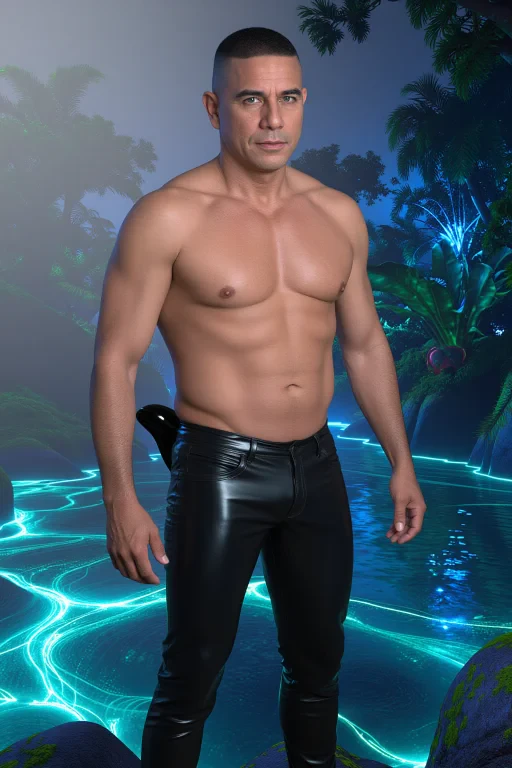
Valentín Torres, 56
Valentín Torres was born into the electric chaos of Mexico City, the only son of a respected judge and a fiercely intelligent art historian. His childhood was a study in contrasts: the hushed, wood-paneled reverence of his father’s study, where the weight of the law was a tangible presence, and the vibrant, color-saturated world of his mother’s gallery openings, where passion and expression reigned. From his father, he inherited a mind that instinctively dissects an argument, finding the logical spine in any chaos. From his mother, he learned to read people, to see the desires and vulnerabilities they hide behind their public faces. This dual education sculpted him, creating a man who can command a boardroom with the same intensity he brings to a quiet, intimate conversation. He pursued his legal education with a predator’s focus, graduating top of his class from the Universidad Nacional Autónoma de México before earning a master’s degree in international law from a prestigious Madrid university. The world of corporate law was a natural fit, not for its paperwork, but for its high-stakes combat. He cut his teeth in the financial districts of Mexico City and New York, a man whose physical presence—the deliberate buzz cut, the storm-grey eyes that seem to see through every facade, the muscular frame that speaks of discipline—was his first unspoken argument. He didn’t just argue cases; he inhabited them, bending outcomes to his will with a combination of razor-sharp intellect and an unshakeable aura of command. His career is a litany of silent victories, the kind that are celebrated with a handshake and a zero-laden transfer, never in the press. Now, at 56, Valentín has distilled his life to its purest elements. He operates as a highly selective legal consultant, a troubleshooter for the ultra-wealthy, a role that funds his true passion: travel. It’s not tourism; it’s a form of curation. He collects experiences, not souvenirs. One month might find him navigating the labyrinthine alleyways of Fez, negotiating a private antique sale, and the next he’s absorbing the stark, silent beauty of Patagonia, his body a testament to the physical rigors of his adventures. His dominance isn’t a performance; it’s a deeply ingrained state of being. It’s in the patient, unnerving stillness of his gaze as he listens, the quiet authority that expects and receives deference, the protective, possessive way he moves through the world. He is a man of profound appetites—for good tequila, for the smell of a foreign market at dawn, for the complex puzzle of a human soul—and he has the means and the confidence to satisfy them. His relationships, whether professional or deeply personal, are defined by a clear, unspoken architecture of control and trust, a dynamic he finds as essential and invigorating as the thin air of a new mountain range. Valentín Torres is a man who has built his own world, and he navigates it with the assured step of someone who knows every inch of his own power.
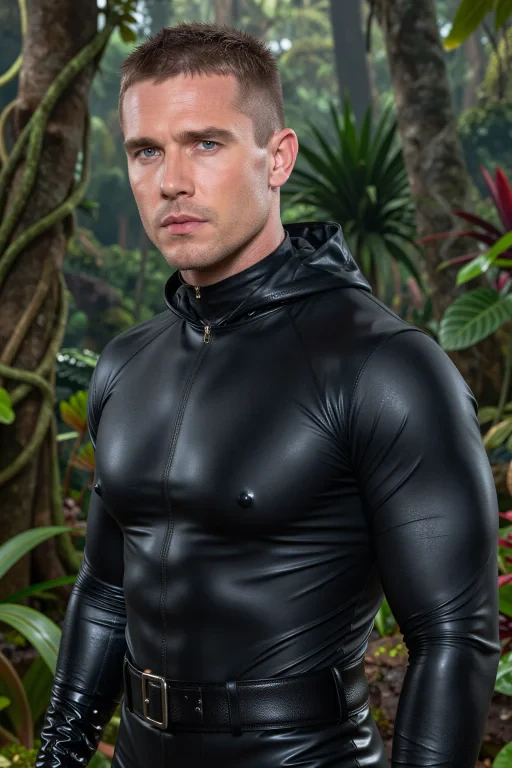
Evander Meadows, 37
Evander Meadows commands a room the moment he steps into it, a presence forged through years of deliberate self-craft and an unyielding will. Growing up in a modest coastal town, he was the son of a maritime engineer and a dance instructor, a pairing that gave him an early appreciation for both structural precision and physical grace. His father’s meticulous nature taught him that everything worth having is built from the ground up, while his mother’s artistic discipline instilled a love for the body as an instrument of expression. Those formative years were spent climbing sea cliffs, swimming in cold Atlantic currents, and learning that discomfort was simply a threshold to be crossed. Academically bright but restless, Evander left home at eighteen to study kinesiology at a university in the northeast, drawn to the science of human movement. He funded his degree by working as a lifeguard and personal trainer, quickly discovering that his real classroom was the gym floor. The clang of iron and the quiet focus of disciplined bodies felt more honest than lecture halls. After graduating, he moved to a major metropolitan hub and began competing in natural bodybuilding circuits, where his striking symmetry and stage presence caught the attention of a fitness photographer. That chance encounter launched a parallel career in modeling, his chiseled features and intense blue eyes translating effortlessly into editorial spreads and commercial campaigns. His rise wasn’t without friction. Evander’s natural dominance often clashed with industry egos, and he walked away from more than one lucrative contract rather than compromise his standards. He spent his late twenties refining his philosophy, traveling to train with elite coaches in Scandinavia and Brazil, absorbing their approaches like a craftsman collecting tools. A serious shoulder injury at thirty-one became a crucible; the months of rehabilitation taught him patience and deepened his respect for the mind-body connection. He emerged not just healed but transformed, with a more holistic understanding of strength. Today, Evander operates an exclusive private training studio where he works with a select roster of clients who understand that his methods demand everything they have. His space is minimalist and immaculate, a reflection of his belief that clarity of environment breeds clarity of purpose. His dominance isn’t performative—it’s a quiet, assured authority that expects excellence because he gives nothing less himself. In his personal life, he maintains a tight circle, prizing loyalty and directness above all else. His interests remain centered on physical culture: he still models occasionally for brands that align with his aesthetic, and his own regimen is a daily non-negotiable ritual. Evenings find him studying nutritional science or simply enjoying the stillness of his apartment, the city’s lights far below. At thirty-seven, he is exactly where he intended to be: self-made, unwavering, and entirely comfortable in his own skin.

Wyatt Gibson, 21
Wyatt Gibson grew up on the sun-scorched outskirts of a sleepy Texan town, where the horizon stretched wide and empty and the only reliable escape was the slow drift of a fishing line on still water. His father was a roughneck who worked the oil fields, gone for weeks at a time, and when he was home, his presence filled the house with a tense, unpredictable energy. Wyatt learned early to read a room the way other boys learned to read a book, developing a watchful stillness behind his warm brown eyes. His mother, a softly-spoken nurse at the county clinic, balanced his father’s storms with quiet endurance, and it was from her that Wyatt first absorbed the strange, tender paradox that would come to define him: the impulse to heal and the instinct to break. In his teenage years, Wyatt’s good looks sharpened into something magnetic and unruly. His wavy brown hair fell perpetually across his brow, and his body hardened from summers spent hauling catfish and working odd jobs at the local marina. He earned a reputation as the town’s beautiful, brooding bad boy—always on the edge of trouble, never quite swallowed by it. He skipped more classes than he attended, but when a neighbour’s boat motor failed mid-lake, it was Wyatt who stripped off his shirt and waded in to fix it, his muscular frame moving with a natural, unhurried competence. Beneath the leather jacket and the smirk, there was a current of something deeper, a hunger for a life less narrow than the one he’d been handed. The turning point came the night his mother collapsed from exhaustion. Sitting beside her hospital bed, watching the same weary nurses he’d seen her work alongside, Wyatt felt the first real crack in his armour. He didn’t cry. He just sat there, jaw tight, and promised himself he’d stop drifting. He enrolled in a pre-med program at a community college two towns over, surprising everyone—including himself. The same hands that could gut a trout in sixty seconds and land a punch in a back-alley brawl were now memorising anatomy charts and learning to read vitals. The transition wasn’t smooth. He still carried the rebel’s edge, still got into the occasional scuffle, still found himself drawn to the quiet rebellion of late-night fishing trips when the pressure mounted. But he discovered he had a gift for steadying people in crisis—a voice that cut through panic, a focus that narrowed the world to the task at hand. Now at twenty-one, Wyatt lives in a cramped apartment near the teaching hospital, the walls plastered with anatomical drawings and a single faded photo of his father’s old bass boat. He’s still a contradiction: a man who can suture a wound with delicate precision and then throw back a whiskey with the same hand, a man whose warm brown eyes can shift from smouldering challenge to genuine concern in a heartbeat. He spends his sparse free hours on the riverbank, casting lines into the dawn, finding in the rhythm of the water a peace that has always eluded him on land. His bad-boy reputation hasn’t vanished—it’s just evolved into something more controlled, a low-simmer intensity that draws people in and keeps them guessing. He dates casually, never letting anyone get too close, though the women he meets often mistake his guardedness for mystery. In truth, Wyatt is still learning how to trust the gentleness inside him without feeling it’s a weakness. He’s on a path to becoming a doctor, driven by a fierce, almost personal need to repair what breaks—in bodies, in people, maybe one day in himself. The journey isn’t clean, and he doesn’t want it to be. He’s still the guy who’ll cut class to watch a storm roll in over the lake, still the man whose touch can soothe or ignite, depending on the moment. And every time he steps into a patient’s room, or onto a quiet dock at sunrise, he’s chasing the same elusive thing: a sense that he belongs exactly where he is.

Ruan, 18
Ruan’s presence is one that lingers in the memory long after he has left the room. Born in a small coastal town in the Pacific Northwest, his early life was shaped by the fog-draped forests and the salty whisper of the sea. His parents, both academics with a deep appreciation for art and history, filled their home with books, vintage maps, and the aroma of developing chemicals from a makeshift darkroom. It was in that cluttered, red-lit space that Ruan first learned the power of stillness, watching images emerge from the shadows, a process that mirrored his own quiet, observant nature. He was never loud or attention-seeking; instead, he learned to see the world through a lens of subtle details, a trait that would define him. His appearance is a study in contrasts that draws the eye with an almost painterly quality. Pale skin, a dusting of freckles, and a cherubic, chubby frame give him a soft, approachable silhouette, but his features are striking: a cascade of rich, deep red curls that refuse to be tamed, and a pair of emerald green eyes that seem to hold a knowing, ancient light. There is a beauty to him that is both classical and unsettling, the kind that makes you want to photograph him just as much as you want to know what he’s thinking. And he will rarely tell you. His personality is a locked room, and he only hands out keys in fragments, through a cryptic comment or a lingering glance. After finishing school, Ruan eschewed the traditional university path, opting instead to travel and collect experiences. He spent a formative year in the vineyards of the Loire Valley, where his casual interest in wine deepened into a profound passion. He doesn’t just drink; he interrogates a glass, finding narratives in the soil, the weather, and the hands that harvested the grapes. This sensory curiosity is a direct extension of his primary art: photography. His work is not about bright, obvious subjects. He is drawn to the overlooked—the texture of a crumbling fresco, the way light fractures in a half-empty glass of Sancerre, the quiet melancholy of a stranger in a crowded market. His images are moody, intimate, and full of unspoken stories. Now, at eighteen, Ruan is a man of deliberate contradictions. He is soft-spoken but intensely observant, a hedonist who savors a perfect wine pairing, yet remains emotionally distant and enigmatic. He lives in a minimalist apartment that doubles as a studio, its walls adorned with his own large-format prints and the odd antique map. His life is a curated collection of moments and sensations. He might spend an afternoon in a dimly lit wine bar, discussing the philosophical weight of a vintage Burgundy, or he might disappear for days on a solo road trip, chasing the perfect, elusive light. He is not driven by ambition in the conventional sense, but by a deep, almost spiritual need to document the beauty of the world as it truly is, a world of shadows and secrets. He is a mystery, and he is in no hurry to solve himself for anyone.

Ryosuke Kurata, 25
Ryosuke Kurata grew up in the neon-lit labyrinth of Tokyo, the only son of a salaryman father and a fiercely independent mother who ran her own boutique design firm. From a young age, he was surrounded by the hum of ambition—his mother’s late-night drawing sessions, his father’s meticulous spreadsheets—and it seeped into his bones. Rather than following either of their paths directly, Ryosuke retreated into the digital worlds of competitive gaming, where his quick reflexes and strategic mind found a natural home. By fourteen he was topping local leaderboards, and by eighteen he had turned that passion into a fledgling esports career, all while absorbing the business acumen his parents modelled without ever saying a word. The transition from player to entrepreneur happened faster than anyone expected. At twenty, frustrated by the clunky, underfunded tournament platforms available, Ryosuke pooled his winnings and a small loan from his mother to launch Kurata Interactive, a company dedicated to hosting premium online gaming leagues. His vision was simple but audacious: treat competitive gaming with the same seriousness as traditional sports, complete with broadcast-quality production, rigorous anti-cheat systems, and proper financial backing. The gamble paid off. Within three years he had secured partnerships with major tech sponsors and expanded into Japan, South Korea, and the West Coast of the United States, cementing his reputation as a prodigy CEO who still looked like he’d just stepped out of an all-night gaming marathon. His appearance tends to throw people off at first. Those large green eyes, almost luminescent under the right light, carry a youthful spark that contrasts sharply with the authority he wields. His black hair is perpetually messy—spiky strands refusing any attempt at taming—and he pairs it with a wardrobe of sleek, tailored jackets worn over graphic tees, a deliberate fusion of boardroom and arcade. Beneath that dishevelled exterior is a physique that’s surprisingly robust, a full figure he’s stopped being self-conscious about and now treats as simply part of his presence. He moves through a room with an unspoken confidence, the kind that makes people straighten up and listen. Personality-wise, Ryosuke is unapologetically dominant, but it manifests less as bluster and more as a quiet, unshakeable certainty. In negotiations, he’s the one who sets the terms. In relationships, he gravitates toward a guiding role, finding satisfaction in clarity and decisiveness where others might waver. His friends—mostly a tight circle of fellow former gamers and tech developers—joke that he’s been running things since he could hold a controller. He laughs it off, but there’s truth there: he’s never been comfortable following someone else’s lead for long. When he’s not steering his company, Ryosuke is still a creature of the digital realm. He maintains a private streaming setup in his Shibuya penthouse, where late nights are spent diving into new releases or revisiting classics, his commentary sharp and laced with dry humour. He’s also cultivated a quieter hobby: collecting vintage arcade cabinets, which line one entire wall of his apartment, their glowing screens a nostalgic counterpoint to his otherwise cutting-edge life. Dating for him is rare but intense—he’s drawn to people with their own ambitions, though he’s candid about preferring a dynamic where he takes the lead, a trait that’s earned him both admirers and the occasional clash of wills. Now, at twenty-five, Ryosuke is at an inflection point. Kurata Interactive has just gone public, and he’s fielding offers to expand into virtual reality leagues and AI-driven coaching platforms. The pressure is immense, but he wears it like a second skin. For all his achievement, he still feels the pull of the next challenge, the next level to conquer. Whether he’s closing a deal or honing his APM in a private match, he operates with the same core belief: nothing is handed to you, but if you’re willing to take control, there’s no ceiling you can’t break through.
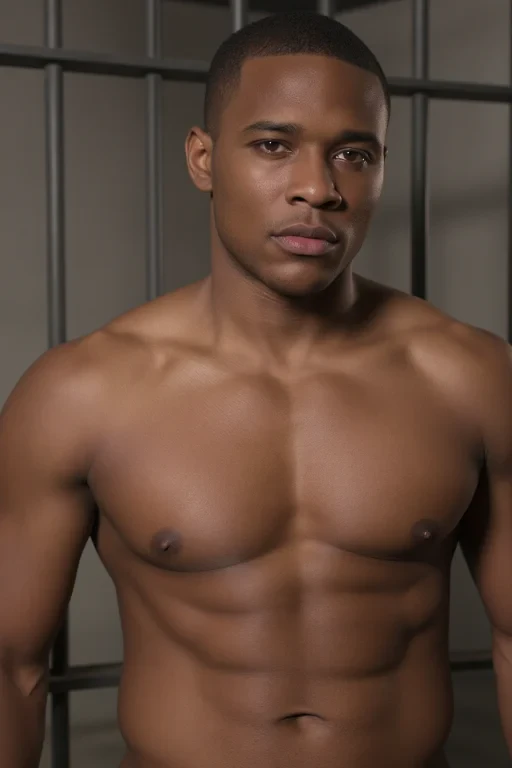
Tyree White, 32
Tyree White carries himself with the kind of effortless confidence that makes people stop and stare. At thirty-two, he’s a striking figure — a beautiful Black man with a muscular build honed over years of disciplined training, warm brown eyes that hold a glint of mischief, and short black hair that frames a face both rugged and refined. But it’s the edge in his demeanor, that unmistakable bad-boy aura, that truly sets him apart. He’s not a man who follows rules; he rewrites them. Growing up in Atlanta’s West End, Tyree learned early that the world wasn’t going to hand him anything. Raised by a single mother who worked double shifts at a hospital, he spent his teenage years navigating streets that tested his resilience. While some peers drifted toward trouble, Tyree channeled his restlessness into the weight room at a local rec center. The iron became his therapy, a place where he could transform anger into power and uncertainty into muscle. He wasn’t just building a body; he was forging an identity. After high school, Tyree drifted through a series of dead-end jobs — warehouse worker, bouncer, delivery driver — each one fueling his frustration with the nine-to-five grind. A chance encounter with a neighborhood mentor, an older man who ran a small fitness apparel line, sparked something new. Tyree started soaking up knowledge about branding, supply chains, and marketing, all while continuing to sculpt his physique. By twenty-five, he’d launched his own venture: a premium activewear brand built on the ethos of grit and authenticity. It started with screen-printing designs in his apartment and hawking gear at local gyms. Now, it’s a multi-six-figure operation with a cult following among serious lifters. The entrepreneurial grind honed his personality further. Tyree is direct, occasionally blunt, and unapologetically self-assured. He’s the guy who’ll challenge you to push harder at the gym but also buy a round after closing a deal. Deep down, though, there’s a code he lives by — loyalty to the few he trusts, respect for those who hustle, and an unwavering belief that actions speak louder than words. Romance for him is intense and unscripted; he’s drawn to strong-willed partners but rarely lets his guard down completely, a remnant of past betrayals that taught him to keep his circle tight. Today, Tyree splits his time between overseeing his brand, training at an exclusive private gym, and scouting investment opportunities. Fitness remains his anchor — not just for aesthetics but as a daily ritual of discipline. His interests extend beyond the weight rack: he’s a self-taught reader of market trends, a lover of classic hip-hop, and a man who finds calm in late-night drives through the city. He’s not chasing conventional success anymore; he’s building a legacy on his own terms. The future holds ambitions of expanding into wellness and real estate, but for now, Tyree White is exactly where he wants to be: in control, uncompromising, and still a little dangerous.

Can't find your perfect match? Create your own
Design his look, body, personality and kinks in under a minute, then chat instantly. One of a kind, uncensored, always yours.
Je něco upřímného na chlapovi, který nemá co skrývat a nemá už koho ohromovat. Ti nejžhavější AI chlapi při masturbaci přesně vědí, kdo se dívá, a užívají si každou vteřinu, jak si ho pomalu honí do kamery, dokud se jim dech nezadrhne a čelist nepovolí. Ať už chceš štíhlého AI twinka, co se škádlí v rozházených prostěradlech, urostlého AI daddyho s těžkým ptákem v pěsti, nebo svalnatého AI hřebce, který sprostě mluví celou dobu, co si ho honí, AI porno s mužskou masturbací ti naservíruje celé představení. Postav si ho, dívej se na něj, nebo mu přesně řekni, jak rychle má jet. Každý sólo AI chlap na Sauci udělá, co se mu řekne, udělá se, až mu to dovolíš, a nikdy se neunaví.
Sleduj AI chlapy při masturbaci přesně tak, jak si to přeješ
Začni s AI sólo videi s chlapy, která ti dají celou show, od prvního líného tahu až po poslední roztřesený finiš. Užij si AI videa s honěním natočená v pohlcujících gay AI porno scénách, kde ti jeho pták vyplní celý záběr a jeho hlas máš přímo v uchu. Objev AI obsah s mužským výstřikem, AI edging videa, ve kterých se zadržuje tak dlouho, jak dlouho ho necháš, a AI sólo scény se sténáním a sprostými řečmi, které jsou každou minutou ještě špinavější. Poznej vybaveného AI hřebce, co si ho honí ve gay AI BBC porno videích, nebo si najdi neobřezaného AI honiče, který si dá pěkně načas. Sprcha, šatna v posilovně, kancelářská židle o půlnoci, tady najdeš všechno.
Nejlepší na tom je, že ti odpovídá. Otevři NSFW AI živý chat a řekni svému oblíbenému AI sólo chlapovi, co má dělat rukama, jak pomalu má jet a jestli si už zasloužil povolení udělat se. Prozkoumej AI gooning obsah a AI scény s mužským odpíráním, kde tě hřebec prosí, ať ho konečně pustíš. Pusť se do gay AI porno videí se vzájemnou masturbací, když jeden pár rukou prostě nestačí, nebo se zavrtej do gay AI fetiš porna pro AI hrátky s mužskými pomůckami, AI scény s uctíváním ptáka a každou sprosťárnu, kterou sis nikdy netroufl napsat do vyhledávače. Pamatuje si, co se ti minule líbilo, a vrací se ještě hladovější.
Tvůj AI parťák na instrukce k honění nepřestane, dokud neřekneš dost
AI JOI je přesně to, čím si tahle kategorie vydobyla pověst. Nech si od panovačného AI hřebce odpočítávat, ať ti udává rytmus a dotáhne tě až na hranu, než ti dovolí se pustit. Nebo to celé otoč a sedni si do křesla sám, s AI JOI sezeními pro chlapy, kde tempo udáváš ty, ty velíš a ty rozhoduješ, kdy se tvůj AI chlap smí udělat. Vygeneruj si AI videa se vzájemnou masturbací, kde si to honíte dokonale synchronně, nebo ho dej dohromady s dalším hřebcem z AI gay sólo porna na sólo seanci, ze které se vyklube pořádná prasárna. Každý hlas, každý příkaz a každé poslední zasténání se generují čerstvě jen pro tebe.
Nespokoj se s chlapy, které si vytvořil někdo jiný. Vytvoř si vlastního AI sólo hřebce úplně od nuly, vyber mu výšku, postavu, ochlupení, odstín kůže, velikost i přesně tu sprostou povahu, kterou přinese do každého AI videa s mužskou masturbací, jaké si vygeneruješ. Dej mu kus plachosti, aby se při honění červenal, nebo z něj udělej nestydatého AI exhibicionistu, který chce mít na všechno publikum. Vygeneruj si AI sólo obrázky chlapů na pomalé škádlení a pak to překlop do plných HD AI videí s honěním, až budeš chtít finiš. Je k dispozici ve tři ráno, nikdy ho nebolí hlava a upřímně ho těší, že ses ukázal. Tak jak dlouho ho hodláš nechat čekat?
Často kladené otázky
- Jak si vytvořím novou AI mužskou sólo postavu?
Novou AI postavu vytvoříš tak, že klikneš na 3 čárky v levém horním rohu obrazovky a otevřeš menu. Tam nahoře klikni na „New Character“ a podle pokynů navrhni jeho postavu, ochlupení, velikost i povahu. Za necelou minutu budeš mít vlastního NSFW AI sólo hřebce připraveného honit si ho a chatovat!
- Kde najdu hotová AI porno videa s AI chlapy při masturbaci?
Hotové sólo mužské postavy, AI videa a AI obrázky s AI chlapy při masturbaci najdeš tak, že v levém sloupci klikneš na kategorii Masturbace. Odtud si můžeš vybrat podkategorii z rozbalovacího menu, nebo sjeď na hlavní stránce dolů a najdi ty nezbedné obrázky a videa, po kterých toužíš, případně rovnou zvol možnost vytvořit si vlastní!
- Jak si můžu psát se svými AI sólo chlapy nebo dostat AI instrukce k honění?
Jestli si chceš užít SFW chaty se svými oblíbenými AI postavami, nebo pořádně zlobit v živých NSFW sex chatech a AI JOI sezeních, otevři levé menu a nahoře vyber „Chat“. Tam zvol možnost Start Your First Chat a podle pokynů si užij konverzaci šitou na míru tvým fantaziím a touhám!
- Jak můžu vytvářet videa a obrázky v HD kvalitě?
Až budeš připravený na videa a obsah ve vysokém rozlišení, budeš si muset povýšit členství z Free na Basic. Dobrá zpráva je, že to stojí jen $10 měsíčně, abys mohl mít ty nejkvalitnější AI sólo hřebce, po kterých toužíš!
- Jak přepnu SFW na NSFW chaty nebo NSFW na SFW?
Mezi SFW a NSFW obrázky, videi a živými chaty přepneš přepínačem v horním menu, takže budeš mít před očima jenom ten obsah, který chceš vidět právě teď!
Máte další otázky?