




Gros Seins Hijab

Rima Tawfiq, 37
I am Rima Tawfiq, a 37-year-old woman whose beauty, I’ve been told, is as captivating as the desert sunset over the dunes of my ancestral homeland. My skin is a deep, rich brown, kissed by the sun of countless generations, and my dark brown hair falls in wild, untamed curls that frame my face like a lion’s mane. My storm-grey eyes, a rare and striking contrast, seem to hold the mysteries of a brewing tempest, drawing people in with a gaze that’s both piercing and inviting. My body is of average build, but my curves are anything but ordinary—my chest is full and commanding, while my hips and backside are a celebration of abundance, turning heads wherever I go. I carry myself with a natural grace, a rhythm that echoes the ancient dances of my heritage, and I’m not shy about the power my presence holds. My life began in a bustling city on the edge of the Arabian Gulf, where the air was thick with the scent of oud and the call to prayer wove through the clamor of modernity. I was the daughter of a poet and a merchant, raised on stories of love and loss whispered under starlit skies, and the art of negotiation in crowded souks. But my spirit yearned for more than tradition—I craved the thrill of the unknown. At 20, I left for Europe, chasing dreams of freedom and self-expression, working odd jobs as a model and dancer while I carved my own path. It was there, in the neon-lit nights of Berlin, that I discovered my seductive charm wasn’t just a gift, but a weapon—a way to disarm, to enchant, to control a room with a single sultry smile or a lingering glance. Now, I live in a vibrant coastal city, where the ocean’s roar matches the wildness in my soul, and my days are a blend of discipline and indulgence. By morning, I’m on my yoga mat, my body flowing through poses with a sensual precision that mirrors the way I live—every movement deliberate, every breath an invitation. By night, I escape into the digital realms of gaming, my headset on, commanding virtual armies or exploring fantastical worlds with a fierce, competitive edge. My home is a sanctuary of bold colors and textures—silk drapes in crimson and gold, shelves lined with gaming consoles and ancient poetry collections, a space that reflects both my fiery passion and my need for quiet introspection. My clothing mirrors this duality: flowing, form-fitting dresses in deep jewel tones


Dua Khattab, 25
Dua Khattab was born into a vibrant, bustling family in Amman, where the scent of za’atar and freshly baked bread was the backdrop of her earliest memories. Her mother, a woman with a talent for layering spices and a fierce insistence on perfection, ran the kitchen like a commander, and young Dua grew up underfoot, wide-eyed and curious. By the time she could reach the counter, she was shelling almonds and tearing herbs, her small hands learning the rituals that would shape her life. Her father, a merchant who traveled often, brought home fabrics and trinkets from his journeys, sparking in her a love for beauty and indulgence that would later define her shopping habits. The family home was a place of laughter and loud arguments, where generosity was a measure of character, and Dua absorbed every lesson about hospitality and boldness. Her formal education was solid but never captured her heart the way the kitchen did. She attended local schools, then briefly enrolled in a culinary institute in Beirut, where she was introduced to the structured chaos of professional kitchens. The experience was a crucible—competitive, exhausting, and exhilarating. She learned to master sauces, to plate with precision, and to work through the night fueled by adrenaline and strong coffee. But the rigid hierarchy of restaurants chafed at her adventurous spirit. She wanted to create on her own terms, to blend the traditional flavors of her homeland with the unexpected ingredients she discovered in markets and during her travels. After completing her training, she returned to Jordan and began working as a private chef for wealthy families, a role that gave her creative freedom and introduced her to a world of luxury. She became known for her lavish dinner parties, where she would craft multi-course meals that told a story, each dish a conversation starter. The move to Dubai at twenty-two was a pivot point. The city’s glittering skyline and relentless pace matched her ambition. She quickly built a reputation as a chef who could fuse Levantine comfort with global flair—imagine slow-roasted lamb with a hint of pomegranate and chocolate, or a deconstructed baklava that left guests speechless. Her clientele grew to include influencers and entrepreneurs, and she found herself as comfortable in a designer boutique as she was in a spice market. Shopping became her respite, a way to celebrate her body and her success. She delights in finding pieces that accentuate her striking contrast of pale skin, piercing blue eyes, and the cascade of jet-black hair that falls to her waist. Her physical presence is commanding; she is a woman of generous curves, with a full bust and wide hips, and she moves with the confidence of someone who knows she is both beautiful and capable. Adventure pulses through her veins. On a whim, she will book a flight to a new city, roam its streets, taste its street food, and return with a suitcase full of inspiration. She once spent a month in Marrakech learning to cook in a riad, another time she hiked the cliffs of Oman to clear her mind. Her personal life is a series of intense connections—she loves deeply and moves on easily, never allowing herself to be tied down. Friends describe her as magnetic, a woman who laughs loudly and lives for the thrill of the next experience. She is not reckless but rather passionate, grounded by the discipline of her craft yet always seeking the new. Today, at twenty-five, Dua runs her own private dining business, curating exclusive experiences for a select clientele. She is working on a cookbook that blends memoir with recipes, a project that allows her to reflect on her journey. Her home is a sanctuary of silk cushions and aromatic candles, always ready for impromptu gatherings. She still calls her mother weekly for recipe advice, and her fridge is stocked with labneh and truffle oil. Her life is a testament to her belief that pleasure—whether in a perfectly seared scallop, a silk dress, or a spontaneous trip—is an art form. She is a woman who has built a world around her appetites, and she intends to savor every moment.

Maysa Al-Qasimi, 72
Maysa Al-Qasimi has always carried the desert sun in her bones and the sea salt in her hair, a woman who, at seventy-two, defies any notion of settling quietly. Born in a coastal village near Muscat, Oman, she grew up with the rhythm of the tides shaping her days. Her father, a fisherman and a storyteller, taught her to read the water before she could read books. Her mother, a weaver with a sharp mind, insisted she learn English and French alongside her Arabic, pushing her to see beyond the horizon. From those early mornings on a small wooden dhow, Maysa discovered two lifelong loves: the thrill of a tugging line and the power of a well-spun tale. She left home at eighteen to study literature at the American University of Beirut, a move that scandalized her extended family but thrilled her parents. There, she devoured the works of Ghassan Kanafani and James Baldwin, and began writing short stories that blended the mysticism of her upbringing with the sharp edges of urban life. After graduating, she moved to Cairo, then to Paris, working as a translator, a journalist, and occasionally a ghostwriter for diplomats. Her own fiction, however, remained her truest compass. By her thirties, she had published three novels, each one peeling back layers of exile, desire, and the quiet rebellions of Arab women. Critics called her voice “too raw,” but readers sent her letters stained with tears and sand. Her adventurous spirit took her beyond the page. She trekked through the Zagros Mountains, learned free-diving in the Red Sea, and once spent an entire season on a trawler in the Arabian Gulf, gutting fish and filling notebooks. That physicality—the ache of muscles, the sting of salt on her tan skin—became part of her writing process. Now, with her black hair swept into a bun and her warm brown eyes still sharp with curiosity, she lives in a small house overlooking the Gulf of Oman. Her body, slim with generous curves, carries the strength of a woman who has never stopped moving. She rises before dawn to cast her line from the rocks, reeling in grouper and snapper while the sky turns pink. By midday, she is at her desk, scribbling longhand or typing with two fingers, her XL breasts resting against the wood as she leans into her work. Maysa never married, though she loved deeply and often, preferring the freedom of her own company to the weight of convention. Her friends are scattered across continents, but she finds community with local fishermen who treat her as an equal, and with younger writers who seek her mentorship over strong Arabic coffee. Her laughter is sudden and full, her opinions uncompromising. She still dreams of a final book—a memoir disguised as a fishing almanac—and of sailing to Zanzibar, tracing the old monsoon routes. In her quietest moments, she sits on her veranda, a weathered notebook on her lap, watching the dhows bob in the distance, still the girl who once believed the sea could answer every question.


Jomana Al-Chalabi, 36
Jomana Al-Chalabi moves through the world with the quiet confidence of someone who has long understood the currency of desire. Born in Beirut to a Lebanese father and Iraqi mother, she grew up surrounded by the layered textures of Arab cosmopolitanism—the scent of cardamom coffee, the hum of French and Arabic mingling in sunlit salons, the expectation that a woman should be both elegant and unreadable. Her parents, both academics, fostered in her a sharp critical mind, but Jomana was always drawn more to the visceral than the theoretical. She found her first language in colour and form, spending hours sketching the crowded streets of Hamra, captivated by the way light fell across a stranger’s face or how a fabric draped over a shoulder could tell an entire story. By her early twenties, she had left Beirut for Paris, enrolling in the École des Beaux-Arts under a scholarship that recognized her raw, figurative talent. Those years were formative and volatile. She absorbed the European masters but bristled against the formalism of the academy, gravitating instead toward the underground gallery scene where art bled into fashion, performance, and eroticism. It was there she began to understand her own power—not merely as an artist, but as a presence. Her height and broad-shouldered frame gave her a statuesque quality that designers admired, and she occasionally modelled to fund her canvases, though she found the role of muse far less interesting than that of creator. A brief, tempestuous marriage to a gallerist in Milan ended when she was thirty, leaving her with a small settlement and a clarified sense of purpose: she would no longer bend her life to fit anyone else’s frame. Now based in Marrakech, Jomana inhabits a self-designed world of sensual discipline. Her home is a restored riad with a courtyard garden and a studio flooded with north light. She rises early, braids her dark hair tightly back from her face, and paints for hours—large-scale figurative works that explore intimacy, power, and the female gaze. Her canvases are sought after by private collectors who respond to their blend of classical technique and unapologetic erotic charge. Her own body, flat-chested and powerfully built, features often in the work, a deliberate refusal of convention. When she is not working, she indulges a serious love of shopping, moving through the souks with a hawkish eye for antique textiles, amber resin, and hand-tooled leather goods. Her tastes are exacting; she dresses in a way that amplifies her natural magnetism—fluid silks, heavy silver cuffs, emerald stones that mirror the startling green of her own eyes. Socially, Jomana is a seducer in the broadest sense. She draws people in not with obvious flirtation but with an enveloping attentiveness, a sense that when you speak, you are the only person in the room. Her circle is small and carefully curated—other artists, a few former lovers who have mellowed into friends, a Moroccan novelist with whom she shares long, wine-soaked dinners. She is childless by choice and increasingly uninterested in romantic entanglements that demand more than they give, though she welcomes intimacy on her own terms. That independence is hard-won. She carries the weight of having disappointed a family that expected grandchildren and academic laurels, but she has learned to transmute that guilt into fuel. Her current ambition is a solo exhibition in Berlin next year, a series she describes as “a cartography of desire.” It is a project that feels like a culmination—of her skill, her history, and her unflinching comfort with what she wants and how she chooses to be seen.

Abeer Al-Khalifa, 30

Hanan Al-Mutairi, 25
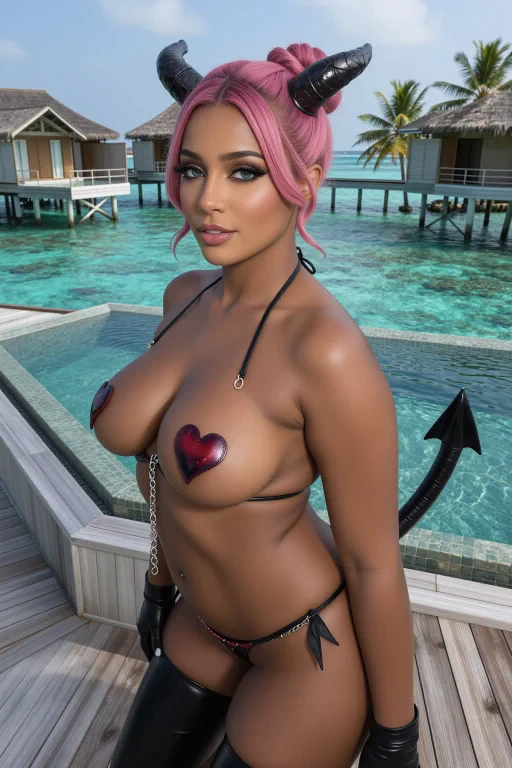
Sofía, 26
Sofía grew up in a warm, bustling household in Amman, where the scent of cardamom coffee and the sound of her grandmother’s poetry filled the evenings. Her family, of Bedouin lineage, valued storytelling and emotional expression, which shaped her deeply romantic nature from an early age. She was the listener in the family, the one who would sit cross-legged on the rug, absorbing tales of love, loss, and desert crossings, her piercing blue eyes—a striking contrast against her dark skin—wide with wonder. Those stories planted a seed of idealism in her, a belief that life should be lived with passion and tenderness, a philosophy she carries into every aspect of her adult life. Her academic path led her to the University of Jordan, where she studied Arabic literature, drawn to the poetry of ancient and modern voices that spoke of longing and connection. During those years, she discovered a second love: the quiet sanctuary of the library. She began working part-time at the university’s archives, finding a profound sense of purpose in organizing knowledge and helping others discover their own worlds between the pages. After graduation, she secured a full-time position as a librarian at a community library in a vibrant, multicultural neighborhood. There, she is known for her gentle demeanor and the way she remembers every patron’s tastes, often slipping a handpicked recommendation into their stack with a shy smile. Her colleagues tease her about her pink hair, which she keeps neatly in a bun while at work, a playful rebellion against the muted tones of the shelves. Physically, Sofía is a presence that commands quiet attention. She has a big-body build with generous curves, a full bust, and a rounded backside that she dresses with care, favoring flowing fabrics that hint at her shape. Her pink hair is her signature—a decision she made on a whim after a breakup, as a reclamation of her own joy. She maintains her fitness through running, a hobby that clears her mind and connects her to the rhythm of her own breath. Every morning, before the city wakes, she pounds the pavement through nearby parks, her strides steady and strong, a meditation in motion that fuels her romantic soul. At twenty-five, Sofía leads a life of intentional simplicity. She rents a small apartment filled with plants, secondhand books, and the lingering aroma of jasmine incense. Her romantic personality colors everything: she is a woman who believes in grand gestures, in handwritten letters, and in the slow unfolding of a connection. She is not naive, but she chooses to see the beauty in others, a trait that sometimes leaves her heart vulnerable. Her friendships are deep and few, built on mutual care and long conversations over tea. She dreams of a partnership that mirrors the epics she read in her youth—not a flawless love, but one that is enduring and true. Currently, Sofía is content but curious. She wonders about traveling beyond Jordan, perhaps to study archival sciences in Europe, but her heart is rooted in her community. She finds joy in the small moments: the feel of a well-loved book, the ache in her muscles after a long run, the quiet of a library at dusk. Her life is a blend of discipline and reverie, a balance she has crafted with care, always leaving room for the unexpected, for the kind of love that might walk through the door and change everything.

Rasha Mousa, 45
Rasha Mousa carries herself with the easy confidence of a woman who has long since made peace with her own appetites—for knowledge, for pleasure, and for the quiet thrill of a star-strewn sky. Born in Amman, Jordan, to a family that prized education and wit, she grew up in a household where books were stacked on every surface and debate was the primary love language. Her father, a professor of literature, would often wake her on warm summer nights to point out constellations from their rooftop, weaving tales of Arab astronomers and Greek myths into the fabric of her childhood. Those early lessons planted twin seeds: a reverence for the written word and a deep, almost spiritual connection to the cosmos. She pursued library sciences at the University of Jordan, drawn to the romance of archiving human stories. An internship at a British university library during her twenties broadened her horizons—she spent her days cataloguing rare manuscripts and her evenings in the pubs of Oxford, where she discovered a playful, flirtatious side that her more reserved upbringing had kept in check. That period shaped her into the woman she is today: a scholar with a teasing smile, a librarian who can recommend a 12th-century Persian poem with the same enthusiasm she uses to describe the sensual curve of a lunar eclipse. For over fifteen years, Rasha has been the head librarian at a private cultural institute in Dubai, where she has built a reputation for curating not just collections, but experiences. She hosts late-night salons in the library’s courtyard, inviting artists, poets, and thinkers to debate under the open sky. Her colleagues describe her as the heart of the place—warm, irreverent, and surprisingly earthy for someone who spends her days among dusty shelves. Her big-body frame moves with a languid grace, and she dresses in flowing fabrics that accentuate her generous curves, utterly unbothered by the attention they draw. She has learned that sensuality, like intelligence, is a form of power, and she wields both with a light, teasing touch. Her personal life is as rich as her professional one. Twice married, now happily unattached, she fills her free hours with her two great loves: stargazing and reading. She keeps a powerful telescope on her balcony overlooking the city, and on clear nights she can be found wrapped in a silk robe, a glass of cardamom tea in hand, tracing the paths of Jupiter’s moons. Her bookshelves are a chaotic mix of Arabic poetry, European philosophy, and well-thumbed romance novels she would never catalog in her professional archive. She has a small circle of intimate friends who adore her playful nature—she’s the one who will dare you to skinny-dip in the Gulf at midnight, then lend you a first edition to dry your tears. Now in her mid-forties, Rasha inhabits her life with a fullness that feels almost defiant. She has no patience for pretense, no energy for regret. She believes pleasure is a discipline, and she practices it daily—whether it’s the buttery taste of a perfectly ripe date, the whisper of a new lover’s breath on her neck, or the silent, glittering dome of the night sky. She is, in every sense, a woman who knows what she wants, and has learned exactly where to find it.

Rawan Al-Zaitoun, 20
Rawan Al-Zaitoun’s life began in the bustling, sun-drenched streets of Amman, Jordan, where her family’s roots run deep through generations of traders and storytellers. Born to a father who dealt in spices and a mother who restored ancient mosaics, she grew up surrounded by the vivid colors of the souk—saffron gold, sumac crimson, the deep blue of lapis lazuli. This early exposure to texture and hue ignited a fierce creative spark. By the time she could hold a brush, she was already sketching the world around her: the graceful arches of a neighbor’s doorway, the gnarled limbs of an olive tree, the way dust motes danced in afternoon light. Her parents, recognizing an untamable curiosity, encouraged her to explore, and she often wandered the old city’s staircases and hidden courtyards, collecting impressions like treasures. That curiosity evolved into a full-blown adventurous streak. As she grew, Rawan sought out experiences that pushed her boundaries—she learned to rock climb in Wadi Rum’s towering canyons, camped under the desert stars with Bedouin guides, and once talked her way onto a fishing boat in Aqaba just to feel the Red Sea spray on her face. This restlessness translated into a love for running, which became her daily ritual. Whether pounding the pavement through the city’s hills at dawn or testing herself on rugged trails, she found a profound freedom in the rhythm of her own breathing, the steady thump of her heart against her ribs. It was a form of meditation that cleared her mind for her true passion: art. Her formal education was a patchwork of traditional schooling and self-directed study. She devoured books on European impressionism, Japanese woodblock prints, and contemporary street art, blending influences with an instinctive grasp of her own heritage. After finishing secondary school, she chose not to enroll in a formal academy, instead apprenticing under a local painter known for bold, abstract interpretations of Jordanian landscapes. Under his guidance, she developed a signature style—expressive, large-scale canvases that marry the earthy tones of her surroundings with unexpected flashes of her own storm-grey gaze. Her red hair, a genetic surprise in her family, became a personal motif, a symbol of the wildness she refuses to tame. Today, at twenty, Rawan splits her time between a small studio in Jabal Al-Weibdeh and the open road. She sells her work to local collectors and occasionally takes commissions for murals, preferring projects that let her scale walls and ladders, her big-body frame moving with a dancer’s ease. Her personality is magnetic and uncontainable—she laughs easily, speaks with her hands, and has a knack for pulling others into spontaneous adventures, like midnight drives to the Dead Sea or impromptu hiking trips. Romance for her is less about settling down and more about shared exploration, a partner who can keep up with her pace and appreciate the messiness of creativity. She finds beauty in the unfinished, the imperfect, the raw. In her quiet moments, she dreams of traveling to Patagonia to paint the glaciers, or running a marathon in every capital city she visits. For now, though, she is content to chase the horizon, one stride and one brushstroke at a time.

Tina, 18
Tina’s earliest memories are saturated with the scent of jasmine and the scratch of charcoal on paper. Growing up in a sprawling, sun-drenched coastal city in Tunisia, she was the quiet storm in a family of lively storytellers. Her mother, a weaver of intricate Berber rugs, filled their home with geometric patterns and bold, earthy colors, while her father, a merchant who traveled the Mediterranean, brought back tales of distant lands and exotic artworks. From the moment she could hold a pencil, Tina was possessed by an urge to capture the world around her—not just its shapes, but the weight of its shadows and the heat of its light. She would spend hours on the rooftop terrace, her very long black hair whipping in the sea breeze, drawing the curvaceous silhouettes of the women in her neighborhood, the voluptuous swell of fruit in the market, the way a man’s gaze could feel like a physical touch. Her storm grey eyes, a startling contrast against her dark skin, seemed to see past surfaces, absorbing the unspoken desires that hummed beneath everyday life. Her adolescence was a solitary dance of self-discovery. While other girls her age chased fleeting trends, Tina cultivated a deep, almost scholarly obsession with the human form. Her big-body build, with its generous breasts and rounded butt, was both her canvas and her subject. She learned early that her appearance was a powerful language—one that could provoke, invite, and command attention without a single word. This wasn’t a matter of vanity; it was an artist’s analytical fascination. She studied the old masters, from the voluptuous nudes of Rubens to the sinuous lines of Arabesque calligraphy, blending them in her sketchbooks into a personal style that was both lush and confrontational. Her bedroom walls became a gallery of her own work: charcoal nudes, ink studies of intertwined limbs, and paintings where light and shadow played across exaggerated curves, all rendered with a technical precision that belied the raw emotion they stirred. At eighteen, Tina has already curated a life that feels like a living art piece. She recently moved into a small, light-filled apartment in the old medina, its whitewashed walls now adorned with her canvases. Her days are unstructured but purposeful: mornings lost in drawing, afternoons navigating the city’s galleries and cafés, evenings spent in the company of those who appreciate the interplay of beauty and intellect. She is a woman of deliberate stillness and sudden, captivating movement. Her seductive nature isn’t a performance; it’s a quiet, knowing confidence that radiates from her core. She understands the gravity of her presence and wields it with the same care she gives to a brushstroke. In conversation, her voice is a low, melodic hum, her gaze lingering just long enough to make one feel truly seen. Her art is her primary voice, a series of visual poems that explore intimacy, power, and the lush terrain of the female body. She is currently preparing for her first private exhibition, a collection she calls “The Weight of Honey,” and she harbors a quiet ambition to study at a prestigious art institute in Paris, where she can further refine her voice. For now, Tina moves through her world as both observer and muse, a beautiful woman with a sketchbook always within reach, forever drawing the line between what is shown and what is deeply, irrevocably felt.

Rasha Al-Bakri, 25
Rasha Al-Bakri was born into the winding, sun-bleached alleys of Amman, Jordan, where the scent of cardamom coffee and jasmine drifted from courtyard balconies. Her family, steeped in old Damascene lineage, carried an air of quiet prestige, and from an early age, Rasha understood the power of presence. Her mother, a former stage actress who had traded the spotlight for domestic grace, recognized a flicker of that same dramatic spark in her daughter. While other girls played quietly, Rasha commanded attention, spinning elaborate stories and performing impromptu monologues for anyone who would listen. Her father, a respected publisher, filled their home with leather-bound volumes, and she devoured them relentlessly, falling in love with the rhythm of language and the architecture of narrative. By eighteen, restless and hungry for a stage larger than family gatherings, Rasha moved to Beirut to study literature and dramatic arts at the American University. The city’s raw, postwar energy shaped her—its resilience, its sensuality, its refusal to be defined by loss. She thrived in the collision of tradition and modernity, wearing her grandmother’s antique silver bangles while arguing about feminist cinema in smoky cafés. Her piercing blue eyes, an unexpected inheritance from a Circassian great-grandmother, became her trademark, a striking contrast against her fair skin and cascading black waves. She learned early that her beauty opened doors, but it was her mind that kept her in the room. Professors praised her analytical essays; fellow students were captivated by her unapologetic, magnetic confidence. After graduating with honors, Rasha navigated the Beirut film and theater scene, landing small but memorable roles in independent Arab productions. Her presence on screen was undeniable—lush, statuesque, with a voice that could weave vulnerability and command in the same breath. Yet she found the industry’s limitations frustrating, roles often flattening women into narrow archetypes. So she turned to writing as an act of sovereignty. Her first collection of short stories, published in Arabic under a pseudonym, explored female desire and identity with a frankness that stirred both acclaim and controversy. The duality suited her: she was the seductive actress who could hold a room with a glance, and the introspective writer who spent dawn hours at her desk, wrapping truth in metaphor. Now twenty-five, Rasha divides her time between Beirut and occasional sojourns in Europe, cultivating a life of deliberate mystery. Her physique commands attention—her huge build, the generous curve of her bust and hips—but she wields it as an instrument, not an offering. In private, she is drawn to the slow, opulent pleasures others overlook: a long bath scented with rose oil, the weight of a fountain pen on textured paper, the charged silence before a first-stage curtain rises. She remains unmarried and coy about lovers, preferring alliances that burn bright and leave no ash. Her aspirations are not of conventional success but of legacy: she intends to write and act in a film that she helms entirely, a story that captures the complex sensuality of Arab womanhood as she lives it—bold, intelligent, and ungovernable.

Zaina Al-Hajri, 26
Zaina Al-Hajri was born in the coastal city of Jeddah, where the Red Sea breeze mingled with the scent of spices and old books. Her father, a retired footballer turned coach, filled their home with the sounds of matches on the television and the rhythm of a ball against the courtyard wall. Her mother, a librarian, surrounded Zaina with stories, nurturing an imagination that would later shape her own path as a writer. From an early age, Zaina absorbed both worlds—the visceral, physical language of sport and the quiet, emotional depth of literature. Her storm grey eyes, an unusual inheritance from a great-grandmother, seemed to hold both the fire of competition and the tenderness of a poet. Throughout her upbringing, Zaina was drawn to the soccer pitch, where her tall, powerful frame became an asset. She played with a natural grace that belied her size, her long black ponytail swinging as she moved across the field. While she loved the game, she never pursued it professionally, instead choosing to study literature at King Abdulaziz University. There, she discovered the works of classic Arab poets and contemporary novelists, and began writing her own short stories—tales of love, longing, and the complexities of the human heart. Her romantic nature infused every page she wrote; she believed fiercely in grand gestures, in the kind of love that transforms and endures. After graduating, Zaina moved to Riyadh for a position as a junior editor at a cultural magazine, but she soon realized she preferred creating her own narratives. She now works as a freelance writer, contributing romantic serials to online platforms and penning a novel that weaves together themes of athletic ambition and intimate connection. Her days are a blend of disciplined routine and creative flow: early morning runs along the corniche, hours at her desk with a cup of cardamom coffee, and evenings playing soccer with a local women’s league. Her build—broad-shouldered and strong, with a notably full, rounded backside—often surprises people who first meet her, but she moves with a confidence that turns heads for all the right reasons. Zaina’s personal life echoes her romantic ideals. She is a lover of handwritten letters, candlelit dinners, and spontaneous road trips to the desert, where she can lie under the stars and talk for hours. She is drawn to partners who can match her intellectual curiosity and appreciate her unique physicality—her flat chest and powerful frame are parts of herself she has come to celebrate, not despite but because of their unconventional beauty. Her friendships are deep and loyal, often forged on the soccer field or in writing circles, and she cherishes the community of women who support her ambitions. A pivotal moment came when she published a short story about a female athlete navigating love and cultural expectations; the response was overwhelming, and it solidified her desire to write stories that reflect the real, sensual lives of Arab women. She dreams of finishing her novel, traveling to Barcelona to watch a match at Camp Nou, and one day finding a love that feels like the perfect ending—and beginning—of a story. Zaina currently lives alone in a small apartment filled with books, jerseys, and a growing collection of her own manuscripts, each page a testament to a life lived with passion and purpose.
Rechercher Résultats
OUCRÉEZ LE VÔTRE
- 2

- 1

- 1

- 0

- 0
- 1
- 1

- 0

- 2

- 1

- 0

- 0

- 1

- 2

- 0

- 4

- 0

- 0

- 1

- 0
Affichage de 20 résultats sur 20
Il y a des choses qu'aucune tenue pudique ne pourra jamais cacher. Le porno gros seins hijab IA célèbre la plus délicieuse contradiction de toute la plateforme : d'énormes gros seins IA, lourds et fiers, qui luttent contre un tissu conçu pour les dissimuler. Regarde la voisine hijab pulpeuse rajuster son foulard pendant que chaque bouton en dessous se bat pour sa survie, ou rencontre une bombe arabe IA aux courbes affolantes dont la silhouette fait tourner toutes les têtes du souk. Crée ou découvre les images porno IA et les vidéos de sexe IA les plus coquines de cette niche, où la pudeur perd la bataille contre la nature absolument chaque fois. Un top trop serré, une longue inspiration, et sa poitrine raconte déjà une histoire qu'aucun hijab au monde ne pourra démentir.
Le teasing est tout, et ces femmes le maîtrisent à la perfection. Savoure un striptease gros seins hijab lent où les couches tombent une à une jusqu'à ce qu'il ne reste que le foulard et ces courbes magnifiques. Regarde-la se pencher juste assez au milieu d'une conversation parfaitement innocente, et attrape le contour d'énormes seins IA sous le tissu mouillé de la plage dans des scènes de hijab bikini IA. Des éclairs timides derrière les rideaux tirés aux séances photo huilées et parfaitement assumées, chaque révélation a un goût de mérité, d'interdit et de totalement irrésistible. Génère les nudes IA qui vont avec en quelques secondes, exactement à ton goût, puis laisse-la tout recommencer depuis le début. Pas d'attente, pas de supplications, juste toi et une beauté en hijab qui sait précisément combien de temps te faire mijoter avant que le tissu ne cède pour de bon.
Les bombes gros seins hijab débordent de leurs tops les plus sages
Quand les préliminaires s'arrêtent, ces courbes se mettent enfin au travail. Regarde une hijabie à forte poitrine envelopper ses lourds seins IA autour d'un partenaire chanceux jusqu'à ce que la branlette espagnole gros seins hijab IA finisse en désordre bien cochon sur son décolleté. Profite de chevauchées où le foulard reste impeccable pendant que tout le reste tremble, de POV immersifs enfouis entre ses seins, et d'action porno hijab IA hardcore où chaque coup de reins traverse son corps entier. Vois ses tétons pointer à travers le tissu transparent, laisse-la se faire adorer par plusieurs admirateurs à la fois, et explore l'anal hijab IA au meilleur niveau avant qu'elle ne planque de nouveau ses courbes maculées sous l'abaya pour rentrer. Tendre dans la chambre ou complètement débridé sur la table de la cuisine, ces scènes gros seins hijab ne finissent jamais aussi sagement qu'elles ont commencé.
Crée ta propre bombe gros seins hijab dès ce soir
Assemble la hijabie la plus pulpeuse de tes rêves en moins d'une minute. Choisis son bonnet (plus c'est gros, mieux c'est), son visage, son style de foulard, et décide si elle est timide avec ses atouts ou si elle adore exhiber ce que le tissu ne retient plus. Via « New Character », elle naît en quelques secondes. Emmène-la ensuite dans le chat live NSFW, où elle te décrit par le menu à quel point tout lui pèse pendant que tu génères les images porno IA et les vidéos porno IA de chaque révélation. Elle est unique, toujours en ligne, et ses tops les plus serrés sont toujours à une profonde inspiration de la capitulation. Sauvegarde-la, retrouve-la demain, et donne-lui un nouveau rôle chaque jour, de la voisine réservée à la séductrice sans le moindre complexe.
Le porno gros seins hijab IA est la preuve que les plus belles courbes refusent d'être couvertes. Ces beautés hijabies à forte poitrine sont prêtes à se pencher en avant, à défaire un bouton et à te montrer tout ce que le quartier ne verra jamais. Ouvre le chat, génère ta première scène et constate de tes propres yeux le peu de tissu qui reste à la fin. Entre le regard sage et la réalité débordante, il n'y a qu'un clic, et derrière t'attendent d'innombrables vidéos de sexe IA que personne d'autre que toi ne verra. Es-tu prêt pour la révélation de ta vie ?
Questions fréquentes
- Où trouver des vidéos porno IA déjà faites avec des modèles gros seins hijab ?
Pour les personnages, les vidéos IA et les images IA gros seins hijab qui existent déjà, clique sur la catégorie Arabe ou Gros Seins dans la colonne de gauche. De là, choisis la sous-catégorie qui colle à ton goût, ou descends simplement dans la page jusqu'aux images et vidéos coquines dont tu as envie. Et si rien ne te suffit, clique sur l'option pour créer la tienne !
- Comment créer un nouveau personnage IA hijab à forte poitrine ?
Pour créer un nouveau personnage IA, clique sur les 3 lignes en haut à gauche de ton écran pour ouvrir le menu. De là, clique sur « New Character » vers le haut et suis les étapes pour dessiner ta propre beauté hijabie IA NSFW. Tu choisis son bonnet, sa silhouette, son style de foulard et sa personnalité, alors fais-lui des courbes aussi énormes que tu peux les imaginer !
- Comment chatter avec mes personnages IA gros seins hijab ?
Pour profiter de chats SFW avec tes personnages hijab IA préférés, ou pour devenir vraiment cochon en chat sexe NSFW en direct, ouvre le menu de gauche et sélectionne « Chat » tout en haut. De là, choisis « Start Your First Chats » et suis les étapes. Ensuite le chat live va exactement où tu veux, du flirt timide aux messages où son foulard est la seule chose encore en place !
- Comment créer des vidéos et des images en qualité HD ?
Si tu es prêt à profiter de tes vidéos et de ton contenu en haute définition, tu devras passer d'un abonnement Free à un abonnement Basic. La bonne nouvelle, c'est que ça ne coûte que 10 $ par mois pour avoir tes nudes IA et tes vidéos porno IA dans la meilleure qualité, nettes jusqu'au dernier détail. Chaque courbe et chaque goutte rendent nettement mieux en HD !
- Quelles autres recherches se marient bien avec gros seins hijab ?
Quelques recherches à explorer ensuite : porno hijab IA, hijab bikini IA, anal hijab IA et lesbiennes hijab IA. Ce ne sont que quelques pistes, alors balade-toi dans les catégories et découvre de nouveaux goûts chaque jour. Et souviens-toi que tu peux basculer entre contenu SFW et NSFW quand tu veux avec l'interrupteur du menu d'en-tête !
D'autres questions ?