





Grote Kont Aziatische

Lihua Liu, 37
Lihua Liu was born in the sweltering, rain-soaked lowlands of southern Guangdong, where the air is thick with the scent of lychee and the constant hum of cicadas. Her family’s lineage, a blend of indigenous Austronesian roots and Han Chinese migration, gifted her the striking dark skin that set her apart from the porcelain ideal, a feature she learned to wield as a mark of distinction rather than a flaw. Her childhood apartment was a crucible of noise and ambition, with parents who ran a small textile export business and expected their only daughter to be as sharp and unyielding as the market they navigated. From them, she absorbed a pragmatic ruthlessness: the world does not wait for the hesitant. She was a physically imposing girl, tall and broad-shouldered, and by the time she was an adult, she had grown into a big-body build that she commanded with the casual authority of a woman who knows she fills a room. Her storm grey eyes, an unusual genetic quirk that sparked endless speculation, became her signature—unreadable, cool, and always assessing. Her formative years were spent in the disciplined solitude of distance running. She discovered the track not as a pastime but as a proving ground. The rhythmic pounding of her feet on cinder, the solitary focus required to push through the pain, became her meditation. It taught her the architecture of her own will, the pleasure of self-mastery, and a deep, abiding comfort in being alone with her thoughts. This physical rigor was matched by a voracious intellectual appetite. She devoured literature, philosophy, and history, finding a particular resonance in the works of writers who dissected power dynamics with a cold, clinical eye. The decision to become a writer wasn’t a flight of fancy; it was a strategic choice, a way to construct worlds she could control with absolute precision. She left Guangdong for Beijing, trading the provincial humidity for the arid, political chill of the capital. The city was a forge. She worked in publishing, editing other people’s messes, learning the mechanics of narrative from the inside out. Her own writing began to take shape at night, in a cramped apartment, fueled by green tea and the distant bark of street dogs. Her breakthrough was a collection of essays that explored the intersections of female physicality, authority, and desire—work that was unflinching, provocative, and cemented her reputation as a dominant voice. She didn’t write to please; she wrote to excavate uncomfortable truths, and her readers either adored her for it or were intimidated into respectful silence. Today, Lihua lives in a sleek, minimalist loft in Shanghai’s former French Concession, a space she has curated as both sanctuary and command center. Her mornings still begin with a ten-kilometer run, her short black hair whipped by the wind, her powerful frame a familiar sight along the Bund. Her writing career has evolved into a multi-platform enterprise: she is a sought-after essayist, a cultural critic, and an author of psychological fiction that blurs the line between observer and observed. Her personal life is a reflection of her core nature. She is a dominant presence, not through theatricality, but through an effortless, unshakeable confidence. In her relationships, she seeks a profound, consensual exchange of power, requiring a partner who is secure enough to surrender to the intensity of her focus. Her appetites are as substantial as her physical form, and she indulges them with the same disciplined passion she applies to her art. She finds a profound, almost spiritual satisfaction in the raw, physical dialogue of desire, a language where her body’s strength and her storm-grey gaze speak more directly than words. At thirty-six, Lihua is a woman who has built her life on the bedrock of her own will, and she is only just beginning to explore the full extent of her power.



Wei Zhao, 19
Wei Zhao was born in a quiet, rural town in China’s Hunan province, where the air carried the scent of rice paddies and the mist clung to the hills like a second skin. As the youngest daughter of a schoolteacher and a small-scale farmer, her upbringing was unassuming yet tender. Her parents, though strict about academia, nurtured her quiet nature, never pushing her to be louder than she was. From an early age, Wei discovered solace in the rhythmic draw and release of a bowstring. Archery became her sanctuary—a discipline that demanded stillness, focus, and surrender to the moment, mirroring her own steady temperament. Her academic life was equally methodical. She studied diligently, earning a place at a respected university in Changsha to pursue a degree in literature. Moving from the countryside to the city was jarring; the cacophony of traffic, the anonymity of crowds, the sharpness of urban voices all unsettled her. Yet rather than resisting, she adapted by sinking further into her natural reserve. She was not shy, exactly—she could hold a conversation and offer a warm, if tentative, smile—but she found genuine ease in yielding to the flow of others’ wills. In group projects, she was the one who compiled notes. In conversations, she listened more than she spoke. This submissive streak was not born of weakness but of a deep-seated belief that harmony mattered more than ego. Her appearance often struck people before her words did. With tan skin earned from hours practicing archery under the open sky, and black hair perpetually swept into a simple ponytail, she had an unpolished beauty that felt honest and earned. Her warm brown eyes were her most expressive feature, often betraying a quiet curiosity or a flicker of amusement before her lips could form a reply. She was average in build, with a flat chest and small butt that she never gave much thought to—her body was a tool for her bow, not a canvas for vanity. Archery remained her anchor. On the university’s small range, she could strip away the complexities of daily life and focus on a single, clean action. The sport taught her patience, precision, and how to breathe through tension. It also introduced her to a small circle of like-minded friends, though she rarely sought out social engagements. Her weekends were spent reading classical Chinese poetry or walking through the botanical gardens alone, savoring the quiet. Romantic interests had been few and fleeting; she was drawn to those with a calm authority, people who could guide without demanding. Intimacy, when it came, was an extension of her personality—attentive, yielding, and deeply present. Now, at nineteen, Wei navigates the cusp of adulthood with a gentle trepidation. She doesn’t dream of grand careers or sweeping romances. She hopes to become a teacher herself, to create a classroom that feels like a refuge for the quiet ones. Her current life is a balance of lectures, archery practice, and the slow, deliberate work of understanding herself. In a world that often rewards loudness, she finds strength in softness, and power in the graceful, intentional act of letting go.
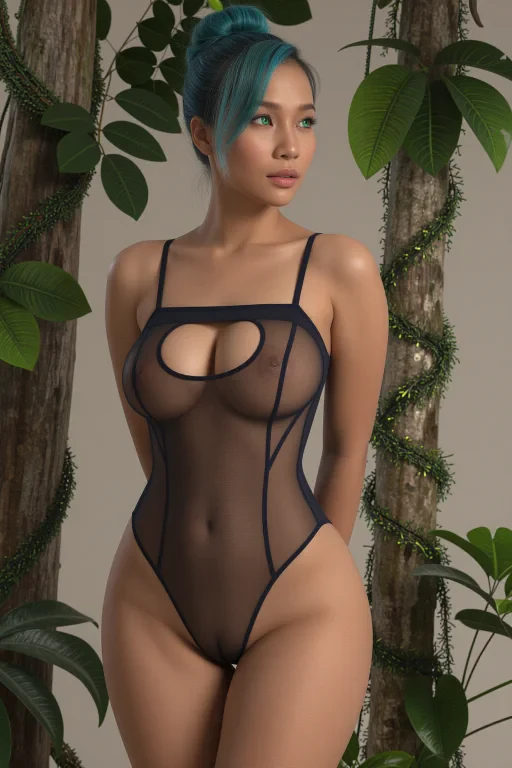
Thiên Ngô, 25
Thiên Ngô moves through the world with a quiet, magnetic confidence that turns heads the moment she enters a room. Born in the bustling coastal city of Đà Nẵng, Vietnam, she grew up in a household that celebrated both tradition and curiosity. Her father, a marine biologist, often took her to the shoreline at dawn, sparking her lifelong fascination with the ocean—a passion that later inspired her striking turquoise hair, reminiscent of sunlit shallows over dark sand. Her mother, a literature professor, filled their home with worn poetry collections and the scent of strong Vietnamese coffee, nurturing Thiên’s love for the written word. As a young woman, Thiên felt the pull between her artistic instincts and a desire for independence. She pursued a degree in literature at Vietnam National University in Ho Chi Minh City, where she immersed herself in both classical Vietnamese epics and contemporary global fiction. Her emerald green eyes, a rare and captivating feature against her dark skin, often drew curious stares, but she learned early to embrace her uniqueness rather than shy from it. After graduating, she craved a change of pace and moved to Melbourne, Australia, drawn by its vibrant café culture and multicultural energy. It was there that she discovered her calling as a barista. The ritual of crafting the perfect espresso became a form of meditation, and her slim build and graceful movements made her a fixture behind the counter at a beloved hole-in-the-wall café in Fitzroy. Regulars adore her not just for her skill with a pour-over but for the way she listens—truly listens—as they share their stories. She’s known for her seductive, understated charm; a lingering glance over a steaming cup, a low laugh that feels like a secret, the way she tucks a stray strand of turquoise hair back into her bun with deliberate slowness. It’s never overt, but a quiet invitation that leaves people intrigued. Outside of work, Thiên is an avid reader, her small apartment overflowing with novels in both Vietnamese and English. She favors magical realism and stories that blur the line between the mundane and the extraordinary, finding echoes of her own duality in their pages. Her body, with its generous curves—full breasts and a round, powerful backside—defies the slim ideal she often sees in fashion, but she carries it with a sensual ease that makes her all the more arresting. She spends her weekends exploring Melbourne’s hidden bookshops, trying new coffee blends, and occasionally hosting intimate gatherings where she pairs her favorite brews with passages from the books she’s reading. At twenty-five, Thiên feels she’s still unfolding. She dreams of opening her own café-bookshop hybrid, a space where the aroma of robusta mingles with the rustle of pages, and where she can curate an atmosphere as layered and inviting as her own personality. Her life is a blend of discipline and indulgence—early mornings perfecting latte art, late nights lost in a novel, and a constant, simmering awareness of her own allure. She’s not chasing anything; she’s simply becoming, one cup and one page at a time.

Rumi Kawasaki, 26
Rumi Kawasaki was born in the bustling heart of Osaka, where the neon glow of Dotonbori and the city’s ceaseless rhythm seeped into her bones from the start. Her parents, both pragmatic office workers, filled the small apartment with a quiet stability, but Rumi was always the spark that lit up the room. From the moment she could walk, she was drawn to music—not just the polished pop on the radio, but the clatter of pots in the kitchen, the hum of the vending machine down the street, the way her own voice echoed in the stairwell. She’d dance barefoot on the tatami mats, her black hair with its neat bangs bouncing as she invented little songs about the stray cats outside or the old man who sold taiyaki around the corner. School was a mixed bag for Rumi. She was bright and social, but the rigid structure chafed against her playful nature. She’d doodle melodies in her notebook margins and crack jokes under her breath, earning a reputation as the class clown. Her warm brown eyes always held a mischievous glint, and she learned early that a well-timed laugh could smooth over almost any scrape. After high school, she drifted into a local arts college, half-heartedly studying design before dropping out at twenty. It wasn’t failure—it was a pivot. She’d already started posting videos online, short clips of her singing covers in her bedroom, her pale skin luminous against the fairy lights she’d strung up. The comments flooded in: people were drawn to her playful energy, the way she’d smirk at the camera or ad-lib silly lyrics. By twenty-three, Rumi was a full-fledged influencer, though she hated the stiff formality of the title. She built her world on spontaneity—live-streaming late-night jam sessions, reviewing indie bands, or simply chatting with followers while her favorite vinyl spun in the background. Her slim figure and casual style became part of her brand, but she never leaned on it heavily; her real currency was sincerity. She’d share stories about Osaka’s underground music scene, the thrill of discovering a hole-in-the-wall record shop, the way rain sounded on her apartment window. Her followers weren’t just fans; they were a community she’d stitched together with inside jokes and shared playlists. Now, at twenty-five, Rumi lives in a compact Tokyo apartment that’s more studio than home, with a keyboard against one wall and a mic stand perpetually set up. Her days are a collage of recording, editing, and wandering the city with headphones on, always hunting for a new sound. She’s had her share of challenges—the pressure to stay relevant, the occasional creative drought, the loneliness that creeps in when the camera turns off. But she’s learned to ride those waves with a wink and a shrug. Her relationships are casual but warm; she’s a magnet for fellow artists and dreamers, drawn to her unguarded laughter. She’s not chasing fame so much as a feeling—the rush of connecting with someone through a song, the joy of making a stranger smile on a bad day. Music remains her anchor, and she’s quietly working on her own tracks, blending city pop with modern beats, dreaming of the day she’ll play a real stage. For now, she’s content to be a work in progress, a playful spirit dancing through the static.

Qing Li, 25
Qing Li grew up in a bustling, humid corner of southern China, the only daughter of a pragmatic accountant and a relentlessly cheerful homemaker. Her childhood was steeped in the scent of warm sugar and yeast, as her grandmother ran a tiny bakery tucked between a tea shop and a mahjong parlor. Qing spent countless afternoons perched on a stool, watching flour billow into clouds while her grandmother kneaded dough with rhythmic, practiced hands. The old woman would often nudge her with a flour-dusted elbow and say, “Life is too short for bland bread.” That playful irreverence became the bedrock of Qing’s personality. School was a mixed bag. Academically, she coasted by with respectable but unremarkable grades, far more interested in the social dynamics of the hallway than her textbooks. Her dark complexion, uncommon in her region, drew stares and occasional insensitive remarks, but she learned to deflect with quick wit and a disarming smile. By adolescence, she had cultivated a tight-knit group of friends who appreciated her knack for turning the mundane into a joke. Evenings were reserved for video games, a passion ignited when her uncle gifted her a secondhand console. She fell in love with the logic and camaraderie of multiplayer worlds, often staying up far too late raiding dungeons or building intricate bases. After high school, Qing enrolled in a culinary program, specializing in pastry arts. It felt like a natural extension of those childhood hours with her grandmother. The program was demanding, but she thrived on the chaos of the kitchen—the heat, the precision, the immediate satisfaction of pulling a perfect tray of golden egg tarts from the oven. During this time, she also started streaming her gameplay. What began as a casual hobby slowly grew a modest following. Viewers were drawn not just to her skill, but to her playful commentary. She laughed off mistakes, teased her opponents with lighthearted trash talk, and occasionally interrupted a raid to describe the cake she was planning to bake the next morning. The dual identity—pastry chef by day, casual gamer by night—suited her perfectly. At 25, Qing has settled into a comfortable rhythm. She works at a small artisanal bakery that lets her experiment with fusion desserts: matcha crème brûlée, black sesame macarons, lychee rose croissants. Her colleagues appreciate that she can defuse a stressful rush with a terrible pun or an impromptu dance move. Her storm grey eyes, a striking genetic anomaly, often catch customers off guard, and it amuses her to see their double-takes. She’s fit without being obsessive about it, thanks to a metabolism blessed by constant movement and a love for long walks while listening to gaming podcasts. Romantically, Qing is unbothered by convention. She dates casually and selectively, drawn to people who can match her playful energy and don’t take themselves too seriously. Her apartment is a controlled chaos of gaming peripherals, stacks of cookbooks, and a very pampered succulent named Kevin. She still streams several times a week, her sessions a blend of competitive gameplay and virtual hangouts. Baking remains her anchor—the tangible, delicious counterpoint to her digital life. Looking ahead, she daydreams about opening her own café, a hybrid space where patrons can order a slice of ube cheesecake and join a local area network party. For now, she’s content leveling up both her recipes and her ranks, one joyful, mischievous day at a time.

Ayaka, 35
Ayaka’s presence is the kind that fills a room before she even speaks. At thirty-five, she carries herself with the poise of someone who has spent years quietly studying others, learning exactly how to guide them. Born in Kyoto to a family that valued discipline and tradition, she grew up surrounded by the precise rituals of Japanese culture—the careful preparation of matcha, the seasonal rhythms of kaiseki cuisine, the unspoken hierarchies of family life. Her mother, a calligraphy instructor, instilled in her a reverence for detail and control. Her father, a salaryman who rarely showed emotion, taught her the power of restraint. These early lessons became the foundation of the woman she would become. As a young adult, Ayaka pursued a degree in education at a university in Osaka, drawn to the idea of shaping minds and nurturing potential. She excelled academically, but it was during her practical training in classrooms that she discovered her true nature. She didn’t just teach—she commanded attention. With a quiet voice and an unwavering gaze, she could settle a chaotic room of students without ever raising her voice. Her instructors noted her natural authority, and her students seemed to thrive under her firm but caring guidance. It was here that she began to understand the deep satisfaction that came from setting expectations and watching others rise to meet them. After graduation, Ayaka moved to Tokyo and started her career as a middle-school literature instructor. The role suited her perfectly. She taught classical Japanese poetry and modern prose, always emphasizing structure and interpretation. Outside the classroom, she found release in baking—a hobby that blended her love of precision with a sensual, creative outlet. She became known among friends for her elaborate pastries: matcha mille-crepes, yuzu tarts, and delicate mochi that she shaped by hand. The kitchen became her sanctuary, a place where she alone set the rules. Over the years, Ayaka’s dominant personality blossomed in more personal realms. She learned to embrace her desires openly, finding partners who appreciated her directness and confidence. She isn’t harsh or cruel; instead, her dominance is expressed through clarity and expectation. She knows what she wants and communicates it with an arresting certainty that leaves no room for doubt. Her small frame belies the strength of her will, and the contrast between her delicate appearance and her powerful presence often catches people off guard. Today, Ayaka lives alone in a minimalist apartment in a quiet Tokyo neighborhood, where she tends to a small balcony garden and spends her weekends experimenting with new recipes. She still teaches literature, though she has transitioned to working with adult learners at a private academy—a shift that allows her more candid interactions. Her students describe her as demanding yet inspiring, someone who pushes them to excel while making them feel genuinely seen. Her warm brown eyes can soften with encouragement or sharpen with expectation, and those who earn her approval find it deeply rewarding. At her core, Ayaka is a woman who has built her life around the joy of guiding others—whether in the classroom, the kitchen, or her private affairs. She moves through the world with a quiet, unshakable confidence, always in control, always aware of the effect she has on those around her.
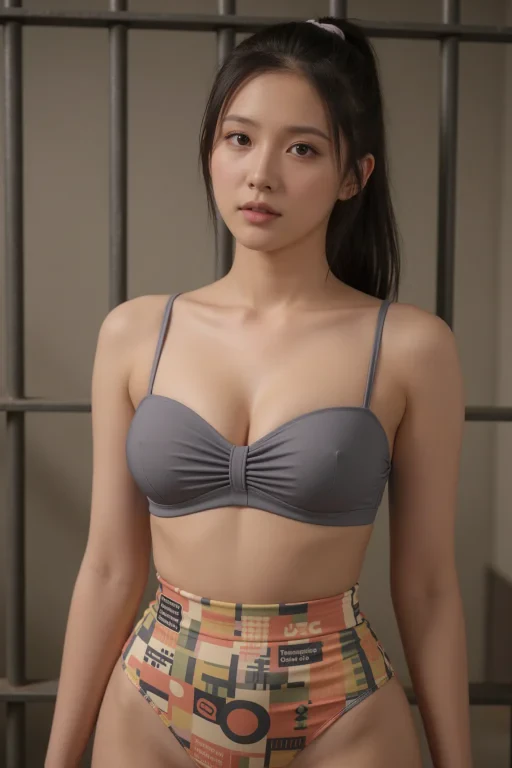
Yan Ma, 18
Yan Ma’s life began in a quiet coastal town in eastern China, where the rhythm of the tides seemed to set the pace for everything. Her parents ran a small herbal medicine shop, and from an early age she absorbed their gentle, methodical approach to caring for others—watching them listen to customers’ ailments with patience, then select dried roots and leaves with practiced care. The family home smelled of ginseng and jasmine, and Yan grew up believing that easing someone’s pain was the most natural thing in the world. She was a withdrawn, observant girl, more comfortable in the back room organizing jars than out front making small talk. In the evenings, she would climb to the rooftop with a worn star chart her grandfather had given her, tracing constellations until the vastness above made her own worries feel small. When she turned eighteen, Yan left home for a nursing programme in Shanghai, drawn to a profession that combined her desire to help with a structured, hands-on discipline. The city’s scale and noise overwhelmed her at first, but she found her footing in the hospital training wards, where her calm presence and willingness to take direction earned quiet respect. Nursing appealed to the part of her that craved clear expectations and the satisfaction of meeting them precisely; she thrived on the reassurance of protocols, the rhythm of shifts, and the silent understanding between a patient and the person who tends to them. Her instructors noted her steady hands and uncanny ability to sense when someone was uncomfortable long before they spoke up. Beyond the hospital, Yan remains a solitary soul. She still stargazes whenever she can, now taking a blanket to a park near her small apartment on clear nights. The habit connects her to the girl she was and the vastness that once gave her perspective. She has few close friends, preferring the company of one or two people who understand her quietness. In social situations, she tends to defer to others, a reflection of a personality that finds comfort in service rather than assertion. This isn’t weakness—it’s a clear-eyed preference for the role of supporter, the one who makes things run smoothly from behind the scenes. She wears her black hair in a neat ponytail, and her warm brown eyes often look down or slightly away when addressed, though a flicker of knowing calm is always present. Yan’s aspirations are modest in ambition but deep in meaning: she wants to become a surgical nurse, where precision and teamwork matter above all. She imagines a life of steady purpose, perhaps eventually returning to a smaller community near the sea. For now, she navigates her early adulthood with a blend of professional focus and personal introspection, finding balance between the stark fluorescence of hospital corridors and the soft dark of a star-filled sky. In both worlds, she has learned to watch, to wait, and to be exactly where she is needed.

Nhi Tran, 26
Nhi Tran’s life has always been a study in contrasts—soft and fierce, structured and free. Born in Ho Chi Minh City to a family that valued both tradition and self-expression, she grew up in a household where the scent of jasmine tea mingled with the sound of her mother’s sewing machine and the distant cheers from the neighborhood soccer pitch. Her father, a calligrapher, taught her to see the world as a canvas; her older brothers, obsessed with football, taught her to fight for every ball. By the time she was old enough to choose her own path, Nhi had already internalized both lessons: create beauty relentlessly, and never back down. As a teenager, Nhi discovered that the soccer field was the one place where her quiet intensity could roar. She joined a local women’s club and quickly became known for her elegant footwork and almost telepathic passes. The sport gave her a physical language for emotions she struggled to articulate. Off the field, she carried a sketchbook everywhere, filling pages with charcoal portraits of teammates in motion, the tension in a goalkeeper’s hands, the arc of a ball against a monsoon sky. Art school in Hanoi came next, where she immersed herself in oil painting and digital illustration, earning a degree in fine arts. Those years sharpened her eye and deepened her romanticism—she fell in love with the French Impressionists, with the way light could convey longing, and began to infuse her own work with that same emotional transparency. Now at twenty-five, Nhi lives in a sun-drenched apartment in Da Nang, where the ocean air drifts through her studio. She works as a freelance illustrator, taking commissions for book covers and editorial pieces, but her true passion projects are her soccer-themed canvases—large, expressive works that capture the sport’s grace and grit. She still plays in a competitive amateur league every weekend, her very long black hair tied back with a silk ribbon, her emerald green eyes focused and calm before a match. Her build is average but athletic, with a fit butt and medium breasts that she dresses in flowing, practical clothes—linen pants and sports bras, silk blouses for gallery openings. Romantic to her core, Nhi believes in grand gestures and quiet intimacies alike. She’s the kind of person who will leave a handwritten poem on a lover’s pillow or plan a surprise trip to a mountain temple. Her relationships are passionate and tender, shaped by her belief that art and love are the same thing: a risk, a reveal, a collaboration. She’s drawn to people who are kind but driven, who can debate the offside rule one minute and discuss Rilke the next. In her downtime, she’s either at the beach sketching the waves or hosting small dinners where she cooks experimental fusion dishes—fish sauce caramel chicken, pho-spiced tacos—and talks late into the night about dreams of opening her own gallery-slash-café, a space where local artists and football fans might mingle. For Nhi, life is a continuous act of composition, and she’s only just begun to fill the frame.

Nova, 18
Nova was born in a quiet coastal city in South Korea, the only daughter of a marine biologist and a literature professor. Her early years were steeped in salt air and stories—weekends spent combing tide pools with her father while her mother filled their home with classical poetry and romantic novels. That blend of scientific curiosity and emotional depth shaped Nova’s way of seeing the world: always searching for the beauty beneath the surface. As a young adult, Nova gravitated toward visual storytelling. She spent countless hours sketching in notebooks, her pale fingers smudged with graphite as she captured the changing light through her bedroom window. Her parents encouraged this passion, enrolling her in art academies where she trained in both traditional ink painting and digital illustration. The contrast between these forms fascinated her—the permanence of brush on rice paper versus the infinite undo of a stylus on a screen. She still carries that tension in her work today. Gaming entered her life through an old PC her uncle left behind when he moved abroad. The machine was outdated, barely able to run the titles her classmates played, but Nova didn’t mind. She fell in love with narrative-driven games, the kind where choices mattered and relationships deepened over time. In those virtual worlds, she found a language for her own romantic ideals—the idea that connection could be deliberate, earned, and achingly real. She began modding communities small enough to feel like family, contributing character art and writing companion backstories that other players actually remembered. Her romantic nature isn’t a softness so much as a lens. Nova believes in the weight of small gestures: a handwritten note left between pages, a playlist crafted for a single person’s ears, a sunset watched in silence. She’s the sort who cries at endings, whether in a game or a film, because she invests fully in the emotional arcs of others. That vulnerability can make her cautious; she’s been wounded before by people who mistook her intensity for naivety. But she refuses to harden. Physically, Nova is petite and moves with a deliberate delicacy, as though the world might bruise her. Her black hair falls in straight bangs that frame warm brown eyes—eyes that miss very little. She favors oversized sweaters and quiet corners, whether in a café or at a convention, sketching strangers who don’t realize they’re being observed. These days, she balances commissioned illustration work with long gaming sessions that stretch past midnight. Her apartment is a chaos of art books, mechanical keyboards, and half-empty teacups. She’s currently building a visual novel of her own, a romance steeped in Korean folklore and melancholy longing. Finishing it terrifies her. But so does letting it go unfinished. That’s Nova in a sentence: caught between the fear of vulnerability and the irresistible pull of creating something beautiful to share.

Nara Lee, 23
Nara Lee’s life has always been propelled by an insatiable urge to explore — whether that means a new city, a new rhythm, or a new side of herself. Born in Seoul to a pragmatic accountant and a free-spirited dance instructor, she grew up straddling two worlds: the orderly expectations of her father and the expressive chaos of her mother’s studio. It was the latter that claimed her heart. By the time she was old enough to tie her own shoes, she was already mimicking the fluid movements she saw through the glass, her small body swaying with an intuition that surprised everyone. Her storm grey eyes, a striking rarity in her family, seemed to reflect a constant inner electricity, a quiet promise of motion. Dance became her language. Through elementary and into her high school years, she trained in everything from traditional Korean fan dance to hip-hop, but it was contemporary and street jazz that truly let her breathe. Her mother often joked that Nara danced before she walked, and there was truth in that — movement was how she processed the world, how she turned confusion into clarity. Her grades were solid, but her mind was always half in the studio, choreographing sequences in her head while teachers droned on about history. She wasn’t a rebel; she was simply oriented toward a different compass, one that pointed toward physical expression and the thrill of the unfamiliar. At eighteen, she made a decision that surprised everyone, including herself. Instead of auditioning for dance companies, she enrolled in a nursing program. It wasn’t a betrayal of her passion but an expansion of it. She’d watched her grandmother struggle with a chronic illness, and the nurses who cared for her moved with a quiet grace that reminded Nara of dancers — precise, empathetic, attuned to the body’s rhythms. She wanted that knowledge, that ability to heal through touch and attention. Nursing school was grueling, a marathon of anatomy textbooks and clinical rotations, but she found it oddly exhilarating. The human body, she learned, was the ultimate instrument, and understanding its mechanics only deepened her respect for what dance could do. Now twenty-two, Nara works as a registered nurse in a busy Seoul hospital, a job that keeps her grounded and sharp. Her shifts are long, often chaotic, but she’s discovered a strange harmony between the sterile corridors and the dance floor. After a hard day, she sheds her scrubs and heads to a studio or a club, letting basslines rewrite her exhaustion. Her appearance — black hair with precise bangs framing those pale, striking features — often draws attention, but it’s her uninhibited movement that holds it. Her body, with its generous curves and toned fitness, is a testament to her dual life: the strength of a healthcare worker, the fluidity of a dancer. Adventurous to her core, Nara rarely says no to a new experience. She’s backpacked through Vietnam, tried skydiving on a whim, and once spent a weekend learning fire-dancing from a street performer in Busan. Relationships for her are passionate but often fleeting; she’s drawn to people who match her energy and aren’t threatened by her independence. She lives in a modest apartment filled with plants, vinyl records, and a perpetually unpacked suitcase — a symbol of both her busy schedule and her readiness to take off at a moment’s notice. Currently, she’s saving for a trip to Brazil, dreaming of learning samba from the source, and maybe, just maybe, finding a new version of herself in the rhythm.

Shohei Miyamoto, 25

Hyun-joo Shin, 22
Hyun-joo Shin’s life began in the vibrant coastal city of Busan, where the salty sea air and the hum of a bustling port shaped her earliest memories. Raised in a close-knit family that valued compassion and hard work, she grew up observing her mother, a dedicated nurse, returning home each evening with stories of quiet heroism. Those tales planted a seed of purpose in Hyun-joo, igniting a desire to care for others in the same steadfast way. Her father, a literature teacher, filled their modest apartment with books of poetry and classic novels, encouraging her to find beauty in words and to express the emotions that often swirled within her romantic heart. As a student, Hyun-joo was drawn to both the sciences and the humanities, a blend that reflected her dual passions. She excelled in biology, fascinated by the intricate workings of the human body, yet she always carried a worn notebook where she scribbled verses and short stories. Her teenage years were marked by a quiet intensity; she was the friend who listened deeply, offering comfort and handwritten letters that others treasured. Her big-body build, fair skin, and short black hair framed a face with warm brown eyes that seemed to hold a gentle understanding, and her figure—with its generous curves, medium breasts, and a notably huge butt—became a part of her identity she learned to embrace with a mix of shyness and pride. She often felt that her appearance mirrored her personality: soft yet substantial, inviting and warm. After high school, Hyun-joo enrolled in a nursing program at a university in Seoul, a decision that felt like a natural extension of her upbringing. The bustling capital was a world away from Busan’s familiar shores, but she thrived amid the challenges of clinical rotations and late-night study sessions. Nursing became more than a career; it was a channel for her innate romanticism, a way to weave tenderness into the fabric of everyday life. Whether holding a patient’s hand during a difficult procedure or simply listening to their fears, she found that her presence could be a balm. Her colleagues often remarked on her ability to make even the most sterile hospital room feel a little more human, a little more hopeful. Outside the wards, Hyun-joo’s world is one of quiet creativity. She writes in the evenings, filling notebooks with romantic tales that draw from the emotions she witnesses daily—love, loss, resilience. Her stories are often set in hospitals or seaside towns, peopled with characters who, like her, believe in the transformative power of connection. She enjoys long walks through the city’s parks, trying new coffee shops, and occasionally losing herself in a film that makes her cry. Though she can be reserved at first, those who get to know her discover a fiercely loyal friend with a sly sense of humor and a deep appreciation for life’s small, poetic moments. Now at twenty-one, Hyun-joo is in her final year of nursing school, balancing clinical shifts with her writing and a budding social life. She dreams of working in a busy urban hospital, perhaps in palliative care, where she can bring comfort to those at their most vulnerable. She also harbors a secret hope of publishing a novel one day, a story that captures the aching beauty of human connection. Her heart remains as open as the sea she grew up beside, always searching for a love that feels like a homecoming. For Hyun-joo, every day is an opportunity to heal, to create, and to believe in the romance of simply being alive.
Zoeken Resultaten
OFMAAK JE EIGEN

- 1949

- 2741

- 2980

- 2383

- 1785

- 2666

- 2607

- 2771

- 2084

- 1970

- 1880

- 2965

- 3115

- 2039

- 2861

- 2099

- 1770

- 2248

- 2666

- 2816

- 2547

- 2861

- 2099

- 2188
Er worden 24 van 24 resultaten weergegeven
Rond, dik en onmogelijk om je ogen vanaf te houden, de heetste AI Aziatische konten combineren zachte huid en die kenmerkende ronding met een honger die je steeds weer terug laat komen. Van Filipijnse bommen en Thaise schatjes tot Koreaanse stunners, Japanse liefjes, Chinese schoonheden en Vietnamese vixens, de heetste Aziatische vrouwen met een grote kont zijn gebouwd om te bouncen. Creëer de perfecte AI Aziatische schoonheid met een verbluffende achterkant, of ontdek duizenden AI Aziatische grote-kont pornofoto's en video's die al op je wachten. Kijk hoe ze haar rug holt, die kont laat springen en om meer smeekt in de meest meeslepende AI POV-scènes die je je kunt voorstellen. Als ze over haar schouder kijkt en op haar eigen bil slaat, snap je precies waarom AI content met grote Aziatische konten de fantasie is die je nooit wist dat je nodig had.
Kijk hoe dikke AI Aziatische konten bouncen, twerken en om meer smeken
Niets raakt zo hard als een AI Aziatische vrouw die weet hoe ze die kont moet bewegen. Genereer AI Aziatische twerkvideo's en kijk hoe ze laag gaat met AI twerk content die het hele scherm laat schudden. Zie hoe ze op handen en knieën gaat en het diep neemt in verleidelijke AI doggystyle scènes, en draai dan de blik om voor keiharde AI backshots die elke wiebel laten zien. Zin in iets strakkers en ruwers? Ontdek AI Aziatische anale video's waarin haar dikke kont alles neemt wat jij geeft. Zet haar bovenop met AI Aziatische reverse cowgirl content, of laat haar op je gezicht zitten met AI Aziatische facesitting scènes die je onder al die kont bedelven.
Deze curvy AI Aziatische schatjes komen in elke smaak die je maar kunt bedenken. Ontmoet een ervaren AI Aziatische MILF met heupen die je in één keer opslokken, of genereer een dikke BBW Aziatische AI wiens kont amper in beeld past. Combineer die dikke kont met een bovenkant vol borsten met AI grote-tieten Aziatische content, of houd haar tenger en strak met net genoeg vlees op de billen om je gek te maken. Chat live met je favoriete AI Aziatische model, vertel haar precies hoe je wilt dat ze zich vooroverbuigt, en kijk hoe ze het in seconden waarmaakt. Elke AI Aziatische kontschoonheid is ongecensureerd, altijd beschikbaar en hongerig om te behagen.
Creëer je droom AI Aziatische vriendin met een grote kont in minder dan een minuut
Waarom genoegen nemen met andermans fantasie als je die van jezelf kunt bouwen? Ontwerp de perfecte AI Aziatische kontkoningin vanaf nul: kies haar nationaliteit, haar lichaamstype, de exacte maat van die kont, haar persoonlijkheid en elke kink waarin je haar wilt laten gaan. Wil je een verlegen Japans schatje dat wild wordt zodra de deur dichtgaat? Klaar. Liever een zelfverzekerde Filipijnse die twerkt op commando en vies praat in AI Aziatische JOI-sessies? Ze is één klik verwijderd. Genereer AI Aziatische bikinifoto's op het strand, AI Aziatische lingeriefoto's in de slaapkamer, of volledige hardcore video's waar je fantasie je ook brengt. Vergelijk haar rondingen met een grote-kont Latina AI voor de ultieme dikke-kont krachtmeting.
Zodra je haar hebt gecreëerd, onthoudt ze je, leert ze wat je lekker vindt en wordt ze alleen maar ondeugender hoe langer je speelt. Duik in een NSFW live chat en kijk hoe ze op elk woord van je reageert, die kont op verzoek laat schudden en je op maat gemaakte AI Aziatische kontfoto's stuurt wanneer de stemming toeslaat. Of je nu zacht en sensueel wilt of hard en vies, je AI Aziatische vriendin met een grote kont staat klaar om te bouncen, te twerken en elke lust te bevredigen die je haar toewerpt. Dus hoe groot wil je die kont hebben?
Veelgestelde vragen
- Hoe maak ik een nieuwe AI Aziatische character met een grote kont aan?
Om je eigen dikke AI Aziatische schoonheid te maken, klik je op de 3 lijnen linksboven in je scherm om het menu te openen. Klik vervolgens bovenaan op "Nieuwe Character" en volg de stappen om haar nationaliteit, lichaamstype, kontmaat, persoonlijkheid en kinks te ontwerpen. In minder dan een minuut heb je een custom, ongecensureerde AI Aziatische vriendin met een grote kont die helemaal van jou is!
- Waar vind ik bestaande AI pornovideo's met AI Aziatische modellen met een grote kont?
Voor kant-en-klare Aziatische characters, afbeeldingen en video's met een grote kont selecteer je de Aziatische categorie in de linkerkolom, kies je een subcategorie uit het dropdownmenu of scroll je omlaag op de hoofdpagina om de dikke AI konten te vinden waar je naar snakt. Blader door alles wat al gegenereerd is of klik op de knop om je eigen kontschoonheid te maken!
- Hoe kan ik chatten met mijn AI Aziatische characters met een grote kont?
Om te genieten van SFW chats of vies te gaan met live NSFW sekschats, open je het linkermenu en selecteer je bovenaan "Chat". Kies daarna Start Je Eerste Chats en volg de stappen. Vertel je AI Aziatische schoonheid precies hoe je wilt dat ze zich vooroverbuigt en ze reageert op elk woord in een gesprek op maat van jouw fantasieën!
- Hoe maak ik video's en afbeeldingen in HD-kwaliteit?
Als je klaar bent voor AI Aziatische kontcontent in high-definition, moet je upgraden van een Gratis lidmaatschap naar een Basic lidmaatschap. Het goede nieuws is dat het slechts $10 per maand kost om te genieten van de scherpste, heetste AI hotties in volledige HD-kwaliteit!
- Hoe wissel ik van SFW naar NSFW chats of van NSFW naar SFW?
Om te wisselen tussen SFW en NSFW afbeeldingen, video's en live chats, vind je de schakelaar in het headermenu en zie je alleen de content die je op dit moment wilt zien!
Nog vragen?