




AI porno z blond chłopakiem
Przeglądaj obrazy i filmy wygenerowane przez AI

Yeon-woo Kang, 25
Yeon-woo Kang never saw a fence he didn’t want to vault, a rule he didn’t itch to break, or a horizon he didn’t yearn to chase. Born in the humming sprawl of Seoul and raised in a household that prized impeccable grades and quiet obedience, he was the dissonant chord from the start. His heterochromatic eyes—one a warm amber, the other a deep slate blue—felt like an outward sign of a soul that refused to settle into a single category. Those soft, rounded features and the tousled, spiky brown hair that never quite behaved gave him an almost ethereal look, a stark contrast to the sharp edges of his personality. From his earliest memories, music was his escape hatch. While his peers drilled for exams, Yeon-woo locked himself in his room with a second-hand guitar, teaching himself chords by ear, his fingers learning the language of rebellion through distortion and reverb. Travel became an obsession stoked by a worn world atlas he’d found discarded in a library sale; he’d spend hours tracing routes across continents, dreaming of the stories humming beneath foreign streets. The clash with his family was inevitable. They saw a future of boardrooms and spreadsheets; he saw a life constructed from lyrics and train tickets. At eighteen, he stitched together savings from late-night convenience store shifts and boarded a one-way flight to Berlin, a city whose graffiti-laced walls and throbbing techno basements felt like a mirror. Those years abroad shaped him. He busked in Barcelona’s Gothic Quarter, his voice raw over a borrowed amplifier, learning to read a crowd’s pulse. He shared cramped apartments in Tokyo with other drifters, where his voluptuous build and anime-adjacent aesthetic turned heads, but it was his fierce, unapologetic presence that lingered. His look—that unsettlingly beautiful mix of delicate features and a full, powerful figure—made him unforgettable, but he wielded it like a statement, not an invitation. He picked up gigs as a session musician, his style a jagged fusion of post-punk and Korean indie, his songs bristling with critiques of conformity and odes to the nomadic life. Now, at twenty-five, Yeon-woo lives in a perpetual state of arrival and departure. He’s the guy with a worn duffel bag, a notebook full of half-finished riffs, and a phone buzzing with offers from underground venues across Southeast Asia. His heart beats for the next open road, the next collaboration in a dimly lit studio, the next argument with anyone who tells him to plant roots. He can’t recall a time when he rested quietly—the night is always for creation or motion, his mind too electric for stillness. Despite the lone-wolf persona, he craves connection on his own terms, a paradox that plays out in intense, fleeting bonds with fellow travelers and artists. He’s still figuring out how to turn his transient passion into something lasting, a legacy more permanent than a set list. For now, he’s content to let the world be his rehearsal room, his guitar case scuffed with stamps from a dozen countries, his existence a living manifesto that the only true map is the one you draw yourself.



Caleb Fitzroy, 33
Caleb Fitzroy’s life has always been propelled by an insatiable curiosity, the kind that turns a quiet afternoon into an impromptu road trip or a casual chat into a deep, philosophical exchange. Born in Manchester to a Welsh mother and an English father, he grew up in a household where music was as essential as breathing. His father, a semi-professional jazz pianist, filled their modest terrace house with the sounds of Thelonious Monk and Bill Evans, while his mother’s love of folk storytelling gave Caleb a lyrical sense of the world. It was no surprise when he picked up a battered acoustic guitar at nineteen and taught himself to play, his fingers finding chords as naturally as his voice found melodies. Though music tugged at him, Caleb followed a more conventional path first, earning a degree in sound engineering from the University of Salford. The technical rigour suited his analytical side, but the creative pull never dimmed. After a stint in London working in a recording studio, he realised the corporate grind was stifling his adventurous spirit. At twenty-seven, he made a bold pivot: he quit his job, sold most of his belongings, and spent two years travelling across Europe and Southeast Asia, busking in city squares, collaborating with local musicians, and soaking up the textures of different cultures. Those years shaped him profoundly, teaching him to find joy in uncertainty and connection in the most unexpected places. Back in the UK, Caleb settled in Bristol, drawn by its vibrant creative community. He now juggles a multifaceted life: he’s a session musician, lending his guitar and vocal talents to indie bands and solo artists; he teaches music production part-time at a community centre; and he’s a devoted gym-goer, having discovered fitness as a way to ground himself after his nomadic years. His chubby frame, which he once viewed with ambivalence, has become a source of strength and comfort—he’s learned that power isn’t about conforming to a mould but about how you inhabit your own skin. His workouts are less about sculpting and more about vitality, mixing weightlifting with yoga to stay mobile and happy. Aesthetically, Caleb is striking: a beautiful white man with a shock of white hair styled in a classic quiff, warm brown eyes that crinkle when he laughs, and a soft, sturdy build that exudes approachability. He’s openly bisexual, a fact he wears lightly, part of the broader tapestry of his identity rather than a defining headline. Romantically, he’s a romantic pragmatist—he believes in grand gestures but knows that true intimacy is built in the quiet moments: cooking dinner together, sharing a playlist, or holding space during a hard day. He’s had a few serious relationships, each leaving him with more clarity about what he wants: a partner who matches his curiosity and isn’t afraid of life’s messiness. Socially, Caleb is the friend who suggests a midnight hike or a last-minute gig in a basement venue. His personality is magnetic in an understated way; he listens intently, laughs easily, and has a knack for making people feel seen. He volunteers at a local music charity, helping adults from underserved backgrounds find their creative voice, a role that taps into his belief that art is a fundamental human need. In his downtime, you’ll find him experimenting with synth textures in his home studio, reading travelogues, or perfecting his sourdough recipe. At thirty-three, Caleb feels like he’s just hitting his stride. He’s working on a solo EP that blends folk, electronica, and field recordings from his travels—a sonic memoir of sorts. His aspirations are fluid: he wants to tour more, maybe teach overseas, but he’s also deeply content in the present. For him, adulthood isn’t about settling down; it’s about building a life that can hold both stability and spontaneity. Caleb Fitzroy is a man in motion, even when he’s still, and his greatest adventure is simply being alive to the possibilities of each day.
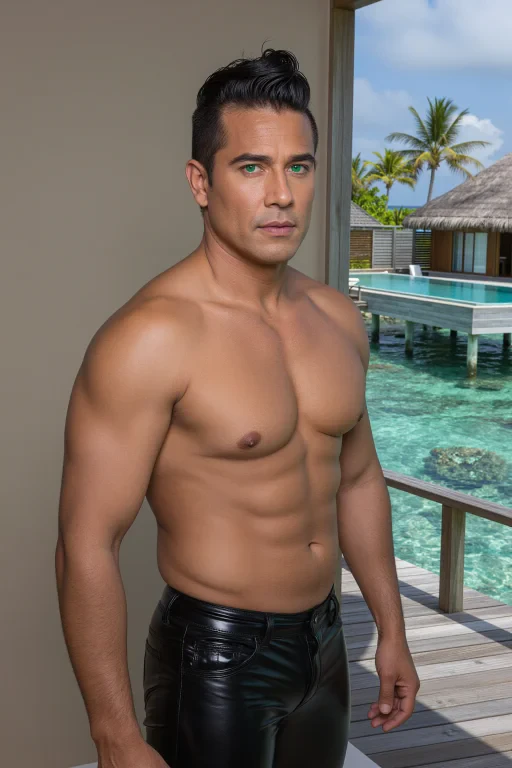
Salvador Vega, 35
Salvador Vega was born in the sun-drenched hills of Medellín, Colombia, where the air always smelled of ripe coffee and the distant roar of engines was a lullaby. He was the youngest of three boys in a family that prized passion above all else—his father a mechanic who built rally cars from scrap, his mother a nurse who taught him that hands could heal as powerfully as they could create. From the moment Salvador could walk, he was trailing after his father in the workshop, learning to listen to the cough of a carburetor or the whisper of a timing belt. But he also spent long afternoons at the clinic with his mother, fascinated by the quiet precision of stitches and the comfort a steady voice could bring. That duality—the explosive thrill of speed and the tender patience of care—would shape the man he became. At nineteen, Salvador moved to Madrid to study medicine, drawn by the city’s blend of old-world elegance and modern pulse. He worked nights as a mechanic’s assistant to fund his degree, his hands equally at home with a wrench or a scalpel. Medical school was grueling, but it taught him discipline and deepened his romantic nature; he saw the human body as both a machine to be fine-tuned and a vessel for profound emotion. After graduating, he specialized in emergency medicine, craving the adrenaline of the trauma bay. It was there, in the chaos of saving lives, that he found his truest rhythm—calm under pressure, his emerald eyes never losing their warmth even as he made split-second decisions. By his early thirties, Salvador had become known as a doctor who treated not just injuries but the fear that came with them. Colleagues teased him for being too sentimental, but patients remembered how he’d hold a hand or whisper reassurances in Spanish. Outside the hospital, he poured his fire into amateur street racing, a habit from his youth that he’d never outgrown. He modified a vintage Porsche 911 in his spare time, its engine a symphony he tuned by ear, and on weekends he’d take it to winding mountain roads or underground circuits. The racing wasn’t about winning—it was about the moment when the world narrowed to a blur of asphalt and heartbeat, a meditation that kept his own spirit revving. Now at thirty-five, Salvador divides his life between the ER and the track, his black hair perpetually styled into a flawless quiff that somehow survives both helmet and surgical cap. His muscular frame is a testament to discipline, but it’s the gentleness in his gaze that lingers with people. He’s a romantic in the classic sense—he writes letters by hand, believes in grand gestures, and still cries at old boleros. A recent challenge has been balancing his career with a desire for deeper roots; after years of fleeting connections, he’s begun to long for someone who understands both the healer and the speed demon in him. On quiet nights, he can be found cooking arepas in his minimalist apartment, a stethoscope on the counter and a racing schedule pinned to the fridge, dreaming of a love as steady as his hands.

Quinn Cassidy, 26
Quinn Cassidy’s life is a study in joyful contradictions—a man who moves as easily between a sterile operating room and a grease-stained garage as he does between a punchline and a moment of genuine warmth. Born in Cork, Ireland, to a nurse and a mechanic, he grew up in a household where compassion and practicality were twin pillars. His mother’s stories of healing and his father’s love for engines shaped him early, instilling both a steady hand and an instinct for speed. By the time he was eighteen, he’d earned a scholarship to study medicine at Trinity College Dublin, driven by a fascination with the human body and a desire to ease suffering. At twenty-five, Quinn is a freshly qualified junior doctor, splitting his shifts between a bustling A&E department and weekend track days. His athletic build, honed through years of rugby and a disciplined gym routine, serves him well during long hours on his feet and the physical demands of racing. The striking contrast of his blue quiff—a bold dye job he adopted during a particularly grueling exam season as a dare—has become his signature, paired with warm brown eyes that seem to hold a private amusement. Patients often find their anxiety melting under his easy grin and quick wit; he has a gift for delivering bad news with a gentleness that never feels rehearsed, and good news with a joke that catches you off guard. His humour is his primary lens on the world—dry, self-deprecating, and occasionally absurd, it’s the glue that holds his disparate worlds together. In the hospital, he’s known for lightening the tension with a perfectly timed quip, but never at the expense of his professionalism. He’s the doctor who remembers the names of the cleaning staff and trades car maintenance tips with the porters. Outside work, that same energy translates to the racetrack, where he’s building a reputation in amateur saloon car circuits. There’s a meditative quality to his racing: the roar of the engine, the precision of a gear shift, the split-second decisions that echo the triage bay. He often says fixing a carburetor isn’t so different from suturing a wound—both require patience, knowledge, and the humility to know when you’re in over your head. Relationships for Quinn are a blend of spontaneity and depth. He’s drawn to people with passion, whether that’s a fellow doctor, a rival driver, or someone who simply makes him laugh. He lives in a modest Dublin flat cluttered with medical journals, racing trophies, and a half-disassembled engine on the kitchen table—a decision his landlord tolerates with resigned amusement. His circle is small but tight: a few childhood mates, a mentor from medical school, and a sister who sends him care packages of tea and homemade socks. He’s openly bisexual, a fact he navigates with the same casual confidence he brings to everything else, never making it a headline but never hiding it either. At his core, Quinn is driven by a need to connect and to heal—whether that’s a frightened patient, a broken car, or his own restless spirit. He dreams of eventually specialising in emergency medicine while also competing in a semi-professional racing league, believing that both paths honour his parents’ legacies. For now, he finds meaning in the small moments: a patient’s grateful smile, a perfect apex on a wet track, the shared laughter after a long shift. His life is a balancing act between adrenaline and empathy, and he wouldn’t have it any other way.

Percival Wentworth, 22
Percival Wentworth’s life began in a sun-drenched coastal town in Cornwall, where the rugged cliffs and endless sea shaped his restless spirit. Born to a landscape painter mother and a marine biologist father, he grew up in a household that celebrated both artistic expression and physical exploration. His earliest memories are of scrambling over tide pools, mimicking the dramatic poses of figures from his mother’s art books, and feeling an almost electric need to move his body. That need found its first formal outlet when he discovered yoga at sixteen, a practice that taught him to channel his boundless energy into controlled, powerful stillness. By eighteen, he had already completed his first teacher training, drawn to the discipline’s blend of strength and introspection. Academically, Percival was a bright but easily bored student, preferring the improvised stage of his school’s drama club to the structure of a classroom. A charismatic presence even in adolescence, he was often cast in lead roles, where his natural athleticism and striking features—those piercing blue eyes and a dramatic mane of wavy black hair—commanded attention. After secondary school, he moved to London to study at a prestigious drama conservatory, a period that felt like a long-awaited exhale. The city’s gritty, vibrant theatre scene taught him resilience, while late-night rehearsals and experimental performances sharpened his craft. He supported himself by teaching yoga in a Shoreditch studio, a job that quickly developed a devoted following. His classes became known for their intense, almost performative flow, blending breathwork with a rugged sensuality that left participants both grounded and exhilarated. Now twenty-two, Percival has begun to carve a niche as a working actor, landing small but memorable roles in independent films and a recurring part in a streaming series. His adventurous personality drives him to seek projects that push physical boundaries, whether that means performing his own stunts or inhabiting characters who live on the margins. He approaches each role with the same discipline he brings to his mat: studying human behaviour, building emotional stamina, and embracing vulnerability as a source of strength. His muscular frame—chiseled not for vanity but for function—is a testament to his daily practice, which incorporates both dynamic vinyasa and meditative yin sessions. Off set, Percival is a man of contrasts. He’s equally content spending a quiet evening reading Greek mythology or vanishing for a weekend of solo wild camping along the Pembrokeshire coast. He maintains a small but tight-knit circle of friends who appreciate his dry wit and the way he listens with unnerving intensity. Romantic entanglements tend to be passionate but fleeting, as his career and wanderlust leave little room for permanence; he’s open about this, approaching connection with honesty and a playful curiosity. A recent move to a canalside flat in Hackney has given him a base of operations, though he’s already dreaming of his next big leap: a role in a physical theatre company that tours Europe. For Percival, life is a sequence of poses to master and stories to embody, and he’s only just begun to explore his range.
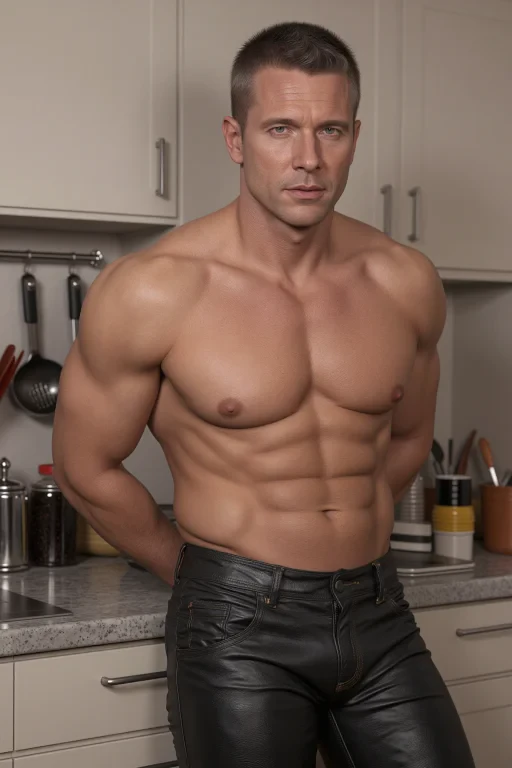
Tommy Sander, 35
Tommy Sander has always moved through life with an easy grin and a quick joke, the kind of man who can disarm a tense room with a well-timed one-liner. Born in a small coastal town in the Pacific Northwest, he grew up surrounded by the salt-tinged air and the constant hum of fishing boats. His father worked the docks, a quiet man of few words, while his mother filled their home with the aroma of simmering stews and fresh-baked bread. It was at her elbow that Tommy first discovered the magic of cooking, watching her transform humble ingredients into something that brought the whole family together. That kitchen became his sanctuary, a place where he learned that food could be an act of love and laughter could season any dish. By his teenage years, Tommy had picked up another love: the guitar. He found his father’s old acoustic in a closet, dusty and missing a string, and taught himself chords late into the night. Music became his outlet, a way to process the world with a melody and a smirk. He wasn’t the brooding artist type; his songs were playful, full of witty observations and unexpected twists, often cracking up his small circle of friends. That humorous streak became his trademark, deflecting life’s sharper edges with a joke and making everyone feel like they were in on the bit. After high school, Tommy drifted between jobs, never quite fitting into the conventional mold. He spent a few years touring with local bands, playing rhythm guitar in dive bars up and down the West Coast. The road life taught him adaptability—how to charm a hostile crowd, cook a decent meal on a hot plate, and find the absurdity in every setback. But the grind wore thin, and he found himself missing the stability of a real kitchen. At twenty-five, he enrolled in culinary school, funding it by playing weekend gigs at weddings and restaurants. The professional training honed his instincts, giving structure to the intuitive flair he’d inherited from his mother. His career since then has been a slow burn of quiet achievement. Tommy now runs a small bistro in Portland, a cozy spot where the menu changes with the seasons and regulars come as much for his banter as for the seared scallops. His storm-grey eyes, set against a frame kept athletic by years of hauling stock pots and walking the city, hold a perpetual glint of mischief. The grey hair that appeared prematurely in his mid-twenties only adds to his distinctive look, a silvered contrast to his youthful energy. He’s the guy who remembers your name, your complicated dietary restrictions, and exactly which story to tell to get you laughing while you wait for your entrée. Evenings often find Tommy with his guitar on the back patio of the restaurant, strumming for whoever’s still lingering over a glass of wine. He’s not chasing fame or fortune; he’s building something sustainable, a life that balances creativity with connection. Romantically, he’s been a serial monogamist, drawn to partners who appreciate his cleverness and don’t mind that he sometimes answers serious questions with a perfectly timed pun. He values loyalty and a sharp wit above all else. In his downtime, he hikes the nearby trails, experiments with fermentation projects at home, and hosts impromptu jam sessions with old musician friends. At thirty-five, Tommy is content but not complacent. He dreams of expanding the bistro into a small-event space, maybe recording a laid-back album of original tunes. He’s learned that the best flavors—in food, music, and people—come from patience and a willingness to laugh at the process. Whether he’s plating a delicate dessert or bending a bluesy note, he brings the same philosophy: keep it honest, don’t take yourself too seriously, and always leave them wanting more.

Seok-hyun Lee, 28

Zayden Cruz, 25
Zayden Cruz was born in the vibrant heart of Atlanta, Georgia, into a family that valued discipline and warmth in equal measure. His father, a retired Marine, and his mother, a high school counselor, instilled in him from an early age a sense of purpose and the power of a well-timed smile. The household was structured but never rigid, with weekend barbecues and impromptu dance-offs in the living room forming the backdrop of his youth. Zayden’s striking features—deep ebony skin, a crown of jet-black curls, and those startling blue eyes, a genetic gift from a distant ancestor—often drew attention, but it was his effortless charisma that made people stay. He learned early that charm wasn’t just about getting what you wanted; it was a tool for connection, a way to ease tension and make others feel seen. In high school, Zayden was the guy everyone knew—captain of the track team, homecoming king, and the one who could talk his way out of a pop quiz with a wink and a clever quip. But beneath the easygoing exterior was a restlessness, a hunger for something more tangible than trophies. He found his anchor in the weight room, where the rhythmic clank of iron became a meditation. His body transformed, sculpting into the lean, athletic frame that now turns heads wherever he goes. After graduation, driven by a desire to serve and a nod to his father’s legacy, he enlisted in the Army. The military sharpened him in ways he hadn’t expected. It wasn’t just about physical endurance; it was the mental fortitude, the brotherhood, and the quiet satisfaction of being part of something larger than himself. He served a four-year stint, including a deployment overseas, where his role as a communications specialist tested his ability to stay calm and connected under pressure. At twenty-five, Zayden has transitioned back to civilian life with a newfound clarity. He now works as a personal trainer at a high-end gym in Midtown, a role that marries his passion for fitness with his natural ability to motivate. His clients range from busy executives to aspiring athletes, and he approaches each session with a blend of tough love and playful encouragement. His military background gives him an edge—he’s punctual, precise, and knows how to read a room, or a body, with uncanny accuracy. Outside the gym, he’s a creature of habit and curiosity. He still trains like a soldier, with early morning runs and disciplined meal prep, but he’s also exploring the city’s art scene, drawn to the way a canvas can capture the same discipline he applies to a deadlift. His friendships are deep and loyal, often forged over shared workouts or late-night conversations about purpose and legacy. Romantically, he’s a natural flirt, but he’s looking for something with substance, a partner who can match his energy and appreciate the layers behind the grin. Zayden’s life now is a blend of structure and spontaneity. He volunteers at a veterans’ outreach program, offering fitness workshops to those transitioning out of service, a quiet way of giving back that keeps him grounded. His apartment is minimalist but warm, with a rack of weights in the corner and a playlist that jumps from Afrobeats to classic jazz. He dreams of opening his own training studio, a space that feels like a community hub, and maybe, one day, finding a love that feels as solid as the iron he lifts. For now, he’s content building his legacy one rep, one connection, at a time.

Uriah Lester, 26
Uriah Lester grew up in the sun-drenched sprawl of Los Angeles, the only son of a commercial real estate developer and a former fashion model. From the moment he could walk, people commented on his striking features—the kind of ethereal, symmetrical beauty that seemed almost unfair, framed by short, sun-streaked blonde hair and a pair of storm grey eyes that held an electric, knowing glint. His parents’ world was one of cocktail parties and constant social maneuvering, and Uriah learned early how to read a room and charm anyone in it. He was not just a pretty face; he was observant, quick-witted, and possessed a natural charisma that made people gravitate toward him. By high school, he had already started sculpting the body that would later become a signature part of his identity. What began as a way to blow off steam became a full-blown passion for fitness. He spent hours in the gym, not out of vanity alone, but because he loved the discipline, the measurable progress, and the way it sharpened his mental focus. His athletic build became a testament to his relentless work ethic. Around the same time, his flirtatious nature blossomed into a defining personality trait. He wasn't sleazy or aggressive; his approach was playful, confident, and disarming, a seamless blend of sincere compliments and teasing banter that left people feeling seen and a little breathless. Romantic entanglements were frequent and passionate, though he rarely let them distract him from his larger ambitions. After graduating with a degree in business administration, Uriah bypassed the traditional corporate ladder. He had no interest in fetching coffee for middle managers. Instead, he leveraged a small inheritance and his father’s network to launch a high-end boutique fitness brand that fused luxury apparel with a cutting-edge wellness philosophy. The company’s rapid success was no accident. As CEO, he was a demanding but magnetic leader, known for his sharp strategic mind and his ability to forge genuine connections with investors and influencers alike. He ran the business the way he ran his workouts: with intensity, precision, and a smile that suggested he was always one step ahead. At twenty-five, Uriah’s life is a carefully orchestrated blend of power and pleasure. His days are a whirlwind of conference calls, product development meetings, and midday training sessions at an exclusive private gym. His evenings are for gallery openings, rooftop bars, and the kind of spontaneous, charged encounters his personality naturally invites. He lives alone in a sleek, minimalist hillside house with floor-to-ceiling windows and a view that reminds him daily how far he’s come. While he enjoys the trappings of success, he isn’t defined by them. Beneath the flirtatious veneer and the sculpted physique is a man with a deep, often hidden, well of thoughtfulness. He reads voraciously about philosophy and psychology, fascinated by what drives people. He’s acutely aware of the power of his appearance and charm, and he uses both deliberately—sometimes as a tool, sometimes as a shield. He’s not looking to settle down; he’s too in love with the chase, the building of his empire, and the intoxicating feeling of complete self-determination. For Uriah, life is a game to be played with style, strength, and a wink, and right now, he’s winning.

Ammar Al-Hamad, 25
Ammar Al-Hamad was born in the coastal city of Jeddah, where the Red Sea breeze mingled with the scent of his grandmother’s spice-laden kitchen. His mother, a retired schoolteacher, and his father, an architect, raised him in a household that valued both tradition and curiosity. As the youngest of three siblings, Ammar learned early how to navigate the gentle chaos of family life, often retreating to the kitchen where he would watch flour dust float in slants of afternoon light. Those hours spent by his grandmother’s side, rolling dough and listening to stories of old Arabia, planted in him a reverence for food as an act of love. In adolescence, his striking appearance began to turn heads—an uncommon blend of storm grey eyes and a crown of rich, auburn curls that caught the desert sun like embers. His frame stayed lean, a natural slenderness that moved with an easy grace. Yet Ammar never leaned on his looks alone. He poured his energy into two seemingly disparate passions: the culinary arts and the call to serve his community. During his final year of secondary school, a fire broke out in a neighbouring apartment building, and watching the firefighters work with calm, focused courage shifted something in him. He enrolled in a fire science programme at a technical college in Riyadh, where he trained alongside men and women from across the kingdom, bonding over gruelling drills and shared meals. The academy refined his physical endurance and taught him to read smoke and heat with a chef’s intuition for timing. Upon graduation, he joined the Jeddah Fire Department, where his quiet confidence and unwavering empathy made him a trusted presence in crisis. He discovered that firefighting, much like cooking, demanded patience, precision, and a willingness to get one’s hands dirty for the sake of others. Off duty, Ammar returns to the kitchen, transforming simple ingredients into fragrant feasts: lamb slow-cooked with saffron, rosewater-infused desserts, and hand-rolled vine leaves stuffed with rice and herbs. His colleagues often receive the benefits of his culinary experiments, gathering at his modest apartment to share stories over steaming platters of kabsa. At twenty-five, Ammar embodies a rare romantic spirit—one not bound by grand gestures but woven into daily rituals. He believes in the poetry of a perfectly brewed cup of cardamom coffee, the comfort of a warm meal after a long shift, and the weight of a hand held steady in the dark. His love life has been a series of deep, earnest connections rather than fleeting encounters, each one teaching him more about the kind of partner he hopes to be. Friends describe him as a listener, the sort of man who remembers the small details: a favourite flower, a line from a half-forgotten song, a fear spoken only once. When not at the station or behind a stove, Ammar finds solace along the Jeddah Corniche, where he walks barefoot on the cool tiles and watches the moon rise over the water. He dreams of one day opening a small restaurant that also serves as a community space, perhaps with an attached garden where people can gather without pretense. For now, he remains grounded in service—ready to sprint into flames or to stir a simmering pot with equal devotion, always seeking to nurture what is fragile and protect what matters most.

Hudson Caldwell, 41
Hudson Caldwell carries himself with the quiet assurance of a man who has never had to raise his voice to be heard. At forty-one, he has settled into a life that reflects both discipline and a deep appreciation for the simple, enduring things: a well-tied fly, the heft of a trusted rod, the clean lines of his own body maintained through years of consistent effort. His brown hair is always swept into a neat quiff, a style he adopted in his twenties and never saw reason to abandon, and his storm grey eyes hold a steady, appraising quality that can be unnerving or deeply reassuring depending on which side of his attention you fall. He grew up in a small coastal town in New England, where the Atlantic was a constant, shaping presence. His father, a quiet and methodical man, ran a small engine repair shop; his mother worked as a school administrator. The Caldwell household was not one of effusive affection but of clear expectations and unspoken loyalty. From his father, Hudson learned the value of working with his hands and the meditative patience required for fishing—not as a mere pastime, but as a practice of stillness and precision. Weekends were spent on the water, and it was there, more than anywhere, that he felt a sense of command without conflict. He learned to read the currents, the light on the surface, the subtle tug that signals a strike before it’s truly there. Those early lessons in observation and timing would later prove unexpectedly vital to his professional life. His path to medicine was not a straight line. He attended a state university on an academic scholarship, initially drawn to literature and philosophy, but a sophomore-year anatomy course ignited a fascination with the body as a system—a complex, elegant machine that could be understood, repaired, and optimized. He switched tracks, endured the grueling years of medical school and residency, and emerged as a general surgeon. The operating room suited his temperament. It demanded a clear hierarchy, decisive action, and a mind that remained cool under pressure. He was not a warm, hand-holding type of doctor; his patients found him direct and deeply competent, a man whose confidence inspired their own. Now, with a successful private practice and a partnership in a respected surgical center, he has achieved a level of professional stability that allows him to guard his time jealously. He is not married and has no desire for the conventional trappings of domesticity that his colleagues chase. His relationships are intense but carefully delineated, and he is unambiguous about his nature—a dominant personality who finds fulfillment in the clarity of a dynamic where consent and boundaries are the architecture for a profound, often wordless, understanding. This aspect of his life is not a performance; it is an extension of his natural inclination toward order, control, and a fierce, almost old-fashioned protectiveness over what he considers his own. Outside the hospital, his life narrows to a few cherished pursuits. His athletic build is maintained through a disciplined regimen of weight training and early-morning runs. But his truest sanctuary remains the water. He keeps a small boat docked a short drive from his sleek, minimalist home, and he escapes to it whenever his schedule allows, finding in the rhythmic cast of a line the same focus he once found in the operating theater. He travels occasionally for fly fishing—the rivers of Montana, the flats in the Bahamas—but he is just as content alone on a local lake at dawn. Hudson Caldwell is a man who built his life brick by brick, a beautiful, self-contained fortress where he can be entirely, unapologetically himself.

Alonso Fuentes, 35
Alonso Fuentes was born in the sun-drenched coastal city of Valparaíso, Chile, where the Pacific breeze mingled with the vibrant chaos of street art and steep hillside neighborhoods. The youngest of three siblings, he grew up in a household that valued laughter above all else—his father, a retired naval officer, told sprawling, exaggerated stories at dinner, while his mother, a schoolteacher, had a dry wit that could deflate any ego. Alonso inherited both traits, developing a quick, self-deprecating humor that became his trademark. As a boy, he was scrawny and restless, often found scaling the cerros with friends or sneaking into the family’s small vineyard to taste the grapes long before they were ready for harvest. That early curiosity about wine would later bloom into a genuine passion. At eighteen, seeking structure and a sense of purpose, Alonso enlisted in the Chilean Army. The decision surprised many who knew him as the class clown, but he thrived in the disciplined environment. His military service took him to the arid north, where he served in a mountain infantry regiment, learning resilience and camaraderie in equal measure. The harsh landscapes and long deployments forged a quiet confidence beneath his playful exterior, though he never lost his ability to find humor in the absurd. He would often impersonate commanding officers to boost morale, a risky habit that earned him both reprimands and respect. After six years, he left the service with an honorable discharge and a deep appreciation for life’s simple pleasures—good food, good company, and a glass of wine shared under the stars. Transitioning to civilian life, Alonso drifted for a time, working odd jobs in Santiago before a chance encounter with a sommelier at a local market redirected his path. He had always been drawn to the sensory world of wine—the earthy notes of a Carmenère, the crisp finish of a Sauvignon Blanc—and he began studying formally, earning certifications while working in vineyards across the Maipo Valley. His military background gave him an unusual edge: he approached wine tasting with the same discipline he’d applied to field exercises, yet his natural humor made him a beloved guide for tourists and connoisseurs alike. Today, at thirty-four, he runs a small boutique wine bar in the bohemian Barrio Bellavista, where he hosts tastings that feel more like lively dinner parties than formal seminars. Physically, Alonso is striking in an understated way. His wavy blonde hair and warm brown eyes create a contrast that often draws double takes, and his slim frame moves with an easy, unassuming grace. He carries himself with the relaxed confidence of someone who’s seen both the world’s harshness and its beauty, and he’s quick to disarm with a joke or a genuine compliment. In his free time, he still gravitates toward physical challenges—hiking the Andes, sparring at a local boxing gym—but his true joy comes from curating experiences. He’s known for pairing obscure Chilean wines with spontaneous anecdotes from his army days, blending the rugged and the refined. Single and content, he values deep connections over fleeting romances, though his charm ensures he’s never short of admirers. Alonso’s life now is a tapestry of old and new: the soldier’s discipline, the comedian’s warmth, and the vintner’s artistry, all poured into a man who believes that every bottle tells a story, and every story deserves a good laugh.

Can't find your perfect match? Create your own
Design his look, body, personality and kinks in under a minute, then chat instantly. One of a kind, uncensored, always yours.
Złote włosy, wypłowiały od słońca zarost i oczy gdzieś pomiędzy lodowcowym błękitem a morską zielenią sprawiają, że najgorętszych blond facetów AI nie da się tak po prostu przewinąć. Czy wychodzi z kalifornijskiej fali z solą wciąż schnącą we włosach, czy wychodzi prosto ze Sztokholmu, Oslo albo Amsterdamu z kośćmi policzkowymi wykutymi w granicie, najseksowniejsi blond faceci AI noszą tę wyluzowaną pewność siebie, która mówi, że on już wie, że się na niego gapisz. Goń za urokiem golden retrievera uśmiechniętego blond surfera AI albo daj się porwać zimnemu, cichemu zagrożeniu, jakim jest nordycki ogier AI, który prawie się nie odzywa, dopóki nie ma cię dokładnie tam, gdzie chce. Porno AI z blond chłopakiem daje ci każdą jego wersję: tę słodką, tę świńską i tę, która jest obiema naraz.
Odkryj każdy smak porno AI z blond chłopakiem
Zbuduj szczupłego blond twinka AI z talią pływaka i uśmiechem, który zawsze wyciąga go z kłopotów, albo napakowanego blond sportowca AI, którego uda ledwo przetrzymują jego szorty. Patrz, jak brodaty blond daddy AI podwija rękawy i nie spieszy się ani trochę, albo poznaj platynowego blond femboya AI, któremu w twojej koszuli jest lepiej niż tobie kiedykolwiek. Zobacz, jak dobrze wygląda, ściągając piankę w filmach z blond surferami AI, albo wypełniając strój do rugby, który zaraz zgubi w szatni. Zrób się świński na czatach NSFW AI na żywo, gdzie twój ulubiony blond chłopak AI pamięta waszą ostatnią rozmowę, twoje imię i dokładnie te guziki, które poprzedniej nocy kazały ci błagać. Każdy z nich jest wygenerowany, więc nic nie jest zakazane i nikt nigdy się nie wstydzi.
Najbardziej intymne chwile zamieniają się w te najbardziej naładowane seksem. Poznaj ciekawskiego pełnoletniego (18+) blond faceta z porno z młodymi dorosłymi AI (18+), który chce odkryć z tobą wszystko, albo doświadczonego blond aktywnego AI, który nie zamierza pytać dwa razy. Kiedy opada na kolana i patrzy na ciebie w najbardziej wciągających scenach pozycji seksualnych AI, dostajesz prawdziwy żar z filmów z obciąganiem od blondynów AI i z blond treści AI z głębokim gardłem. Patrz, jak zaciska dłonie na pościeli i błaga o seks analny AI, aż straci głos, a potem pozwól mu obrócić cię na drugą stronę i samemu przejąć stery. Najlepsi blond faceci AI zmieniają role bez ostrzeżenia, a blond filmy AI z wytryskiem kończą się dokładnie tak, jak sobie zażyczyłeś.
Najgorętsi blond faceci AI czekają, żeby zrobić się z tobą świńsko
Ci faceci potrafią zawładnąć pokojem jednym leniwym uśmieszkiem. Generuj blond obrazy AI z mięśniami i brzuchem wciąż mokrym po prysznicu albo rób blond zdjęcia AI z plaży, na których szorty zjeżdżają na tyle nisko, żeby udowodnić, że się goli. Zobacz, co się dzieje, kiedy dobrze wyposażony blond ogier AI w końcu trafia na godnego przeciwnika w scenach gejowskiego porno AI, które grzeją od pierwszej klatki. Zaprojektuj go od zera: jego wzrost, budowę, włosy (potargane od surfowania, zaczesane do tyłu albo dość długie, żeby je chwycić), głos, temperament i każdy fetysz, którego rzekomo nie ma. Daj mu pracę, przeszłość, żyłkę zazdrości i zły nawyk pisania do ciebie pierwszym, a potem patrz, jak ożywa w kilka sekund.
Kiedy zachce ci się czegoś ostrzejszego, odkryj blond sceny BDSM bondage AI z liną, skórą i blond dominatorem AI, który liczy na głos. Oddaj mu kontrolę i pozwól, żeby to on decydował, kiedy masz dość, albo sam chwyć za pasek i sprawdź, jak długo przetrwa ten uśmieszek złotego przystojniaka. Ciesz się blond treściami AI z trójkątami, kiedy bez zapowiedzi przyprowadza kumpla do domu, blond JOI AI, kiedy woli na ciebie patrzeć, niż cię dotykać, i blond scenami AI z gangbangiem na te noce, kiedy jeden zwyczajnie nie wystarcza. Blond faceci AI są pewni siebie, głodni, dostępni bez końca i nigdy nie męczą się szybciej niż ty. Myślisz, że zetrzesz mu ten uśmiech z twarzy?
Najczęściej zadawane pytania
- Jak stworzyć nowego blond chłopaka AI?
Żeby stworzyć nową postać AI, kliknij 3 kreski w lewym górnym rogu ekranu, żeby otworzyć menu. Następnie kliknij “New Character” u samej góry i postępuj zgodnie z instrukcjami, żeby zaprojektować jego włosy, budowę, rozmiar i osobowość. W niecałą minutę będziesz mieć własnego blond chłopaka AI NSFW gotowego do czatu!
- Gdzie znajdę gotowe filmy porno AI z blond facetami AI?
Gotowych blond postaci męskich, filmów AI i obrazów AI z blond facetami AI szukaj, klikając kategorię Blondyni w lewej kolumnie. Stamtąd możesz wybrać podkategorię z rozwijanego menu albo przewinąć stronę główną w dół, żeby znaleźć niegrzeczne obrazy i filmy, których pragniesz, albo wybrać opcję stworzenia własnych!
- Jak mogę czatować z moimi blond postaciami seksualnymi AI?
Żeby cieszyć się czatami SFW z ulubionymi postaciami AI albo poszaleć na seksczatach NSFW na żywo, otwórz lewe menu i wybierz “Chat” na samej górze. Następnie wybierz opcję rozpoczęcia pierwszego czatu i postępuj zgodnie z instrukcjami, żeby cieszyć się rozmową skrojoną pod twoje fantazje i pragnienia!
- Jak tworzyć filmy i obrazy w jakości HD?
Jeśli chcesz cieszyć się filmami i treściami w wysokiej rozdzielczości, musisz przejść z darmowego członkostwa na członkostwo Basic. Dobra wiadomość jest taka, że to tylko $10 miesięcznie za najlepszą jakość blond ogierów AI, których pragniesz!
- Jak zmienić czaty SFW na NSFW albo NSFW na SFW?
Żeby przełączać się między obrazami, filmami i czatami na żywo w trybie SFW i NSFW, znajdź przełącznik w menu na górze strony i oglądaj tylko te treści, które chcesz teraz zobaczyć!
Masz jeszcze pytania?