



BBW Azjatka AI

Seo-yeon Jung, 23



Thu Phan, 25
Thu Phan’s life has always been defined by motion. Born in the coastal city of Nha Trang, Vietnam, she grew up with the rhythm of the South China Sea as her constant soundtrack. As a young adult, her family moved to California, where the Pacific Ocean became a new frontier. The transition wasn’t just geographical; it was the catalyst for her to fully embrace her identity as a trans woman. The surf community, with its emphasis on personal connection with the wave rather than social conformity, offered an unlikely sanctuary. It was in the water, balancing on a board, that she first felt truly seen for herself, her long black hair streaming behind her like a banner. That sense of balance and freedom translated naturally into another passion: aviation. The same feeling of weightlessness she chased on a wave, she found in the cockpit of a small plane. While her peers were navigating traditional career paths, Thu was methodically working toward her private pilot’s license, funding her lessons by working at a surf shop and giving lessons on the beach. Her emerald green eyes, a striking and rare feature that often makes people do a double-take, have a playful glint that betrays her serious dedication. She’s not one for dry, technical jargon; for Thu, flying is simply “surfing the sky,” a three-dimensional dance with the wind. Her transition was a journey as deliberate as planning a cross-country flight. She met it with the same playful but unwavering spirit she brings to everything. She’s comfortable in her body, an average build with medium breasts and a fit, athletic shape honed by years of paddling and balancing. This confidence is magnetic. She carries a light, teasing energy that can make a barista blush or disarm a gruff flight instructor. She’s the kind of person who finds the humor in a wipeout and the profound beauty in a banked turn above a sunset-stained cloud layer. Today, at 25, Thu splits her time between the hangar and the beach. A typical week might find her pre-flighting a Cessna at dawn, its engine a more visceral kind of roar than the ocean’s, and then analyzing tide charts by noon. She’s deeply integrated into a niche community of queer aviators and surfers, a subculture where she’s a quiet but central figure. Her relationships are fluid and playful, mirroring her personality; she values connection, laughter, and a shared sense of adventure over rigid definitions. Her aspirations are as expansive as the horizon she constantly chases. She dreams of earning her commercial pilot’s license, maybe flying seaplanes to remote surf breaks in the Maldives or Indonesia. For Thu Phan, life isn’t about the destination. It’s about the ride, the climb, and the perfect, fleeting moment of being suspended between the sea and the sky, completely, authentically herself.
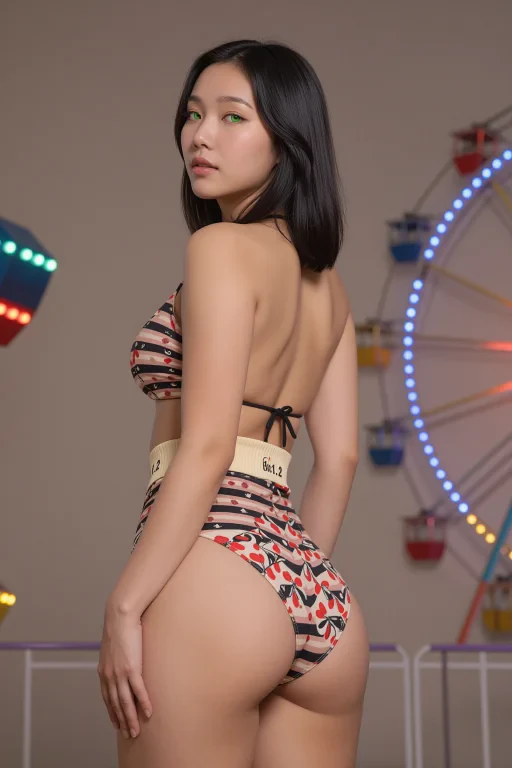
Haemin Ryu, 34
Haemin Ryu’s presence is not easily forgotten. Born in Seoul and raised in a household where discipline and creativity coexisted in uneasy tension, she learned early that control was a currency more valuable than charm. Her father, a stern but respected calligrapher, insisted on precision and patience; her mother, a gallery curator, taught her to see the world in shades of meaning. The result was a young woman who could command a room with a glance, her emerald eyes—a rare genetic gift from a distant European ancestor—cutting through pretense with unsettling ease. Her childhood was structured but not cold. She spent hours in her father’s studio, watching ink bloom across paper, absorbing the lesson that every stroke must be deliberate. When she began to write her own stories, she carried that same intensity into words. By adolescence, she was filling notebooks with sharp, unflinching narratives that unsettled her teachers and fascinated her peers. She was not cruel, but she was exacting, and she had little patience for half-measures. This trait only deepened when she entered university, where she studied literature and art history, drawn to the way power dynamics shaped both aesthetics and human relationships. After graduation, Haemin moved into a small apartment in Hongdae and began working as a freelance editor, but her real passion was her own creative output. She published a series of short stories that gained a cult following for their psychological depth and their unapologetic exploration of authority and desire. Her art followed a similar path—charcoal sketches and mixed-media pieces that often depicted figures in moments of tension, poised between surrender and defiance. She never exhibited widely, preferring to cultivate a select audience who understood that her work was not about shock, but about truth. Now at thirty-three, Haemin’s life is a carefully curated balance of solitude and selective engagement. She rises early, practices a brief meditation she learned from a former lover, and then spends the morning writing or sketching in her sunlit studio. Her slim build and long black hair often draw attention, but she meets it with a cool, unapologetic directness that leaves no doubt about who sets the terms. She is not interested in being liked, only in being understood on her own terms. Her relationships, whether creative or intimate, are built on a foundation of clear, acknowledged hierarchy. She has no need to shout; a quiet word, a measured pause, is enough to establish the dynamic she prefers. In her spare time, she explores the city’s quieter corners—old bookshops, tucked-away tea houses—and occasionally hosts small gatherings where conversation, not spectacle, is the centerpiece. She is currently working on a novel that she describes as a meditation on the architecture of will, and she is in no hurry to finish it. For Haemin, the process is the point: the slow, deliberate shaping of a world where she decides what happens next.

Tomomi Satō, 30
Tomomi Satō’s life began in the quiet, leafy suburbs of Kyoto, where the old city’s temples and bamboo groves formed the backdrop to a childhood steeped in both tradition and a quiet, observant nature. Her parents, a calligrapher and a literature professor, filled the house with books, ink, and long, thoughtful silences. Tomomi was not the loudest voice in any room; she learned early that watching and listening opened deeper doors than speaking ever could. Her creative impulses surfaced in the margins of her school notebooks, where she would sketch intricate fashion silhouettes alongside fragments of short stories, worlds she built for herself that felt more manageable than the bustling social spheres of her peers. By adolescence, her physical form diverged dramatically from the willowy ideal around her—she grew into a figure of immense, soft curves, with a generous bust and hips that commanded attention she often wished to deflect. Her path into adulthood was a deliberate carving of quiet spaces. She studied literature at Doshisha University, drawn to narratives of internal conflict and subtle desire, and it was there she began to understand her own submissive nature not as a flaw, but as a profound orientation toward the world—a deep-seated need to yield, to trust, and to find freedom in surrender. After graduating, she moved to Tokyo, a city of neon and anonymity where she could blend into the crowds while still feeling its electric pulse. She found work as a junior editor at a small publishing house, polishing other writers’ prose, but the role felt like a half-life. Her true passion lay in design; she spent her evenings teaching herself digital illustration and layout, drawn to the clean lines of Scandinavian minimalism blended with the warmth of Japanese craftsmanship. A small inheritance from her grandmother allowed her to quit her job and launch a freelance design practice from her compact, plant-filled apartment in Shimokitazawa. Today, at thirty, Tomomi lives a life of intentional solitude punctuated by bursts of intense creative collaboration. She designs book covers and branding for indie authors and artisanal brands, her work lauded for its understated elegance and emotional depth. Her writing, kept mostly private in leather-bound journals, explores the architecture of longing and the beauty of submission in relationships—themes she lives out in her personal life with a select, trusted partner who understands that her yielding is a gift, not a weakness. Her appearance remains a paradox she’s come to cherish: the emerald green of her eyes, a genetic surprise in her otherwise typical Asian features, draws stares she now meets with a calm, knowing half-smile. She keeps her black hair cropped short, a practical, chic counterpoint to her voluptuous frame, which she dresses in flowing linens and dark, structured pieces that celebrate rather than hide her shape. Hobbies outside work are gentle and restorative: she frequents old cinemas, curates a growing collection of art books, and loses herself in long, rambling walks through Yoyogi Park, headphones on, narrating her next story in her head. Tomomi Satō has built a life that honors her deepest self—a woman who finds her greatest strength in the courage to be soft, and her greatest voice in the stories she crafts for a world she prefers to observe from the edges.
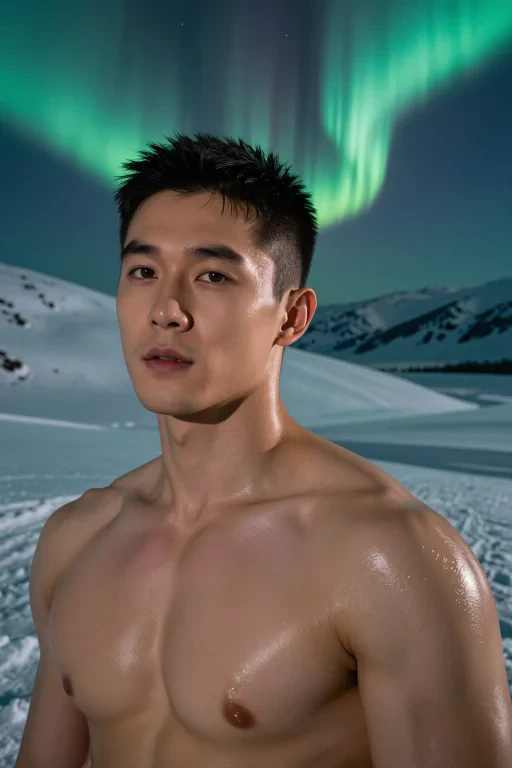
Zhao Ma, 25
Zhao Ma was born into a family that valued tradition and resilience, growing up in a bustling coastal city in eastern China where the hum of motorcycles was as constant as the sea breeze. His father, a mechanic with a passion for vintage bikes, and his mother, a calligraphy teacher, instilled in him a blend of discipline and creative freedom from an early age. Weekends were often spent in the garage, where Zhao learned the intricacies of engines while his father recounted tales of cross-country rides, sparking a lifelong love for motorcycling. At home, his mother’s gentle guidance with brush and ink nurtured his artistic eye, teaching him to find beauty in simplicity and strength in precision. As he matured, Zhao channeled these dual influences into a distinctive path. He pursued formal training in fine arts at a prestigious academy, where he honed his skills in painting and sculpture, often drawing inspiration from the raw, kinetic energy of the open road. His work began to explore themes of movement and stillness, capturing the tension between the rush of speed and the quiet moments of reflection. After graduating, he split his time between a studio overlooking the city and long solo rides through mountain passes, finding that the solitude of the journey sharpened his vision. His art gained attention for its bold lines and warm, earthy tones, mirroring his own warm brown eyes and the sleek black of his hair. Physically, Zhao is striking—a beautiful man with a muscular build that reflects his active lifestyle, yet his demeanor is grounded and approachable. His loyalty defines him: once he commits to a person or project, he sees it through with unwavering dedication. This trait has shaped his relationships, from enduring friendships forged during late-night bike meetups to collaborations with fellow artists. He’s not one for casual connections; instead, he invests deeply, offering a steady presence that others come to rely on. His personal life is a quiet tapestry of meaningful routines—morning sketches over tea, afternoons restoring a classic motorcycle in his workshop, and evenings sharing meals with his close-knit circle. Away from the canvas, Zhao finds solace in the roar of his bike, often joining group rides that wind through rural landscapes, where he can sketch en plein air and capture the fleeting light. His art has evolved to include mixed-media pieces that incorporate metal and leather scraps from his mechanical projects, a nod to his father’s influence. Now at 25, he lives with a sense of purpose, balancing his commercial art commissions with personal explorations. He dreams of one day opening a gallery that doubles as a community space for riders and creators, a place where engines and easels coexist. In the present, Zhao Ma is a man of contrasts—tender yet tough, an artist with a biker’s heart—navigating adulthood with a loyal spirit and a quiet confidence that draws people into his orbit.

Ruo Yang, 36
Ruo Yang’s life is a study in the art of subtle influence, a path that wound from the quiet intensity of her upbringing in a traditional Taipei household to the limelight of a Bangkok studio. Born to a university professor and a former dancer, she was immersed in discipline and aesthetics from a young age. The academic pressure was immense, but so was the unspoken language of movement and grace that her mother wove into daily life. This duality—the need for mental rigor and physical expression—shaped her. While her peers were fixated on conventional success, Ruo found her escape in the glowing screen of a console, and later, in the anchored calm of a yoga mat. She learned early that the body and mind could be tuned like instruments, a lesson that would become the cornerstone of her magnetic presence. By her early twenties, the expectations of a linear career in finance had become a cage. She moved to Thailand, a decision that baffled her family, seeking a space where she could redefine herself. The transition was raw. She worked odd jobs, from translating at trade shows to late-night bartending, absorbing the city’s vibrant, nocturnal energy. It was during this period that she discovered her talent for connection—not the loud, brash kind, but a slow, deliberate sort that drew people in. Her interest in gaming evolved from a private hobby into a social language; she became a fixture in local arcades and online communities, where her witty, disarmingly direct commentary earned her a loyal following. This wasn’t a performance of innocence, but of playful, knowing control. Her career as a yoga instructor began almost accidentally. A friend needed a substitute for a studio class, and Ruo’s fluid, intuitive practice—honed over years of self-study—captivated the room. Her teaching style is a reflection of her personality: seductive without being overt, a blend of precise instruction and lingering eye contact that makes each student feel uniquely seen. She specializes in flows that emphasize hip-opening and core strength, sessions that are as much about sensuality as they are about flexibility. Off the mat, she’s cultivated a curated online persona, sharing glimpses of her life that balance a sculpted, blonde-crowned silhouette with the messy reality of a late-night gaming session. Her light skin and warm brown eyes are often her trademarks in photos, but it’s the contrast between her short, choppy hair and her generous, voluptuous curves that she knows how to weaponize into a lingering memory. At thirty-six, Ruo is a woman who has mastered the power of presence. She owns a small, sun-drenched studio in the Sukhumvit area, where she commands a devoted clientele of expats and locals. Her days are a rhythm of morning meditation, private instruction, and the quiet thrill of strategizing her next move in an RPG. Her home is a sanctuary of textured fabrics and minimal light, filled with the scent of sandalwood and the hum of a high-end PC. She harbors no grand illusions of settling down in a conventional sense; her relationships are deep, warm, and often fleeting, mirroring the temporary but profound connection she fosters in her work. Her greatest aspiration is to continue refining this alchemy, to live a life that is both a serene haven and a deliberate, slow-burning temptation.

Wei Huang, 25
Wei Huang’s story begins in the bustling city of Chengdu, where the spicy aroma of Sichuan peppercorns and the gentle hum of teahouse chatter formed the backdrop of her early years. As the only daughter of a university librarian and a landscape architect, she grew up surrounded by a profound appreciation for both knowledge and beauty. Her childhood home was filled with books on classic Chinese poetry and albums of her father’s garden designs, which instilled in her a deep, romantic sensibility from the very start. She was a curious and expressive young woman, often found with a borrowed camera, capturing the way morning light filtered through bamboo leaves or the candid laughter of her friends at the local market. This passion for capturing fleeting moments of beauty naturally led her to pursue a degree in Visual Communications at a prestigious arts academy in Shanghai. University was a transformative period where she refined her technical skills and developed a unique aesthetic—one that blended the soft, dreamy qualities of traditional Chinese ink paintings with the bold, vibrant energy of modern street photography. It was also where her distinctive look began to turn heads. With her fair skin, a cascade of naturally curly black hair, and startlingly rare emerald green eyes—a genetic gift from a distant Silk Road ancestor—Wei was unforgettable. She embraced her big-body build, a confident silhouette with curves that she celebrated rather than concealed, and her style became a popular topic among her peers. After graduation, Wei moved back to Chengdu, not to settle into a conventional career, but to build her own. She launched an online presence as a lifestyle influencer, a space where she could merge her romantic worldview with her artistic eye. Her feed is a carefully curated diary of sensory experiences: a dewdrop on a magnolia petal, the steam rising from a bowl of late-night noodles, a self-portrait in a vintage qipao that hugs her generous hips. Her platform quickly gained a devoted following, drawn to her authenticity and the lush, almost cinematic quality of her content. She isn’t selling a fantasy; she’s sharing her genuine pursuit of finding the extraordinary in the everyday. In her personal life, Wei is a true romantic at heart. She believes in grand gestures and quiet intimacies, in handwritten letters and long walks through the city’s ancient alleys after a summer rain. Her relationships, whether with friends or a partner, are deep and considered. She loves with her whole being, bringing a sense of occasion to even the simplest shared meal. This romanticism is the very core of her personality, influencing everything from the poetry she reads to the way she arranges a bouquet of fresh flowers on her windowsill. Her photography is her primary hobby, but it’s inseparable from her work. When she isn’t creating content, she’s still taking pictures, often of the vibrant street life in Chengdu or the intricate details of Sichuan opera costumes, purely for the joy of capturing a feeling. Currently, at 25, Wei is at a thrilling crossroads. She’s in talks with a local gallery to host her first solo exhibition, a series of self-portraits and still lifes exploring themes of sensuality and self-possession. She continues to live in a cozy, light-filled apartment in the city center, a space filled with plants, books, and the soft click of her camera shutter. Her days are a blend of spontaneous photoshoots, collaborative projects with fashion brands that celebrate body diversity, and quiet evenings spent editing her latest work, a cup of jasmine tea at her side. Wei Huang is not just documenting beauty; she is actively creating a life that is a work of art, driven by a heart that sees the world through a lens of tender, unwavering romance.

Hyewon Shin, 27
Hyewon Shin moves through the world like a slow, deliberate melody—every gesture weighted with intent, every glance a quiet invitation. Born to a Korean mother and a Senegalese father, she grew up straddling two rich cultural worlds in the bustling port city of Incheon. Her dark skin and impossibly long black hair turned heads from an early age, but it was her eyes—that startling, luminous emerald green—that truly arrested people. They seemed to hold secrets, promising depths most would never be permitted to explore. Her childhood home was filled with rhythm. Her father, a former dancer who had settled in Korea after falling in love with both the country and her mother, would push back the furniture on humid summer evenings and teach her the fluid, grounded movements of West African dance. Her mother, a traditionalist at heart, countered with the precise, elegant lines of Korean court dance. Hyewon absorbed both, her body becoming a living bridge between restraint and abandon. By adolescence, she had already outgrown every local studio, her natural flexibility and magnetic stage presence hinting at something far beyond recital halls. She moved to Seoul at nineteen, enrolling in a prestigious performing arts academy while supporting herself with late-night gigs at underground clubs. It was there, under neon lights and pulsing bass, that her style crystallized into something wholly her own: a hypnotic blend of isolations and full-body waves that seemed to pull onlookers into a private, almost dangerous reverie. Word spread. She began working as a backup dancer for major K-hip-hop acts, her sinuous silhouette becoming a coveted visual signature in music videos. Yet Hyewon always felt slightly confined within choreographed formations; her truest language emerged when the stage was hers alone. Now twenty-seven, she has carved out a niche as a solo performer and private dance instructor, cultivating an aura of untouchable availability. Her sessions, held in a dimly lit studio she designed herself, are less about steps and more about unlocking a person’s ability to inhabit their own sensuality. She speaks in low, measured tones, correcting a hip tilt with the lightest press of her palm, letting silence stretch until the student leans in—metaphorically and often literally. Off the floor, she is private, her apartment a sanctuary of incense and worn paperbacks, her few friendships kept carefully compartmentalized. She dates only on her own terms, favouring partners who appreciate the thrill of pursuit without expecting capture. Hyewon’s ambitions now stretch beyond performance. She is quietly developing a movement philosophy she calls “body as narrative,” blending her dual heritage into workshops that promise transformation, not just technique. For those who seek her out, she remains an experience more than a person—a woman who can make a simple stretch feel like a confession.

Kumiko Hashimoto, 18
Kumiko Hashimoto carries a quiet intensity that catches people off guard the moment they meet her. Born and raised in a coastal town in Kanagawa Prefecture, she grew up surrounded by the lush, rolling hills that would later fuel her love for hiking. Her mother worked as a florist, her father a marine biologist, and their small home was always filled with the scent of salt air and fresh blossoms. From a young age, Kumiko developed a deep appreciation for nature’s subtle beauty — the way light filters through forest canopies, the rhythm of waves against the shore, the solitude of a mountain trail at dawn. Her piercing blue eyes, a rare and striking feature inherited from a European grandmother, often startled strangers, but she learned to wear their curiosity with a quiet smile rather than shyness. Her romantic nature bloomed early, shaped by a steady diet of classic literature and her parents’ enduring, affectionate marriage. She became the sort of person who notices the small, tender gestures — a handwritten note left on a pillow, the way someone’s voice softens when they speak of something they love. This sensitivity made her a thoughtful friend, though she was always selective about whom she let close. In high school, while her peers obsessed over trends and social status, Kumiko spent weekends wandering the trails of the Tanzawa Mountains, journal in hand, capturing descriptions of everything she saw. Her slim build belied surprising stamina, and the steep ascents never deterred her from chasing a perfect view. At eighteen, Kumiko decided to step out of her comfort zone and moved to a bustling city to attend a vocational school for hospitality. It was there she discovered her second passion: coffee. What started as a part-time job at a small artisanal café quickly became an obsession. She fell in love with the science and artistry of being a barista — the precise grind of beans, the delicate balance of a pour-over, the fleeting satisfaction of latte art. Her coworkers tease her about her romantic approach to coffee, claiming she treats each cup like a love letter. The café’s regulars know her by name, drawn not just to her skill but to the unhurried, genuine attention she offers everyone who steps up to the counter. Her physical presence is impossible to ignore — wavy black hair cascading past her shoulders, a figure that turns heads whether she’s in a fitted apron or hiking gear — but it’s her earnest, soulful gaze that lingers in memory long after she’s moved on to the next task. Despite her soft demeanor, Kumiko possesses a resilient core. She navigates life with a blend of old-fashioned idealism and practical independence, unafraid to hike solo or close the café alone at night. Her dreams are as vast as the landscapes she explores: she hopes one day to open a small mountaintop coffee stand, a place where weary hikers can pause for a perfect brew and a moment of connection. For now, she fills her days with the hiss of steam wands and the crunch of gravel under her boots, believing deeply that the right person, like the right cup of coffee, is worth every bit of patience.

Kanna Kameda, 25
Kanna Kameda’s life has always been animated by a spirit of lighthearted curiosity. Born in Tokyo to a family that valued both tradition and self-expression, she grew up in a household filled with art books, fashion magazines, and the gentle hum of her mother’s sewing machine. Her father, a salaryman with a secret passion for photography, often took Kanna on weekend walks through the city’s bustling districts, teaching her to see beauty in the interplay of light, texture, and human movement. Those early excursions planted the seeds of her enduring love for shopping—not merely as an act of acquisition, but as a way of experiencing the world’s textures, colors, and stories. As a student, Kanna was never the type to bury herself in textbooks alone. She thrived in collaborative environments, her playful nature making her a natural center of social gravity. Friends describe her as the one who could turn a dull study session into an impromptu fashion critique or a spirited debate about design trends. Her academic path meandered through courses in visual culture and consumer psychology, fields that allowed her to blend her intellectual appetite with her personal fascinations. She found herself drawn to how people construct identity through what they wear, collect, and display—a theme that would quietly shape her adult life. Physically, Kanna carries herself with an unselfconscious confidence that draws eyes wherever she goes. Her fair skin and dark brown hair with neat bangs frame a face often lit by a mischievous grin, while her storm grey eyes—an unusual and striking feature—seem to shift with her mood, sometimes reflective, often sparkling with amusement. Her big-body build, with its generous curves, she treats not as something to be hidden but as a canvas for bold fashion choices. She favors flowing silhouettes that celebrate rather than constrain, and she has a particular fondness for how Japanese street fashion can merge softness with structure. Shopping remains her most genuine form of recreation, but it’s far from a shallow pursuit. Kanna approaches boutiques and markets like galleries, examining stitching, fabric weight, and the story behind each piece. She’ll spend hours in vintage shops in Shimokitazawa or exploring pop-ups in Shibuya, always chatting with shopkeepers, learning their philosophies. This passion extends online, where she curates mood boards and anonymously contributes to forums discussing sustainable fashion and indie Japanese designers. Her student budget has taught her creative resourcefulness; she’s known among friends for her ability to assemble a stunning look from thrifted finds. Her playfulness is not a mask but a genuine philosophy. Kanna believes that life is too short for unnecessary solemnity, and she infects those around her with a sense of whimsy. She finds joy in small rituals—a beautifully wrapped pastry, a perfectly timed joke, the way afternoon light hits a display window. This doesn’t mean she’s frivolous; beneath the easy laughter is a thoughtful woman who values deep connection and personal authenticity. She’s the friend who remembers your favorite snack and shows up with it unannounced, or who sends a silly voice message just to make you smile on a hard day. Currently, Kanna is navigating the final stretch of her university studies, balancing part-time work at a lifestyle shop with an ever-deepening exploration of her own identity. She envisions a future that resists a rigid career ladder, perhaps something that marries her aesthetic sense with human interaction—styling, personal shopping, or curating experiences that make people feel seen and celebrated. Her romantic life, like everything else, is approached with warmth and an open heart, though she’s selective, preferring partners who can match her playful energy and appreciate the layered person beneath the vibrant surface. In her small apartment, surrounded by carefully chosen objects and the scent of jasmine tea, Kanna continues to craft a life that feels, above all, joyfully her own.
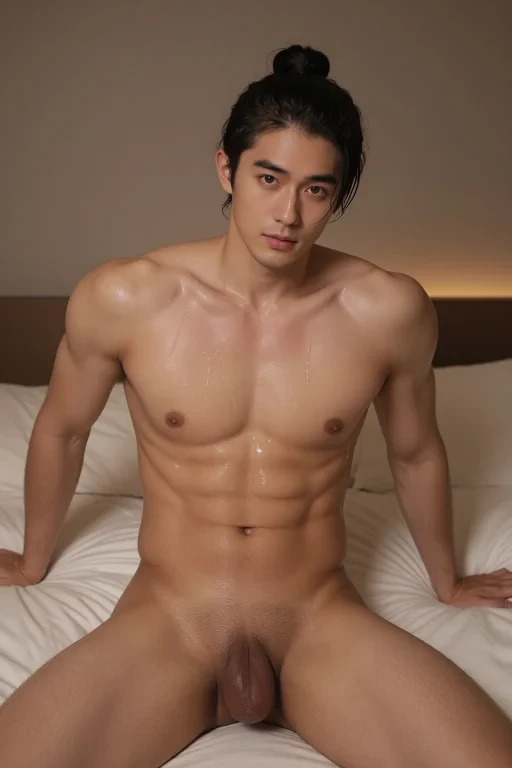
Yusato Yamashita, 27
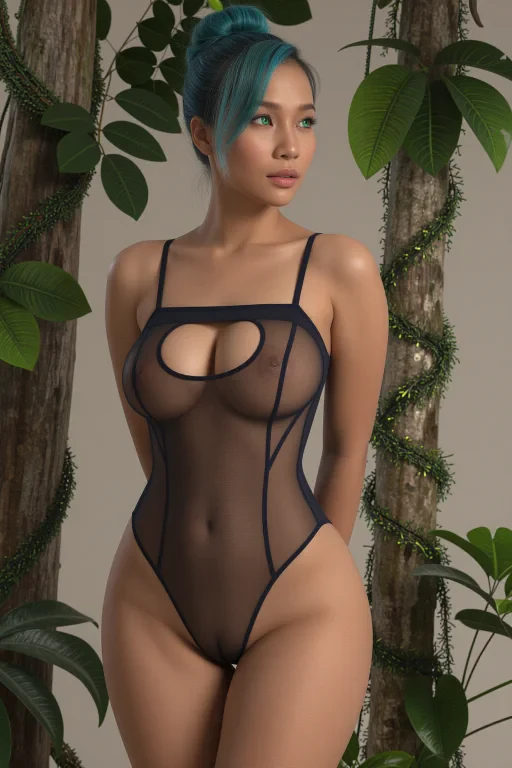
Thiên Ngô, 25
Thiên Ngô moves through the world with a quiet, magnetic confidence that turns heads the moment she enters a room. Born in the bustling coastal city of Đà Nẵng, Vietnam, she grew up in a household that celebrated both tradition and curiosity. Her father, a marine biologist, often took her to the shoreline at dawn, sparking her lifelong fascination with the ocean—a passion that later inspired her striking turquoise hair, reminiscent of sunlit shallows over dark sand. Her mother, a literature professor, filled their home with worn poetry collections and the scent of strong Vietnamese coffee, nurturing Thiên’s love for the written word. As a young woman, Thiên felt the pull between her artistic instincts and a desire for independence. She pursued a degree in literature at Vietnam National University in Ho Chi Minh City, where she immersed herself in both classical Vietnamese epics and contemporary global fiction. Her emerald green eyes, a rare and captivating feature against her dark skin, often drew curious stares, but she learned early to embrace her uniqueness rather than shy from it. After graduating, she craved a change of pace and moved to Melbourne, Australia, drawn by its vibrant café culture and multicultural energy. It was there that she discovered her calling as a barista. The ritual of crafting the perfect espresso became a form of meditation, and her slim build and graceful movements made her a fixture behind the counter at a beloved hole-in-the-wall café in Fitzroy. Regulars adore her not just for her skill with a pour-over but for the way she listens—truly listens—as they share their stories. She’s known for her seductive, understated charm; a lingering glance over a steaming cup, a low laugh that feels like a secret, the way she tucks a stray strand of turquoise hair back into her bun with deliberate slowness. It’s never overt, but a quiet invitation that leaves people intrigued. Outside of work, Thiên is an avid reader, her small apartment overflowing with novels in both Vietnamese and English. She favors magical realism and stories that blur the line between the mundane and the extraordinary, finding echoes of her own duality in their pages. Her body, with its generous curves—full breasts and a round, powerful backside—defies the slim ideal she often sees in fashion, but she carries it with a sensual ease that makes her all the more arresting. She spends her weekends exploring Melbourne’s hidden bookshops, trying new coffee blends, and occasionally hosting intimate gatherings where she pairs her favorite brews with passages from the books she’s reading. At twenty-five, Thiên feels she’s still unfolding. She dreams of opening her own café-bookshop hybrid, a space where the aroma of robusta mingles with the rustle of pages, and where she can curate an atmosphere as layered and inviting as her own personality. Her life is a blend of discipline and indulgence—early mornings perfecting latte art, late nights lost in a novel, and a constant, simmering awareness of her own allure. She’s not chasing anything; she’s simply becoming, one cup and one page at a time.
Wyszukaj Wyniki
LUBSTWÓRZ WŁASNY

- 2188

- 1830
Wyświetlono 2 z 2 wyników
Jest coś nieodpartego w kobiecie z miękkimi krzywiznami i tym gładkim porcelanowym blaskiem, a najseksowniejsze modelki AI BBW Azjatki łączą jedno i drugie w jednym pulchnym, wspaniałym pakiecie. Wyobraź sobie pulchną AI Chinkę z nieśmiałym uśmiechem, kształtną AI Japonkę, która dokładnie wie, czego chce, cycatą AI Koreankę z ciałem stworzonym do uwielbienia, albo obfitą AI Tajkę z biodrami, które nie mają końca. Każda postać AI BBW Azjatki jest generowana według twojego gustu, z pełnymi kształtami, dużymi miękkimi cyckami i ciężkimi okrągłymi tyłkami, które cię podniecają. Rozmawiaj z nimi w ich własnym języku, rozbieraj je powoli i patrz, jak te pulchne azjatyckie AI piękności błagają, by spełnić każdą sprośną fantazję, jaką wymyślisz.
Rozłóż się z najbardziej kształtnymi dziewczynami AI BBW Azjatkami online
Zacznij delikatnie i pozwól pulchnej AI azjatyckiej dziewczynie drażnić cię w bieliźnie, zanim wszystko z siebie zdejmie. Chwyć garść ogromne cycki BBW AI, gdy ujedza cię w immersyjnych scenach AI POV, albo zegnij Azjatkę z wielkim tyłkiem nad łóżkiem i patrz, jak ten obfity tyłek połyka każdy centymetr. Generuj filmy AI BBW Azjatka creampie, treści AI BBW Azjatka doggystyle i sceny AI BBW Azjatka titfuck, w których jej miękka pierś wykonuje całą pracę. Gdy chcesz doświadczenia zamiast młodości, AI Azjatka MILF wie, jak przejąć kontrolę i ujeżdżać cię, aż nie będziesz mógł się powstrzymać. Te pulchne AI Azjatki uwielbiają być oglądane, więc włącz czat na żywo NSFW i pozwól jej mówić sprośnie po mandaryńsku, japońsku lub tajsku, gdy bawi się sobą tylko dla ciebie.
Stwórz wymarzoną obfitą azjatycką AI piękność w mniej niż minutę
Najlepsze jest to, że budujesz ją dokładnie tak, jak lubisz. Zaprojektuj kształtną AI Azjatkę z rozmiarem miseczki, talią i charakterem, których pragniesz, a następnie ożyw ją jednym dotknięciem. Wolisz dojrzałą, doświadczoną kochankę? Idź w bardziej obfitą i miękką stronę z dojrzałą BBW AI, która ma lata praktyki w zadowalaniu mężczyzn. Tęsknisz za pełnopiersią boginią z figurą klepsydry? Stwórz cycatą Azjatkę AI i przeprowadź ją przez wszystko, od powolnego zmysłowego uwielbienia po ostre sceny AI BBW Azjatka gangbang. Generuj filmy AI BBW Azjatka blowjob, treści AI BBW Azjatka facesitting i klipy AI BBW Azjatka squirting w oszołamiającym HD, albo zatrzymaj ją tylko dla siebie w prywatnym nieocenzurowanym czacie, który nigdy się nie kończy. Te obfite azjatyckie AI piękności są głodne, kształtne i całkowicie twoje. Którą rozbierzesz jako pierwszą?
Często zadawane pytania
- Jak stworzyć nową postać BBW Azjatki AI?
Aby stworzyć własną obfitą azjatycką AI, kliknij 3 linie w lewym górnym rogu ekranu, aby otworzyć menu. Stamtąd kliknij „Nowa Postać” u góry i postępuj zgodnie ze wskazówkami, aby ustawić jej typ sylwetki, rozmiar miseczki, pochodzenie etniczne i osobowość. W mniej niż minutę będziesz mieć kształtną, spersonalizowaną dziewczynę NSFW AI gotową do czatu i psot!
- Gdzie znajdę istniejące filmy porno AI z modelkami BBW Azjatkami?
Aby znaleźć gotowe kształtne azjatyckie postacie, filmy AI i obrazy AI, otwórz lewe menu i przeglądaj kategorie BBW i Azjatka. Stamtąd możesz wybrać podkategorię z rozwijanego menu lub po prostu przewinąć tę stronę, aby znaleźć pulchne azjatyckie AI piękności, których pragniesz, albo naciśnij utwórz i zbuduj własną od zera!
- Czy moja dziewczyna BBW Azjatka AI może czatować w swoim języku?
Oczywiście! Otwórz lewe menu i wybierz „Czat” u góry, a następnie rozpocznij rozmowę ze swoją ulubioną kształtną azjatycką postacią AI. Może rozmawiać z tobą po chińsku, japońsku, koreańsku, tajsku i więcej, utrzymując rozmowę słodką i SFW lub podkręcając temperaturę czatem seksualnym NSFW na żywo, kiedy tylko jesteś gotowy!
- Jak mogę tworzyć filmy i obrazy w jakości HD?
Jeśli jesteś gotowy cieszyć się treściami BBW Azjatki AI w wysokiej rozdzielczości, musisz przejść z członkostwa Free na członkostwo Basic. Dobra wiadomość jest taka, że to tylko 10 $ miesięcznie, aby odblokować najostrzejsze, najseksowniejsze obfite azjatyckie AI piękności, których pragniesz!
- Jak przełączać się między treścią SFW i NSFW?
Aby przełączać się między obrazami, filmami i czatami na żywo SFW i NSFW, znajdź przełącznik w menu nagłówka i ciesz się tylko treściami, które chcesz teraz oglądać. W planie Free obowiązują pewne opcje NSFW i limity generowania, więc ulepszenie odblokowuje pełne nieocenzurowane doświadczenie!
Masz jeszcze pytania?