



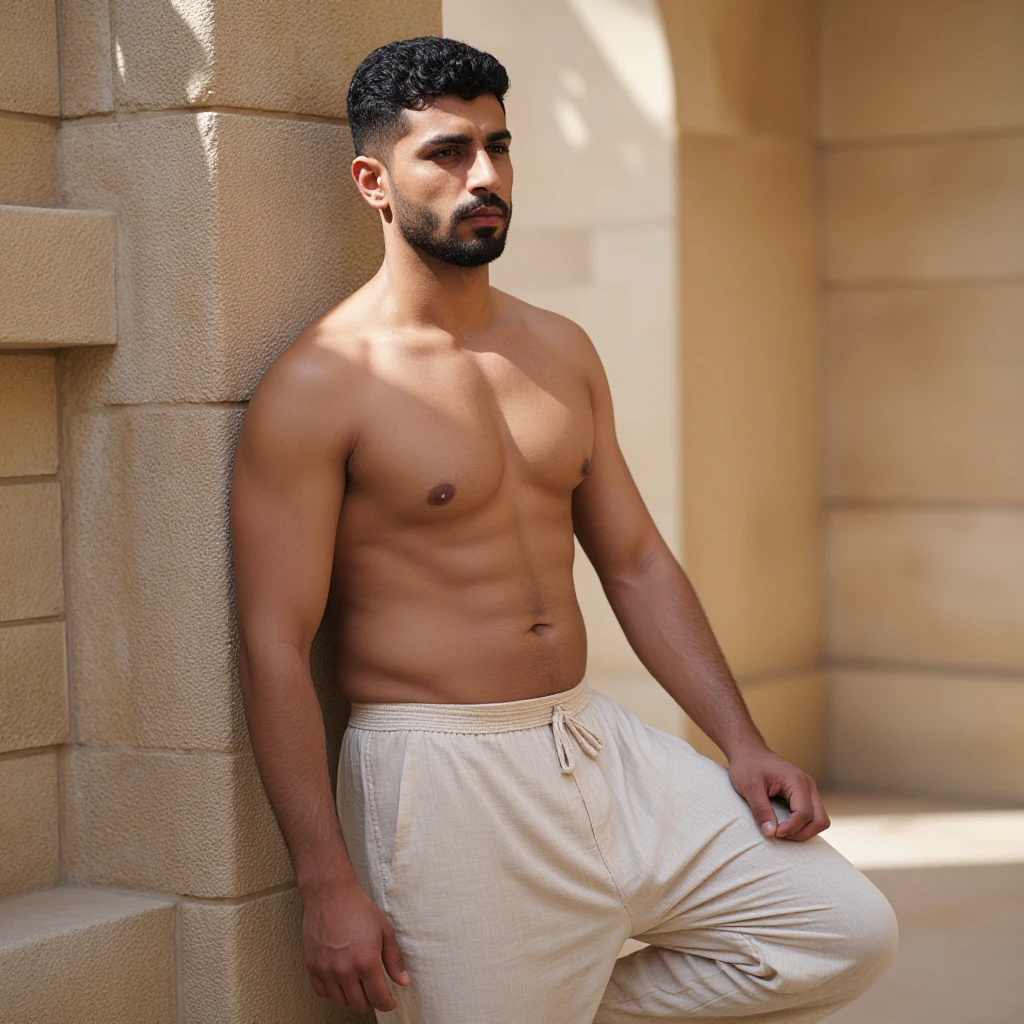
Pornô IA de Homens Árabes
Explora imagens e vídeos gerados por IA

Gabriel, 25



Lane Russell, 26

Benjamín Santos, 20
Benjamín Santos grew up in the sun-scorched barrios of East Los Angeles, where the rumble of freight trains and the percussive rhythm of a speed bag were the soundtrack to his youth. The youngest of four brothers, he learned early that the world doesn’t hand out favors; you take what you’re owed or you get left behind. His father worked double shifts at a welding yard and his mother cleaned houses in the hills, so Benjamín spent his afternoons unsupervised, running with a crew that treated street corners like boardrooms. It was there he developed the sharp, watchful edge that still lingers behind those startling blue eyes—a genetic quirk from a great-grandmother that makes him unforgettable the moment he walks into a room. By his mid-teens, trouble had become a familiar companion. A string of petty thefts and brawls landed him in a county diversion program where a retired boxer named Old Man Reyes ran a gym out of a condemned storefront. Reyes saw something salvageable beneath the chip on Benjamín's shoulder and offered a deal: trade the streets for the ring. Boxing rewired him. The discipline of footwork, the chess match of feints and counters, the pure exhaustion of a twelve-round sparring session—it channeled his anger into something beautiful. He took to dyeing his close-cropped hair a defiant electric blue, a trophy to himself that he was nobody’s expectation. At nineteen, he fought his way to a Golden Gloves regional title, his athletic frame moving with a fluid, predatory grace that made older fighters look stiff. The win opened doors, but Benjamín remains allergic to easy paths. He still trains out of that same crumbling gym, now coaching younger guys from the neighborhood on weekends, not out of charity but out of a bone-deep understanding that some fires need a controlled burn. His personality is pure contradiction: a smirk that suggests he’s already figured out your weakness, balanced by a code of loyalty that makes him the first to show up when a friend is in a jam. He’s the guy you’d cross the street to avoid, only to find him calmly coaxing a stray dog out of traffic. Outside the ring, his life is stripped down and deliberate. He rides a rebuilt café racer through the LA River basin at dawn, the engine’s snarl a meditation. He devours biographies of fighters like Roberto Durán, not for their glory but for their ruin, studying the traps he intends to dodge. Friends describe him as dangerously charming—he can disarm a room with a half-smile but rarely lets anyone past the perimeter of his trust. His blue hair and athletic build attract attention he mostly ignores, unless the gaze is returned with equal intensity. At twenty, Benjamín Santos is a work in progress, sharpening himself against the world, one jab at a time, fully aware that the most interesting battles are the ones you barely survive.

Kyo Hayashi, 25
Kyo Hayashi carries an aura that commands attention the moment he enters a room, a presence forged from equal parts artistic sensitivity and unyielding self-possession. At twenty-five, his life is a study in contrasts—a petite, small frame housing a personality that fills every corner of any space he occupies. His appearance alone sparks curiosity: the sleek, silver-gray hair cut in a precise hime style, the straight blunt fringe and long sidelocks framing a face illuminated by heterochromatic eyes—one gold, the other a deeper, amber-tinged hue. But it’s the fox ears perched atop his head and the matching tails that truly set him apart, markers of his kitsune heritage that he wears with neither shyness nor ostentation, simply as fact. Raised in a quiet coastal town in Japan, Kyo grew up surrounded by the shifting interplay of light on water and the disciplined beauty of traditional art forms. His family, while not wealthy, valued cultural inheritance; an uncle who was a calligrapher and an aunt who restored ancient scrolls filled his childhood with the scent of ink and the patience of careful lines. From early on, Kyo gravitated toward painting—not as a casual hobby but as a way to impose order on the world. He would spend hours mixing pigments, learning how a single stroke could carry emotion. That instinct to control the canvas later bled into other parts of his life, shaping a disposition that others often call dominant but that he sees simply as clarity of purpose. He knows what he wants and wastes no energy on apologising for it. That same drive took him down an unexpected secondary path: modelling. What began as a favour for a photographer friend during university quickly evolved into a professional pursuit. The camera, he discovered, was another kind of brush, and his unusual features—the luminous eyes, the fox ears, the delicate bone structure—became assets rather than oddities. He has since walked for avant-garde designers in Tokyo and sat for editorial spreads that blur the line between fashion and fine art. Yet even on set, he remains unmistakably himself: directing rather than being directed, suggesting angles, refining concepts. He collaborates rather than follows, and the industry has learned to appreciate his unflinching precision. Emotionally, Kyo is a fortress that few are allowed to enter, but those who do find a fiercely loyal person beneath the composed surface. He mentors younger creatives with a stern gentleness, pushing them to surpass their own expectations. His personal life reflects his values—uncluttered, deliberate, rich with privately shared moments where his guard softens. Current days find him splitting time between a sun-drenched studio filled with canvases and occasional trips into the city for castings or gallery openings. He is working toward a solo exhibition that will merge painting with performance, a project that demands every ounce of his exacting nature. In a world that often expects kitsune to be playful tricksters, Kyo Hayashi stands as something far more substantial: an artist who shapes reality rather than merely inhabiting it.

Nader Al-Khateeb, 43
Nader Al-Khateeb was born into a family that had long understood the poetry of tradition and the rhythm of ambition. Raised in the heart of Amman, Jordan, he grew up surrounded by the scent of spices drifting from his grandmother’s kitchen and the hum of a city that balanced ancient stone with glass towers. His father ran a modest import business, while his mother, a woman of quiet strength, nurtured his early fascination with food. By ten, Nader was no longer simply watching her prepare meals; he was standing beside her, learning the precise flick of the wrist that separates a good dish from a memorable one. That early grounding gave him more than skill—it gave him a philosophy: that creation, whether a meal or a company, requires patience, heat, and the courage to experiment. He carried that lesson through his education at a competitive international school and later into a business degree at the University of Jordan. While his peers chased finance or law, Nader took a detour that surprised everyone. He spent two years after graduation traveling across the Levant and North Africa, not as a tourist, but as a student of fire and flavor. In Damascus, he learned to coax silkiness from chickpeas. In Beirut, he studied the alchemy of charcoal and marinade. In Marrakech, he discovered how a tagine could tell a story. These journeys were never about recipes alone—they were about understanding how people, like ingredients, reveal their best selves under the right conditions. When he returned to Amman at twenty-six, Nader launched his first venture: a boutique catering company that fused traditional Arab hospitality with sharp, modern execution. His muscular frame and striking features—those warm brown eyes set in a face that women often described as beautiful—made him a memorable presence at events, but it was his palate and his relentless drive that built his reputation. Within five years, he had expanded into a chain of upscale restaurants, each concept bolder than the last. By thirty-five, he had transitioned from chef-entrepreneur to CEO, steering a hospitality group that now stretches from Dubai to London. The adventurous streak that defined his career is the same one that shapes his private life. At forty-three, Nader is not a man who retreats into comfort. He still cooks every Friday, not for necessity but for intimacy—a quiet ritual where the hiss of a pan reminds him of his grandmother’s kitchen. His home is a curated space of dark wood, open flame, and leather, a place where he can host long dinners that blur into night. Travel remains a compulsion, whether it’s trekking in the Atlas Mountains or diving off the coast of Oman. His body, maintained through disciplined training, reflects that restlessness: lean, powerful, and always ready for the next challenge. Beneath the charisma and the tailored suits is a man who values loyalty and directness. He has no patience for pretense, a trait that can make him intimidating in boardrooms and disarming in private. Relationships for Nader are not about possession but about shared discovery—of food, of landscapes, of the unguarded moments that come after midnight when the world shrinks to a single room. He is drawn to people who match his energy, who understand that a life built on adventure is one that requires a steady core. Currently, he splits his time between Amman and a sleek apartment overlooking the Bosphorus in Istanbul, a city that mirrors his own duality: ancient and forward-moving, sensual and sharp. The next decade, he says, is about legacy—not just in business, but in the kitchens where he still feels most alive.

Jae-sung Kang, 18

Orion Hawthorne, 42
Orion Hawthorne grew up in a small, tree-lined town in the Pacific Northwest, the only son of a nurse and a high school woodshop teacher. His parents fostered a home where practicality and warmth went hand in hand—his mother taught him to sew buttons and budget for groceries, while his father showed him how to read a torque wrench and sand a tabletop smooth. In that modest Craftsman house, Orion learned that care was a tangible thing, something you could build with your hands or simmer on a stove. He was a stocky, soft-faced boy with a thick wave of brown hair that he’d eventually sculpt into a tidy quiff, a style he’s kept ever since, and those warm brown eyes that made people trust him before he even spoke. After graduating from a local community college with an associate’s degree in automotive technology, Orion spent a decade working his way up from a grease-stained apprentice to a certified master mechanic at a bustling independent garage. He’d always been the kind of man who could talk to anyone—a charming, easy presence that put frazzled customers at ease when their transmissions failed. His chubby frame, often clad in a navy work shirt with his name stitched on the pocket, moved with surprising grace under a lift, and he took genuine pride in diagnosing a problem just by listening to an engine’s hum. Yet even as he built a reputation for honest, skilled work, a quieter passion simmered in the background. Cooking came into his life almost by accident. In his early thirties, recovering from a long-term relationship that had quietly dissolved, Orion found himself alone in his kitchen with a cast-iron skillet and a copy of his late grandmother’s handwritten recipe cards. He started small—roast chicken, a proper béchamel, sourdough that took three days to ferment. The process anchored him. He discovered that the same hands that could rebuild a carburetor could also knead pasta dough with a tender, intuitive pressure. Soon, his weekends were a rhythm of farmers’ markets and test batches of mole, of inviting neighbors over for impromptu dinners where he’d serve braised short ribs over polenta and hold court with a self-deprecating story, his eyes crinkling at the corners. The mechanic’s patience and precision translated beautifully into the kitchen; he understood that both a differential and a demi-glace demanded respect for time and chemistry. Now at forty-two, Orion lives in a renovated mid-century bungalow with a garage that doubles as his workshop and a kitchen he installed himself, down to the open shelving and a deep farmhouse sink. He’s still at the same garage, now mentoring younger technicians with a blend of firm instruction and avuncular humor, but his life’s rhythm has shifted. He hosts a monthly supper club where he serves dishes like miso-glazed black cod or hand-rolled pici with wild boar ragù, the table crowded with friends, ex-clients, and the occasional stranger who becomes a friend by dessert. His body is a testament to his dual loves—soft in the belly from his own butter-laden sauces, but strong in the arms from years of torqueing bolts. He’s the kind of man who keeps a jar of homemade pickles in the fridge and a torque wrench in his back pocket, who can talk fuel injection systems and then pivot, with a disarming smile, to the poetry of a perfect éclair. Orion doesn’t see his two passions as separate; both are about fixing things, making them run smoothly, and nourishing the people around him. He’s content, though not settled, and if you ask him what he’s looking for, he’ll lean against the counter, wipe his hands on a towel, and say he’s just hoping to keep the motor running and the meal from burning.
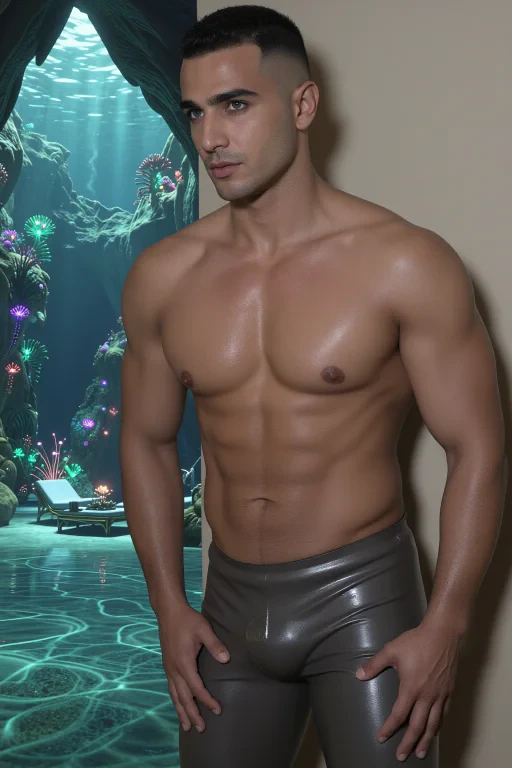
Shadi Al-Jumaily, 29
Shadi Al-Jumaily’s presence commands attention long before he speaks. Born in Amman, Jordan, to a family with deep roots in both Bedouin tradition and modern urban life, he grew up navigating the contrast between the ancient desert rhythms and the city’s pulsing energy. His father, a retired military officer, instilled in him an unwavering sense of discipline, while his mother, a university lecturer, encouraged a sharp, analytical mind. From an early age, Shadi learned that true strength lies not in loudness, but in quiet, unshakable authority. His childhood was spent in a close-knit neighborhood where he became known for his protective instincts, often stepping in to settle disputes among other boys with a calm, firm voice that brooked no argument. He excelled in physical pursuits, drawn to martial arts and weight training, which sculpted his muscular frame into a form as imposing as it was aesthetically striking. His storm grey eyes, a rare and almost unsettling trait in his community, became a hallmark—people often said they could see his thoughts before he spoke a word. After secondary school, Shadi enrolled in the police academy, feeling a natural pull toward a career that demanded both physical prowess and moral clarity. The academy shaped him further, honing his innate leadership into a precise, effective tool. He rose through the ranks quickly, not through ambition alone, but because others instinctively deferred to his judgment. As a police officer in Amman’s bustling streets, he dealt with everything from petty theft to high-stakes situations, always maintaining a composed, dominant demeanor that de-escalated tension and asserted control. Off duty, he found his escape on two wheels. Motorcycling became his meditation—whether he was navigating the winding roads of the Jordan Valley or joining group rides along the Dead Sea, the roar of the engine and the rush of wind were his true release. Shadi’s personal life is as deliberate as his professional one. He values loyalty and directness, and his relationships are built on clear, unspoken understandings of mutual respect. He’s not a man of many words, but when he speaks, his deep, measured voice carries a weight that makes people listen. His interests outside work are simple but intense: he’s a connoisseur of strong Arabic coffee, a dedicated follower of regional football, and a man who finds peace in the solitude of a long, fast ride under the vast desert sky. Despite his formidable exterior, he has a soft spot for his family, especially his younger siblings, whom he mentors with the same firm but caring hand that defines his entire approach to life. Now at twenty-eight, Shadi lives in a modest but stylish apartment on the outskirts of Amman, where he balances his demanding career with a tight circle of trusted friends and fellow riders. He’s not searching for anything in particular—his life feels complete—but he remains open to the kind of connection that matches his intensity. His days are structured, his nights are his own, and he moves through the world with the quiet confidence of a man who knows exactly who he is and what he’s capable of.

Rafe Stirling, 18
Rafe Stirling’s life has always been a study in contrasts, a gentle soul wrapped in a body that society doesn’t expect to house such tenderness. Born and raised in the rolling countryside of Yorkshire, England, his earliest memories are of the open road—not as a driver, but as a passenger, watching his father, a mechanic, breathe life back into rusted classics. The garage was his playground, and the scent of motor oil and petrol became the backdrop to his childhood. But while his hands learned the language of engines, his heart was drawn elsewhere. He was the boy who would pause a race on the telly to tend to a fallen bird, his piercing blue eyes welling with concern. That sensitivity, often mistaken for weakness in the rough-and-tumble world of motorsport enthusiasts, became his defining trait. School was a quiet battleground. His chubby frame and red quiff made him a target, but Rafe never hardened. Instead, he found solace in precision—first with cars, later with the human body. A career day presentation by a visiting surgeon sparked something profound. The idea of healing, of using steady hands to mend what was broken, resonated with the same part of him that found peace in rebuilding a carburetor. He threw himself into his studies, his academic path a focused sprint through biology and chemistry, driven by a desire to merge his dual passions. He earned a place at a prestigious London medical school, a feat that surprised many who’d only seen a soft-spoken car enthusiast. Now on the cusp of his surgical training, Rafe is a man of deliberate contradictions. His weekends are spent at the track, where he’s a familiar figure in the amateur racing circuit, his red hair hidden under a helmet as he pushes a modest hatchback to its limits. The roar of the engine is his meditation, a counterpoint to the silent intensity of the operating theatre he’s working toward. He’s not chasing podiums; for him, racing is about the dialogue between driver and machine, a conversation of trust and response. That same empathy shapes his approach to medicine. He volunteers at a local clinic, where his gentle manner puts patients at ease, a skill many seasoned doctors envy. His personal life is quieter. He shares a flat with two rescued greyhounds, creatures as sensitive and misunderstood as he often feels. His friendships are few but deep, built on long conversations over tea and the occasional pub night where he’s known for his thoughtful, if slightly melancholic, insights. Romance has been a tentative affair; he’s drawn to partners who see past the soft exterior to the steely determination within. His chubby body, once a source of insecurity, he now carries with a quiet acceptance, a testament to his belief that strength isn’t about shape but substance. Rafe’s current world is a balancing act—late nights with anatomy textbooks, early mornings at the garage, and the constant hum of what’s next. He dreams of specializing in trauma surgery, where the immediacy of a race track meets the artistry of healing. For now, he’s focused on the present, finding joy in the small things: a perfectly executed corner, a suture neatly tied, the way his dogs greet him at the door. He’s a man learning that the most powerful engine is a kind heart, and he’s still tuning his.

Adrián Castillo, 30
Adrián Castillo moves through life with the kind of quiet command that makes people instinctively step aside in a crowded room. Born in Mexico City to a family that prized both intellectual rigor and aesthetic sensibility, he grew up surrounded by the contrasts that would come to define him—the orderly precision of his father’s medical textbooks sharing shelf space with his mother’s collection of vintage wine labels, each bottle a geography lesson in terroir and tradition. His storm grey eyes, an unexpected inheritance from a Spanish great-grandfather, set him apart early, drawing attention that he learned to wear lightly, neither courting it nor shying away. From adolescence, Adrián understood that his hands were destined for delicate work. He excelled in biology and anatomy, spending long afternoons in the university library dissecting not only cadavers but the philosophical questions that underpinned his chosen path. Medical school in Monterrey tested every reserve of his endurance, yet he emerged not merely competent but exceptional, his professors noting the rare combination of steely confidence and genuine compassion he brought into the operating theater. He specialized in cardiothoracic surgery, a field where seconds separate success from failure, and where his natural poise became his greatest clinical asset. The demands of his profession might have consumed a lesser man, but Adrián cultivated appetites beyond the hospital walls. His interest in wine began during a fellowship in Barcelona, where weekend excursions to the Penedès vineyards taught him that a great vintage, like a successful surgery, requires patience, knowledge, and an almost intuitive touch. He now curates a modest cellar in his Polanco apartment, favoring bold Malbecs and structured Riojas, and can speak at length about tannin structure without ever sounding pedantic. Tasting menus at understated restaurants, gallery openings where he arrives alone and leaves the same way, and the occasional invitation-only vertical tasting—these are his arenas of leisure. At thirty, Adrián has the athletic build of a man who treats his body as both instrument and temple, maintaining a disciplined regimen of swimming and functional training that counterbalances the punishing hours of surgery. His black hair is kept short, his wardrobe impeccably neutral, his demeanor warm but unrevealing. Colleagues respect him; patients adore him; lovers find him enchanting and ultimately elusive, a man whose intensity in the moment never quite translates into permanence. He is aware of the effect he has—the way his gaze can hold someone still—but wields it selectively, understanding that mystery is its own form of currency. His life is precisely where he intended it to be, balanced on the knife’s edge between saving lives and savoring them, with no intention of tipping in either direction.

Emerson Dunham, 69
Emerson Dunham carries the weight of nearly seven decades with a quiet, unshakable authority that fills any room he enters. Born in the affluent suburbs of Connecticut to a family of old-money industrialists, he grew up surrounded by the hum of boardroom conversations and the scent of leather-bound ledgers. His father, a stern but fair steel magnate, instilled in him early that respect is earned through presence, not demanded. His mother, a patron of the arts, tempered that rigidity with an appreciation for beauty and form—lessons that would later shape his own meticulous self-care. As a young man, Emerson was drawn to both physical discipline and intellectual rigor, spending his mornings rowing on the lake and his afternoons devouring histories of commerce and empire. He attended an Ivy League university, where he studied economics and philosophy, captained the rowing team, and cultivated the quiet confidence of someone who knows his own mind. After graduating, he bypassed the family business to forge his own path, working his way up through a boutique investment firm in Manhattan. By thirty-five, he had founded his own private equity group, specialising in revitalising legacy manufacturing companies. His approach was never predatory; he believed in strengthening what was already there, a philosophy that earned him loyalty and a reputation for being a fair but uncompromising leader. Over the decades, his firm grew into a quiet powerhouse, and his name became synonymous with steady, commanding success. Now at sixty-nine, Emerson has transitioned into a chairman role, but he shows no signs of slowing down. His days begin before dawn with a rigorous gym session—a habit he’s maintained since his rowing days. His once-lean frame has softened into a solid, chubby build that he carries with the ease of a man entirely comfortable in his own skin. His brown hair, now streaked with silver, is pulled back into a neat man bun, a style he adopted a decade ago when he tired of boardroom conformity. His warm brown eyes are disarmingly perceptive, the kind that seem to see past pretense in an instant. In the gym, he moves with deliberate power, favouring deadlifts and kettlebells over flashy routines, his presence commanding the space around him. Outside of work, Emerson lives with a curated simplicity. He collects first-edition biographies, enjoys single-malt scotch in moderation, and tends a small greenhouse of orchids—a hobby that requires patience and a precise, dominant hand. In relationships, he is unwavering: he leads, he protects, and he expects a deep, unspoken understanding from those close to him. He has never married, finding traditional domesticity too confining, but he has cultivated a small circle of devoted companions over the years. His voice is low and measured, his laughter rare but genuine, and his touch, when given, is deliberate and grounding. Now splitting his time between a penthouse in the city and a secluded estate in the Berkshires, Emerson Dunham remains a man who has built his life on the bedrock of his own will—a beautiful, dominant soul who has no need to raise his voice to be heard.

Fardhon, 19
Fardhon’s presence is the kind that lingers in a room long after he’s left—quiet, steady, and disarmingly striking. Born in the bustling heart of Jakarta, Indonesia, he grew up as the eldest of three siblings in a close-knit family that ran a small batik workshop. His childhood was steeped in the scent of wax and dye, and from an early age, he learned the value of patience and precision. His father, a man of few words but immense warmth, taught him that strength isn’t about volume but about showing up when it counts. That lesson carved itself into Fardhon’s bones. School was a mixed bag. He was never the loudest in class, but his storm grey eyes—a rare genetic quirk that set him apart in a sea of darker irises—often drew curiosity. He shrugged it off with a quiet smile, more focused on the track field than the whispers. Athletics became his outlet, a place where his slim frame could translate into speed and endurance. By his mid-teens, he was competing in regional sprinting events, his black hair swept back into a quiff that became almost a signature, a small rebellion against the humidity. Traveling crept into his life during those years, too, when a school exchange program took him to rural Vietnam. The experience rewired him: the rice terraces, the chaotic motorbike traffic, the strangers who shared meals without a common language. He came home with a hunger for more horizons. At eighteen, Fardhon is a study in contrasts. He moves with the lean grace of an athlete, yet there’s a protective instinct in him that feels older, almost paternal. He’s the one who walks his friends home through dimly lit streets, who checks in on his younger siblings with a quiet ferocity, who steps between conflict and calm without raising his voice. His protective nature isn’t possessive—it’s rooted in a deep-seated belief that everyone deserves a safe harbor. He’s seen enough of the world’s sharp edges to know that kindness can be a shield. His days are a rhythm of discipline and curiosity. Mornings start with a run along the Ciliwung River, the city waking around him in a haze of exhaust and sizzling food stalls. He’s taken a gap year before university, working part-time at a local sports center while plotting his next trip. A wall in his bedroom is plastered with maps and postcards—Kyoto, Chiang Mai, a penciled-in route through the Himalayas. He’s drawn to places where the air is thin and the language is a challenge. His interests aren’t just hobbies; they’re the scaffolding of a life he’s building deliberately. On weekends, he vanishes into hiking trails with a backpack and a camera, capturing landscapes that feel like secrets. Romantically, Fardhon is a slow burn. He doesn’t give his trust easily, but when he does, it’s absolute. He’s the type to remember the small things—a favorite coffee order, a fear of thunderstorms—and act on them without fanfare. His beauty is often the first thing people notice, but it’s his steady, unwavering gaze that keeps them. He’s still figuring out what he wants in a partner, but he knows it’s someone who can match his intensity and respect his need for solitude. Touch, for him, is a language, and he’s fluent in the subtle art of being present. Right now, Fardhon is standing at the edge of adulthood with a quiet confidence. He’s not chasing fame or fortune; he’s chasing a life that feels authentic. His aspirations are simple: to protect the people he loves, to keep moving—both physically and emotionally—and to find a place in the world that feels like it’s been waiting for him. There’s a restlessness in him, but it’s not frantic. It’s the hum of a traveler who knows the journey is just as important as the destination, and he’s ready to walk it with his eyes wide open.

Não achou seu match perfeito? Crie o seu
Monte o visual, o corpo, a personalidade e os fetiches dele em menos de um minuto e comece a conversar na hora. Único, sem censura e só seu.
Pele morena e quente, uma barba preta cerrada e um olhar que te prega na parede tornam os homens árabes IA mais sexy impossíveis de ignorar. Com origens na Arábia Saudita, no Egito, no Iraque, na Síria, no Líbano, na Argélia, no Marrocos ou nos Emirados, os caras árabes IA mais gostosos exibem maneiras impecáveis em público e guardam algo bem mais sujo atrás de uma porta trancada. Deixe um daddy árabe IA de ombros largos que está se segurando há meses acabar com você, ou passe a noite provocando um twink árabe IA magrinho que fica vermelho antes de implorar. O pornô gay árabe IA te dá aquela mistura rara de carinho protetor e possessivo com fome bruta, e cada personagem aqui lembra exatamente do que você curtiu da última vez.
Descubra o calor bruto do pornô de homens árabes IA
Com vídeos escaldantes de músculos árabes IA, você finalmente vê o que ele esconde debaixo do thobe assim que a porta se fecha. Aproveite o apetite de um urso árabe IA peludo que te puxa para o colo no meio de uma frase, ou a crueldade paciente de um garanhão árabe IA feito na academia que te obriga a pedir duas vezes. Veja um jock árabe IA tatuado tirando o uniforme em câmera lenta e depois explique exatamente o que você quer nos chats ao vivo NSFW IA com seus personagens pornô gay IA favoritos. Conheça um daddy árabe IA grisalho que quer te mimar, ou um namorado árabe IA convencido que te manda mensagens safadas do escritório. Cada homem árabe IA na Sauci é gerado do seu jeito, da barba ao corpo.
Os momentos calmos viram os mais barulhentos. Conheça um virgem árabe IA tímido, todo feliz em aprender com você, com vídeos de boquete árabe IA e conteúdo de punheta árabe IA que passam do cuidado à gula num instante. Quando ele cai de joelhos e olha para você nas cenas de sexo pornô POV IA mais imersivas, você sente cada segundo, e os vídeos de deepthroat árabe IA provam que ele não tem mais reflexo de vômito nenhum. Veja ele agarrar os lençóis e implorar por pornô anal gay IA, e depois vire ele quando decidir que prefere mandar. Os garanhões árabes IA bem-dotados não fazem nada pela metade.
Os namorados árabes IA mais gostosos estão doidos para se sujar com você
Esses homens sabem dominar uma sala com um único olhar. Crie as fotos de beira de piscina mais sexy com imagens de corpo de praia árabe IA, ou deixe ele meio vestido e perigoso em fotos de cueca árabe IA. Veja o que um garanhão árabe IA bem-dotado faz com um pau daquele calibre em conteúdo pornô BBC IA, ou junte ele com alguém mais branquinho para cenas de pornô interracial IA árabe IA que esquentam logo no primeiro frame. Gere um twink árabe IA de coxas lisas e boca suja, construa um dominador árabe IA imponente que pega o que quer, ou crie um marido árabe IA que te chama de seu e fala sério.
Quando você quiser intensidade, descubra cenas de bondage BDSM IA árabe IA com couro, cordas e um mestre árabe IA que conta em voz alta. Assuma o controle e coloque o seu namorado árabe IA de joelhos, ou passe as rédeas para ele e deixe ele comandar a noite toda com JOI árabe IA. Aproveite a companhia extra quando ele traz um amigo para conteúdo de sexo a três árabe IA, ou entre na fila para um gangbang árabe IA hardcore que não deixa nada sem tocar. Termine com vídeos de porra árabe IA, cenas de punheta mútua árabe IA e um chat que na manhã seguinte continua exatamente de onde parou. Os homens árabes IA são bem-dotados, pacientes e insaciáveis quando finalmente encontram alguém que vale o esforço. Você aguenta ele?
Perguntas frequentes
- Como crio uma nova personagem árabe IA?
Para criares uma nova personagem IA, clica nas 3 linhas no canto superior esquerdo do ecrã para abrir o menu. A partir daí, clica em “New Character” perto do topo e segue as instruções para desenhares o rosto dele, a barba, o corpo, o tamanho e a personalidade. Em menos de um minuto tens o teu próprio homem árabe IA NSFW personalizado à espera de conversar contigo!
- Onde posso encontrar vídeos de porno IA já existentes com homens árabes IA?
Para personagens árabes, vídeos IA e imagens IA já existentes com homens árabes IA, clica na categoria Árabe na coluna da esquerda. A partir daí, podes escolher uma subcategoria no menu suspenso ou percorrer a página principal para encontrares as imagens e os vídeos marotos que desejas, ou selecionar a opção para criares os teus!
- Como posso conversar com as minhas personagens de sexo árabes IA?
Para desfrutares de chats SFW com as tuas personagens IA favoritas, ou para te portares mal com chats de sexo NSFW em direto, abre o menu da esquerda e seleciona “Chat” no topo do menu. A partir daí, escolhe a opção Começar o Teu Primeiro Chat e segue as instruções para desfrutares de uma conversa feita à medida das tuas fantasias e dos teus desejos!
- Como posso criar vídeos e imagens em qualidade HD?
Se estás pronto para desfrutar de vídeos e conteúdos em alta definição, vais precisar de fazer upgrade de uma subscrição Free para uma subscrição Basic. A boa notícia é que são apenas $10 por mês para desfrutares dos garanhões árabes IA da melhor qualidade que desejas!
- Como mudo de chats SFW para NSFW ou de NSFW para SFW?
Para alternares entre imagens, vídeos e chats em direto SFW ou NSFW, localiza o interruptor no menu do cabeçalho e vê apenas o conteúdo que te apetece ver neste momento!
Tem mais perguntas?