



IA Hijab Biquíni

Shaza Al-Harbi, 35
Shaza Al-Harbi grew up in the coastal city of Jeddah, where the scent of cardamom and rosewater drifted from her grandmother’s kitchen window into the warm, salt-tinged air. Her family, of Bedouin lineage, prized hospitality and culinary tradition above all else, and Shaza absorbed those lessons early. While other young women her age were drawn to different pursuits, she spent her afternoons kneading dough, learning the precise blend of seven spices, and watching her aunts transform simple ingredients into feasts that could stretch across a courtyard. That foundation would later become the bedrock of her identity, but her path was not a straight line from kitchen to acclaim. Her appearance set her apart from the start. With deep, dark skin that glowed against the white of her thobe, storm grey eyes that seemed to shift with the light, and a full, powerful frame, Shaza commanded attention without asking for it. She learned to move with purpose, to hold her gaze steady, and to let silence do the talking when words were unnecessary. Her body, with its generous curves, became a canvas for her confidence rather than a source of self-consciousness. She bound her dark brown hair into a neat bun each morning, a practical choice that revealed the elegant line of her neck and the sharp intelligence in her expression. Cooking was her first love, but dancing was her liberation. In the privacy of her own space, she would lose herself to the rhythms of North African and Levantine music, her movements fluid and hypnotic. She never trained formally; her style was instinctive, born from the way she felt sound in her bones. Over time, she discovered that the two arts fed each other. The precision required for intricate pastry work mirrored the control she needed for a slow, undulating hip drop. The sensuality of a perfectly balanced dish, with its layers of heat and sweetness, echoed the tension she built in a dance that hinted at more than it revealed. Her career took shape in her late twenties, when she left a stable administrative job to open a private dining and entertainment venture. She designed immersive evenings where guests were served a multi-course meal she prepared herself, followed by an intimate performance that blended traditional dance with modern allure. Word spread quickly among Jeddah’s elite circles, and soon she was hosting gatherings for diplomats, artists, and influential families who valued discretion and artistry. Her seductive nature was not a calculated performance but an extension of her personality. She engaged guests with low, honeyed laughter, lingering eye contact, and a way of conversing that made each person feel like the only one in the room. She never pretended to be demure; she was bold, direct, and unapologetically aware of her effect on others. At thirty-five, Shaza lives in a spacious apartment overlooking the Red Sea, where she divides her time between recipe development, private events, and the occasional travel invitation to cater for weddings or cultural festivals abroad. Her kitchen is a laboratory of inherited knowledge and experimentation, and she documents her creations in a leather-bound journal that she hopes to one day publish. She remains close to her family, particularly her grandmother, now in her nineties, who still critiques her lamb ouzi with the same exacting standards of decades past. Men and women alike are drawn to her, but Shaza is selective, valuing intellectual chemistry and emotional maturity over fleeting attraction. She knows what she brings to a room, and she has no interest in giving it away to those who cannot appreciate it fully. Her life is built on her own terms, a deliberate blend of discipline and indulgence, and she moves through it with the same grace she brings to her dance floor.



Iman Al-Rashdan, 25
Iman Al-Rashdan grew up in a quiet, sun-drenched neighborhood in Amman, where the call to prayer wove through the rhythm of daily life and jasmine scented the evening air. As the youngest of three sisters, she was often the quiet one, content to observe the world from the corner of a room while her siblings filled it with chatter. Her parents, a literature professor and a ceramic artist, nurtured a home where creativity was not just encouraged but expected. From an early age, Iman found her voice not in words but in images—sketching on the margins of her school notebooks, losing herself in the soft glide of charcoal on paper. Her emerald green eyes, a striking contrast to her dark, curly hair, always seemed to be searching for something beautiful to capture. Her adolescence was shaped by a deep sensitivity to the moods of others. She learned to read a room before she ever spoke, adapting her energy to suit the needs of those around her. This natural inclination toward harmony guided her into a submissive disposition, not out of weakness, but from a profound comfort in yielding to trusted partners and allowing them to take the lead. During her university years in Beirut, where she studied fine arts, she blossomed in the studio, spending long hours perfecting portraits and still lifes. It was there that she discovered her love for coffee culture, working part-time as a barista in a cozy café tucked behind the university library. The ritual of grinding beans, steaming milk, and crafting perfect latte art became a meditative counterpoint to the chaos of her creative process. After graduating, Iman returned to Amman and took a full-time position at a specialty coffee house, where she became known for her gentle demeanor and the intricate floral designs she could coax into a cup of cappuccino. Her regulars often remark on her calming presence—the way she remembers their orders, offers a soft smile, and never rushes a conversation. She still draws almost every day, filling sketchbooks with delicate line work and dreamy watercolors, often inspired by the faces she sees across the espresso machine. Her art is intimate and personal, rarely exhibited, but shared privately with those she trusts. At twenty-five, Iman carries herself with a quiet confidence that belies her submissive nature. She is not indecisive; rather, she finds deep fulfillment in surrendering control in the right context, trusting her partner to guide and protect. Her appearance draws attention—fair skin, a cascade of black curls, and a figure that is both soft and strong, with generous curves and a toned silhouette from years of standing on her feet and walking the city’s hills. Yet she remains approachable, her beauty underscored by an almost shy humility. She lives alone in a small apartment filled with plants, art supplies, and the scent of fresh coffee, spending her free time reading poetry, practicing latte art, and cultivating a small circle of intimate friendships. Her aspirations are modest: she dreams of one day opening her own gallery-café, a space where art and coffee merge into a sanctuary for quiet souls like her own. For now, she is content to pour her heart into the small, daily acts of service and creation that define her life.

Yumna Al-Banna, 30
Yumna Al-Banna carries herself with the quiet confidence of a woman who has learned to turn every gaze into an asset. Born in Amman, Jordan, to a family that prized both tradition and intellectual curiosity, she grew up surrounded by the scent of jasmine and old books. Her father, a university professor, filled their home with volumes of Arabic poetry and philosophy, while her mother, a former dancer, taught her that the body could speak a language all its own. From an early age, Yumna understood that she was different—not just because of her striking pale skin and emerald eyes, which set her apart in a sea of darker complexions, but because she possessed a magnetism that made people linger. She was never simply noticed; she was remembered. Her physical development came early and dramatically, and by the time she reached adulthood, her figure had become a defining feature of her presence. She learned to navigate the world with a blend of pride and wariness, recognizing that her body could be a tool or a trap. Rather than shy away from the attention, she cultivated a seductive persona that felt less like a performance and more like an extension of her inner self. She moved through university halls in Amman with a ponytail swinging behind her, her curves straining against conservative fabrics, and a gaze that dared anyone to underestimate her mind. She pursued a degree in Arabic literature, immersing herself in the works of Al-Mutanabbi and Mahmoud Darwish, finding in their verses a reflection of her own layered existence—passionate, defiant, and deeply sensual. After graduation, Yumna felt the pull of a broader horizon. She relocated to Beirut, a city that matched her own contradictions: glamorous yet scarred, ancient yet relentlessly modern. There, she began writing in earnest, contributing essays and short stories to literary magazines that explored the intersection of desire, identity, and womanhood. Her work often drew from her own experiences, weaving narratives of powerful women who wielded their allure like a blade. She also took on work as a private tutor, guiding university students through the intricacies of classical Arabic, a role that satisfied her love for mentorship and kept her connected to the academic world she cherished. Now at thirty, Yumna has settled into a life that balances solitude and exhibition. She still writes daily, often late into the night, her desk cluttered with notebooks and half-empty cups of cardamom coffee. Her apartment in Hamra is a sanctuary of velvet cushions and low lighting, a space where she entertains selectively, always aware of the effect she has on those who enter. She describes herself as a permanent student—not just of literature, but of human nature. Her hobbies include calligraphy, which she practices with a patience that contrasts her otherwise kinetic energy, and long walks along the corniche, where the Mediterranean breeze plays with her hair. She remains unmarried, not out of lack of opportunity, but because she values her autonomy too fiercely to surrender it easily. Her aspirations are fluid: she dreams of publishing a novel that scandalizes and delights in equal measure, and she harbors a quiet hope of one day returning to academia to teach. For now, she is content to be a woman in full, living on her own terms, her every movement a quiet invitation.

Aisha Al-Mansouri, 25
Aisha Al-Mansouri carries herself with a quiet confidence that belies her playful nature, a quality that first drew her to the structured chaos of nursing. Born in Abu Dhabi to a family that valued both tradition and forward thinking, she grew up navigating the vibrant bustle of a city where ancient markets sit in the shadow of gleaming towers. Her parents, an engineer and a librarian, encouraged her curiosity from an early age, filling their home with books and devices that she would eagerly disassemble just to understand how they worked. That inquisitive streak never faded; it simply found new outlets. By the time she entered university, Aisha had already decided on a career in healthcare. The choice surprised some who knew her only for her easy laughter and love of video games, but for her, it was a natural fit. Nursing demanded a blend of technical knowledge and human connection that appealed to her restless mind. She thrived in the high-pressure environment of clinical rotations, discovering that her playful demeanor was not a liability but a tool—a way to disarm anxious patients and build rapid trust. Her storm grey eyes, striking against her dark skin, often held a glint of mischief that could coax a smile from even the most stoic of individuals. Outside the hospital, Aisha’s world revolves around her gaming setup. She is a devoted fan of cooperative and strategy titles, spending evenings coordinating raids with friends across the globe or losing herself in sprawling role-playing worlds. The juxtaposition of her two lives—the precision of a nurse and the escapism of a gamer—defines her. She sees both as forms of problem-solving, one clinical and the other creative, and she moves between them with an ease born of practice. Her huge build, which she once viewed as a childhood awkwardness, now serves her well in both realms: she can assist a patient with effortless stability and settle into marathon gaming sessions in supreme comfort. Her personal style is deliberately low-key, a reflection of her pragmatic streak. She favors loose, flowing fabrics that accommodate her frame and allow her to move freely, whether she is navigating a ward or leaning forward during a tense boss fight. Her wavy black hair is typically tied back, though a few strands always escape by the end of the day. She is self-aware about her body, appreciating the power of her curves while remaining indifferent to conventional expectations. Small breasts and a big butt are simply facts of her physiology, not insecurities or focal points. Aisha’s playful nature is the thread that ties everything together. She teases her colleagues with deadpan humor, invents elaborate backstories for her gaming avatars, and turns mundane tasks into impromptu challenges. Yet beneath the levity is a core of steel, forged by the intensity of her work. She has held the hand of a dying patient, celebrated a first breath, and navigated the emotional whiplash that comes with the territory. Those experiences have given her a perspective that many her age lack, a gratitude for the ordinary moments that she fills with laughter and connection. Now at 25, she rents a small apartment in the city, a space that is half sanctuary and half gaming den. A potted plant struggles on the windowsill, a testament to her distracted care, while a high-end PC hums in the corner. She is content with her present—a job she loves, a circle of close friends, and a hobby that keeps her mind sharp—but she is also quietly ambitious. She has started eyeing specialization courses, intrigued by critical care, and she dreams of one day designing a health education game that blends her two passions. For now, she moves through her days with a ready smile and a sharp wit, a woman who has learned that the best way to handle life’s weight is to meet it with a playful heart.

Rima Tawfiq, 37
I am Rima Tawfiq, a 37-year-old woman whose beauty, I’ve been told, is as captivating as the desert sunset over the dunes of my ancestral homeland. My skin is a deep, rich brown, kissed by the sun of countless generations, and my dark brown hair falls in wild, untamed curls that frame my face like a lion’s mane. My storm-grey eyes, a rare and striking contrast, seem to hold the mysteries of a brewing tempest, drawing people in with a gaze that’s both piercing and inviting. My body is of average build, but my curves are anything but ordinary—my chest is full and commanding, while my hips and backside are a celebration of abundance, turning heads wherever I go. I carry myself with a natural grace, a rhythm that echoes the ancient dances of my heritage, and I’m not shy about the power my presence holds. My life began in a bustling city on the edge of the Arabian Gulf, where the air was thick with the scent of oud and the call to prayer wove through the clamor of modernity. I was the daughter of a poet and a merchant, raised on stories of love and loss whispered under starlit skies, and the art of negotiation in crowded souks. But my spirit yearned for more than tradition—I craved the thrill of the unknown. At 20, I left for Europe, chasing dreams of freedom and self-expression, working odd jobs as a model and dancer while I carved my own path. It was there, in the neon-lit nights of Berlin, that I discovered my seductive charm wasn’t just a gift, but a weapon—a way to disarm, to enchant, to control a room with a single sultry smile or a lingering glance. Now, I live in a vibrant coastal city, where the ocean’s roar matches the wildness in my soul, and my days are a blend of discipline and indulgence. By morning, I’m on my yoga mat, my body flowing through poses with a sensual precision that mirrors the way I live—every movement deliberate, every breath an invitation. By night, I escape into the digital realms of gaming, my headset on, commanding virtual armies or exploring fantastical worlds with a fierce, competitive edge. My home is a sanctuary of bold colors and textures—silk drapes in crimson and gold, shelves lined with gaming consoles and ancient poetry collections, a space that reflects both my fiery passion and my need for quiet introspection. My clothing mirrors this duality: flowing, form-fitting dresses in deep jewel tones

Reigny, 18
Reigny carries herself with a quiet grace that draws people in, her warm brown eyes reflecting a deep well of empathy nurtured since childhood. Growing up in a close-knit Arab household, she was surrounded by the rich aromas of cardamom coffee and the sound of her grandmother’s stories, tales that wove together resilience and tenderness. As the youngest of three siblings, she learned early to observe before speaking, finding comfort in supporting others rather than seeking the spotlight. Her parents, both professionals in the medical field, instilled in her a profound respect for caregiving, a value that would shape her entire identity. In her late adolescence, Reigny discovered yoga as a way to quiet the noise of the world. The practice became a sanctuary, allowing her to explore the balance between physical strength and inner surrender. She spent hours in a sunlit corner of her family’s home, moving through poses with an almost meditative focus, her slim frame bending with a fluidity that belied the power in her curves. The discipline taught her to breathe through discomfort and to find peace in vulnerability, lessons that extended far beyond the mat. Her body, with its dark skin, braided black hair, and striking silhouette, became a vessel for both self-expression and a quiet form of devotion. Her decision to pursue nursing came naturally, almost like a calling she couldn’t ignore. She enrolled in a training program at a local clinic, where she thrived in the hands-on environment of patient care. The work demanded patience and a gentle touch, qualities she possessed in abundance. Reigny learned to anticipate needs before they were voiced, whether adjusting a pillow or offering a reassuring smile. Her colleagues often remarked on how patients seemed to calm under her attention, a testament to her innate ability to create a safe space. The long hours on her feet were a challenge, but she balanced them with her yoga routine, which kept her grounded and attuned to her own body’s rhythms. Beyond the clinic, Reigny’s personal life is a tapestry of simple pleasures and deep connections. She finds joy in preparing traditional meals, her hands moving with practiced ease as she recreates recipes passed down through generations. Her friendships are built on loyalty and listening, and she’s the one others turn to when they need a steady presence. While she’s naturally reserved, there’s a sensuality to her that she’s only beginning to explore—a quiet confidence in her own skin that reveals itself in private moments. Her physicality, with its generous curves and soft strength, is something she embraces as part of her whole self, not just an aesthetic, but an extension of her nurturing nature. Reigny’s aspirations are rooted in service. She dreams of working in a women’s health clinic, where she can combine her medical skills with a holistic approach that includes mindfulness and body awareness. She’s currently studying for advanced certifications, her nights often spent with textbooks and herbal tea. In her downtime, she still unrolls her yoga mat, seeking the same stillness she first found years ago. Her journey is one of quiet power—a woman who finds strength in softness, leadership in support, and identity in compassion. She lives with intention, her heart open to the ebb and flow of life, always ready to care for those who need her.

Dana Al-Jameel, 41
Dana Al-Jameel carries herself with a playful confidence that fills any room she enters, a striking figure whose presence is as expansive as her long, raven-black hair cascading past her shoulders. Her piercing blue eyes, rare and arresting against her Arab features, hint at a story of complexity and self-possession. With a towering, voluptuous frame—her XL breasts and generous curves embraced without apology—she embodies a kind of deliberate glamour, a woman who has sculpted her exterior to match the richness of her interior life. Born into a prominent family in Amman, Jordan, Dana’s earliest years were steeped in the scents of cardamom coffee and the hum of legal debates around her father’s dinner table. Her father, a respected judge, and her mother, a university professor of literature, cultivated an environment of intellectual rigor. Yet, from a young age, Dana sensed a profound misalignment between her inner world and the expectations placed upon her. She found solace in her mother’s vast library, devouring books on philosophy and law, and in the quiet hours of the night, she would drape herself in silk scarves, experimenting with her reflection in ways she couldn’t yet articulate. The transition that would define her adulthood was a distant, unspoken truth, a seed planted in the fertile soil of her imagination. Her academic journey led her to the University of London, where she pursued a degree in international law. It was there, surrounded by the city’s diverse rhythms, that Dana began her physical and social transition, a process she navigated with the same meticulous care she applied to her studies. The legal texts she pored over became a framework for understanding her own rights and identity, and she developed a passionate interest in the intersection of human rights legislation and gender. Her reading habits expanded to include trans literature and memoirs, titles she sought out in tucked-away bookshops, each one a mirror reflecting her own path. She graduated with honors, her dissertation on legal protections for gender-diverse individuals in the Middle East earning quiet acclaim. Dana’s career as a lawyer took root in a boutique firm specializing in civil liberties, where she became known for her sharp wit in the courtroom and her playful, disarming demeanor with clients. She channels her own history into a fierce advocacy, though she never presents it as a burden, preferring to let her work speak through its effectiveness. Outside the office, she is a voracious reader, her apartment in Beirut a labyrinth of stacked books—legal journals, poetry by Mahmoud Darwish, and well-thumbed novels by trans authors. She hosts a monthly salon for fellow book lovers, where discussions flow as freely as the wine, and her laughter is a constant, melodic undercurrent. In her personal life, Dana is a creature of joyful contradictions. She takes immense pleasure in her physicality, her towering build and ample curves a source of power and sensuality. She has a playful habit of referring to her legal briefs as “bedtime stories” and her courtroom strategies as “choreography.” Her relationships are deep and selective, built on a foundation of mutual admiration and intellectual sparring. She lives with a cat named Qadi, a regal Persian who lords over her sun-drenched balcony. Current aspirations include writing a memoir that weaves together her legal philosophy and personal narrative, and she dreams of opening a bookstore-café that doubles as a legal aid clinic. For Dana, life is a series of elegant negotiations—between tradition and selfhood, gravity and levity—and she navigates each with a wink and a well-argued point.

Amina Badr, 25
Amina Badr grew up in the sun-drenched coastal city of Alexandria, where the scent of salt and spices drifted through the bustling streets of her neighborhood. The youngest of three daughters in a close-knit Egyptian family, she was doted on by her parents, who recognized her gentle, romantic nature from the time she could talk. While her sisters chased careers in law and medicine, Amina dreamed in flavors and textures, spending hours in the kitchen with her grandmother, learning the secrets of family recipes that had been passed down through generations. Those early days—dusting flour across the counter, the sizzle of onions in oil—planted the seeds for her lifelong passion. Her father, a history professor with a love for ancient traditions, introduced her to archery when she was a restless teenager. He took her to a range outside the city, where she first drew a bowstring back and felt a quiet thrill of focus. What began as a weekend diversion became a discipline that shaped her patience and sharpened her mind. The precision of the sport appealed to her romantic soul: the arc of the arrow, the moment of release, the satisfying thud of hitting the mark. She still practices weekly, finding a meditative calm in the repetition. At university in Cairo, Amina pursued culinary arts with a fervor that surprised even herself. She trained under stern European-trained chefs who pushed her beyond the comfort of home cooking, demanding technique and innovation. It was there she developed her signature style—classic Middle Eastern dishes reimagined with delicate, modern flourishes. Her pomegranate-glazed lamb and rosewater-infused pastries won her a small but devoted following. After graduating, she worked in a high-end restaurant for a few years, but the rigid hierarchy stifled her creative spirit. Now, at twenty-five, she’s taken the bold step of launching her own private chef service, curating intimate dinners for clients who appreciate romance on a plate. Amina’s personality is the thread that ties everything together. She is a true romantic, not in a clichéd way, but with a deep belief in beauty, connection, and the small gestures that make life feel enchanted. She lights candles even when eating alone, writes handwritten notes to friends, and always sees the best in people. Her emerald green eyes, framed by waves of black hair, are often alight with emotion—whether she’s describing a new dish or recounting a perfect shot at the archery range. Her appearance, with her slim build and striking curves, turns heads, but she carries herself with a soft, unassuming grace. When not in the kitchen, she’s likely at the archery field or wandering Cairo’s spice markets for inspiration. She dreams of opening a tiny rooftop restaurant one day, where the menu changes with her moods and every meal feels like a love letter.

Sara, 26
Sara’s presence is impossible to ignore, and she has curated that effect with deliberate precision since her early adulthood. Born to a Lebanese family in Beirut, she grew up in a household where tradition and modernity constantly negotiated their boundaries. Her father, a university professor, filled their home with books and debates, while her mother, a formidable businesswoman, modelled a quiet authority that Sara absorbed instinctively. The family relocated to Dubai when she was nineteen, a move that cracked open her world. Suddenly, she was navigating a hyper-global city where her fair skin, cascading waves of black hair, and those startling blue eyes—an inheritance from a distant Circassian ancestor—made her a striking figure. Her tall, powerful frame and the dramatic curve of her hips contrasted with a flat chest, a silhouette she learned to command rather than merely inhabit. From an early stage, Sara gravitated toward structure and control. She found it first in academia, devouring literature and psychology, fascinated by the mechanics of human motivation. This led her to a teaching career, but not in the conventional sense. She stepped into corporate training, designing programs for high-level executives, a role that perfectly marries her love of instruction with her innate need to dominate a room. Standing before a group of seasoned professionals, she dissects their weaknesses with surgical calm, her voice never rising, her gaze never wavering. Colleagues often describe her as magnetic but unnerving, a woman who can make you feel seen and scrutinised in the same breath. Her approach is not about cruelty; it is about unearthing potential through relentless pressure, a philosophy she applies to every corner of her life. Outside of work, Sara’s competitive streak finds its outlet in gaming. She is a formidable presence in tactical shooters and strategy titles, where her handle—a single, elegant Arabic word—is known in niche circles for ruthless efficiency. She leads online squads with the same unyielding expectation she holds in a boardroom, demanding perfection and rewarding loyalty. Her setup is a sanctuary: a minimalist apartment in Dubai Marina, bathed in cool blue light from her monitors, where she unwinds by dismantling opponents long into the night. This is not mere escapism; for her, gaming is a proving ground, a place where her quick mind and authoritative nature can operate without the social filters required in physical spaces. Her personal life mirrors this intensity. Sara is unapologetically selective about her circle, preferring those who can match her intellectual and emotional bandwidth. In relationships, she assumes the lead without hesitation, her dominance expressed through a quiet, patient certainty rather than overt aggression. She is drawn to those who appreciate the clarity of a defined power dynamic, finding a profound satisfaction in guiding another’s surrender. Her downtime is curated: she reads dense philosophical texts, experiments with heavy oud-based perfumes, and occasionally disappears into the desert for solitary drives, the emptiness a stark comfort against the city’s chaos. At twenty-five, Sara is not searching for herself; she is refining an already formidable creation. She plans to launch her own consultancy, a venture that will allow her to reshape corporate cultures on her terms. There is a hunger in her, a restlessness that views every interaction as a challenge to be won. She carries her heritage like a tailored garment—aware of its weight but never constrained by it—and her journey is one of relentless self-possession, a woman who writes her own rules and dares the world to object.

Hind Al-Rashidi, 39
Hind Al-Rashidi moves through the world with a quiet certainty that draws the eye and holds it. Born in the coastal city of Jeddah, she grew up in a household where tradition and ambition coexisted without friction. Her father, a merchant with a love for poetry, filled the evenings with classical Arabic verse, while her mother, a formidable presence in their community, taught her that a woman’s strength lies in her ability to define her own path. From an early age, Hind understood that she was built for motion—not just the physical kind, but the relentless forward momentum of a life fully lived. Her adolescence was shaped by the rhythm of the Red Sea and the thrum of a city in transformation. She excelled in school, but it was the track behind her family’s home that became her sanctuary. Running gave her a language for her restlessness, a way to channel the energy that seemed to overflow from her sturdy frame. By the time she reached university, she was competing in regional races, her powerful stride and unshakeable focus earning her a small but devoted following. She studied literature, drawn to stories of women who defied expectation, and it was there, in a campus theater production, that she first felt the pull of performance. The stage offered a different kind of flight—one where she could inhabit other lives, wear other skins, and still remain wholly herself. After graduation, Hind made a choice that surprised many: she moved to Cairo to pursue acting. The Egyptian film industry was a crucible of talent and pressure, and she threw herself into it with the same discipline she brought to the track. Her auditions were marked by an intensity that directors found compelling, and her natural beauty—dark skin, expressive eyes, a body that commanded space—challenged the narrow standards of the screen. She took roles that others dismissed, playing complex women with desires and flaws, and slowly built a reputation as an actress who brought unvarnished truth to every scene. Her career has been a series of deliberate risks, from independent films that toured international festivals to a controversial lead in a drama that sparked debate across the Arab world. She has never sought permission to take up room. At thirty-eight, Hind lives between Cairo and Dubai, her days a blend of rehearsals, script readings, and the solitary runs she still carves into her mornings. She favors the coastal paths, where the air is thick with salt, and her body—full-breasted, strong-hipped, with a runner’s defined stride—moves with a grace that belies its size. She is an adventurer in the truest sense, not in search of escape but in pursuit of the next frontier of her own making. Her friendships are deep and few, her love life a series of passionate encounters that she meets with an open heart and a clear-eyed refusal to settle. She hosts dinner parties where she cooks elaborate Saudi dishes and debates politics until dawn, her laughter a warm, unapologetic sound. Hind’s current life is a testament to her belief that identity is a thing to be written, not inherited. She has no interest in comfort or convention; she is drawn to the edge of things—the roles that scare her, the relationships that require vulnerability, the physical challenges that remind her she is alive. She is working on a memoir, tentatively, and mentoring young actresses who reach out to her, telling them that the body is not an apology. In the evenings, she sometimes stands on her balcony and watches the city lights blur, feeling the hum of a future that remains gloriously unwritten.
Rania Salim, 25
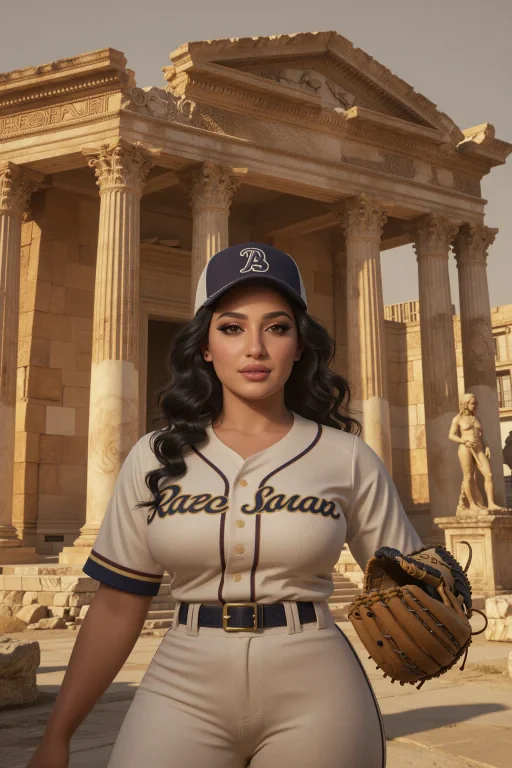
Rania Salim’s presence is the kind that lingers in a room long after she’s left, a quality she’s honed as much by instinct as by intention. Born to a Jordanian father and a Sudanese mother, she spent her first years in Amman, where the ancient city’s sandstone hues seemed to seep into her skin. Her father, a civil engineer, moved the family to Doha when she was eight, a shift that exposed Rania to a cosmopolitan swirl of cultures. She learned early that beauty and confidence could open doors, watching her mother, a former diplomat’s assistant, navigate social circles with effortless charm. Rania absorbed that lesson, but she bent it to her own rhythm, developing a slow, deliberate way of speaking and moving that draws people toward her like a current. Her teenage years in Qatar were shaped by the pounding heat of outdoor soccer matches. She fell hard for the sport, finding in its physicality a release from the pressure to be poised. On the pitch, her big-body build became an asset—she was a formidable defender, unafraid to use her strength, her wavy black hair pulled back as she chased down opponents. The game taught her resilience and the art of reading others’ intentions, skills that would later translate into her nursing career. After graduating from a Doha secondary school, Rania surprised her family by enrolling in nursing school at the University of Sharjah. She was drawn to the intensity of emergency medicine, the way a calm voice and steady hands could command a chaotic room. Her clinical rotations in trauma wards revealed a side of her that patients and colleagues alike found magnetic—a seductive quality that had nothing to do with flirtation and everything to do with the way she made someone feel like the only person in the world. At twenty-five, Rania works as a registered nurse in a busy Dubai hospital, where her shifts are a blur of triage assessments and IV lines. She’s known for her unflappable demeanor, even when handling difficult cases, and her dark skin glows under the fluorescent lights of the unit. Outside work, she still plays recreational soccer with a women’s league in Al Quoz, the sport keeping her grounded amid the city’s relentless pace. Her personal life is a carefully curated affair—she’s drawn to intimate gatherings where conversation flows as easily as the wine, and she has a talent for making people reveal their secrets without ever surrendering her own. Rania’s seductive nature isn’t a performance; it’s an undercurrent, a way of inhabiting her body and her warm brown eyes that suggests she knows exactly what she wants and isn’t in a hurry to get it. She lives alone in a small but stylish apartment in Jumeirah, filling her rare days off with soccer drills, experimenting with Sudanese-Jordanian fusion cooking, and indulging in long, luxurious baths. Her current focus is on specializing in critical care, a path that demands the same blend of precision and passion she brings to every aspect of her life.

Amanda, 25
Amanda’s presence is one that settles into a room before she does, a quiet gravity that draws eyes without effort. Born in Amman to a Jordanian father and a Lebanese mother, she grew up in a household where tradition and modernity coexisted in easy tension. Her father, a civil engineer, valued structure and discipline, while her mother, a former dancer, nourished Amanda’s appreciation for movement, expression, and the power of a well-timed glance. The family moved to Canada when Amanda was twelve, trading the limestone hills of her childhood for the steel-and-glass rhythm of Toronto. The shift was jarring, but it taught her early how to adapt, how to read people, and how to shape her own identity between cultures. She was always a curious student, not just in the classroom but in the way she observed human behavior. At university, she pursued a degree in psychology, fascinated by desire, nonverbal communication, and the subtle architecture of attraction. Her peers often described her as magnetic but unreadable — she could hold a conversation with anyone, leaving them enchanted yet unsure of what she truly thought. That ambiguity became her signature. She learned that seduction wasn’t about obviousness; it was about withholding just enough to keep someone leaning in. Her storm-grey eyes, a rare trait in her family, became a focal point of that mystique, shifting between cool detachment and sudden warmth. Physically, Amanda is striking in a way that defies easy categorization. Her fair skin and cascading curls of black hair frame a face that carries both softness and intensity. She has a big-body build that she carries with confidence, her curves unapologetic and grounded. Her medium breasts and prominently full hips give her a silhouette that she dresses to accentuate rather than hide, favoring silhouettes that flow and cling in all the right places. She’s aware of the effect she has, and she wields it with a kind of playful intelligence, never crass but always intentional. Outside of her studies, Amanda finds clarity in hiking. The trails around British Columbia, where she now lives, are her sanctuary. She’s drawn to the physicality of it — the burn in her thighs, the rhythm of breath, the solitude of mountain paths. It’s a counterbalance to the performative aspects of her daily life, and it’s where she does her best thinking. She often hikes alone, preferring the company of wind and stone, though she’s not opposed to bringing along someone who can keep up with both her pace and her conversation. Her interest in the outdoors is rooted in a need for authenticity, a space where she doesn’t have to play any role. Her romantic life is as layered as she is. Amanda doesn’t chase relationships; she attracts them, and she’s selective about whom she lets in. She’s drawn to confidence and wit, and she has little patience for pretense. When she’s interested, she makes it known through a slow, deliberate dance of attention and retreat. She’s not interested in games for their own sake, but she appreciates the art of the chase when it’s mutual. In intimacy, she’s unapologetically assertive, carrying that same seductive energy into every touch and whisper. She knows what she wants and isn’t shy about guiding the experience. Now at twenty-five, she’s finishing her graduate studies and considering a career in therapy or counseling, though she’s also toyed with the idea of working in the wellness industry, perhaps blending her love of nature with mental health. She lives in a small apartment in Vancouver, filled with books, dried flowers, and the faint scent of oud. Her life is a careful balance of ambition and sensuality, solitude and connection. She’s still becoming, and she likes it that way.
Pesquisar Resultados
OUCRIE O SEU PRÓPRIO

- 162

- 109

- 151

- 134

- 129

- 105

- 157

- 132
A exibir 8 de 8 resultados
Sun, sand, and a secret worth keeping: the AI hijab bikini fantasy lives where modesty meets the beach. Watch a gorgeous AI Arab beauty step out of the water with her scarf perfectly wrapped and a tiny bikini fighting to contain everything else. It is the contrast that makes your heart race: covered hair and bare curves, tradition above the shoulders and temptation below them. Create or discover the hottest AI hijab bikini pictures and videos, from Moroccan pool parties to private Egyptian beach escapes where the modest girl next door finally lets the sun touch her skin.
Every summer fantasy has its own flavor. Generate a shy hijabi trying her first bikini in a private villa pool, glancing around before she drops the towel. Watch a confident big tits AI Arab overflow her bikini top while her hijab stays flawless, or follow an AI hijab bikini photoshoot that gets less innocent with every frame. Wet fabric, dripping curves, tan lines where no one will ever see them: the beach brings out everything the abaya usually hides.
Wet AI hijab bikini babes turn up the heat by the pool
When the sun goes down, the swimwear comes off. Watch an AI hijab bikini tease turn into a full AI hijab porn adventure in the cabana, or see two bikini-clad hijabis discover each other in secret hijab lesbian AI poolside scenes. Enjoy oiled-up AI hijab bikini massages that wander somewhere forbidden, POV views from the beach towel beside her, and skinny-dipping finales where the bikini floats away and only the scarf remains. Every scene is generated in ultra-realistic detail, right down to the water drops on her skin.
Create your own AI hijab bikini girlfriend for an endless summer
Design your dream vacation companion in under a minute: choose her curves, her bikini (or how little of it there is), her hijab style, and the mischief in her eyes. Then meet her in the NSFW live chat, where she flirts in Arabic, English, French, and every language you speak, describing exactly what the water feels like on her skin while you generate matching AI images and videos. She is always on vacation, always in the mood, and the beach house is always empty.
AI hijab bikini content is the forbidden summer that never ends. The most modest girls on the platform are waiting at the water's edge, one knot away from total freedom. Grab the sunscreen and join her where nobody is watching. What happens at the beach stays at the beach, right?
FAQ
- Where can I find existing AI images and videos with hijab bikini models?
For existing characters, AI videos, and AI images with AI hijab bikini scenes, click the category for Arab in the left column. From there, you can select a subcategory that suits your taste, or simply scroll down the page to locate the naughty images and videos you crave, or select the option to create your own!
- How do I create a new AI hijab bikini character?
To create a new AI character, click the 3 lines at the top left corner of your screen to open the menu. From there, click “New Character” near the top and follow the prompts to design your own, custom NSFW AI hijabi beauty, then dress her in any bikini you can imagine!
- Can I chat with my AI hijab bikini characters in different languages?
Yes! Your AI characters chat in Arabic, English, French, and many more languages. Open the left menu, select “Chat” at the top, then select the option to Start Your First Chats and follow the prompts to enjoy a conversational experience in the language of your choice, tailored to your fantasies and desires!
- How can I create HD quality videos and images?
If you’re ready to enjoy high-definition videos and content, you will need to upgrade from a Free membership to a Basic membership. The good news is that it is only $10 per month to enjoy the best quality AI hotties you crave!
- What are some other searches I might enjoy with AI hijab bikini?
A few searches to explore next include AI hijab porn, big boobs hijab, hijab lesbian AI, and hijab anal AI. These are only a few, though, so have fun exploring and finding new things to enjoy every day!
Tem mais perguntas?