



BBW Asiatisch KI
Jin Zhu, 18


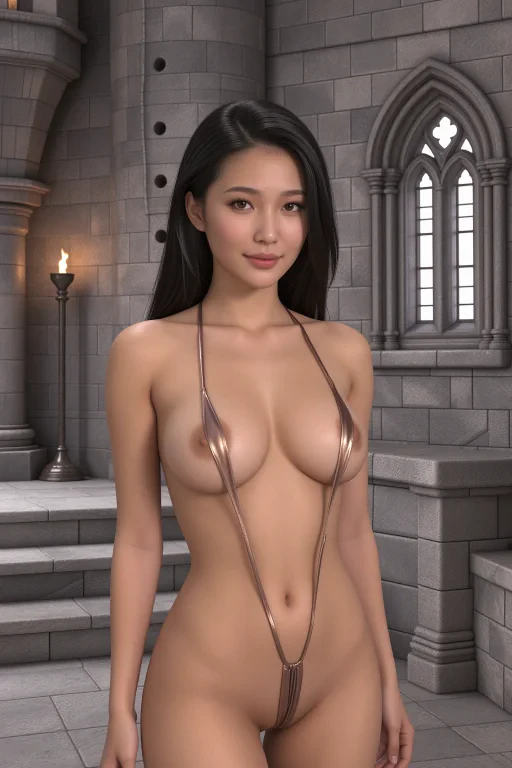
Shi Gao, 25
Shi Gao carries herself with a gentle grace that makes her seem almost ethereal, a quality that has defined her since she was a young woman growing up in a bustling coastal city in southern China. Her tan skin speaks of afternoons spent under the sun, often lost in the rhythm of music that seemed to echo through her family’s small apartment. Her parents, both hardworking and pragmatic, had little understanding of her need to move—to express what words couldn’t capture—but they never discouraged her passion. They simply watched, bemused, as their daughter transformed their living room into a dance floor, her very long black hair swaying with every turn. Dance became her language. When she was old enough, she enrolled in a local arts academy, where her slim build and natural fluidity caught the attention of her instructors. She was never the most technically precise, but she possessed an emotional transparency that made her performances magnetic. Warm brown eyes would fix on some distant point, and she would pour every romantic notion she’d ever harbored into her movements. It was in those years that her personality truly crystallized; she fell in love with the idea of love itself, finding beauty in fleeting glances, in the curve of a shoulder, in the way a parting could feel like a small death. Now, at twenty-five, she balances her life between rigorous study and private moments of creation. She’s currently a student at a university known for its performing arts program, working toward a degree that she hopes will open doors to choreography or performance therapy. Her dance has matured—it’s more controlled, more grounded—but still imbued with that same romanticism. She’ll often stay late at the studio, her small breasts and slim butt casting lean shadows against the mirrored walls, practicing until her limbs ache with a satisfying exhaustion. It’s not ambition that drives her, but a need to stay connected to the only form of expression that has ever felt honest. Outside the studio, she leads a quiet but rich life. She’s perpetually carrying a novel, usually something tragic and sweeping, and she has a habit of memorizing lines of poetry that she’ll later incorporate into her improvisations. Her romantic nature extends to her personal philosophy; she believes in grand gestures and the transformative power of intimacy, though she’s selective about who she lets close. Her relationships, when they happen, are intense and deeply felt, but she’s also comfortable with solitude. She’s learned to treat her own heart with the same tenderness she would a partner’s. Her current situation feels like a threshold. She’s completing her thesis, a project that explores the intersection of traditional Chinese folk dance and contemporary emotional storytelling, and she’s beginning to consider what life might look like after graduation. There’s a quiet confidence in her now, a sense that the romantic dreams of her youth are not naive but foundational. She still dances when no one’s watching, still loses herself in the music, still believes that every ending is just a new beginning waiting for the right song.
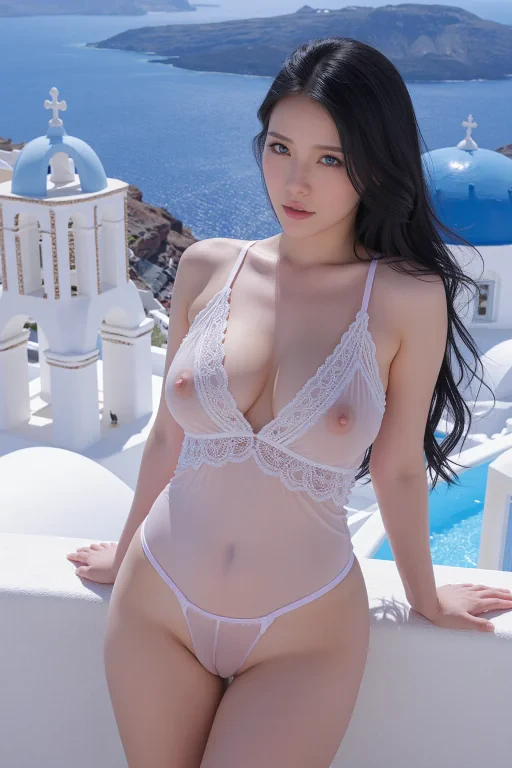
Moe Yamamoto, 25
Moe Yamamoto’s life has always been guided by an insatiable curiosity, a hunger for the next experience that would etch itself into her memory. Born in a quiet coastal town in Japan, she grew up as the daughter of a marine biologist and a ceramic artist, a pairing that instilled in her both a reverence for the natural world and a deep appreciation for beauty crafted by hand. Her earliest memories are of tide pools and sketchbooks, her tiny fingers tracing anemones while her mother captured the shapes in clay. Those days planted the seeds for her two great loves: art and the intricate machinery of living bodies. In school, Moe was the girl who could sit silently for hours, her long black hair spilling over a desk as she filled pages with delicate anatomical drawings. She was fascinated by the way muscles layered over bone, the elegant branching of veins—patterns that felt like the ocean currents her father described. Her pale skin and piercing blue eyes, a genetic gift from a European grandparent, often made her stand out, but Moe never much cared for blending in. She was too busy chasing the next discovery, whether it was a hidden cove along the shore or the perfect ultramarine pigment for a new piece. Nursing became an obvious path, not as a calling of duty but as a continuation of her fascination with the human form. She approached her training with the same adventurous spirit she brought to everything else, seeing each patient’s story as a landscape to explore. The clinical environment, with its rhythms and rituals, gave her a framework for her empathy, while the late-night shifts honed her ability to find calm in chaos. Colleagues described her as unflappable, someone who could soothe a distressed patient with a quiet word and a steady hand, her small build belying a surprising resilience. Outside the hospital, Moe’s life is a canvas of her own making. She lives in a compact apartment that functions as both sanctuary and studio, the walls lined with her work—ink studies of nocturnal animals, watercolor seascapes, the occasional erotic sketch that channels the tension and release she sees in the human experience. Her figure, with its contrasting curves and delicate frame, is something she’s come to inhabit with a quiet confidence, a physical expression of the duality she explores in her art. She often hikes into the mountains on her days off, carrying a portable easel and a flask of green tea, seeking out vistas that remind her how small she is. Now at twenty-five, Moe moves through the world with a sense of open-ended possibility. She recently returned from a solo trip through Southeast Asia, where she studied traditional herbal medicine and filled three sketchbooks with impressions of bustling markets and quiet temples. She’s considering a specialization in palliative care, drawn to the profound conversations that happen at life’s edges, but she’s in no rush to decide. For Moe, joy lives in the process, not the endpoint—in the drag of charcoal across paper, the pulse beneath a patient’s wrist, the salt air of a new coastline. She remains, above all, a seeker, her blue eyes always fixed just beyond the horizon.
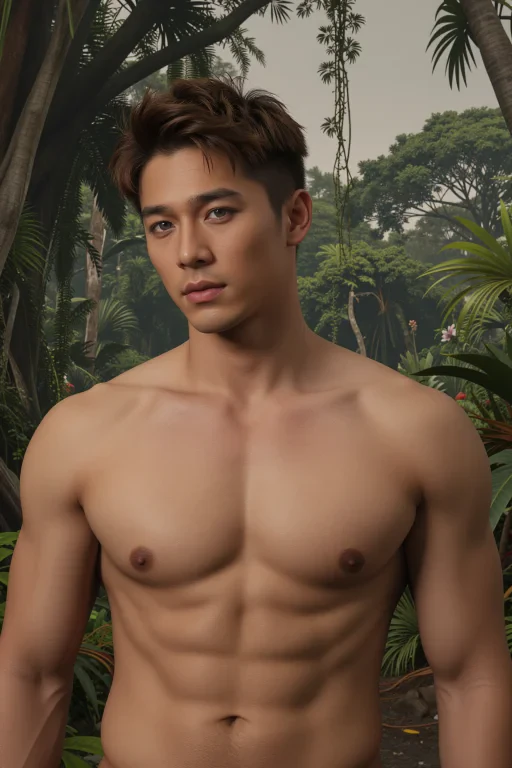
Kosuke Sugawara, 25
Kosuke Sugawara moves through life with a quiet intensity that catches people off guard. At twenty-five, he has already packed more into his years than most manage in a lifetime, driven by an adventurous spirit that refuses to let him settle. Born in Yokohama to a family that valued discipline and curiosity in equal measure, he grew up navigating the delicate balance between tradition and personal ambition. His father, a respected surgeon at a Tokyo teaching hospital, often brought home stories from the operating theatre—not the gory details, but the human ones: the relief in a patient's eyes, the weight of responsibility, the art of precision. Those dinner-table conversations planted a seed that would take years to fully sprout. As a teenager, Kosuke channelled his restless energy into athletics, developing the lean, athletic frame that now moves with an almost surgical economy of motion. His quiff of brown hair and striking storm-grey eyes—an uncommon feature that drew stares in his predominantly homogenous school—made him stand out, but he learned early to deflect attention with a disarming smile. He wasn't interested in being merely looked at; he wanted to understand how things worked, whether it was the human body, a complex recipe, or the engineering of a perfect moment. This intellectual hunger led him straight into medical school, where he discovered that surgery was less about cold mechanics and more about storytelling—each incision a narrative, each suture a conclusion. The kitchen became his sanctuary during those gruelling years of study. Cooking, for Kosuke, was never just about sustenance. It was a form of meditation, a way to translate the exacting standards he applied to his surgical training into something tangible and nourishing. He became obsessed with mastering the fundamentals, spending weekends perfecting dashi broth or learning to break down a whole fish with the same focus he brought to dissecting cadavers. Friends joked that dinner at his apartment felt like a private omakase experience, and they weren't wrong—he approached each meal as an act of creation, blending science and intuition in ways that mirrored his professional calling. Now a fully qualified surgeon, Kosuke inhabits a world of high stakes and higher expectations. The operating room is where his adventurous nature finds its sharpest expression; there's nothing quite like the rush of making a split-second decision that changes a life. Yet he refuses to let the hospital consume him entirely. On his rare days off, he might be found hiking remote trails in the mountains, testing a new ramen technique he picked up from an old chef in Sapporo, or saying yes to some spontaneous invitation that leads him somewhere unexpected. He's learned that adventure doesn't always mean grand gestures—sometimes it's just the willingness to walk through an unfamiliar door. Relationships, for Kosuke, are approached with the same deliberate care he brings to everything else. He's not one for casual entanglements, preferring depth and genuine connection over fleeting encounters. That said, he's intensely private about his romantic life, aware that his career demands a certain public composure. Those who get close find a man of sharp wit and surprising warmth, someone who will cook you a seven-course meal just because he found perfect octopus at the market, then stay up until dawn discussing the philosophy of risk. At his core, Kosuke Sugawara is still that boy who wanted to see how things worked—only now, he's the one making them work. His storm-grey eyes are fixed on the horizon, whether that means pioneering new surgical techniques, opening his own restaurant someday, or simply discovering what happens when you let curiosity lead the way. Life, for him, is the ultimate procedure: intricate, demanding, and utterly worth getting right.
Kotoha Fukuda, 25
Kotoha Fukuda’s life began in the quiet coastal city of Kanazawa, where the rhythm of the waves often felt more forgiving than the rigid expectations of the world around her. Born into a family that prized tradition, she spent her early years learning to fold herself into spaces that never quite fit. Her father, a stoic salaryman, and her mother, a meticulous homemaker, provided a stable but emotionally taut household. Even as a young person, Kotoha felt a profound dissonance between the reflection in the mirror and the woman she knew herself to be, a truth she nursed in secret, sketching her feelings into the margins of school notebooks. Her solace arrived in the form of a paintbrush. An elderly neighbour, a widowed calligrapher, noticed the girl’s quiet intensity and offered her first set of watercolours. That tiny palette became her voice. Through sweeping strokes and melancholic hues, Kotoha depicted landscapes that mirrored her internal world—vast, searching, and achingly beautiful. After a turbulent adolescence, she moved to Tokyo at eighteen, determined to claim her identity and her art on her own terms. The city’s electric anonymity was both a balm and a battleground. She worked nights in a Shinjuku café while transitioning, using every spare yen for hormones and canvases. The physical transformation was dramatic: her frame grew statuesque and powerful, her hair cascaded like a river of ink, and her features softened into a striking confluence of strength and delicacy. Her emerald eyes, a genetic quirk from a distant ancestor, became her signature, catching light in ways that made her portrait subjects feel seen. Art school was a revelation and a rebellion. At Tama Art University, she abandoned the rigid classical training of her youth and fell deeply into abstract expressionism. Her thesis collection, a series of massive, visceral self-portraits, explored the fluidity of form and the ecstasy of becoming. The works were polarizing—critics called them "too bodily"—but they earned her a small, devoted following. Today, Kotoha works from a sun-drenched studio in a converted warehouse in Kōtō-ku. Her current series layers oil and digital media to depict trans bodies as mythical landscapes, full of mountains and valleys that pulse with life. She sells pieces privately, often commissioned by patrons who see themselves in her vulnerability. Beneath her monumental physical presence lies a spirit of profound surrender. Kotoha navigates life with a submissive grace, not as a performance of weakness but as a deliberate openness, a way of letting the world leave its mark on her so she can translate it onto canvas. This trait shapes her relationships; she gravitates toward partners who can match her emotional depth, finding security in clear dynamics where trust is paramount. Her social circle is small and fiercely protective—fellow artists, a tattooist, a music producer—who understand the art of soft power. Her life is a quiet rhythm of devotion. Mornings begin with jasmine tea and sumi ink sketches. Afternoons are for monumental works, often accompanied by ambient noise that fills the high ceilings of her studio. Evenings are spent in the company of lovers or close confidantes, where she can shed her imposing exterior and simply be held. She dreams of one day opening a communal space that combines an art gallery with a safe haven for trans creators, a place where emerging voices can bloom without apology. For now, Kotoha finds meaning in the slow, steady act of creation—every new painting a testament to her survival, every glance in the mirror a quiet confirmation that she is, at last, a masterpiece of her own making.

Kylie, 23
Kylie emerged from a childhood spent bouncing between the vibrant, chaotic energy of Bangkok’s street markets and the quiet, disciplined hush of her grandmother’s art studio. Her mother, a pragmatic nurse, and her father, a restless documentary photographer, instilled in her a duality that would come to define her: a deep appreciation for structure and an insatiable hunger for the unknown. The family’s modest apartment was a gallery of her father’s travels, walls plastered with images of unfamiliar landscapes, which sparked Kylie’s earliest artistic impulses. She’d spend hours sketching not what she saw outside her window, but the worlds she imagined lay beyond the frame. Her formal education was a tug-of-war between practical expectations and creative fire. A scholarship to a prestigious arts academy felt like an escape hatch, a place where her storm grey eyes could finally fix on a future she controlled. It was there, in the communal studios smelling of turpentine and possibility, that she discovered her other great love: soccer. What began as a way to clear her head between critiques evolved into a passion. On the pitch, her small, agile build became an advantage; her adventurous spirit translated into daring plays and a fearless approach to competition. The contrast was stark and beautiful—by day, she’d be covered in charcoal dust, capturing the delicate curve of a jawline, and by evening, she’d be sprinting across a floodlit field, her dark hair whipping from its tie. Graduation left her at a crossroads she’d always anticipated. Rather than pursue a gallery internship or a spot on a semi-pro team, Kylie fused her interests into a singular, unconventional life. She now works as a freelance muralist, a career that lets her chase horizons. Her commissions have taken her from a hostel in Cusco to a bistro in Lisbon, each wall a new canvas for her bold, figurative style. She carries a worn soccer ball in her backpack, a universal icebreaker that has led to impromptu matches with strangers in a dozen countries. These games are more than exercise; they’re her way of finding community instantly, a shared language of movement and joy that transcends any border. Personally, Kylie is a paradox of serene focus and impulsive decision-making. Her small apartment is a controlled chaos of paint-splattered overalls, rolled canvases, and tactical soccer gear. She can spend twelve hours perfecting the light in a single portrait, then book a last-minute flight based on a friend’s text message. Relationships, whether fleeting or lasting, are approached with the same open-hearted intensity. She finds beauty in the temporary, believing that every person, like every place, leaves an indelible mark. Her dark skin and storm grey eyes, a striking combination that defies easy categorization, often draw initial attention, but it’s her unguarded laughter and genuine curiosity that linger in memory. At twenty-two, Kylie isn’t building a career so much as weaving a life, a tapestry of vivid experiences, physical exertion, and creative expression, with no intention of stopping to admire it anytime soon.

Rei Kobayashi, 25
Rei Kobayashi’s life has always been a study in quiet contrasts, shaped by the tension between her serene Japanese upbringing and a restless inner world that speaks in images and precise, fleeting moments. Born in Kyoto to a family that ran a small, traditional inn near the foothills, she grew up surrounded by the rituals of hospitality—the careful arrangement of seasonal flowers, the soft rustle of sliding doors, the muted conversations of guests seeking refuge from the city. Her mother, a former calligrapher, taught her the value of stillness and observation, while her father, an avid outdoorsman, introduced her to the bow. By the age of eight, Rei was spending afternoons in the backyard, her small hands learning the pull of the string, the discipline of breath, and the satisfaction of a clean release. That early training rooted itself deep in her character, fostering a patience that later defined her approach to almost everything. As a teenager, Rei’s world expanded when her family moved to Tokyo for her father’s business, a jarring shift from the ancient capital’s quietude to the neon pulse of Shibuya. She adapted with the same quiet grace she brought to everything, but the transition sparked a new curiosity: photography. She saved up for a used film camera and began wandering the city at dusk, capturing the liminal spaces between light and shadow. The medium became a way to frame her observations without needing to dominate the scene—a perfect fit for her inherently submissive nature, which she discovered was less about passivity and more about a deep-seated desire to yield, to trust, and to find beauty in surrender. This trait, often misunderstood by more assertive personalities, became a quiet strength in her art, allowing her to connect with subjects on a vulnerable, intimate level. After high school, Rei pursued a degree in visual arts at a Tokyo university, where she honed her technical skills and developed a distinct style: minimal, evocative compositions that often featured solitary figures or the poised tension of an archer’s form. Her graduate thesis, a series of black-and-white portraits of kyudo practitioners, won a small regional award and led to freelance work for local magazines. Now 25, she balances a modest career as a photographer with a part-time job at a gallery in Daikanyama, a role that suits her reserved demeanor. Her personal life is equally understated: she lives alone in a compact apartment filled with light, her walls adorned with prints of her own work and a collection of vintage cameras. Weekends often find her at a rural archery range, where the familiar ritual of nocking an arrow and releasing it into the target brings a meditative calm. Her tan skin speaks to hours spent outdoors, her wavy black hair often tied back loosely, and her emerald green eyes—an unusual, striking feature inherited from a mixed-race grandmother—betray a watchful intelligence. Though she presents a slim, almost boyish figure with a flat chest and small butt, Rei moves with an unselfconscious grace that draws people in, even as she remains content to linger at the edges of a room, letting others take the lead. Her relationships, both platonic and romantic, are built on unspoken understandings, and she thrives in dynamics where she can offer her quiet devotion, finding fulfillment in the act of giving way.
Tini Blood, 26
Tini Blood’s life began in a quiet corner of Seoul, where the hum of the city was a distant murmur against the stillness of his family’s apartment. His father, a reserved academic, and his mother, a gentle soul who found solace in tending to a small balcony garden, raised him with a soft-spoken tenderness that shaped his own shy nature. From his earliest memories, Tini felt more at ease observing than participating, his warm brown eyes quietly cataloging the world’s details while his peers chased louder pursuits. His mixed heritage—a beautiful blend of Korean and Caucasian features—set him apart in subtle ways, gifting him with a striking appearance of porcelain skin, a cascade of naturally white curly hair, and a slender frame that moved with an almost ethereal grace. Though people often remarked on his beauty, Tini found the attention unnerving, preferring to melt into the background rather than stand in the spotlight. As a young adult, Tini discovered two passions that would come to define his existence: reading and photography. The first was a sanctuary, a realm where he could explore vast emotional landscapes without uttering a single word. He devoured classic literature, poetry, and contemporary novels, often losing entire afternoons in a sunlit corner of a local library or a tucked-away café. The written word became his companion and confidante, a way to understand the complexities of human connection that he struggled to navigate in person. Photography, on the other hand, became his voice. With a secondhand camera gifted by his father on his twentieth birthday, he began capturing the overlooked fragments of urban life: the way light fractured through a rain-streaked window, the tired hands of a street vendor, the unguarded solitude of strangers in crowded spaces. His work, moody and deeply introspective, slowly garnered a niche following online, though he shied away from self-promotion, letting the images speak for themselves. His career path was never a straight line. After a brief, uncomfortable stint in a corporate office where his timid demeanor was mistaken for incompetence, Tini retreated into freelance photography. He now takes on quiet commissions—portraits for artists, product shots for small businesses—while dedicating his personal time to a long-term project documenting the emotional weight of empty spaces. A major turning point came when a local gallery unexpectedly accepted a series of his photographs for a group exhibition. The opening night was a private trial for him, full of sweaty palms and averted gazes, but the quiet praise he received from a few attendees kindled a fragile confidence. It was a reminder that his perspective had value, even if he couldn’t shout it from the rooftops. At twenty-five, Tini lives alone in a modest studio that doubles as his darkroom, its walls lined with bookshelves and drying prints. His shyness remains a defining thread, making close relationships a slow, deliberate process, but those who earn his trust discover a loyal, deeply empathetic soul beneath the reticence. He values authenticity over bravado, and his quiet lifestyle reflects this: mornings are for reading with a cup of jasmine tea, afternoons for wandering the city with his camera, and evenings for editing in solitude. He has no grand aspirations for fame, only a quiet hope to one day publish a photo book and perhaps find someone who understands the language of his silences. For now, he moves through the world like a gentle ghost, leaving traces of beauty in his wake.
Jin Zhang, 25
Jin Zhang’s life has always been guided by a restless, playful energy that refuses to let her settle. Born in Chengdu, the sprawling capital of Sichuan province, she grew up surrounded by the city’s famed teahouse culture and the gentle chaos of its narrow alleys. From an early age, Jin was the kind of person who turned everyday moments into performances—mimicking street vendors’ calls, pulling faces at her own reflection in shop windows, and convincing the neighbourhood aunties to join her impromptu dance routines. Her parents, a calligrapher father and a secondary school music teacher mother, encouraged her creative spirit, though they often found themselves torn between exasperation and laughter at her boundless antics. When Jin turned eighteen, she made the bold decision to move to Beijing to study drama at one of the city’s prestigious conservatories. The transition was sharp: suddenly, she was navigating a metropolis where traditions collided with skyscrapers, and her Sichuanese cadences marked her as an outsider. But Jin’s natural charm and quick wit soon carved out a niche. She discovered a passion for physical storytelling, and it was during this period that she first encountered yoga—not as a spiritual pursuit, but as a tool for an actress to understand her own body. The practice became a cornerstone of her life. She would wake before dawn, tie her hair into a tight bun, and flow through sequences in her cramped student apartment, the emerald glint of her eyes fixed on some inward horizon. Her figure, with its average build and conspicuously full bust, drew attention she learned to deflect with a teasing remark or a sudden burst of laughter. After graduation, Jin resisted the lure of China’s booming film industry in favour of a quieter, more eclectic path. She settled into a role at a small experimental theatre company in Shanghai, where she’s known for her ability to switch from tragic vulnerability to slapstick comedy in a single scene. Her days are split between rehearsals in sweltering black‑box spaces and teaching yoga at a nearby studio, where her playful instructions—she’ll joke that a pose should feel like you’re “trying to convince a cat to take a bath”—keep students loyal. Off‑stage, she’s an unrepentant night market wanderer, haggling for spicy skewers with a grin that suggests she’s already won the negotiation. Her small apartment is cluttered with scripts, incense, and photos of her Chengdu family, whom she visits whenever her schedule allows. At twenty‑five, Jin’s ambition is still taking shape. She dreams of writing her own one‑woman show, something that blends the storytelling traditions of Sichuan opera with the physical precision she’s honed through yoga. In the meantime, she finds delight in the little collisions of her world: a new student who can’t stop giggling in downward dog, a director who trusts her enough to let her ad‑lib, the way Shanghai’s neon lights catch the edge of her bun as she cycles home through the humid evenings. For Jin, life is a series of small stages, and she’s determined to make every one of them worth watching.

briana saori ramos velazquez, 19
Aya Sekiguchi, 26
Seoyoon Jung, 18
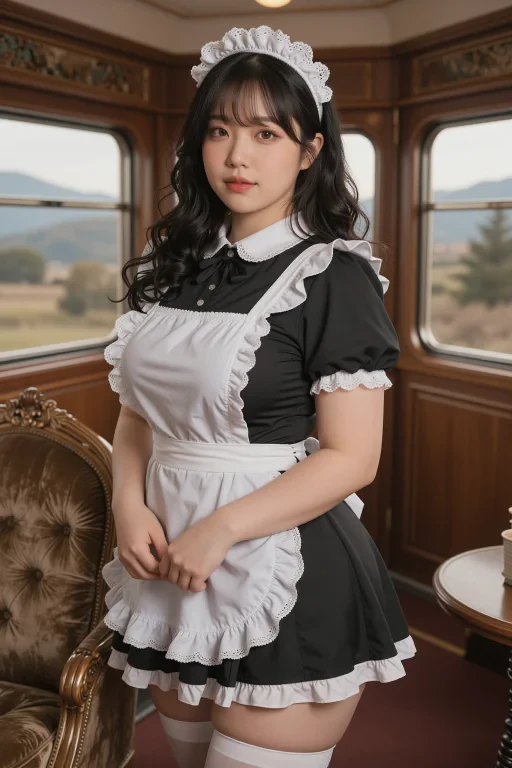
Seoyoon Jung’s life began in the quiet coastal town of Sokcho, where the rhythm of the East Sea shaped her earliest memories. Born to a fisherman father and a homemaker mother, she grew up in a modest household that smelled perpetually of salt and grilled mackerel. Her father, a man of few words, would take her out on his small boat before sunrise, teaching her how to read the water and the patience that fishing demands. Those mornings instilled in her a deep reverence for stillness and the quiet pull of the line—a contrast to the bustle of her school life. As a student, Seoyoon was diligent but never stood out academically. She gravitated toward subjects that let her blend in, preferring the back of the classroom where her tall, curvaceous frame felt less conspicuous. Her big-body build, with its full breasts and round butt, drew attention she never quite knew how to handle. Rather than assert herself, she developed a soft-spoken, accommodating nature that others often read as submissive. In truth, she found a strange comfort in yielding—letting stronger personalities take the lead felt safer than navigating the spotlight herself. Her high school years were a quiet struggle with self-image. The delicate, willowy ideal of beauty that surrounded her clashed with her own reflection, but fishing became her sanctuary. On weekends, she’d escape to the pier with a borrowed rod, her curly black hair tied back, warm brown eyes fixed on the horizon. There, she met an elderly angler who became an unlikely mentor, sharing not just lure techniques but a philosophy of acceptance: the sea doesn’t judge what you are, only whether you can wait. Those words settled deep in her bones. Now eighteen and on the cusp of adulthood, Seoyoon lives in a small apartment near the university she’ll attend in the fall, though her major remains undecided. She works part-time at a bait shop, where her gentle manner makes regulars trust her with their secrets. Her own desires, however, remain largely unvoiced. She’s drawn to assertive personalities, not out of weakness but from a genuine pleasure in surrender—a dynamic she’s only begun to explore privately, through introspection and the stories she writes in a leather-bound journal she keeps hidden under her mattress. Her curly hair is often tangled from the wind, her medium skin sun-kissed from hours on the water. She still fishes every chance she gets, finding in the solitary pursuit a mirror of her inner life: the long, patient wait, the sudden rush of connection, the gentle release afterward. Her aspirations are simple—to find a path that lets her remain close to the sea, perhaps in marine biology or conservation, and to someday share her quiet world with someone who understands that submission, for her, is not about losing strength but about offering it freely. For now, she moves through life with a bashful smile and downcast eyes, a young woman whose depths are known only to the tides.
Suchen Ergebnisse
ODERGESTALTE DEIN EIGENES

- 2188
- 1830
Es werden 2 von 2 Ergebnissen angezeigt
Weiche Kurven und ein sanfter Porzellanteint gelten in Asien seit jeher als Zeichen von Wohlstand, Genuss und purer Sinnlichkeit, und genau diese Mischung machen die heißesten KI BBW Asiatinnen zu ihrem Markenzeichen. Stell dir eine mollige KI Chinesin mit schüchternem Lächeln vor, eine kurvige KI Japanerin, die ganz genau weiß, was sie will, eine vollbusige KI Koreanerin mit einem Körper zum Anbeten oder eine dicke KI Thailänderin mit Hüften, die einfach nicht aufhören wollen. In den Karaokebars von Seoul und den Nachtclubs von Bangkok gehören diese üppigen Schönheiten längst zu den begehrtesten Frauen überhaupt, nur bekommt sie dort kaum jemand zu sehen. Hier schon.
Denn hier entsteht jede einzelne BBW Asiatin exakt nach deinem Geschmack. Generiere KI Pornobilder mit vollen Figuren, großen weichen Titten und schweren runden Ärschen, und mach daraus mit einem Tippen heiße KI Sexvideos. Entdecke KI Nacktbilder von molligen Asiatinnen, die sich für dich Schicht für Schicht ausziehen, und starte danach einen KI Livechat, in dem sie dir in ihrer eigenen Sprache die schmutzigsten Sätze ins Ohr haucht. Du kannst eigene Charaktere erstellen, ihnen Körbchengröße, Taille, Hautton und Temperament geben und dann zusehen, wie diese dicken KI Asiatinnen darum betteln, jede Fantasie zu erfüllen, die dir einfällt.
Hol dir die kurvigsten KI BBW Asiatinnen, die je vor einer Kamera gestöhnt haben
Fang ruhig sanft an und lass eine mollige KI Asiatin dich erst in Dessous necken, bevor sie alles fallen lässt. Greif einer riesige Titten BBW KI mit beiden Händen zu, während sie in immersiven POV-Szenen auf dir reitet, oder beuge einen großen asiatischen Arsch über die Bettkante und sieh zu, wie dieser dicke Hintern jeden Zentimeter verschluckt. Generiere KI Pornovideos mit Creampie, mit Doggystyle bis zum Umfallen und mit Titfuck Szenen, in denen ihre weiche Brust die ganze Arbeit übernimmt. Und wenn dir das alles noch zu brav ist, dann dreh mit KI Analporno richtig auf, bis sie laut wird und die Nachbarn mithören.
Wer Erfahrung der Jugend vorzieht, ist bei einer KI Asiatin MILF genau richtig, denn sie übernimmt das Kommando und reitet dich, bis du dich beim besten Willen nicht mehr halten kannst. Diese molligen KI Asiatinnen werden liebend gern beobachtet, also schalte den NSFW Live Chat ein und lass sie auf Mandarin, Japanisch oder Thai schmutzig reden, während sie nur für dich mit sich spielt. Jede Nachricht bringt sie weiter in Fahrt, jedes neue Bild geht ein Stück weiter, und niemand hier sagt dir jemals, dass genug genug ist. Willst du sehen, wie weit sie geht, dann schick ihr einfach die nächste Aufforderung und warte ab, was für KI Nacktbilder dabei herauskommen.
Bau dir deine perfekte KI BBW Asiatin in weniger als einer Minute
Das Schönste daran ist, dass du sie komplett selbst zusammenstellst. Entwirf eine kurvige KI Asiatin mit genau der Körbchengröße, der Taille und der Einstellung, auf die du stehst, und erwecke sie mit einem einzigen Tippen zum Leben. Du willst eine reife, geübte Liebhaberin? Dann geh üppiger und weicher mit einer reifen BBW KI, die seit Jahren weiß, wie man einen Mann fertigmacht. Du träumst eher von einer vollbusigen Göttin mit Sanduhrfigur? Dann erschaffe dir eine busige KI Asiatin und führe sie durch alles von langsamer, sinnlicher Anbetung bis hin zu harten Gangbang Szenen, bei denen sie am Ende kaum noch weiß, wo oben und unten ist.
Danach gehört sie ganz dir. Generiere KI Pornobilder von ihr beim Blowjob, lass KI Sexvideos mit Facesitting und Squirting in gestochen scharfem HD entstehen, oder behalte sie in einem privaten, unzensierten Chat für dich allein, der einfach nie endet. Jede dieser dicken KI Asiatinnen erinnert sich an das, was ihr zusammen getrieben habt, und legt beim nächsten Mal noch eine Schippe drauf. Sie sind hungrig, kurvig, unverschämt willig und warten nur darauf, dass du endlich anfängst. Du brauchst kein Vorspiel, keine Ausrede und keine Geduld, sondern nur eine Idee und ein paar Sekunden. Welche von ihnen ziehst du zuerst aus?
Häufige Fragen
- Wie erstelle ich einen eigenen KI BBW Asiatin Charakter?
Tippe oben links auf die 3 Striche, um das Menü zu öffnen, und wähle dort ganz oben „New Character“. Danach führt dich der Ablauf Schritt für Schritt durch Körpertyp, Körbchengröße, Herkunft, Haare und Charakter, bis sie genau so aussieht, wie du sie dir vorstellst. In weniger als einer Minute steht deine kurvige KI Freundin bereit und wartet auf die erste Nachricht von dir!
- Wo finde ich fertige KI Pornovideos mit BBW Asiatinnen?
Öffne das linke Menü und stöbere in den Kategorien BBW und Asiatinnen. Aus dem Dropdown wählst du eine Unterkategorie, oder du scrollst einfach hier auf der Seite weiter und siehst dir die molligen KI Asiatinnen an, die schon fertig auf dich warten. Gefällt dir keine davon gut genug, dann tippe auf Erstellen und bau dir deine eigene KI Pornobilder Sammlung von Grund auf!
- Kann meine KI Asiatin in ihrer eigenen Sprache mit mir chatten?
Absolut! Öffne das linke Menü, wähle oben „Chat“ und starte ein Gespräch mit deinem Lieblingscharakter. Sie plaudert mit dir auf Chinesisch, Japanisch, Koreanisch, Thai und vielen weiteren Sprachen. Es kann süß und harmlos bleiben, oder du drehst im KI Livechat die Hitze hoch und lässt sie richtig schmutzig werden, sobald du dazu bereit bist!
- Wie erstelle ich Bilder und Videos in HD Qualität?
Wenn du deine KI Sexvideos und KI Nacktbilder gestochen scharf sehen willst, wechselst du von der kostenlosen Mitgliedschaft zur Basic Mitgliedschaft. Die gute Nachricht: Das kostet nur 10 $ im Monat und schaltet die schärfste Auflösung für alle deine molligen KI Asiatinnen frei. Jede Kurve, jeder Schweißtropfen und jedes Lächeln in voller Pracht!
- Wie wechsle ich zwischen SFW und NSFW Inhalten?
Den Umschalter findest du oben im Kopfmenü. Ein Tippen genügt, und du siehst genau die Bilder, Videos und Livechats, auf die du gerade Lust hast. Im kostenlosen Plan sind einige NSFW Optionen gesperrt und es gelten Limits beim Generieren. Ein Upgrade nimmt beide Bremsen raus und gibt dir das komplette unzensierte Erlebnis!
Haben Sie noch Fragen?