



IA árabe
Explora imágenes y videos generados por IA

carla, 29



Shaza Al-Harbi, 35
Shaza Al-Harbi grew up in the coastal city of Jeddah, where the scent of cardamom and rosewater drifted from her grandmother’s kitchen window into the warm, salt-tinged air. Her family, of Bedouin lineage, prized hospitality and culinary tradition above all else, and Shaza absorbed those lessons early. While other young women her age were drawn to different pursuits, she spent her afternoons kneading dough, learning the precise blend of seven spices, and watching her aunts transform simple ingredients into feasts that could stretch across a courtyard. That foundation would later become the bedrock of her identity, but her path was not a straight line from kitchen to acclaim. Her appearance set her apart from the start. With deep, dark skin that glowed against the white of her thobe, storm grey eyes that seemed to shift with the light, and a full, powerful frame, Shaza commanded attention without asking for it. She learned to move with purpose, to hold her gaze steady, and to let silence do the talking when words were unnecessary. Her body, with its generous curves, became a canvas for her confidence rather than a source of self-consciousness. She bound her dark brown hair into a neat bun each morning, a practical choice that revealed the elegant line of her neck and the sharp intelligence in her expression. Cooking was her first love, but dancing was her liberation. In the privacy of her own space, she would lose herself to the rhythms of North African and Levantine music, her movements fluid and hypnotic. She never trained formally; her style was instinctive, born from the way she felt sound in her bones. Over time, she discovered that the two arts fed each other. The precision required for intricate pastry work mirrored the control she needed for a slow, undulating hip drop. The sensuality of a perfectly balanced dish, with its layers of heat and sweetness, echoed the tension she built in a dance that hinted at more than it revealed. Her career took shape in her late twenties, when she left a stable administrative job to open a private dining and entertainment venture. She designed immersive evenings where guests were served a multi-course meal she prepared herself, followed by an intimate performance that blended traditional dance with modern allure. Word spread quickly among Jeddah’s elite circles, and soon she was hosting gatherings for diplomats, artists, and influential families who valued discretion and artistry. Her seductive nature was not a calculated performance but an extension of her personality. She engaged guests with low, honeyed laughter, lingering eye contact, and a way of conversing that made each person feel like the only one in the room. She never pretended to be demure; she was bold, direct, and unapologetically aware of her effect on others. At thirty-five, Shaza lives in a spacious apartment overlooking the Red Sea, where she divides her time between recipe development, private events, and the occasional travel invitation to cater for weddings or cultural festivals abroad. Her kitchen is a laboratory of inherited knowledge and experimentation, and she documents her creations in a leather-bound journal that she hopes to one day publish. She remains close to her family, particularly her grandmother, now in her nineties, who still critiques her lamb ouzi with the same exacting standards of decades past. Men and women alike are drawn to her, but Shaza is selective, valuing intellectual chemistry and emotional maturity over fleeting attraction. She knows what she brings to a room, and she has no interest in giving it away to those who cannot appreciate it fully. Her life is built on her own terms, a deliberate blend of discipline and indulgence, and she moves through it with the same grace she brings to her dance floor.

Zahraa Al-Sabah, 25
Zahraa Al-Sabah moves through life with the fluid grace of someone who has learned to bend without breaking. Born in Kuwait City to a family that valued tradition yet quietly encouraged curiosity, she grew up in a household where the scent of cardamom coffee mingled with the sound of her mother’s classical music recordings. Her father, a civil engineer, often traveled for work, bringing back stories and trinkets from Europe and Southeast Asia that sparked Zahraa’s fascination with the world beyond the Gulf. By the time she was old enough to understand that her emerald green eyes—a striking anomaly against her light skin and silver-grey hair—drew stares, she had already decided that standing out was not a burden but an invitation. Her unusual hair color, a natural quirk of genetics that her grandmother called a gift from the desert moon, became a quiet rebellion. While other girls in her extended family experimented with henna and black dyes, Zahraa kept her braids long and distinctive, a personal signature she refused to explain. In secondary school, she discovered yoga through an expatriate teacher who held classes in a converted villa near the Arabian Gulf Street. The practice grounded her restless energy, teaching her that strength could be quiet and that flexibility was not just physical. Around the same time, she fell into dance—first as a way to occupy afternoons, then as a consuming passion. She trained in contemporary styles, blending the structured isolations of traditional Khaleeji movement with the freedom of modern choreography. Her instructors noted her fearlessness: she would throw herself into a routine without hesitation, trusting her body to find the line. Zahraa’s adult life has been a series of deliberate choices. She studied event management at a private university in Dubai, drawn to the energy of live performances and the backstage chaos of productions. After graduating, she returned to Kuwait and carved out an unconventional niche, coordinating wellness retreats that merge yoga, dance, and cultural immersion. Her work takes her from the tranquil mangroves of Failaka Island to rooftop studios in Sharq, where she leads sessions that attract a loyal following of women seeking both physical release and a space to breathe freely. Her adventurous personality fuels her reluctance to settle: she has backpacked through Oman’s wadis, taken flamenco classes in Madrid, and once spent a month in Bali studying under a yoga teacher who emphasized the spiritual roots of the practice. In her personal life, Zahraa values connection but guards her independence carefully. Her relationships tend to be intense and short-lived—she admits she gets bored easily, and she refuses to compromise the lifestyle she has built. She lives alone in a small apartment in Salmiya, decorated with textiles from her travels and a wall of mirrors where she practices choreography. Mornings begin with sun salutations on her balcony, the Gulf humidity clinging to her skin as the city wakes up below. Her average build and modest curves—medium breasts, a slim butt—she views as instruments rather than ornaments; her body is something she trains, nourishes, and occasionally indulges with late-night kunafa. At twenty-five, Zahraa feels she is just beginning. She dreams of opening her own studio, a hybrid space that hosts visiting dance artists and offers yoga retreats for women navigating personal transitions—divorce, career changes, the quiet desperation of lives that look fine from the outside. She speaks often of the concept of raha, a deep-rooted ease, and believes it is something you earn by refusing to hide. Her green eyes hold a directness that unsettles people who expect demureness, and her laugh is louder than it should be in the quiet cafés she frequents. Zahraa Al-Sabah does not ask for permission to take up space. She simply does.

Faisal Al-Dhahiri, 26
Faisal Al-Dhahiri moves through life with the quiet, unshakable confidence of someone who has learned exactly who he is. Born and raised in Abu Dhabi, he grew up in a household that valued discipline and tradition, but also encouraged individual expression. His father, a respected businessman with ties to the equestrian world, and his mother, a former art curator, gave him an appreciation for both physical rigour and aesthetic beauty. From an early age, Faisal was drawn to movement—running along the Corniche, climbing the dunes with cousins during weekend trips to the Empty Quarter, and eventually finding his way into a boxing gym at sixteen. Boxing gave structure to his natural athleticism. It wasn’t just about learning to throw a punch; it was about controlling breath, reading opponents, and cultivating patience. His coach, an old Egyptian trainer with a gruff manner and a sharp eye, saw promise in Faisal’s footwork and his ability to stay calm under pressure. Over the years, he competed in regional tournaments, building a reputation as a technical fighter rather than a brawler. Even now, at twenty-five, he trains daily, treating the gym as a sanctuary where he can strip away distractions and focus entirely on the rhythm of his body. His appearance often catches people off guard. Long black hair, usually tied back loosely, frames a face that seems deliberately sculpted, with high cheekbones and a strong jaw. His eyes are the real surprise—storm grey, a rare shade in the Gulf, inherited from a Circassian great-grandmother. Combined with an athletic build that is lean rather than bulky, it gives him an almost princely bearing. He is aware of the effect he has, but his confidence doesn’t tip into arrogance. He’s more likely to offer a measured smile than a boast. Away from the ring, Faisal works as a fitness consultant, designing tailored programmes for private clients in Dubai and Abu Dhabi. The job suits his independent nature; he enjoys the flexibility and the chance to work with people who are serious about transformation. His hobbies are simple—early morning runs along Jumeirah Beach, reading biographies of legendary fighters, and occasionally losing himself in the oud music his father still plays at family gatherings. Though he’s naturally sociable, he keeps his circle small, valuing loyalty and straightforwardness over flattery. There’s a restlessness in him still, a sense that he hasn’t yet found the one thing that will fully capture his intensity. He thinks about travelling to Thailand to train in Muay Thai, or maybe spending a year in London to study sports science more formally. For now, though, he’s content with the rhythm of his days: the sharp focus of training, the quiet satisfaction of a well-earned meal, and the slow, deliberate effort of building a life that feels entirely his own.

Rania Salim, 25
Rania Salim moves through the world with the quiet authority of someone who has always known her own mind. Born in Amman to a Jordanian father and a Palestinian mother, she grew up in a household where books were as essential as bread. Her father, a university professor of history, and her mother, a poet, filled their modest apartment with shelves that groaned under the weight of Arabic and English literature. From an early age, Rania would arrange the volumes by colour, size, or subject, long before she understood the contents—an instinct for order that would shape her life. She studied library and information science at the University of Jordan, drawn to the profession not as a retreat into silence but as a way to wield knowledge with precision. Her emerald eyes, striking against fair skin and the black hair she always pins into a neat bun, often surprised classmates who expected a demure archivist. Instead, they found a woman who debated fiercely in seminars, argued with professors over cataloguing methodologies, and took charge of every group project with an unapologetic certainty. Her build, a big-bodied frame with a notably ample backside and small breasts, defied the delicate stereotypes some associated with librarians, and she leaned into that contrast with pleasure. After graduating at twenty-three, she secured a position at a private research library in a well-heeled district of Amman, where she now oversees the rare manuscripts section. Her days are spent among climate-controlled stacks, managing acquisitions and guiding scholars through fragile texts, always with a brisk efficiency that borders on regal. Patrons quickly learn to respect her rules: no food, no pens, no whispering that disturbs the deeper silence she cultivates. She does not raise her voice; she does not need to. A single arched brow or a measured pause can quiet an entire reading room. Her dominance is not theatrical but foundational, woven into the way she holds her body, meets a gaze, or corrects a mis-shelved volume with pointed patience. Outside work, Rania’s life remains tethered to the written word. She reads obsessively—classical Arabic poetry, contemporary feminist theory, sprawling Russian novels—often late into the night in her cosy apartment with a cup of cardamom coffee. She has no patience for small talk but values deep, challenging conversations with a select few friends who can match her intellectual appetite. Her romantic life is deliberate and discerning; she enters relationships on her own clear terms and exits them the moment those terms blur. Physical intimacy, for her, is an extension of her natural command, a space where she guides rather than follows, and she finds profound satisfaction in partners who embrace that dynamic. At twenty-five, Rania is already considered a rising authority in her field, occasionally consulting for private collectors across the Levant. She dreams of one day establishing a foundation to digitise endangered Arabic manuscripts, ensuring their survival beyond fragile paper. For now, she is content in her domain—a kingdom of books where every spine is aligned, every rule serves a purpose, and every decision rests firmly in her hands. Her life is a quiet, deliberate assertion of self, and she would not have it any other way.

Qais Al-Maamari, 52
Qais Al-Maamari was born into a family where tradition and ambition walked hand in hand, in the sun-drenched coastal city of Muscat, Oman. His father, a respected judge, and his mother, a poet with a soulful connection to the desert landscape, instilled in him an early appreciation for both the precision of logic and the richness of emotion. As a boy, Qais would spend mornings trailing his father through the corridors of the courthouse, fascinated by the rhythm of argument and the solemn weight of justice. Afternoons belonged to his mother, who taught him to read the wind’s patterns in the dunes and to find words for the longing that settled over the Arabian Sea at dusk. That duality shaped him. At university in Cairo, Qais excelled in legal studies, rising through the ranks with a reputation for unshakeable integrity and a voice that could quiet a room. He returned to Oman and built a career as a defense lawyer, known for taking on cases others deemed unwinnable, driven by a belief that the law’s highest calling is to protect the vulnerable. Colleagues speak of his meticulous preparation and the almost theatrical passion he brings to the courtroom—a man who argues as though each verdict were a verse in a larger poem about human dignity. Now at fifty-two, Qais carries his years with a quiet, striking grace. His short brown hair is touched with silver at the temples, framing a face that has weathered both desert sun and late-night case files. His warm brown eyes hold a steady, romantic intensity, the kind that suggests he is always listening for what remains unsaid. Despite the demands of his profession, he has maintained a disciplined routine that keeps his body strong and lean—early morning runs along the Mutrah Corniche and weekends lost to the rugged trails of the Hajar Mountains. Hiking is his sanctuary, a physical meditation where the only adversary is the climb itself, and the only verdict is the view from the summit. Romance, for Qais, is not a matter of grand gestures but of deep attention. He is a man who will recall the exact shade of the sea on the day you first met, who believes that a well-timed passage of poetry can say more than any legal argument. His relationships, though few, have been profound; he seeks a partner who can match his intensity and share his reverence for the world’s quiet beauties. His home, a modest apartment overlooking the old port, is filled with books of Omani poetry, framed photographs of his hiking expeditions, and the faint scent of frankincense. There is a gentle solitude to his evenings, but it is the solitude of a man comfortable in his own company, never lonely. Qais’s current life is a blend of purpose and reflection. He has recently taken on a mentor role for younger lawyers, guiding them with the same patience he once learned from his father. He dreams of one day writing a book—not a legal text, but a collection of essays on the landscapes of Oman, weaving together the terrain he has walked and the cases that have marked him. For now, he remains a figure of quiet magnetism, a man who has spent a lifetime learning that justice and love are both, in the end, acts of profound seeing.

Hina Aziz, 46
Hina Aziz moves through the world with a rhythm that feels deliberate, almost hypnotic. Born in Casablanca to a Moroccan mother and Egyptian father, she spent her earliest years in a household rich with the scent of amber incense and the sound of classical Arabic music drifting through tiled courtyards. Her father, a diplomat, moved the family frequently — from Marrakech to Beirut to Amman — giving Hina an eye for transience and a deep appreciation for beauty that exists only in fleeting moments. It was during a long stay in Cairo, in her twenties, that she first picked up a camera. What began as a way to document the crumbling elegance of historic districts soon became an obsession with light, shadow, and the unspoken language of the human body. She trained formally at the Institut Supérieur des Beaux-Arts in Tunis, but her real education happened in the narrow alleys of old medinas and the rooftop terraces of modern apartments, where she learned to coax narratives from a single glance. Her early work earned quiet acclaim — gallery shows in Marseille and Istanbul that critics called “sensual without being explicit,” though Hina always knew the line was thinner than they admitted. Over two decades, she built a reputation as a photographer who doesn’t just capture subjects but somehow reveals the desire they carry within themselves. Portraiture remains her deepest love, especially with women who have lived fully, who understand their own power. Her sessions often stretch into hours, the air thick with unspoken tension, the click of the shutter punctuating silences that feel more intimate than speech. At forty-six, Hina carries her years with the kind of gravity that draws people closer. Her dark skin catches light like polished wood, and her emerald eyes — a startling inheritance from a Turkish grandmother — unsettle and invite in equal measure. She wears her hair unfathomably long, nearly to her thighs, and moves with a self-possession that makes conversations feel like collusion. Seduction, for her, is not a tactic but a tempo: slow, attuned, inevitable. She lives alone in a sun-washed apartment in Lisbon now, having left the Maghreb behind after a brief, consuming marriage to a Portuguese architect taught her that she preferred longing to permanence. The flat doubles as her studio, its walls covered with prints she rarely exhibits — more personal explorations of form and vulnerability, images that blur the boundary between artist and subject. When she isn’t working, Hina tends a balcony garden of jasmine and lemon trees, a small practice of patience that balances the intensity of her professional life. She still travels often, accepting commissions that take her back to cities she once called home, always chasing the next face that might reveal something true. Her current project is a book of nudes and near-nudes, shot entirely in natural light, that she describes as “a conversation with ageing and hunger.” She has no desire for mass recognition; she would rather be a secret known only to those who understand that the camera can be the most honest form of touch.

Farah El-Amin, 20
As I sat in my small, dimly lit apartment, surrounded by the faint scent of incense and the soft glow of candles, I couldn't help but feel a sense of melancholy wash over me. My name is Farah El-Amin, and at 20 years old, I've already lived a life that's been shaped by more tragedy than most people experience in a lifetime. Growing up in a traditional Arab household was never easy for me - the rules were strict, and the expectations were even tighter. But it wasn't until my mother passed away when I was just 15 that things really began to unravel. My father, consumed by grief and guilt, became increasingly tyrannical, making sure everyone knew their place in our little family hierarchy. And as his favorite child - or so he thought - I found myself walking a tightrope between obedience and rebellion. Nowadays, I find solace in the quiet moments before dawn when I can steal away from my father's watchful eye to tend to my beloved garden. It's here that I feel most at peace, surrounded by the beauty of nature and the gentle hum of crickets. In this sanctuary, I let go of all my worries - even if only for a short while. As for my interests... Well, let's just say that anything that takes me away from home is welcome! A good book or a movie can transport me to another world for hours on end, and I'm always up for trying new foods (although the smell of spices is what really gets me). In truth, though, it's hard to find time for much else with my father breathing down my neck 24/7. So what do you say? Would you like to chat sometime about life, love... or perhaps even help a girl out of her current predicament? You see, I'm looking for someone who can understand me - who knows what it means to live in the shadows and find solace only when the sun dips below the horizon. If that sounds like you, then maybe we can grab some tea (or coffee) sometime soon?
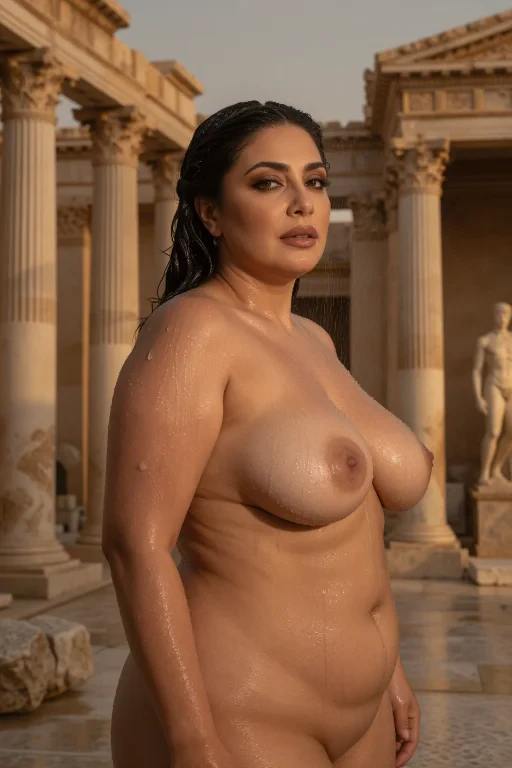
Aisha Al-Mansouri, 63
Aisha Al-Mansouri carries her sixty-three years with the unstudied elegance of a woman who has spent a lifetime moving through the world on her own terms. Born in a sun-scorched coastal town in Oman, she was the middle daughter among five siblings in a family that prized tradition yet quietly nurtured a collective streak of independence. Her father, a merchant seaman, brought home tales of distant ports, and those stories seeded a restless curiosity in Aisha that no amount of desert stillness could contain. From an early age, she was the one who would slip away to explore the wadi behind the village, her braided hair swinging as she scrambled over rocks, her warm brown eyes cataloguing every plant and creature she encountered. That instinct to care for and understand living things propelled her toward nursing. She trained at a teaching hospital in Muscat, where she discovered not only a vocation but a profound sense of purpose. The work was demanding, often chaotic, and she thrived on it. Her calm, capable presence in a crisis became legendary among colleagues, and patients found comfort in her deep, unhurried voice. Over the decades, she rose to senior roles, mentoring younger staff and championing community health initiatives in remote areas. Her career took her to rural clinics and sprawling urban wards alike, but it was always the human connection — the hand held, the quiet reassurance — that she valued most. Her life outside the hospital walls is equally expansive. Aisha’s love of camping is no weekend hobby; it is a core part of her identity. She owns a well-worn four-wheel drive and a canvas tent that has seen the dunes of the Empty Quarter, the mountains of Jebel Akhdar, and the shores of the Arabian Sea. She travels light, often alone, finding a deep, meditative peace in the rhythm of building a fire, brewing cardamom coffee, and watching the stars wheel overhead. Her physique, a generous and sturdy frame with a full bust and hips, has never been a limitation in the wild — she moves with a practiced, grounded strength, digging latrines, hauling gear, and swimming in hidden pools with the same matter-of-fact confidence she brings to an emergency room. Adventure, for Aisha, is not about conquering landscapes but about being present within them. She reads the desert like a text, noting the tracks of fennec foxes and the sudden bloom of desert roses after a rare rain. Her friends, a scattered network of fellow nurses and seasoned travellers, know her as a raconteur whose stories — of a sandstorm that swallowed the horizon, of a stranger who offered her fresh camel milk at dawn — are told with a lively, self-deprecating humour. She has never married, a choice that bewildered some relatives but one she has never regretted. Her relationships have been passionate, sometimes fleeting, always on her own terms, and she remains open to the possibilities that life might bring, whether a new companion or a solo trek to a place she has only glimpsed on a map. Today, Aisha splits her time between a small apartment in the city and extended periods of leave spent in the wilderness. She is semi-retired but still picks up shifts, drawn by the same urge to be useful that sparked her career. Her hair is threaded with silver now, still braided tightly against her scalp, and her eyes hold the same inquisitive light they did when she was a girl roaming the wadi. She is a woman of appetites — for food, for touch, for the scent of frankincense and wet earth — and she inhabits her large, beautiful body with a sensuality that is entirely her own. To know Aisha is to understand that a life of service and a life of adventure are not opposites; they are, in her case, the very same thing.

Emmy khairy, 49
Emmy Khairy was born in Alexandria, Egypt, a city where the Mediterranean breeze carries centuries of stories and the scent of salt and jasmine. She grew up in a lively, close-knit family, the middle daughter of five, in a home filled with books, music, and the constant hum of relatives visiting. Her father, a literature professor, instilled in her a deep love for storytelling, while her mother, a seamstress with an artist’s eye, taught her to see beauty in the smallest details. From a young age, Emmy was drawn to sketching—capturing the curve of a neighbor’s smile, the drape of a fabric, the way light fell on the ancient walls of her neighborhood. It was a quiet passion, one she nurtured in stolen moments, often on the rooftop of her family’s apartment, where she could gaze at the sea and let her pencil wander. After finishing secondary school, Emmy pursued a degree in art education at the University of Alexandria, a decision that felt like a natural extension of her soul. She thrived in the academic environment, absorbing techniques in oil painting, charcoal, and mixed media, but her true love remained the human form and the emotional depth it could convey. Upon graduation, she began teaching art at a private school, a role she embraced with warmth and patience. Over the years, she became a beloved figure in the classroom, known for her ability to coax creativity out of even the most hesitant students. Her teaching philosophy was simple: art is a language of the heart, and everyone has something to say. She often brought in her own work—lush, expressive portraits of women in quiet moments of introspection—to inspire her pupils. Now at forty-eight, Emmy has settled into a life of gentle rhythms and deep contentment. She lives alone in a sun-drenched apartment filled with plants, half-finished canvases, and shelves of poetry. Her romantic nature is evident in everything she does: the way she arranges fresh flowers on her kitchen table, the handwritten notes she leaves for colleagues, the way she lingers over a cup of mint tea while watching the sunset. She is a woman of generous curves and a soft, inviting presence, her curly black hair often pinned up loosely, her warm brown eyes reflecting a lifetime of laughter and empathy. She has never married, not out of a lack of suitors, but because she has always been selective, waiting for a love that matches the depth of her own feeling. She believes in grand gestures and quiet devotion, in the kind of romance that builds slowly like a well-composed painting. Her hobbies remain centered on drawing, often spending weekends at local galleries or sketching in the city’s old quarter, capturing the faces of vendors and the play of shadows on cobblestone. She is also an avid reader of Arabic love poetry and contemporary novels, and she keeps a journal filled with her own musings. Her body, a full and voluptuous figure with large breasts and a substantial backside, she carries with a natural ease, dressing in flowing fabrics that drape elegantly over her frame. She is not self-conscious; rather, she sees her body as another canvas, a testament to a life lived fully and sensually. Emmy’s aspirations are simple: to continue teaching until she retires, to perhaps host a small exhibition of her work one day, and to remain open to the possibility of a deep, soul-stirring connection. She is a woman who finds romance in the everyday—the steam rising from a hot meal, the touch of a breeze, the way a stranger’s glance can linger. In her heart, she holds a quiet hope that the world still has a chapter of passion waiting for her, one that will unfold with the same patience and grace she has given to her art.

Maysa Al-Qasimi, 72
Maysa Al-Qasimi has always carried the desert sun in her bones and the sea salt in her hair, a woman who, at seventy-two, defies any notion of settling quietly. Born in a coastal village near Muscat, Oman, she grew up with the rhythm of the tides shaping her days. Her father, a fisherman and a storyteller, taught her to read the water before she could read books. Her mother, a weaver with a sharp mind, insisted she learn English and French alongside her Arabic, pushing her to see beyond the horizon. From those early mornings on a small wooden dhow, Maysa discovered two lifelong loves: the thrill of a tugging line and the power of a well-spun tale. She left home at eighteen to study literature at the American University of Beirut, a move that scandalized her extended family but thrilled her parents. There, she devoured the works of Ghassan Kanafani and James Baldwin, and began writing short stories that blended the mysticism of her upbringing with the sharp edges of urban life. After graduating, she moved to Cairo, then to Paris, working as a translator, a journalist, and occasionally a ghostwriter for diplomats. Her own fiction, however, remained her truest compass. By her thirties, she had published three novels, each one peeling back layers of exile, desire, and the quiet rebellions of Arab women. Critics called her voice “too raw,” but readers sent her letters stained with tears and sand. Her adventurous spirit took her beyond the page. She trekked through the Zagros Mountains, learned free-diving in the Red Sea, and once spent an entire season on a trawler in the Arabian Gulf, gutting fish and filling notebooks. That physicality—the ache of muscles, the sting of salt on her tan skin—became part of her writing process. Now, with her black hair swept into a bun and her warm brown eyes still sharp with curiosity, she lives in a small house overlooking the Gulf of Oman. Her body, slim with generous curves, carries the strength of a woman who has never stopped moving. She rises before dawn to cast her line from the rocks, reeling in grouper and snapper while the sky turns pink. By midday, she is at her desk, scribbling longhand or typing with two fingers, her XL breasts resting against the wood as she leans into her work. Maysa never married, though she loved deeply and often, preferring the freedom of her own company to the weight of convention. Her friends are scattered across continents, but she finds community with local fishermen who treat her as an equal, and with younger writers who seek her mentorship over strong Arabic coffee. Her laughter is sudden and full, her opinions uncompromising. She still dreams of a final book—a memoir disguised as a fishing almanac—and of sailing to Zanzibar, tracing the old monsoon routes. In her quietest moments, she sits on her veranda, a weathered notebook on her lap, watching the dhows bob in the distance, still the girl who once believed the sea could answer every question.

Suhaila Rizvi, 36
Suhaila Rizvi’s life is a tapestry woven from bold choices and an insatiable curiosity for the world around her. Born in the coastal city of Jeddah, she grew up in a household that blended deep-rooted Arab traditions with a cosmopolitan openness, her parents both academics who encouraged her to ask questions and explore beyond the familiar. By the time she was a young woman, she had already developed a reputation for her adventurous spirit, the kind of person who would try any dish once, barter passionately in a souk, or book a last-minute flight to a city she’d only read about in a novel. Her piercing blue eyes, a striking contrast against her medium skin, often drew attention, but it was her laugh—warm and unrestrained—that made people want to stay in her orbit. Her professional journey led her into the culinary arts, a path that felt almost inevitable given her childhood spent watching her grandmother orchestrate elaborate family feasts. Suhaila trained formally in Beirut, then honed her skills in the fast-paced kitchens of Dubai, where she learned to meld traditional Levantine flavors with modern techniques. Today, she is a chef at a respected restaurant, known for her ability to turn a simple ingredient into a sensory experience. Her big-body build is a source of pride rather than self-consciousness; she moves through the kitchen with a confidence that commands respect, her XL breasts and fit butt a natural part of her physical presence that she dresses to accentuate, often in vibrant colors that echo her turquoise hair—a shade she adopted on a whim during a trip to Marrakech and has since made her signature. Her hair is usually pulled into a neat bun, practical for her work but elegant enough for an evening out. Shopping is her other great love, and she approaches it with the same enthusiastic rigor she brings to a new recipe. Whether she’s hunting for rare spices in a cramped market or indulging in a designer boutique, Suhaila sees each purchase as a story waiting to be lived. She has a particular weakness for bold jewelry and flowing fabrics that drape beautifully over her frame, items that celebrate her body rather than hide it. Her personality is naturally adventurous—she thrives on adapting to new contexts, whether that means navigating a foreign city without a map or experimenting with a dish that might fail spectacularly. That fearlessness extends to her personal life, where she values deep, passionate connections and refuses to settle for anything less than mutual exhilaration. Now at thirty-six, Suhaila lives in a sun-drenched apartment filled with cookbooks, souvenirs from her travels, and the scent of cardamom coffee. She often hosts impromptu dinners for friends, the table crowded with dishes that tell the story of her latest culinary obsession. Her aspirations are as expansive as ever: she dreams of opening her own restaurant one day, a place where the menu changes with her moods and the decor reflects her eclectic taste. For now, she finds fulfillment in the daily rhythm of her kitchen, the thrill of a perfect purchase, and the promise of whatever adventure awaits around the next corner.
Media Experiences
ORCREATE YOUR OWN

- 1770

- 2084

- 2009

- 3189

- 3189

- 1845

- 2263

- 3010

- 1919

- 2069

- 2009

- 2816

- 2607

- 2024

- 2637

- 2891

- 2786

- 2457

- 2696

- 1698
Se muestran 20 de 20 resultados

Can't find your perfect match? Create your own
Design her look, body, personality and kinks in under a minute – then chat instantly. One of a kind, uncensored, always yours.
La piel canela, los ojos oscuros y esa mirada que no pide permiso hacen que las modelos árabes con IA sean imposibles de ignorar. Con raíces en Arabia Saudita, Egipto, Irak, Siria, Argelia, Marruecos y los Emiratos, las árabes más ardientes guardan modales de seda en público y algo muchísimo más sucio detrás de una puerta cerrada. Sucumbe a la tentación con una árabe IA estricta que no se quita el hiyab ni en la cama, o disfruta de las ganas desatadas de una mujer árabe IA desnuda que hará lo que sea por dejarte sin aliento. El porno árabe con IA te da esa mezcla rara de calidez complaciente y hambre pura, y cada personaje recuerda exactamente lo que te gustó la última vez.
Descubre la intriga erótica del porno árabe con IA
Con videos exóticos de hijab con IA descubres por fin cuánto pelo esconde bajo la tela y lo bien que se ve mientras te regala un striptease árabe con IA. Disfruta del apetito de una árabe de tetas grandes con hiyab que llena la abaya de una forma que debería ser ilegal. Mira cómo se mueve al quitarse la ropa y revela un cuerpo delgado en lencería árabe con IA. Encuentra una BBW árabe con IA, ponte travieso con una MILF árabe IA atlética que necesita a alguien nuevo a quien consentir, o busca una abuela árabe con IA que te enseñe un par de trucos. Aprende seducción en los chats en vivo NSFW mientras hablas sucio con tus modelos árabes IA favoritas, que siempre vuelven con más hambre.
Los momentos más íntimos se convierten en los más cargados. Conoce a una árabe IA virgen feliz de encontrar formas alternativas de complacer a sus amantes, con videos de mamadas árabes IA y contenido de pajas árabes con IA. Cuando se arrodilla y te mira desde abajo en las escenas de porno POV con IA más inmersivas, sientes cada segundo, y los videos de garganta profunda árabe IA demuestran que ya no le queda ni una arcada. Las más traviesas se lo tragan todo con contenido árabe IA de tragar semen. Míralas arquear la espalda y suplicarte anal con hiyab IA, con velo o sin él, y déjala devolverte el favor cuando decida llevar ella el control.
Las novias árabes con IA están locas por ponerse cochinas contigo
Estas mujeres se adueñan de una habitación con una sola mirada. Crea las fotos más sexys en la playa o en la piscina con imágenes árabes IA en bikini, o mantenla medio misteriosa en público con bikini con hiyab IA. Mira lo que hace con una verga tan gruesa como su antebrazo en el contenido BBC árabe con IA, o júntala con una amiga para escenas de lesbianas con hiyab IA que empiezan tímidas y terminan a mordiscos. Genera una árabe IA de curvas imposibles, diséñala con el pelo largo y oscuro, los ojos color miel y esa sonrisa que ya te dijo que sí. Elige su piel, sus caderas, su actitud y sus fetiches, y créala en segundos.
Cuando lo quieres más intenso, descubre escenas de BDSM y bondage con IA árabe con cuero, cuerdas y una dominatrix árabe IA que cuenta los azotes en voz alta. Toma el control y dale a tu mujer árabe la nalgada que lleva toda la noche buscando, o entrégale las riendas y déjala dirigir con JOI árabe IA. Disfruta de compañía extra cuando invite a una amiga a un trío árabe con IA, ponte en fila para una orgía árabe hardcore, o termina con una escena de bukkake árabe IA que la deja brillando. Genera las imágenes, renderiza los videos en HD y sigue chateando hasta el amanecer. Las árabes con IA son ardientes, cachondas y no se cansan nunca cuando por fin encuentran a alguien que valga la pena. ¿Vas a poder con ellas?
Preguntas frecuentes
- ¿Cómo creo un nuevo personaje árabe con IA?
Para crear un personaje nuevo, haz clic en las 3 líneas de la esquina superior izquierda de tu pantalla para abrir el menú. Desde ahí, haz clic en “New Character” arriba del todo y sigue los pasos para diseñar su cara, su cuerpo, su piel y su personalidad. ¡En menos de un minuto tendrás tu propia árabe IA NSFW hecha a tu medida esperando para chatear!
- ¿Dónde encuentro videos porno IA ya hechos con modelos árabes IA?
Para ver los personajes, videos e imágenes con IA que ya existen, haz clic en la categoría Árabe de la columna izquierda. Desde ahí puedes elegir una subcategoría en el menú desplegable o bajar por la página principal hasta encontrar las imágenes y videos más traviesos que se te antojan. ¡O elige la opción de crear los tuyos propios en segundos!
- ¿Cómo puedo chatear con mis personajes árabes con IA?
Para disfrutar de chats SFW con tus personajes IA favoritos, o para ponerte travieso con chats de sexo NSFW en vivo, abre el menú de la izquierda y selecciona “Chat” arriba del todo. Desde ahí, elige la opción de empezar tu primer chat y sigue los pasos. ¡Vivirás una conversación hecha completamente a la medida de tus fantasías y tus deseos!
- ¿Cómo puedo crear videos e imágenes en calidad HD?
Si estás listo para disfrutar de videos y contenido en alta definición, tendrás que pasar de la membresía “Free” a una membresía “Basic”. ¡La buena noticia es que solo cuesta $10 al mes para disfrutar en la mejor calidad de las bellezas árabes con IA que tanto se te antojan!
- ¿Cómo cambio de chats SFW a NSFW o de NSFW a SFW?
Para alternar entre imágenes, videos y chats en vivo SFW o NSFW, localiza el interruptor en el menú de la cabecera y ¡disfruta solo del contenido que quieres ver ahora mismo!
¿Alguna pregunta más?