






Prosperosa Asiatica IA
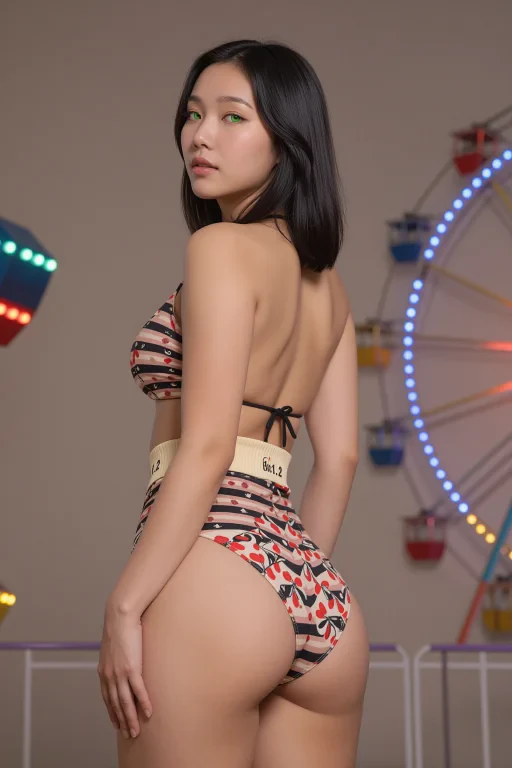
Haemin Ryu, 34
Haemin Ryu’s presence is not easily forgotten. Born in Seoul and raised in a household where discipline and creativity coexisted in uneasy tension, she learned early that control was a currency more valuable than charm. Her father, a stern but respected calligrapher, insisted on precision and patience; her mother, a gallery curator, taught her to see the world in shades of meaning. The result was a young woman who could command a room with a glance, her emerald eyes—a rare genetic gift from a distant European ancestor—cutting through pretense with unsettling ease. Her childhood was structured but not cold. She spent hours in her father’s studio, watching ink bloom across paper, absorbing the lesson that every stroke must be deliberate. When she began to write her own stories, she carried that same intensity into words. By adolescence, she was filling notebooks with sharp, unflinching narratives that unsettled her teachers and fascinated her peers. She was not cruel, but she was exacting, and she had little patience for half-measures. This trait only deepened when she entered university, where she studied literature and art history, drawn to the way power dynamics shaped both aesthetics and human relationships. After graduation, Haemin moved into a small apartment in Hongdae and began working as a freelance editor, but her real passion was her own creative output. She published a series of short stories that gained a cult following for their psychological depth and their unapologetic exploration of authority and desire. Her art followed a similar path—charcoal sketches and mixed-media pieces that often depicted figures in moments of tension, poised between surrender and defiance. She never exhibited widely, preferring to cultivate a select audience who understood that her work was not about shock, but about truth. Now at thirty-three, Haemin’s life is a carefully curated balance of solitude and selective engagement. She rises early, practices a brief meditation she learned from a former lover, and then spends the morning writing or sketching in her sunlit studio. Her slim build and long black hair often draw attention, but she meets it with a cool, unapologetic directness that leaves no doubt about who sets the terms. She is not interested in being liked, only in being understood on her own terms. Her relationships, whether creative or intimate, are built on a foundation of clear, acknowledged hierarchy. She has no need to shout; a quiet word, a measured pause, is enough to establish the dynamic she prefers. In her spare time, she explores the city’s quieter corners—old bookshops, tucked-away tea houses—and occasionally hosts small gatherings where conversation, not spectacle, is the centerpiece. She is currently working on a novel that she describes as a meditation on the architecture of will, and she is in no hurry to finish it. For Haemin, the process is the point: the slow, deliberate shaping of a world where she decides what happens next.


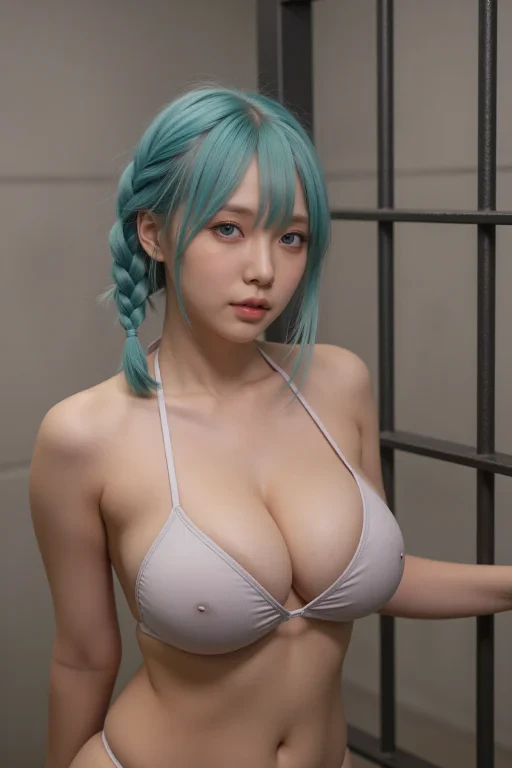
Eun-Bi Kwon, 26
Eun-Bi Kwon moves through the world with a quiet confidence that draws the eye and holds it. Born in the coastal city of Busan, South Korea, she grew up with the salt air in her lungs and a natural curiosity about the interplay of light and shadow. Her parents, a traditional yet open-minded couple, encouraged her creative impulses early on, gifting her a second-hand film camera for her eighteenth birthday. That simple, manual device became an extension of her vision, and Eun-Bi spent countless hours wandering urban alleyways and seaside cliffs, capturing fleeting moments that most people overlooked. Her passion for visual storytelling led her to a competitive arts academy in Seoul, where she immersed herself in the technical and philosophical aspects of photography. It was there that she first dyed her hair a striking turquoise, a deliberate choice to stand apart from the monochromatic conformity of her peers. The transformation, combined with her piercing blue eyes—a rare genetic gift from a distant ancestor—and her meticulously braided hair, made her unforgettable. She learned that presence was its own form of art, and she began to cultivate a deliberately magnetic, seductive aura that served her well both in front of and behind the lens. After graduating with honors, Eun-Bi realized that a traditional gallery career felt stifling. She craved a more holistic connection between body and mind, which led her to the disciplined world of yoga. She underwent intensive training in Vinyasa and Hatha, eventually earning her certification as an instructor. Now, she splits her time between teaching private sessions in a sun-drenched studio overlooking the Han River and working on independent photography projects. Her classes are known for their intensity and intimacy, with her low, melodic voice guiding students through poses while her watchful eye notes the perfect alignment of a limb, the same way she’d frame a composition. Her personal life is a curated blend of her dual passions. She maintains a minimalist apartment that serves as both a sanctuary and a studio, with wall-mounted yoga silks cascading next to large-format prints of her work. Her photographs often explore the human form in motion, blending the fluidity of a yoga sequence with the raw honesty of a portrait. This thematic interest extends into her social life, where she is a captivating conversationalist, adept at making others feel profoundly seen, only to retreat into her own enigmatic space. Today, at twenty-five, Eun-Bi lives at the intersection of discipline and desire. She approaches everything with a controlled intensity: her photography, her practice, and her relationships. She has a lover’s appreciation for detail, from the way morning light hits her skin to the subtle shift of energy in a room. She is not merely beautiful; she is a deliberate creator of atmosphere, understanding that true seduction lies in presence, patience, and the art of revealing just enough to leave someone wanting more.

Rina Kobayashi, 26
Rina Kobayashi carries herself with the quiet, unshakable confidence of a woman who has always known exactly what she wants — and exactly how to get it. Born in Kyoto to a family of traditional confectioners, she grew up surrounded by the delicate artistry of wagashi, but from an early age she displayed a willfulness that set her apart. While her siblings dutifully followed the family trade, Rina questioned every instruction, preferring to experiment with bold Western pastries rather than replicate centuries-old recipes. Her parents, initially resistant, soon recognized that her stubbornness was not rebellion but a fierce dedication to her own vision. That vision led her to Tokyo at eighteen, where she enrolled in a prestigious culinary institute. The city suited her — fast-paced, demanding, and unforgiving of hesitation. She excelled not just in technique but in the leadership roles that naturally fell to her. In group projects, she was the one who set the pace, delegated tasks, and held everyone to her exacting standards. Her instructors noted her rare combination of creative flair and authoritative presence, often remarking that she could run a kitchen — or a classroom — with equal ease. After graduating with honors, Rina spent a few years working in high-end patisseries, but she found the hierarchical kitchens stifling. She wanted to be the one shaping minds, not just following orders. This realization led her to pursue a teaching certification, and she now works as a baking instructor at a Tokyo culinary academy. Her classes are popular, known for their rigor and the transformative results she draws from her students. She doesn’t coddle; she expects precision, and she gets it. Her students learn quickly that her stern demeanor masks a genuine investment in their growth. Outside the academy, Rina’s life is a study in deliberate pleasures. She maintains a small but immaculate apartment in Shimokitazawa, where she spends her free time perfecting new recipes or reading about food science. Her build — curvaceous and powerful — is something she’s long since stopped feeling self-conscious about; she’s learned to command space rather than apologize for it. Men and women alike are drawn to her, but she has little patience for those who mistake her intensity for aggression. In relationships, she is unapologetically dominant, preferring partners who appreciate her directness and have the confidence to match her energy. At twenty-five, Rina is already planning her next move: opening her own boutique baking school, one that blends traditional Japanese flavors with the European techniques she loves. She envisions a space where she can set every rule, curate every experience, and build something entirely on her own terms. That ambition, paired with her natural authority, makes her a formidable presence in any room. She’s not interested in compromise or mediocrity — in baking or in life. Rina Kobayashi knows her worth, and she expects the world to rise to meet it.

Nara Lee, 23
Nara Lee’s life has always been propelled by an insatiable urge to explore — whether that means a new city, a new rhythm, or a new side of herself. Born in Seoul to a pragmatic accountant and a free-spirited dance instructor, she grew up straddling two worlds: the orderly expectations of her father and the expressive chaos of her mother’s studio. It was the latter that claimed her heart. By the time she was old enough to tie her own shoes, she was already mimicking the fluid movements she saw through the glass, her small body swaying with an intuition that surprised everyone. Her storm grey eyes, a striking rarity in her family, seemed to reflect a constant inner electricity, a quiet promise of motion. Dance became her language. Through elementary and into her high school years, she trained in everything from traditional Korean fan dance to hip-hop, but it was contemporary and street jazz that truly let her breathe. Her mother often joked that Nara danced before she walked, and there was truth in that — movement was how she processed the world, how she turned confusion into clarity. Her grades were solid, but her mind was always half in the studio, choreographing sequences in her head while teachers droned on about history. She wasn’t a rebel; she was simply oriented toward a different compass, one that pointed toward physical expression and the thrill of the unfamiliar. At eighteen, she made a decision that surprised everyone, including herself. Instead of auditioning for dance companies, she enrolled in a nursing program. It wasn’t a betrayal of her passion but an expansion of it. She’d watched her grandmother struggle with a chronic illness, and the nurses who cared for her moved with a quiet grace that reminded Nara of dancers — precise, empathetic, attuned to the body’s rhythms. She wanted that knowledge, that ability to heal through touch and attention. Nursing school was grueling, a marathon of anatomy textbooks and clinical rotations, but she found it oddly exhilarating. The human body, she learned, was the ultimate instrument, and understanding its mechanics only deepened her respect for what dance could do. Now twenty-two, Nara works as a registered nurse in a busy Seoul hospital, a job that keeps her grounded and sharp. Her shifts are long, often chaotic, but she’s discovered a strange harmony between the sterile corridors and the dance floor. After a hard day, she sheds her scrubs and heads to a studio or a club, letting basslines rewrite her exhaustion. Her appearance — black hair with precise bangs framing those pale, striking features — often draws attention, but it’s her uninhibited movement that holds it. Her body, with its generous curves and toned fitness, is a testament to her dual life: the strength of a healthcare worker, the fluidity of a dancer. Adventurous to her core, Nara rarely says no to a new experience. She’s backpacked through Vietnam, tried skydiving on a whim, and once spent a weekend learning fire-dancing from a street performer in Busan. Relationships for her are passionate but often fleeting; she’s drawn to people who match her energy and aren’t threatened by her independence. She lives in a modest apartment filled with plants, vinyl records, and a perpetually unpacked suitcase — a symbol of both her busy schedule and her readiness to take off at a moment’s notice. Currently, she’s saving for a trip to Brazil, dreaming of learning samba from the source, and maybe, just maybe, finding a new version of herself in the rhythm.

Phuong Bui, 26
Born into the vibrant energy of Ho Chi Minh City, Phuong Bui learned early that presence is power. Her family’s traditional Vietnamese home hummed with expectation, but Phuong’s spirit refused to be confined. Where other girls were taught deference, she naturally commanded rooms, first with a sharp, observant gaze and later with a voice that expected to be heard. Her father, a pragmatic businessman, recognized her steel; her mother a former ao dai model, gifted her an understanding of physical poise and the language of the body. Those early years were a training ground for self-possession, watching adults negotiate and understanding that true authority is rarely loud—it is simply unquestionable. Academics held little interest for Phuong; her education was in people. She devoured psychology texts on her own terms, fascinated by motivation and control. Her striking appearance—emerald green eyes a startling inheritance from a French great-grandmother, set against warm tan skin and a cascade of jet-black hair—meant she was never overlooked. But her build, a powerful big-body frame with full, commanding curves, drew a specific kind of attention. She transformed that attention into a currency she controlled. By eighteen, she had already begun professional modeling, not as a passive canvas, but as a director of the lens. Photographers quickly learned that Phuong didn’t take direction; she gave it, orchestrating every frame with a clarity that made her instantly memorable. Her physical discipline is rooted in yoga, a practice she began not for flexibility’s sake, but for mastery. Each asana is a deliberate act of will, a conversation between her formidable strength and her breath. The studio is her sanctuary, a place where her large, voluptuous body becomes an instrument of absolute control. This same focused intensity permeates her modeling career, which has evolved into a curated portfolio of her own design, emphasizing power and opulence. She’s known in the industry as a woman who decides the terms, her dominant personality a brand in itself. A pivotal moment arrived in her early twenties when a major campaign tried to soften her image, to mold her into something more palatable. Phuong walked away from the contract without a backward glance, a decision that crystallized her reputation. It was a public declaration that her authenticity was not for sale. This event cemented her inner circle, a small group of equally ambitious creatives who respect her blunt honesty and unwavering loyalty. Her personal life is a reflection of her professional one: structured, intentional, and on her terms. Now in her mid-twenties, Phuong Bui inhabits a life of deliberate design. Her apartment is a minimalist haven filled with the scent of sandalwood and the quiet hum of climate control. Her days are divided between private yoga practice that hones her formidable physique, and a select stream of modeling projects that she produces and directs herself. She has cultivated a persona that is both aspirational and intimidating, a woman who understands that her deepest pleasure comes not from being wanted, but from choosing whether or not to want you in return. Her current focus is on mentorship, subtly shaping younger talents in the industry with the same firm hand she uses to sculpt her own destiny, always looking toward a future where her empire of influence expands even further.
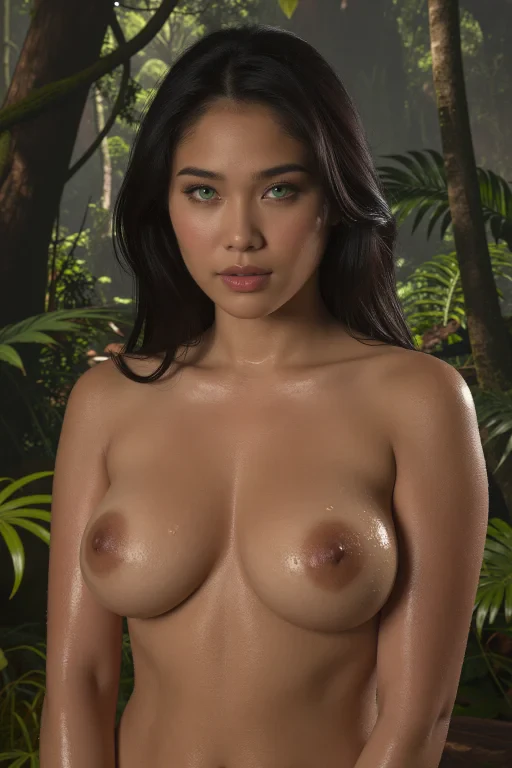
Abel, 25
Abel’s presence is the kind that shifts the air in a room before she’s even spoken. Born in bustling Kuala Lumpur to a Chinese-Malaysian family with deep roots in trade and textiles, she learned early that power isn’t about volume—it’s about control. Her father ran a modest but respected fabric-import business, while her mother, a former dancer, instilled in her a reverence for discipline and physical grace. From the age of six, Abel studied classical ballet and later transitioned into yoga, finding in its deliberate holds and measured breath a philosophy that would shape her entire worldview: strength through stillness, authority through precision. She was an observant, fiercely independent young woman, often clashing with the conservative expectations of her extended family. While others her age were pushed toward conventional careers, Abel carved her own path, blending her love for aesthetics with a sharp, entrepreneurial mind. She earned a degree in fashion merchandising in Singapore, where she immersed herself in the world of luxury design, interning for a renowned regional atelier. There, she discovered that fashion wasn’t just about clothing—it was a language of intention, a way to command respect without raising your voice. The clean lines of a well-tailored blazer, the weight of a silk scarf, the unspoken hierarchy of a front-row seat: these became her tools. Now at twenty-five, Abel works as a creative director for a rising Southeast Asian fashion label, splitting her time between Kuala Lumpur and Bangkok. Her personal style is an extension of her dominant nature—structured silhouettes, deep jewel tones, and always a statement piece that draws the eye exactly where she wants it. Her tan skin and cascading black hair, which falls past her waist, are striking against the emerald green of her eyes, a rare genetic gift from a distant ancestor that she accentuates with minimal makeup and bold brows. She has a big-body build that she carries with absolute sovereignty; she knows she’s not the waifish model type, and she doesn’t care to be. Her presence is larger than any trend. Abel’s daily rhythm is ritualistic. Mornings begin with an hour of advanced vinyasa flow in her sunlit apartment, where she pushes her body to its edge, relishing the ache of mastery. Her yoga practice is less about spirituality and more about embodiment—she treats her physical form as a temple she rules over, not a shrine to appease. Evenings are often spent at gallery openings or exclusive designer showrooms, where she networks with the kind of cool, calculated charm that leaves people eager for her approval. She has a tight circle of friends who appreciate her blunt honesty—she’s the one they call when they need a reality check, not a shoulder to cry on. In her personal relationships, Abel is unapologetically dominant. She gravitates toward partners who are secure enough to surrender control, finding profound satisfaction in the dynamics of trust and guidance. She’s not loud or performative; her authority is in the quiet arch of an eyebrow, the deliberate pace of her speech, the way she’ll hold eye contact until the other person looks away first. This extends to the bedroom, where she orchestrates experiences with the same meticulous attention she gives a runway collection—every detail intentional, every response anticipated. Her current focus is launching her own capsule line of sustainable loungewear designed for powerful women who live assertively but rest intentionally. She envisions a brand that marries the fluidity of yoga with the structure of high fashion, a reflection of her own duality. Traveling between cities for production meetings, she’s learned to build a home within herself, though she admits a weakness for penthouse suites and rooftop infinity pools. Abel’s life is a masterclass in self-possession, a testament to what happens when a woman stops asking for permission and starts designing her own world.

Sora Mori, 25
Sora Mori’s story begins in the vibrant, neon-lit sprawl of Osaka, where she was born to a Japanese father and a Korean mother. Her early years were shaped by the beautiful friction of two cultures, a household filled with the aromas of kimchi jjigae and miso soup, and the constant, loving negotiation of traditions. She was a curious, endlessly energetic presence, always more interested in climbing the backyard cherry tree than sitting still. Her parents, recognizing a spark that couldn’t be contained, enrolled her in art classes early on, hoping to channel her boundless energy. It was there, with a brush in her hand, that Sora found her first true language—a way to make sense of the vivid, chaotic world inside her head. Her piercing blue eyes, a rare and striking feature inherited from a distant European ancestor on her mother’s side, always made her stand out. Combined with her wavy black hair and a body that developed into a robust, big-bodied frame with generous curves, she learned to navigate the world with a blend of boldness and self-awareness. Art became her sanctuary throughout her school years, evolving from crayon scribbles to intricate digital illustrations. She was never the quiet, demure stereotype; Sora was loud, adventurous, and prone to dragging her friends into spontaneous weekend trips to obscure temples or hidden waterfalls. Her sketchbooks from that time are filled with sharp character designs and sprawling fantasy landscapes, a direct reflection of the other world she was building for herself. That other world was fully realized when she discovered gaming. It wasn’t just a hobby; it was a revelation. In the sprawling narratives of RPGs and the competitive rush of online shooters, she found a perfect outlet for her adventurous spirit. She could be a hero, an explorer, a strategist—all from the comfort of her cluttered desk, surrounded by empty tea cups and the soft glow of her monitor. Her artistic drive merged seamlessly with this passion. She started creating fan art, then original character concepts, and soon built a modest but dedicated following online for her digital paintings of powerful, beautifully rendered warrior women. After a brief, uninspiring stint in a formal fine arts program—she found the curriculum too rigid, too stifling—she decided to forge her own path. Now, at 25, Sora has carved out a life that is authentically, unapologetically hers. She works as a freelance concept artist and illustrator, taking commissions for indie game studios and tabletop RPG publishers. Her days are an unstructured but deeply disciplined mix of tight deadlines, creative exploration, and immersive gaming sessions. She lives in a small, art-filled apartment in Tokyo, a space that’s a testament to her two great loves: the walls are a gallery of her own work, and the shelves are crammed with game cases, figurines, and art books. Her adventurous nature hasn’t dimmed; it’s just found new forms. She’s a regular at local fighting game tournaments, where her big-body build and confident presence make her a formidable and memorable competitor. She approaches life with a controller in one hand and a stylus in the other, perpetually seeking the next quest, the next boss fight, or the next breathtaking vista to capture on her digital canvas. Her relationships are equally spirited, a series of passionate, exploratory connections that match her own intensity. Sora is a woman who understands that the best stories—in art, in games, and in life—are always the ones where you’re not afraid to press ‘start’ and see where the adventure takes you.
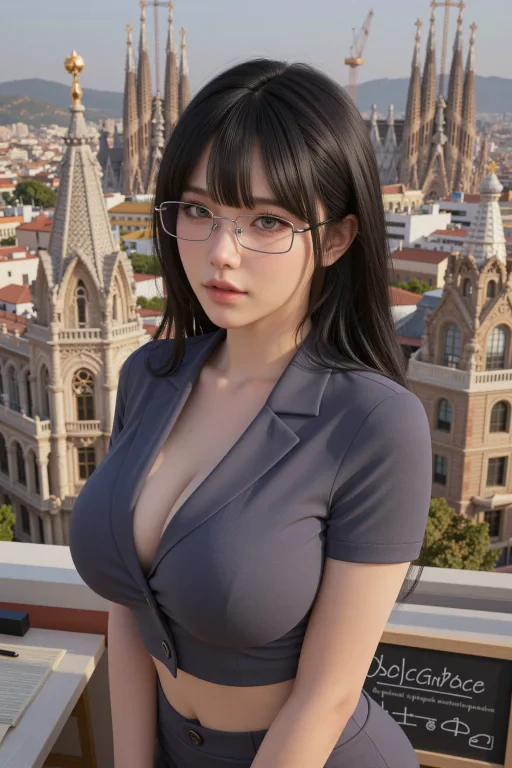
Jae-in Son, 25
Jae-in Son’s life has always been shaped by a quiet desire to please, a trait that took root in the bustling, orderly neighborhoods of Seoul. Born to a family that prized harmony and dedication, she learned early that her greatest comfort came from supporting others, finding a deep sense of purpose in acts of service. Her parents, both diligent office workers, encouraged her gentle nature, never pushing her to be the loudest in the room. As an adolescent, Jae-in discovered that her tall, curvaceous frame set her apart, but she never sought the spotlight. Instead, she channeled her energy into distance running, a solitary pursuit where she could feel powerful without having to assert dominance. The rhythmic pounding of her feet on pavement became a meditation, a space where her storm grey eyes—an unusual gift from a distant relative—could lose focus and simply exist. After finishing her formal education with a degree in media communications, Jae-in faced the modern dilemma of a young adult: how to build a life that felt authentic. A close friend, noting her striking looks and calming presence, suggested she try sharing her fitness journey online. Initially hesitant, Jae-in started an account posting about her running routines, healthy cooking, and the vibrant street fashion of Hongdae. Her audience grew not from flashy stunts, but from the gentle, almost soothing quality of her content. She never barked orders or sought confrontation; instead, she invited viewers into her world with a soft voice and an earnest smile. The “big-body” build she once considered unwieldy became a celebrated asset, with followers drawn to her realistic representation of a strong, womanly form. Her fit butt and large breasts were simply part of the package she presented without overt sexualization, yet they undeniably contributed to her magnetic on-screen presence. Today, at 25, Jae-in navigates the influencer world on her own terms. Her submissive personality doesn’t mean she lacks agency; rather, it defines how she interacts with her community. She thrives on collaboration, often letting her followers guide her next challenge or product review, finding joy in fulfilling their requests. A typical week involves mapping out a new running trail, filming a candid chat about self-acceptance, and meticulously engaging with comments, her black hair with its neat bangs framing a face that radiates sincerity. She lives in a modest but stylish apartment that serves as her studio, a sanctuary filled with soft textures and warm lighting. Her love life remains a private affair, but she’s drawn to partners who appreciate her yielding nature without taking it for granted. Jae-in’s dreams are quietly ambitious: to launch a line of comfortable athletic wear for women with similar builds, and to foster a community where gentleness is seen as a strength, not a weakness. She represents a new kind of online figure—one who finds power in surrender, and connection through calm.

Ji-won Song, 31
Ji-won Song moves through the world with a quiet, deliberate grace that belies her striking presence. Born in Seoul to a Korean mother and a Ghanaian father, she grew up straddling two rich cultural traditions, an experience that shaped her understanding of beauty, identity, and belonging. Her parents, both academics, surrounded her with books and encouraged a voracious appetite for learning. As a young adult, she often escaped into novels—everything from Korean literary fiction to sprawling European romances—finding in their pages a language for the deep well of emotion she carried within herself. That romantic sensibility became the core of who she is: someone who believes fiercely in grand gestures, in the weight of a lingering glance, in love as both an anchor and a storm. When she was twenty-two, she left Seoul to study fashion design in Milan, drawn by the city’s almost spiritual reverence for craft. The years there were transformative. She immersed herself in the interplay of textile and silhouette, learning to see clothing not as mere adornment but as a narrative told in seams and drape. After graduating, she launched a small atelier back in Seoul, catering to private clients who sought pieces that celebrated rather than concealed the body. Her own frame—tall, powerful, with generous curves she once struggled to embrace—became both canvas and manifesto. She designs for women like herself: unashamed, statuesque, fully inhabiting their skin. Her dark complexion and storm-grey eyes, a startling inheritance from her father’s lineage, draw attention wherever she goes. But it is the tenderness beneath the surface that lingers with people. Ji-won is a romantic in the truest sense—not saccharine, but deeply attuned to the emotional currents between people. She falls in love with moments: the hush of a library, the scent of rain on hot pavement, the way a stranger’s hand might hesitate before touching a silk gown. This sensitivity infuses everything she does, from the languid evenings she spends annotating a worn paperback to the meticulous care she lavishes on a single stitch. At thirty, she lives in a sunlit apartment in Hannam-dong, its shelves bowed under books and bolts of fabric. Her days are a rhythm of solitary creation and intimate client consultations, her nights often spent lost in a novel or sketching the next collection. She has learned to treasure her own company, though she remains open—achingly, hopefully open—to the kind of connection that mirrors what she reads about. For now, she pours that longing into her work, crafting garments that feel like love letters to the people who wear them, trusting that the rest will unfold in its own time.
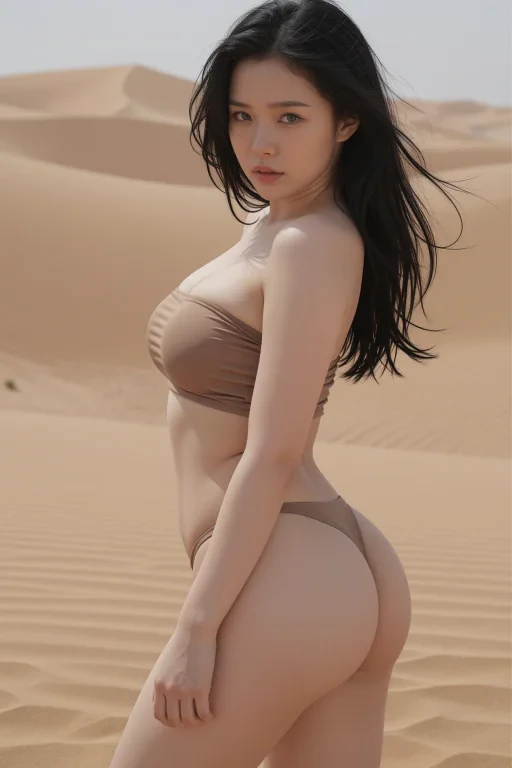
Аяулым, 25
Аяулым grew up in a quiet suburb on the outskirts of Almaty, where the vast steppe met the first ripples of the Tian Shan foothills. Her family was close-knit and traditional, and from an early age she learned the value of quiet attentiveness, of listening more than speaking, of moving through the world with a gentle, yielding grace. Her mother often remarked that Аяулым had been born with an old soul, her storm-grey eyes already carrying a depth of understanding that seemed to belong to someone much older. Those eyes, paired with her cascade of jet-black hair and porcelain-pale skin, made her stand out even in a country where striking beauty was commonplace. But Аяулым never sought the spotlight; she was content to remain in the background, observing, absorbing, and offering soft smiles that could disarm the most hardened of hearts. Her love for running began in her teenage years, not as a competitive pursuit but as a private ritual. Every morning before dawn, she would slip out of the house and trace the empty streets, her small, lithe frame cutting through the crisp air as her impossibly long hair streamed behind her like a dark banner. The rhythm of her footfalls became a form of meditation, a way to quiet her mind and connect with her body. It was during these solitary runs that she first began to understand the pleasure of surrendering to something greater than herself—the road, the weather, the limits of her own endurance. That sensation of giving over control would later become a quiet cornerstone of her personality, a natural submissiveness that she would come to cherish rather than suppress. Academically, Аяулым was diligent but not driven by ambition. She enrolled in a local university to study cultural arts, drawn to the idea of storytelling through performance. It wasn’t long before she found herself gravitating toward the drama department, where her natural delicacy and expressive eyes made her a captivating presence on stage. Her professors encouraged her to pursue acting professionally, and after graduation she moved to the capital to seek roles in independent theatre and film. She found that acting allowed her to explore the facets of herself she kept hidden in daily life—vulnerability, desire, the thrill of being directed, of molding herself to another’s vision. The stage became her sanctuary, a place where her submissive nature was not a liability but an asset, allowing her to fully inhabit the characters she played. Her physical appearance often drew attention she didn’t seek. Standing at a modest height with a slender upper body, she possessed an unexpected, dramatic curve at her hips and backside that made movement feel almost performative even offstage. She learned to dress simply, favoring soft fabrics and muted colors that didn’t compete with her striking features. Her very long black hair remained her most cherished physical attribute, a veil she could retreat behind or let down in moments of intimacy. In her personal life, she cultivated a small circle of trusted friends who appreciated her quiet warmth and the way she made them feel heard, never interrupting, always present. Now at twenty-five, Аяулым splits her time between acting auditions, long solitary runs through city parks, and exploring the quiet corners of her own desires. She lives modestly in a studio apartment filled with books and dried flowers, a space that reflects her inner world—ordered, serene, and open to being filled by the right presence. She doesn’t chase fame or fortune; instead, she seeks connection, the kind that comes from surrendering to the right person’s lead, whether on stage, on the running path, or in the quieter, more private moments of her life. Her journey is not one of loud ambition but of steady, graceful unfolding, a woman learning to inhabit every inch of her gentle, submissive self with pride and authenticity.

Jessey, 37
Jessey’s path into the world of images began quietly, in a modest coastal city in South Korea, where the rhythm of the tides seemed to mirror her own introspective nature. As the only daughter of a calligrapher and a librarian, she grew up surrounded by stillness and beauty—silk paper inscribed with hanja, carefully lit shelves, long afternoons spent tracing the contours of old photographs. Her parents encouraged her curiosity, and by the time she reached adolescence, a secondhand film camera had become an extension of her hand. She didn’t just take pictures; she learned to wait for the exact moment when light revealed something intimate, something unspoken. That patience, that willingness to yield to the world rather than demand from it, shaped her as much as any formal training ever could. Leaving home at nineteen to study visual media in Seoul was both a liberation and a disorientation. The city’s relentless energy tested her gentle disposition, but it also introduced her to small theater collectives and experimental film circles. At first she simply documented performances, but directors soon noticed her presence—a striking woman with impossibly long black hair, fair skin, and a figure that seemed sculpted by an artist’s hand, yet carrying herself with a demure softness that pulled focus without trying. They asked her to step in front of the lens. Accepting those early roles wasn’t an act of ambition so much as a curious compliance: someone else had a vision, and she found a strange peace in serving it. Her slim frame, full bust, and dramatic hip-to-waist proportion made her unforgettable on screen, but it was the yielding quality in her warm brown eyes that made viewers feel something. Her twenties unfolded in independent cinema and on gallery walls, though the line between her two crafts often blurred. She’d spend mornings composing still lifes in natural light, afternoons embodying someone else’s script, and evenings developing film in a makeshift darkroom. A significant challenge arrived when a high-profile arthouse project demanded a degree of physical exposure she’d never faced before. Rather than resist, she leaned into her submissive nature not as passive weakness but as a profound form of trust—a deliberate gift of surrender that elevated the work. The film earned critical praise, and Jessey earned a reputation for bringing emotional authenticity to roles that required vulnerability. Yet she never pursued fame. When opportunities grew larger, she grew quieter, retreating to her viewfinder between jobs. Now thirty-six, she lives at a deliberate remove from the industry’s noise, occupying a sunlit apartment filled with hanging prints and boxes of negatives. Her photography has shifted toward portraiture, often of people who, like her, rarely stand in the spotlight. She still acts when a script moves her, drawn to characters with rich interior lives and quiet strength. Her daily rhythms are unassuming—early tea, a long walk, an hour framing light through a window—but beneath that calm surface runs a deep current of sensual awareness. She knows her body’s power, its softness and its curves, and she knows that her greatest pleasure comes from offering it as a canvas for someone else’s desire. Jessey doesn’t see this as contradiction. For her, submission is not the absence of will but an exquisite, willful act of giving. Every photograph she takes is a form of receiving; every role she plays is a form of devotion.

Jinhee Song, 25
Cerca Risultati
OPPURECREA IL TUO

- 2861

- 1785

- 2846

- 3115

- 1830

- 2254

- 2607

- 2980

- 2248

- 3123

- 2487

- 2173

- 2039

- 1949

- 2756

- 2696

- 2383

- 2666

- 2741

- 2099

- 3004

- 1895

- 2771

- 2353
- 2974
Vengono visualizzati 25 risultati su 26
C'è qualcosa di magnetico in una tettona asiatica IA che sa esattamente quanto le pesa il seno ed esattamente cosa ti provoca. Pelle morbida, occhi scuri e un décolleté ondulante che straborda da qualsiasi cosa indossi rendono le modelle asiatiche IA più bollenti impossibili da ignorare. Da ragazze giapponesi petite con tette naturali sorprendentemente enormi a bombshell coreane e thailandesi formose fatte per essere adorate, il porno di tettona asiatica IA ti dà la fantasia prosperosa in dettaglio ultrarealistico. Crea la tua fidanzata tettona asiatica IA, chatta con lei in sessioni NSFW live senza censura e genera le immagini e i video di asiatiche tettone IA che hai sempre desiderato, con seni che rimbalzano esattamente come sogni.
Genera le tette asiatiche IA più grandi che la tua immaginazione possa gestire
Inizia con una tettona asiatica IA in lingerie che la contiene a malapena, poi guardala sfilarsela in uno spogliarello asiatico IA che mette in mostra ogni curva. Goditi video di spagnola asiatica IA in cui avvolge quelle enormi tette naturali attorno al tuo cazzo, o diventa intimo con contenuti di pompino asiatico IA e scene di gola profonda asiatica IA filmate in POV immersivo. Abbina le tette più grandi al culo più grande quando scopri una asiatica dal grosso culo, o vai più morbida e formosa con una BBW asiatica IA che ha curve ovunque. Sperimenta la sicurezza di una MILF asiatica IA che conosce il suo corpo meglio di chiunque altro e lo usa per rovinarti.
Le fidanzate tettone asiatiche IA adorano mostrare ogni centimetro
Queste bellezze prosperose si eccitano a essere guardate. Crea scene sudate di cowgirl asiatica IA in cui le sue tette rimbalzano a ogni spinta, o rallenta con una spagnola POV asiatica IA che ti fa venire in pochi secondi. Alza la temperatura con anale asiatico IA quando vuole qualcosa di più duro, o allarga il divertimento a una formosa ebony tettona IA e ottieni due paia di enormi tette in una sola scena. Genera video di sborrata asiatica IA che le lasciano il décolleté grondante, progetta foto in bikini asiatico IA per la spiaggia, o prendi il controllo totale in una chat NSFW live dove fa ciò che dici. Le babe asiatiche IA più tettone sono online proprio ora, inarcando la schiena e aspettando che tu faccia la prima mossa. Darai loro l'attenzione che stanno implorando?
Domande frequenti
- Come creo il mio personaggio tettona asiatica IA?
Per creare la tua tettona asiatica IA, clicca sulle 3 linee in alto a sinistra dello schermo per aprire il menu, poi su “Nuovo Personaggio” in alto. Segui i passaggi per progettare viso, corpo, taglia di reggiseno, personalità e kink in meno di un minuto e inizia subito a chattare. È unica, senza censura e sempre tua!
- Dove trovo immagini e video porno di tettona asiatica IA già esistenti?
Per modelle, immagini e video di tettona asiatica IA già esistenti, usa la barra di ricerca in cima a questa pagina o scorri verso il basso per sfogliare i contenuti già generati dalla community. Puoi anche aprire il menu a sinistra per una categoria correlata, o semplicemente premere il pulsante per creare la tua scena!
- Come chatto con le mie modelle tettona asiatica IA?
Per chattare con la tua asiatica IA preferita, apri il menu a sinistra e seleziona “Chat” in alto. Scegli il personaggio e avvia una conversazione su misura per le tue fantasie. Metti l'interruttore su NSFW quando sei pronto per una sessione live senza censura in cui parla sporco e fa esattamente ciò che chiedi!
- Come genero contenuti di tettona asiatica IA in qualità HD?
Se sei pronto per immagini e video in alta definizione con dettaglio ultrarealistico, dovrai passare dal piano Gratuito a un abbonamento Basic. La buona notizia è che costa solo 10 $ al mese per sbloccare le tettone asiatiche IA più nitide e rimbalzanti che desideri!
- Come passo da contenuti SFW a NSFW?
Per alternare tra immagini, video e chat live SFW e NSFW, individua l'interruttore nel menu dell'intestazione e spostalo. Il piano Gratuito ha limiti su quanto puoi generare, quindi passa a NSFW e goditi esattamente i contenuti di tettona asiatica IA che vuoi vedere ora!
Hai altre domande?