



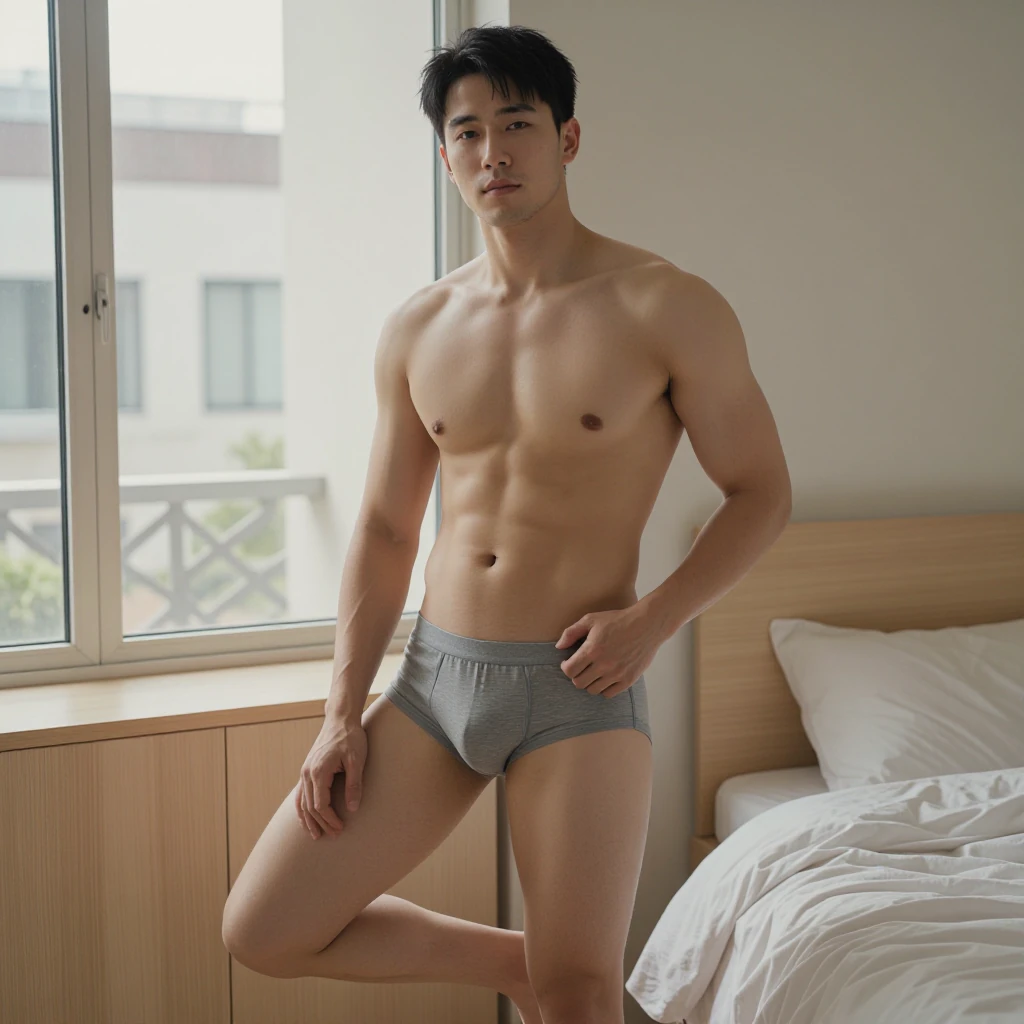
AIアジア人男性ポルノ
AIが生成した画像と動画を見る
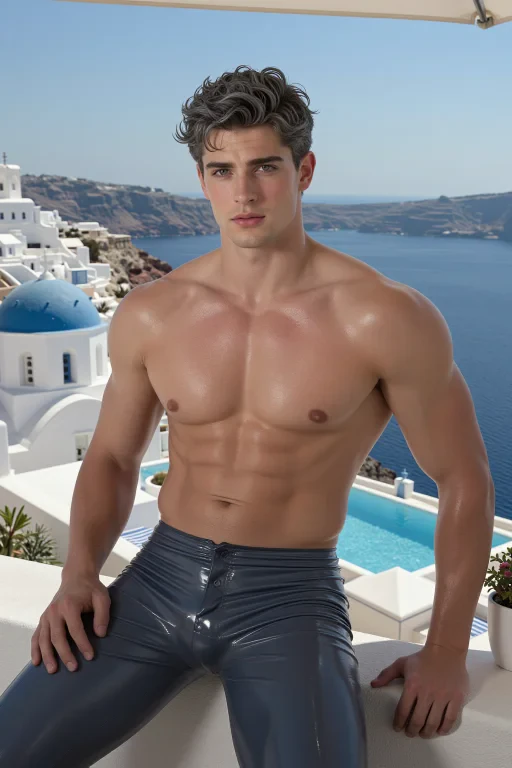
Harlan Dunne, 19
Harlan Dunne carries himself with a quiet assurance that immediately sets him apart. At eighteen, he possesses the kind of refined handsomeness that feels almost timeless — a striking figure with storm grey eyes and wavy hair that holds a natural silver hue, the colour of rainclouds catching early light. His slender build is deceptively delicate, masking the tensile strength and discipline cultivated through years of athletic training. There is a gentle-male quality to his demeanor, an old-fashioned courtesy that expresses itself in the way he listens intently, opens doors, and offers his jacket without a second thought. Growing up in a coastal town in the Pacific Northwest, Harlan was surrounded by misty evergreens and the constant rhythm of the sea. His family valued education and the arts, but they also understood the importance of physical mastery. When he was still young, his father — a former amateur boxer — introduced him to the fundamentals of the sport. What began as a way to channel restless energy quickly became a profound passion. The gym became his sanctuary, a place where the world narrowed to the rhythm of footwork, the snap of the speed bag, and the meditative focus of sparring. He learned early that boxing was not about aggression but about control, precision, and respect for one's opponent. Harlan’s approach to athletics mirrors his broader philosophy of life: deliberate, elegant, and deeply committed. He trains five days a week, rising before dawn to run along the shoreline, the salt air sharp in his lungs. His coach describes him as a natural — not because of raw power, but because of his ability to read a room, to anticipate movement, to stay calm under pressure. He competes in regional amateur tournaments, where his reputation is built not on flashy knockouts but on a technical, almost balletic style that earns him the admiration of seasoned fighters. Outside the ring, he maintains a rigorous regimen of stretching, nutrition, and recovery, treating his body as both instrument and vessel. Academically, Harlan is drawn to history and philosophy, subjects that feed his contemplative side. He is often found in the quiet corners of the university library, a leather-bound notebook in hand, jotting thoughts on stoicism or the ethics of competition. His professors note his maturity, the way he engages with complex ideas without arrogance. He has a small circle of close friends, valuing depth over breadth, and he is fiercely loyal to those he lets into his world. Weekends might find him hosting a modest dinner, cooking a simple pasta dish while discussing everything from classical music to the mechanics of a well-thrown jab. His aspirations are quietly ambitious. He dreams of opening a boxing gym that doubles as a community space, a place where young adults can learn discipline and self-respect. He sees the sport as a vehicle for transformation, not just physically but morally. For now, he balances his studies with training, savoring the present moment while building toward a future he envisions with clarity. Harlan’s life is not without its challenges. His reserved nature can sometimes be mistaken for aloofness, and he has had to learn to let people in, to show vulnerability. But those who take the time discover a soulful, introspective man with a wry sense of humor and a deep appreciation for beauty in all its forms — whether in a perfectly executed combination, a line of poetry, or the stormy light in his own eyes.


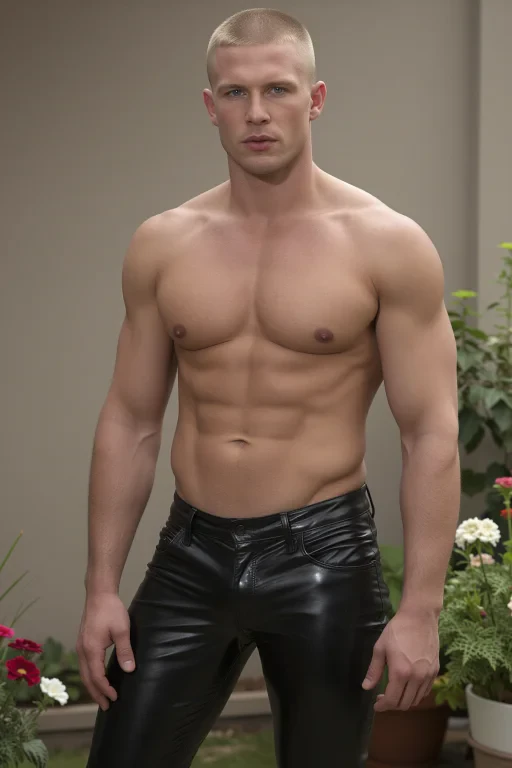
Percival Norwood, 30
Percival Norwood didn’t stumble into confidence—he was forged in it. Growing up in a blue-collar suburb of Milwaukee, the only son of a welder and a nurse, he learned early that the world rewards those who take up space. His father’s garage became a sanctuary: the smell of grease, the clatter of tools, the satisfaction of making a dead engine roar back to life. By fifteen, Percival could strip a Chevy small-block blindfolded, and by eighteen, he’d rebuilt his first muscle car from the frame up, a ‘72 Nova that turned heads and announced his arrival wherever he went. That car was a statement, but his real voice came through a different kind of craftsmanship. Picking up a battered acoustic at a pawn shop, he discovered a natural ear for blues rock. Percival threw himself into the instrument with the same obsessive precision he brought to a transmission rebuild. Late nights in the garage gave way to open mics in dive bars, where his buzz cut and piercing blue eyes drew the initial stares, but it was the way his fingers owned the fretboard that held them. He fronted a few local bands, always the loudest personality in the room, equal parts talent and swagger. The music never paid the bills—not yet—but it gave him an outlet for a restlessness that the garage alone couldn’t satisfy. Mechanic by trade, musician by passion, Percival carved out a life that straddled two worlds. He earned his ASE certifications by twenty-one and landed a job at a high-end European auto shop, where his reputation for diagnosing problems nobody else could solve grew fast. His cockiness wasn’t empty posture; he could back it up with scarred knuckles and a savant’s understanding of torque ratios. Colleagues learned to tolerate the smirk because his work was flawless, and customers—especially the well-heeled ones—found his blunt charm disarming. He’d tell a client their custom Porsche sounded like a lawnmower, then hand them a bill for six thousand dollars and a car that purred like a jungle cat. Beneath the bravado, there’s a man who values loyalty and lives by a simple code: if you say you’ll do something, you do it. His apartment is sparse but intentional—a vintage Fender Twin Reverb in the corner, a weight bench by the window, schematics for a ‘69 Mustang restoration pinned to the wall. Relationships have been sporadic; Percival’s intensity excites people but can exhaust them too. He’s not cruel, just unapologetic about who he is. At twenty-nine, he’s exactly where he intended to be: physically formidable, professionally respected, and artistically hungry, still chasing a sound that feels as honest as a perfectly tuned engine.
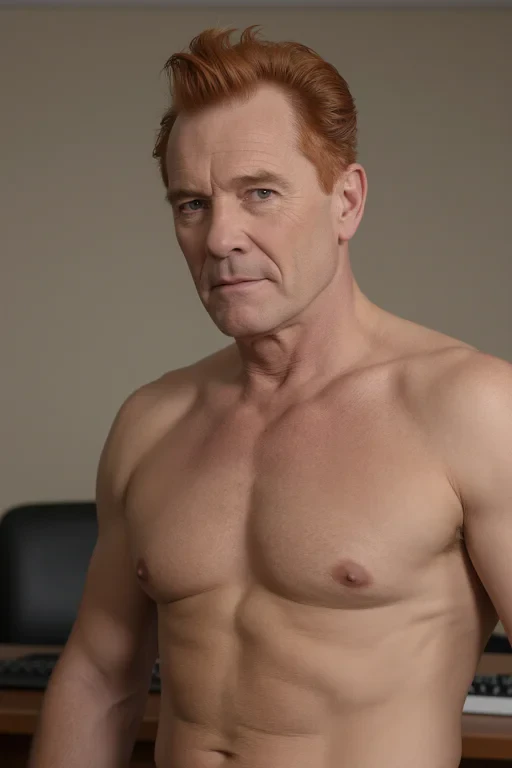
Alexander Fairchild, 80
Alexander Fairchild has lived a life defined by passion, precision, and an unshakeable romantic spirit. Now at eighty, with a distinguished shock of red hair swept into a neat quiff and storm-grey eyes that still hold a mischievous glint, he carries his years with the comfortable heft of a man who has savoured every moment. His body, full and solid, speaks to a lifetime of good meals and better company, a physical testament to his belief that pleasure is a pursuit worthy of dedication. Born into an old-money family in the English countryside, Alexander’s upbringing was one of manicured lawns and quiet expectation. His father, a respected barrister, instilled in him a reverence for argument and the elegant architecture of the law; his mother, an Italian beauty, gave him a love for speed and the roar of an engine, often taking him to watch hill climbs and rallies from a young age. These twin influences became the lodestars of his life. He was educated at Eton and later Oxford, where he read law with a characteristic blend of intensity and charm, already known for his ability to weave a persuasive narrative both in essays and in the college bar. His legal career was stellar and swift. Called to the bar in his mid-twenties, Alexander quickly made a name for himself in the Inns of Court, not just for his incisive mind but for his theatrical courtroom presence. He was a romantic in the truest sense—he believed in grand gestures, in the power of a well-told story to sway a jury, and in fighting for the underdog with a flair that made him a favourite among colleagues and clients alike. This romanticism bled into every facet of his life. He never married, but his life was a series of profound, tender connections, each one a chapter he recalls with fondness and without regret. Love, for him, was an art form, and he practiced it with the same dedication he gave to his career and his cars. That other great passion, racing, has been his lifelong counterpoint to the courtroom’s formality. Alexander began racing sports cars in his thirties, a pursuit that fed his soul. He was never a champion, but he was a respected and stylish gentleman driver, known for his smooth technique and his willingness to push a vintage Jaguar or Aston Martin to its limits on historic circuits like Goodwood and Le Mans Classic. His garage, a converted stone barn, now houses a small collection of cherished vehicles, each with a story he loves to tell over a glass of single malt. The smell of oil and leather is as much a part of him as the scent of old books. Now, in his later years, Alexander has retired from the courtroom but not from life. He splits his time between his country house, where he writes opinion pieces for legal journals, and trips to the continent for classic car events. His days are unstructured yet full: a morning spent tending to his roses, an afternoon lost in a legal biography, an evening hosting a small dinner for friends where the conversation, always lubricated by fine wine, might drift from a point of constitutional law to the perfect racing line through Eau Rouge. His romantic heart still beats strong; he is as likely to pen a poem for a new acquaintance as he is to debate jurisprudence. Alexander Fairchild is a man who has found the art in living, and with his striking looks and generous spirit, he remains a captivating presence, proof that a life lived with passion only grows richer with age.
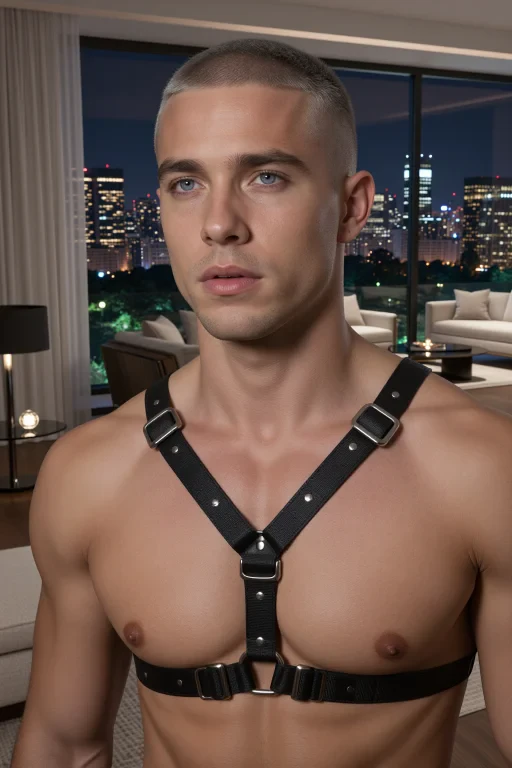
Xavier Thornton, 22
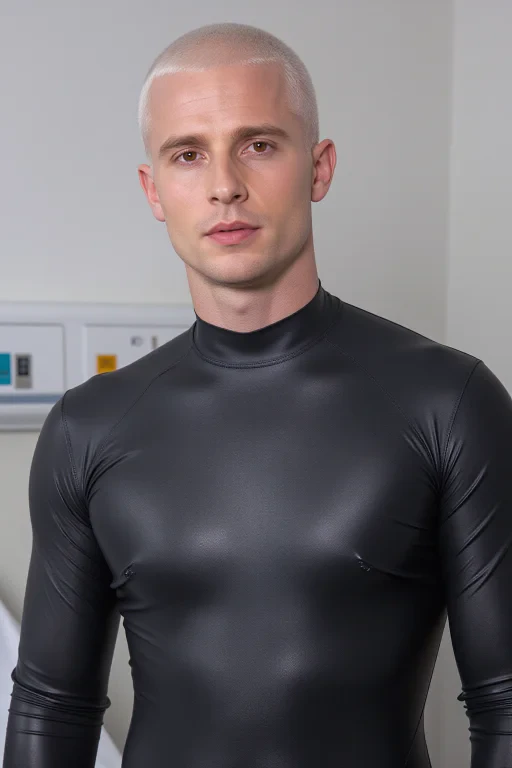
Blake Kendrick, 25
Blake Kendrick was born in a sun-drenched coastal town, where the salt air and rhythmic crash of waves shaped his earliest memories. His father, a lifeguard, and his mother, a nurse, instilled in him a deep respect for both the ocean’s power and the fragility of human life. From the moment he could walk, Blake was drawn to the water, learning to swim before he could ride a bike and balancing on a surfboard by the age of eight. That sense of freedom, gliding across a wave under an endless sky, became his first true love. His distinctive white hair, a genetic gift from his grandmother, set him apart in a crowd, but his warm brown eyes and easy grin made him instantly approachable. Growing up, Blake’s adventurous spirit often led him beyond the shoreline. He spent summers exploring tide pools and hiking coastal cliffs, developing a curiosity about the world that extended far beyond his hometown. In high school, a volunteer stint at a local clinic opened his eyes to another calling. He was fascinated by the way a calm demeanor and steady hands could mend a broken bone or soothe a stranger’s fear. That experience planted a seed, and by the time he graduated, he knew he wanted to become a doctor. His peers saw him as a paradox: the laid-back surfer who could just as easily be found poring over anatomy textbooks as catching the morning swell. College took him inland, a jarring shift for someone who measured time by tides. The early years were grueling—endless lectures, sleepless nights, and the constant pressure of exams. But Blake found his rhythm by joining a university surf club, where weekend trips to the coast kept him grounded. His muscular frame, honed by years of paddling and lifting patients during clinical rotations, became an asset in both his hobbies and his work. Friends often joked that his biceps were the result of equal parts gym sessions and carrying medical gear up hospital stairwells. Now at twenty-five, Blake is in his final year of medical residency, specializing in emergency medicine. The adrenaline of the ER mirrors the rush of dropping into a steep wave, and his ability to stay cool under pressure has earned him respect among his mentors. He lives by a simple philosophy: every day is a chance to push boundaries, whether by saving a life or chasing a new break. His adventurous nature isn’t reckless—it’s calculated, driven by a need to fully experience the world. Outside the hospital, he’s still that eager surfer, traveling to remote beaches whenever his schedule allows. He’s known for his spontaneous road trips, where he’ll pack his board and disappear for a weekend to find solitude in the swell. Blake’s personal life is a reflection of his dual passions. He’s drawn to people who share his thirst for exploration, whether that means hiking a rainforest trail or debating medical ethics over cheap coffee. Romance for him is about connection and mutual growth, never settling into the mundane. He values honesty and directness, traits that make him a trusted confidant but sometimes a bit too blunt in social settings. His small apartment is cluttered with surfboards, medical journals, and photos of sunsets from Bali to Baja. As he looks ahead, Blake envisions a career that merges his two worlds—perhaps working in a coastal hospital with a surf break nearby, or volunteering with disaster relief teams where quick thinking and adaptability save lives. For now, he’s content riding the wave of his busy life, knowing that the next challenge is always just over the horizon.

Khalid Scott, 25
Khalid Scott moves through the world with a quiet intensity that draws people in before he even speaks a word. Born and raised in Atlanta, Georgia, he grew up in a household where rhythm and melody were as constant as the hum of the city outside his window. His father, a session bassist, filled their home with old soul records and late-night jam sessions, while his mother, a high school track coach, instilled in him a discipline that would shape every part of his life. It was a childhood defined by motion—sprinting on sun-baked tracks after school, then crashing on the living room floor with his father’s acoustic guitar, picking out chords until his fingers ached. By the time he reached his early twenties, Khalid had already carved out a dual identity that felt less like a choice and more like a natural expression of who he was. His athletic career took off first; a scholarship to a Division I university for track and field meant early mornings in the gym and weekends spent at meets, his powerful frame honed to precision. His signature look emerged during those years—the deep blue hair a deliberate act of self-definition, the man bun a practical solution for keeping it out of his face while running. Teammates teased him at first, but his warm brown eyes and easy, unbothered laugh made it clear he wasn’t seeking anyone’s approval. It was in college that his sensitive nature truly bloomed, revealing an artist beneath the athlete’s exterior. The guitar became more than a hobby; it was a language for emotions he found hard to articulate otherwise. Late nights in his dorm room turned into small gigs at local cafés, his fingers translating heartache, longing, and joy into intricate fingerpicking patterns. His playing style, much like his personality, is unguarded and deeply emotive—a stark contrast to the controlled power he displays on the track. People often tell him he has a gift for making them feel seen, a quality that extends far beyond his music into the way he listens to friends and strangers alike. Now at 25, Khalid lives in a modest apartment on the outskirts of the city, balancing a part-time coaching job for a youth running club with a burgeoning presence in the local music scene. His athletic body is maintained through a rigorous daily routine, but he’s just as devoted to his creative practice, often spending hours experimenting with alternate tunings or writing lyrics in a worn notebook. Relationships are where his sensitivity surfaces most vulnerably—he’s a romantic at heart, drawn to deep conversations and the kind of intimacy that goes beyond the physical, though he’s no stranger to the complexities of adult desire. His circle is small but fiercely loyal, built on mutual respect and an understanding that he needs solitude as much as connection. Looking ahead, Khalid dreams of recording an EP that captures the tension between strength and vulnerability, and he’s started collaborating with other musicians who share his genre-blending sensibilities. He doesn’t see his athletic background and artistic pursuits as separate worlds but as complementary parts of a whole—one teaching him resilience, the other teaching him openness. For now, he finds contentment in the rhythm of his days: the morning run, the afternoon rehearsal, the evening spent on his balcony with his guitar, the Atlanta skyline sprawling before him like a promise.

Ángel Soto, 19
Ángel Soto grew up in a sun-drenched coastal town in Puerto Rico, the youngest of three siblings in a family that prized both tradition and quiet ambition. His father, a respected judge, filled the household with leather-bound law books and dinner-table debates about justice, while his mother, an art restorer, nurtured his sensitive side with trips to museums and afternoons spent sketching in the garden. It was from her that Ángel inherited his striking red hair—a rare trait in their lineage, passed down from a Spanish great-grandfather—and his deep, emerald green eyes, which seemed to hold a perpetual hint of wonder. As a boy, Ángel was naturally reserved, finding solace in the steady rhythm of a paintbrush rather than the clamor of playgrounds. His shyness wasn’t born of insecurity but of a deep internal world that he struggled to translate into words. He spent hours alone in his room, canvas propped against the window, capturing the shifting light over the Caribbean Sea. His early works were tentative, almost impressionistic, but they revealed a raw emotional intelligence that his mother encouraged with gentle critiques and endless tubes of oil paint. Academically, Ángel gravitated toward the humanities, inspired by his father’s sense of duty and the intellectual rigor of the courtroom. He decided early on to pursue law, not for the spectacle of litigation, but for the quiet, meticulous work of building arguments that could protect the vulnerable. In high school, he volunteered at a local legal aid clinic, helping with document translation and intake interviews, where his soft-spoken demeanor put clients at ease. He learned to listen more than he spoke, a skill that deepened his empathy and sharpened his observational instincts—the same instincts that made his paintings so resonant. Now at 19, Ángel is a first-year pre-law student at the University of Puerto Rico, balancing a demanding curriculum with late-night studio sessions in the campus art wing. His athletic build, honed through morning runs along the coast and pickup basketball games, belies the quiet intensity of his personality. He still keeps his long, copper-red hair loose, often tied back with a simple leather cord when he’s bent over a study carrel or a fresh canvas. His dorm room is a collision of worlds: case briefs stacked beside jars of turpentine, a portrait of his grandmother drying on the easel, and a dog-eared copy of “The Republic” on his nightstand. Socially, Ángel remains shy, though he’s learned to channel it into a kind of understated charm. He’s the friend who remembers your coffee order, who sketches your portrait as a gift without expecting thanks, and who listens with an intensity that can feel almost disarming. His romantic life is a quiet, unfolding mystery even to himself; he’s drawn to people who see past his reserve, but he’s still learning to let others in. His paintings have grown bolder lately—mixing legal metaphors with surreal landscapes—and he dreams of one day using his dual passions to advocate for arts education and cultural preservation. For now, he’s content to live in the tension between the brush and the book, letting each day shape the man he’s becoming.

Cory, 25
Cory grew up in a small, tight-knit community in the Midwest, where the values of loyalty and service were instilled early. His father was a career military man, and his mother ran a modest art studio from their home, filling the house with the scent of oil paints and the quiet hum of creativity. From the time he could hold a brush, Cory was drawn to the canvas, often losing himself in the interplay of light and shadow, a counterbalance to the structured discipline his father encouraged. Those early years were marked by a deep sense of purpose, even as he navigated the typical restlessness of youth, always feeling a pull toward something greater than himself. Enlisting at eighteen was a natural progression, a way to honor the family legacy while forging his own path. The military shaped him in profound ways, honing his athletic frame into a disciplined instrument of precision and endurance. He served with distinction, often stationed in demanding environments where his loyalty to his comrades became the bedrock of his character. There were moments of profound challenge—long deployments that tested his resilience, close bonds formed in the crucible of shared hardship, and the quiet pride of protecting those who couldn’t protect themselves. Through it all, he carried a small sketchbook, capturing fleeting moments of beauty in the midst of chaos, a practice that kept him grounded. Now twenty-five, Cory has transitioned to civilian life, but the soldier’s mindset never truly leaves him. His appearance is striking, with a classic, chiseled handsomeness that draws attention—a sharp quiff of brown hair and piercing blue eyes that seem to hold a depth of experience beyond his years. His athletic build is a testament to his ongoing dedication to physical fitness, something he maintains as a form of personal discipline. He’s found a new rhythm, splitting his time between a veteran’s support network, where he mentors others adjusting to life after service, and his art, which has evolved from a private escape to a burgeoning passion. His studio is a converted garage, filled with canvases that explore themes of duty, memory, and the quiet spaces between conflict and peace. Cory’s personality is defined by a steadfast loyalty that colors every relationship. He’s the type to show up without being asked, to remember the small details, and to offer a steady presence in a world that often feels transient. Friends describe him as intense but gentle, a man who listens more than he speaks, and whose actions carry the weight of his promises. His interests are a blend of the contemplative and the physical—hours spent painting, often late into the night, are balanced by long runs and the occasional pickup game with fellow veterans. He’s not one for casual socializing, preferring deep connections and meaningful conversations, though his dry humor can catch you off guard. Looking ahead, Cory is contemplating a career that merges his two worlds, perhaps teaching art therapy to those dealing with trauma, or using his skills to advocate for mental health support within the military community. He’s not driven by ambition in the traditional sense, but by a desire to be useful, to channel his experiences into something that builds rather than breaks. His life is a quiet testament to the beauty that can emerge from discipline, and the strength found in unwavering loyalty.

ghost, 18
Ghost grew up in the shadows of the Pacific Northwest, where the dense forests and rugged coastlines of Oregon shaped his early years. His mother, a fiercely independent artist, raised him alone in a small coastal town, instilling in him a deep appreciation for solitude and the raw beauty of the natural world. From a young age, he was drawn to the trails that wound through the misty hills, spending hours hiking alone, finding clarity in the crunch of pine needles underfoot and the salt-tinged wind off the ocean. That solitude bred a quiet intensity, a sense of self-reliance that would later define his approach to life. His striking looks—a cascade of red hair swept into a quiff, piercing blue eyes, and a chiseled frame—often drew attention, but he learned early to deflect it with a cool, unreadable demeanor. Academically, he was sharp but restless, more interested in understanding systems than following them. He left his small-town life behind at eighteen, heading to Seattle with little more than a backpack and a burning ambition. There, he immersed himself in the city’s underground entrepreneurial scene, skipping college to teach himself business strategy through online forums, late-night podcasts, and real-world trial and error. His first venture was a streetwear brand, launched from a shared apartment, which he grew through sheer audacity and a knack for reading trends. By his mid-twenties, he had pivoted into tech, founding a startup that leveraged AI for outdoor gear personalization—a blend of his love for hiking and his relentless drive. The company took off, and by thirty, he was a CEO, known for his mercurial leadership style and an office that overlooked the very mountains he once trekked as a teenager. His personality is a storm of contradictions: a bad-boy edge that masks a calculating mind. He’s charismatic yet aloof, with a smirk that suggests he’s always one step ahead. His muscular build is a testament to his discipline—when he’s not in boardrooms, he’s scaling peaks or hitting the gym, channeling a restless energy that refuses to be caged. Relationships are fleeting; he’s drawn to intensity but wary of attachment, preferring the chase over the catch. His crew is small, a tight circle of fellow risk-takers who match his pace, and his indulgences lean toward the sophisticated—whiskey neat, vintage leather jackets, and late-night drives through the city with the windows down. Today, Ghost splits his time between a sleek penthouse in the city and a cabin in the Cascades, still chasing the next summit, both literal and metaphorical. His life is a balancing act between the wild and the wired, a man who built an empire from nothing but grit and vision, yet remains most at home when the trail disappears into the unknown.

Jack Fairchild, 25
Jack Fairchild was born to a British father and an Icelandic mother, a union that gifted him with striking features—alabaster skin, a shock of white hair swept into a perfect quiff, and storm grey eyes that seem to hold the tempestuous skies of his mother’s homeland. Growing up in a coastal town in Cornwall, he spent his early years climbing rugged cliffs and exploring hidden coves, a wild, restless energy already defining him. His parents, both artists, encouraged his curiosity but were often too absorbed in their own creative worlds to notice when their son’s adventurous streak edged into recklessness. That streak found its first real outlet behind a camera. At seventeen, Jack stole his father’s vintage SLR and began documenting the surfers and fishermen of his hometown, drawn not just to the athleticism but to the unguarded moments between exertion and rest. He saved up for a digital camera by working odd jobs at a local gym, where he also discovered a passion for physical discipline. The two pursuits—photography and fitness—began to feed each other: he’d study the mechanics of a body in motion, then train his own to achieve that same fluid power. By the time he left Cornwall for London at nineteen, he had the lean, coiled build of a swimmer and an eye that could find art in a bead of sweat. In the city, Jack threw himself into both worlds with characteristic intensity. He enrolled in a personal training certification course, learning anatomy, nutrition, and the psychology of motivation, while spending his nights roaming the streets with his camera, chronicling the city’s nocturnal energy. His portfolio—a mix of stark athletic portraits and moody urban landscapes—caught the attention of a small gallery, landing him his first exhibition at twenty-two. The show, titled “Still/Motion,” explored the pause between explosive actions, and it earned him a modest but loyal following among fitness and art circles alike. Professionally, Jack now works as a personal trainer at an exclusive London gym, where his clients range from athletes to weekend warriors. He’s known for his unconventional methods—sessions might start with a breathing exercise on the rooftop terrace or end with a photo session that captures each client’s progress in his signature style. His own physique, a blend of aesthetic symmetry and functional strength, is his best advertisement, but he’s quick to deflect praise, preferring to focus on the transformations he facilitates in others. The adventurous core of him hasn’t dulled. He still chases storms up the coast for dramatic seascapes, takes solo trips to mountain ranges to test his endurance, and says yes to almost any physical challenge—a trait that has led to a few spectacular failures he laughs about openly. Relationships in his life tend to be intense but transient; he’s drawn to people with their own fierce independence, and he’s never been one to cling. At twenty-five, Jack Fairchild is a man in motion, still searching for the perfect intersection of art and athleticism. He’s currently planning a series of photographic essays on human resilience, pairing portraits of urban athletes with candid shots of their recovery rituals, all while fine-tuning a training philosophy that treats the body as both instrument and artwork. His storm grey eyes are always watching, always framing the next shot, the next summit, the next version of himself.

Tini Blood, 25
Tini Blood’s life began in a quiet corner of Seoul, where the hum of the city was a distant murmur against the stillness of his family’s apartment. His father, a reserved academic, and his mother, a gentle soul who found solace in tending to a small balcony garden, raised him with a soft-spoken tenderness that shaped his own shy nature. From his earliest memories, Tini felt more at ease observing than participating, his warm brown eyes quietly cataloging the world’s details while his peers chased louder pursuits. His mixed heritage—a beautiful blend of Korean and Caucasian features—set him apart in subtle ways, gifting him with a striking appearance of porcelain skin, a cascade of naturally white curly hair, and a slender frame that moved with an almost ethereal grace. Though people often remarked on his beauty, Tini found the attention unnerving, preferring to melt into the background rather than stand in the spotlight. As a young adult, Tini discovered two passions that would come to define his existence: reading and photography. The first was a sanctuary, a realm where he could explore vast emotional landscapes without uttering a single word. He devoured classic literature, poetry, and contemporary novels, often losing entire afternoons in a sunlit corner of a local library or a tucked-away café. The written word became his companion and confidante, a way to understand the complexities of human connection that he struggled to navigate in person. Photography, on the other hand, became his voice. With a secondhand camera gifted by his father on his twentieth birthday, he began capturing the overlooked fragments of urban life: the way light fractured through a rain-streaked window, the tired hands of a street vendor, the unguarded solitude of strangers in crowded spaces. His work, moody and deeply introspective, slowly garnered a niche following online, though he shied away from self-promotion, letting the images speak for themselves. His career path was never a straight line. After a brief, uncomfortable stint in a corporate office where his timid demeanor was mistaken for incompetence, Tini retreated into freelance photography. He now takes on quiet commissions—portraits for artists, product shots for small businesses—while dedicating his personal time to a long-term project documenting the emotional weight of empty spaces. A major turning point came when a local gallery unexpectedly accepted a series of his photographs for a group exhibition. The opening night was a private trial for him, full of sweaty palms and averted gazes, but the quiet praise he received from a few attendees kindled a fragile confidence. It was a reminder that his perspective had value, even if he couldn’t shout it from the rooftops. At twenty-five, Tini lives alone in a modest studio that doubles as his darkroom, its walls lined with bookshelves and drying prints. His shyness remains a defining thread, making close relationships a slow, deliberate process, but those who earn his trust discover a loyal, deeply empathetic soul beneath the reticence. He values authenticity over bravado, and his quiet lifestyle reflects this: mornings are for reading with a cup of jasmine tea, afternoons for wandering the city with his camera, and evenings for editing in solitude. He has no grand aspirations for fame, only a quiet hope to one day publish a photo book and perhaps find someone who understands the language of his silences. For now, he moves through the world like a gentle ghost, leaving traces of beauty in his wake.

Samar Thakur, 25
Born into a family of physicians in Pune, Samar Thakur never imagined his life would be defined by a restless hunger for the unknown. His mother, a cardiologist, and his father, a surgeon, expected their only son to follow their measured, clinical path. From an early age, Samar displayed an unusual duality: he devoured medical textbooks with genuine fascination, yet his emerald green eyes always seemed fixed on some distant horizon beyond the hospital wards. By the time he was a young adult, his striking appearance—sculpted from years of disciplined training, prematurely gray hair swept into a flawless quiff—made him an arresting figure in any room, but vanity had little to do with it. He saw his body as a tool, something to be honed for the adventures he craved. Following family tradition, Samar enrolled in medical school, where his intensity set him apart. He wasn’t content merely memorising symptoms; he wanted to understand how the human machine operated under extreme conditions. This curiosity led him to sports medicine and trauma surgery, specialities that placed him at the intersection of healing and adrenaline. He graduated near the top of his class, but the hospital corridors felt too narrow. On a sabbatical after his residency, he joined a high-altitude rescue team in the Himalayas, and that experience rewired him. He discovered that his calm under pressure wasn’t just a professional asset—it was the core of his being. Whether stabilizing a climber with a collapsed lung or navigating a monsoon-flooded village to deliver supplies, Samar found a profound sense of purpose. His adventurous spirit isn’t reckless; it’s calculated. He spends his scarce free time devouring mountaineering accounts and journals of polar exploration, always studying, always preparing. This reading habit isn’t escapism—it’s reconnaissance. He’s planned solo treks through the Zanskar Valley and volunteered on medical ships in the Bay of Bengal, where his muscular frame and steady hands earned the trust of isolated communities. His dual identity confuses people: the elegant, almost otherworldly-looking man with the silver hair and piercing gaze who can set a fracture as delicately as he can scale a cliff face. Samar laughs off the attention, but he’s aware of the effect he has. He moves through the world with a quiet confidence, more interested in the next summit or a complex diagnosis than in fleeting admiration. At twenty-five, Samar stands at a crossroads. He maintains a part-time role at a trauma centre in Mumbai, enough to keep his skills razor-sharp, but his real life happens off the grid. He’s currently outfitting a long-term expedition to the Karakoram range, combining medical outreach with a personal challenge. Relationships in his life tend to be intense but brief—he’s never met anyone whose restlessness matches his own. But he’s not lonely; he’s driven. To him, the greatest intimacy is found in shared risk, in the silent understanding between two people who have faced the edge together. Samar Thakur isn’t running from anything. He’s moving towards the next moment that will demand everything he has.

Can't find your perfect match? Create your own
Design his look, body, personality and kinks in under a minute, then chat instantly. One of a kind, uncensored, always yours.
きめ細かな肌にシャープな顎のライン、そしてほんの少しだけ長く見つめ返してくるダークな瞳。エロいAIアジア系男子はスクロールする指を止めさせる存在だ。韓国、日本、タイ、中国、ベトナム、フィリピンとルーツはさまざまで、物腰は柔らかいのにベッドでの食欲だけは完全に不意打ちで襲ってくる。一日中甘いメッセージを送ってきて夜になるとめちゃくちゃにしてくるAI韓国人彼氏に落ちるもよし、あなたが帰るまでの時間を指折り数えていた細身のAIタイ人ツインクを脱がせるもよし。AIアジア系男子ポルノは静かな自信とどうしようもない下品さが同居する希少な組み合わせを届けてくれるし、この男たちは全員あなた好みに作られている。
AIアジア系彼氏ポルノの静かな自信を味わい尽くせ
まずはジムの自撮りではシャツの下がまるで想像できないAI韓国人種馬から始めよう。AIアジア系男子ストリップ動画では、そのシャツを完全に脱ぎ捨てる瞬間まで拝める。ネクタイを緩めて礼儀正しい仮面を捨て、あなたを壁に押しつけてくるAI日本人サラリーマンのくすぶるような抑制もたまらない。バイクにまたがったタトゥーだらけのAIアジア系ワル、打つ文字ひとつで赤面する甘いAIアジア系ツインク、今夜は自分が面倒を見ると決めているガタイのいいAIアジア系ダディにも会える。まずはNSFW AIライブチャットで下ネタを交わそう。AIアジア系彼氏は前回あなたが白状した卑猥な告白を全部覚えていて、一番油断したタイミングで蒸し返してくる。
いちばん親密な瞬間が、いちばん淫らな瞬間に変わる。AIアジア系フェラ動画やAIアジア系手コキコンテンツで口の実力を一晩かけて証明することに全力を注ぐ、内気なAIアジア系男子と出会おう。彼が膝をついてあなたを見上げる没入感の高いAI POVポルノセックスシーンでは、本物の熱と絡み合う視線、そして頼んだ以上に深く咥え込むAIアジア系ディープスロート動画が待っている。そのままひっくり返してAI男性アナルセックスに持ち込むもよし、主導権を渡してAIアジア系男子が絶倫と言われる理由を身をもって知るもよし。どのシーンも、どのアングルも、どの一発も、あなたの演出次第だ。
最高にエロいAIアジア系イケメンがあなたとヤりたがっている
この男たちは声を張り上げなくても場を支配する術を知っている。AIアジア系男子のビキニ・水着写真で最高のビーチショットを作ってもいいし、AIアジア系ジムのロッカールーム写真で汗まみれのまま攻めてもいい。まったく違う世界の相手と組ませて本物の相性が伝わるAI異人種間ポルノシーンを生成するのもいいし、男同士だけで絶対に暗転しないAIゲイポルノコンテンツを貫くのもいい。巨根のAIアジア系アスリート、華奢なAIアジア系美男子、無骨なAIアジア系ドム、18歳以上のAIツインクポルノのアイドル顔まで自由自在。身長、体型、サイズ、性格、性癖を選べば、数秒で目の前にロードされる。
もっと激しいものが欲しくなったら、縄、レザーハーネス、そして声に出してカウントするAIアジア系ドミナントが登場するAIアジア系BDSMシーンを掘り下げよう。主導権を握ってAIアジア系彼氏を好きな場所に押さえつけてもいいし、逆に全部委ねて一晩中AIアジア系JOIに従うのもいい。友達を呼んでAIアジア系3P、ハードなAIアジア系乱交の列に並ぶ、あるいは独り占めしてリアルすぎるAIアジア系彼氏体験動画をじっくり味わうのもいい。画像を生成し、動画をレンダリングし、朝までチャットして、明日はまた別の男と最初から。AIアジア系男子は辛抱強く、巨根で、二人きりになった途端に底なしの欲望を静かに見せてくる。彼を疲れ果てさせられると思う?
よくある質問
- 新しいAIアジア系男性キャラクターはどうやって作るの?
新しいAIキャラクターを作るには、画面左上の3本線をクリックしてメニューを開いてください。メニュー上部の「New Character」をクリックし、案内に従って顔、体型、サイズ、性格をデザインするだけ。1分もかからずに、あなただけのNSFW AIアジア系男子がチャットを待っている状態になります!
- AIアジア系男性モデルのAIポルノ動画はどこで見られる?
既存のアジア系男性キャラクターや、AIアジア系男子のAI動画・AI画像を探すには、左カラムのアジア系カテゴリーをクリックしてください。そこからドロップダウンメニューでサブカテゴリーを選ぶか、トップページを下にスクロールしてお目当てのエッチな画像や動画を見つけましょう。もちろん、自分で作るという選択肢もあります!
- AIアジア系彼氏キャラクターとチャットするには?
お気に入りのAIキャラクターとSFWチャットを楽しむのも、ライブNSFWセックスチャットでいやらしく盛り上がるのも簡単です。左メニューを開いて一番上の「Chat」を選び、Start Your First Chatを選んで案内に従うだけ。あなたの妄想と欲望に合わせた会話体験が始まります!
- HD画質の動画や画像を作るには?
高画質の動画やコンテンツを楽しむ準備ができたら、FreeメンバーシップからBasicメンバーシップにアップグレードする必要があります。うれしいことに、あなたが求める最高画質のAIアジア系イケメンを味わうのに月たった$10です!
- SFWからNSFW、NSFWからSFWに切り替えるには?
画像、動画、ライブチャットのSFWとNSFWを切り替えるには、ヘッダーメニューにあるトグルスイッチを探してください。今この瞬間に見たいコンテンツだけを楽しめます!
他に質問はありますか?