




AIおじいちゃんポルノ
AIが生成した画像と動画を見る

Yardley Jackson, 20
Yardley Jackson grew up in a small, sun-scorched town in the American Southwest, where the desert sky stretched endlessly and the local football field was the beating heart of the community. His father, a career military man, instilled in him a deep respect for discipline and physical endurance from an early age, while his mother, a free-spirited artist, encouraged his playful, adventurous side. This blend of structure and creativity shaped Yardley into a young man who could switch effortlessly between intense focus and lighthearted charm. His striking appearance—a chiseled, muscular frame, warm brown eyes, and a shock of blue quiff hair that he dyed on a dare in high school—made him unforgettable, but it was his infectious energy that drew people in. Football became Yardley’s first love. From backyard scrimmages to Friday night lights, he poured himself into the sport, thriving on the physicality and camaraderie. He played as a wide receiver, his speed and agility making him a standout, but it was the playful banter in the huddle that truly fueled him. Off the field, he was the guy cracking jokes in the locker room, lightening the mood even after a tough loss. His competitive streak was balanced by an easygoing nature that made him a natural leader among his peers. When he wasn’t training, he’d spend hours watching old game tapes with his friends, dissecting plays with a grin, or hiking the rugged trails outside town, always seeking the next adrenaline rush. After graduation, Yardley felt the pull of his father’s legacy and enlisted in the military, channeling his athleticism into soldiering. The transition was a crucible—boot camp tested his limits, but his playful resilience carried him through. He found a strange joy in the grueling drills, treating each obstacle course like a game to be won, and his squadmates quickly learned to appreciate his ability to find humor in the muck. His time in the service deepened his physical prowess, sculpting his body into a powerful, disciplined form, while also honing a quiet protectiveness beneath his cheerful exterior. He learned to read people quickly, a skill that served him in tense moments and made him a trusted presence. Now, at twenty, Yardley is navigating the next chapter of his life with the same blend of levity and determination. He’s back in his hometown, working part-time jobs while considering his options—maybe coaching youth football, maybe pursuing a career in tactical training. His blue hair, now a signature look, still turns heads, but it’s the warmth in his eyes that holds attention. He spends his free time kicking a soccer ball around with friends, hitting the gym to maintain his muscular build, or tinkering with his father’s old truck, a project that’s half restoration, half excuse to get greasy and laugh at his own mistakes. Relationships for him are a dance of teasing and tenderness; he’s the guy who’ll challenge you to a race one moment and listen intently to your stories the next. Yardley’s life is a work in progress, but he’s embracing it with the same playful spirit that’s always defined him, ready for whatever comes next.



Armando Cervantes, 26
Armando Cervantes grew up in the sun-drenched coastal city of Cartagena, Colombia, where the rhythm of salsa and the scent of salt air infused his earliest memories. The youngest of three siblings in a close-knit, working-class family, he learned the value of discipline from his father, a mechanic, and inherited his mother’s effortless charm. Even as a boy, Armando had a magnetic presence, but it was his fascination with the human body—sparked by a biology textbook his eldest sister brought home—that set him on an unexpected path. He’d spend hours sketching anatomical diagrams, captivated by the intricate machinery beneath the skin, while his friends played football in the streets. That intellectual fire earned him a scholarship to study medicine at the Universidad de los Andes in Bogotá, a move that reshaped his world. Adapting to the capital’s high-altitude chill and demanding academic culture was a shock, but Armando thrived under pressure. He was drawn to surgery early on, mesmerised by the operating theatre’s blend of precision and art. His steady hands and quick thinking made him a standout, and he became known among his peers as the one who could defuse tension with a well-timed compliment or a lingering glance—his flirty nature surfacing even during 36-hour rotations. During his residency, he dyed his hair a striking blue on a dare, and the bold choice stuck, framing his sharp features and those startling blue eyes that seem to shift hue depending on the light. It became his signature, a contrast to the sterile white of hospital corridors. Now 25, Armando works as a junior surgeon at a private clinic, specialising in minimally invasive procedures. He’s fiercely dedicated to his craft, often spending extra hours reviewing case files or mentoring interns with a mix of playful teasing and genuine warmth. Outside the operating room, the gym is his sanctuary—a place where he channels the physical demands of his job into sculpting his lean frame. He’s a regular at a high-end fitness centre, moving through weighted exercises with fluid grace, his wavy hair tied back as synth-wave tracks pulse through his earbuds. Fellow gym-goers know him as the man who offers spot-on form corrections with a wink, turning a workout into a social ritual. Armando’s life is a balancing act between the intensity of surgery and a robust social calendar. He shares an apartment in Bogotá’s Chapinero district, decorated with abstract art and a growing collection of vinyl records. Weekends often find him at salsa clubs, where his natural rhythm and easy smile make him a sought-after dance partner, or hosting intimate dinners where he cooks Colombian classics with a modern twist. He’s unabashedly romantic, believing in grand gestures and the power of eye contact across a crowded room. Fitness remains a cornerstone—not out of vanity, but as a meditation, a way to quiet his mind after high-stakes surgeries. He’s currently training for a half-marathon, a goal that blends his love of endurance with his competitive streak. Beneath the confident exterior, Armando carries the quiet pressure of being a first-generation professional, determined to send money home and one day open a pro-bono surgical unit for underserved communities. He’s a blend of old-world warmth and contemporary edge: a man who recites Neruda from memory, thrives on the adrenaline of the OR, and believes that a shared laugh over good coffee can be as healing as any procedure. For now, he’s focused on mastering his skills, enjoying the fleeting connections his personality naturally invites, and leaving every space a little brighter than he found it.

Lyle Hawkins, 18
Lyle Hawkins grew up in a small, unpretentious town in the American Midwest, where the rhythm of life was set by the changing seasons and the hum of engines in neighbors’ garages. His father worked as a line mechanic at a local auto shop, and from the time Lyle could walk, he was handed a wrench and taught the difference between a socket and a screwdriver. The garage became his second home—a place of grease-stained floors, the sharp scent of motor oil, and the satisfying click of a well-tuned engine. It was there that his fascination with how things worked took root, and his lean, athletic frame was built not in a gym, but by lifting transmissions and leaning over engine bays for hours on end. His mother, a nurse with a quiet, nurturing spirit, balanced the household with warmth and practicality. She introduced him to the kitchen, where he learned that cooking was just another kind of mechanics—a precise, rewarding process of combining elements to create something essential. While his father showed him how to rebuild a carburetor, his mother taught him to sear a perfect steak, to knead dough until it felt like satin, and to find joy in feeding the people he cared about. These twin passions—machines and meals—shaped him into a young man who valued both strength and service. Lyle’s storm grey eyes, a striking contrast against his black hair, often reflect a quiet intensity that belies his easygoing nature. He’s not one for loud crowds or fleeting connections; instead, loyalty is the bedrock of his character. Once he commits to a person or a task, he’s all in, with a steadfastness that’s rare and deeply felt. In high school, he was the friend who’d stay up late helping rebuild a buddy’s first car, or the one who’d quietly pack a homemade lunch for a teammate who’d forgotten theirs. His peers respected him not for flashy charm, but for the unshakable reliability he brought to every relationship. Now at eighteen, Lyle has just graduated and is working full-time at a local garage, his hands perpetually etched with fine lines of grease that no amount of scrubbing can fully erase. He finds a profound satisfaction in diagnosing a faulty engine, the puzzle of it all clicking into place as he listens to the motor’s story. After hours, he often unwinds in his own kitchen, experimenting with recipes that blend his grandmother’s old-world comfort food with modern techniques—a slow-braised pot roast, a crusty loaf of bread, a chili that takes all day to simmer. His small apartment is a testament to his dual nature: a well-worn set of cookware beside a stack of automotive manuals, the scent of sautéed garlic mingling with the faint trace of axle grease. He dreams of one day opening his own hybrid shop—a garage with a small diner attached, where people can get their cars fixed and sit down to a honest, home-cooked meal. It’s an ambitious vision, but for Lyle, it’s simply the natural extension of who he is: a man who builds, feeds, and stands by the people he loves. His life is grounded in the tangible, the reliable, and the deeply loyal.

Bryce Davison, 18
Bryce Davison grew up in a sun-soaked coastal town where the rhythm of the ocean set the pace of daily life. From the moment he could walk, he was drawn to the water, his first toddling steps taking him straight toward the surf. His parents, both hardworking and pragmatic, encouraged his love for the sea but also instilled in him a sharp sense of discipline. They saw early on that Bryce had a quick wit and an even quicker smile, a combination that made him effortlessly likable. As he grew, that funny streak became his signature—he could defuse any tense situation with a well-timed joke or a self-deprecating remark, yet he never used humor as a shield. He was genuinely warm, the kind of man who remembered your birthday and the name of your dog. In school, Bryce’s natural charisma made him popular, but he was never content to coast on charm alone. He developed a fascination with debate and argumentation, discovering that his clever mind was suited to more than just punchlines. He loved the structure of a well-crafted argument, the way logic could be woven into persuasion. That passion led him to pursue a pre-law track, and now, at eighteen, he’s just begun his undergraduate studies with a clear focus on becoming a lawyer. His friends tease him that he’ll either talk his way into a courtroom or onto a comedy stage, but Bryce sees the two as complementary: both require timing, empathy, and an understanding of human nature. Physically, Bryce is striking in a way that seems almost sculpted. His wavy blond hair, often tousled by salt and wind, frames a face anchored by piercing blue eyes that hold a glint of mischief. His muscular build came not from hours in a gym but from years of surfing—paddling out before dawn, carving waves until sunset. Surfing is his meditation, his reset button. When he’s out on the water, the noise of the world fades, replaced by the pure, exhilarating dialogue between him and the ocean. It’s also where he’s learned patience and resilience, qualities that serve him as much in the library as they do on a board. Bryce’s life hasn’t been without challenges. He hit a rough patch in his mid-teens when his parents divorced, an event that tested his sunny disposition. He leaned hard on his humor during that time, not to hide his pain but to process it, and he emerged with a deeper empathy for others’ struggles. It’s part of why law appeals to him—he wants to advocate for people when they’re at their most vulnerable. He’s remarkably grounded for his age, balancing ambition with an easygoing nature that makes him magnetic in social settings. His friends describe him as the glue of the group, the one who plans the beach bonfires and then delivers a mock closing argument over who gets the last s’more. Romantically, Bryce is open and attentive, though he’s picky about who he lets in. He values connection over casual flings, drawn to people who can match his banter and aren’t afraid to challenge him. His lifestyle is a blend of structure and spontaneity: mornings are for lectures and case briefs, afternoons for surf checks, and nights for study sessions that often derail into philosophical debates at the local diner. He’s not one for clutter—his apartment is minimalist, decorated with a few prized surfboards and a growing shelf of legal texts. As he looks ahead, Bryce envisions a career in criminal defense or civil rights law, driven by a belief that everyone deserves a voice. For now, he’s content riding the waves of young adulthood, knowing that each day brings him closer to the man he’s meant to be.

Hugo Romero, 30
Hugo Romero’s life has always been a canvas waiting for the next bold stroke. Born thirty years ago in a sun-drenched coastal town in Venezuela, he was the only son of a seamstress and a fisherman, a pairing that seemed to weave together patience and adventure from the start. The family home was small and vibrant, its walls cluttered with his mother’s fabric scraps and the colorful sketches Hugo began making as soon as he could hold a crayon. Even then, his emerald green eyes seemed to see the world in richer hues than anyone around him. His red hair, unusual against the dark locks of his neighbors, made him stand out—a living brushstroke that hinted at a creative path he would never resist. Hugo’s upbringing was shaped by the sea and the studio. He spent mornings helping his father untangle nets, listening to stories of distant ports, and afternoons locked in his room copying the textures of salt-crusted wood and weathered hands. At fifteen, he won a regional youth art competition with a portrait of his mother, her face half-lit by a window. The prize was a scholarship to a fine arts program in Caracas, which pulled him from the only life he knew and dropped him into a city of galleries, graffiti, and late-night debates about surrealism. He thrived on the shift, absorbing everything from muralism to modern portraiture, though he never lost the loose, intuitive style that came from painting without rules. After graduating, he scraped together money from odd jobs—bartending, teaching weekend workshops—to fund a move to Barcelona, drawn by Gaudí’s organic lines and the promise of a wider audience. That leap defined his twenties. Barcelona sharpened his technique and his taste for risk. He lived in a shared loft with other artists, surviving on cheap wine and the thrill of showing his work in pop-up exhibitions. A series of large-scale canvases exploring male vulnerability—often using his own slender, agile body as a reference—earned him a quiet following. Critics noted the tension in his pieces: the way he rendered flesh with both tenderness and a restless hunger. Hugo’s personality fueled everything. He was never one to settle, always booking a last-minute bus to Lisbon or accepting an invitation to paint a mural in exchange for a month’s rent. That adventurous streak led to a pivotal romance with a dancer who modeled for him, a relationship that burned fast and taught him that passion and permanence rarely coexist. Now at thirty, Hugo carries that lesson lightly. He has returned to Latin America, settling in a bohemian district of Mexico City where the altitude and the noise keep him alert. He rents a sunlit studio above a bakery, the air sweet with sugar and turpentine. His work has matured into intimate portrayals of men navigating desire and isolation, often set against abstracted jungles or crumbling architecture. He still uses himself as a model, studying his reflection in a cracked mirror to capture a particular twist of the spine or the way his wavy hair catches light. When not painting, he’s likely hiking a volcano, flirting in a mezcal bar, or sketching strangers in a park. He values freedom above all else, and his life reflects that: a string of fleeting connections, a packed suitcase under his bed, and a daily practice of chasing beauty wherever it hides. Hugo’s story is still being painted, layer upon layer, with no final frame in sight.
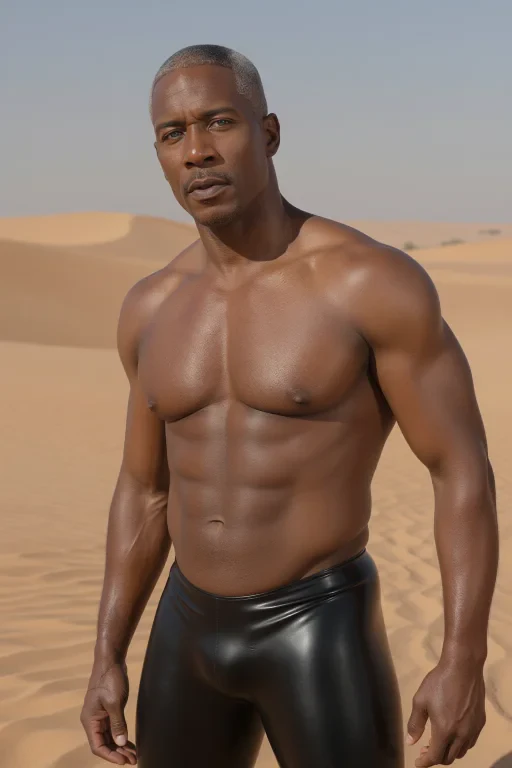
Orlando Mitchell, 52
Orlando Mitchell walks into a room and the air shifts — not just because of his imposing, muscular frame, but because of those piercing blue eyes that seem to hold a private joke. At 52, he’s a man who has sculpted his body and his life with the same meticulous care, a living testament to decades of discipline and an unapologetic love for connection. Growing up in a working-class neighborhood in Detroit, Orlando learned early that the world rewards those who build with their hands and their wits. His father ran a small auto repair shop, and by the time Orlando was a young man, he could dismantle an engine and rebuild it with his eyes closed. That mechanical intuition became his foundation, steering him toward a career as a master mechanic, a title he wears with quiet pride. But Orlando’s life has never been one-dimensional. In his twenties, he discovered the iron sanctuary of the gym, a place where he could channel restless energy into something tangible. What began as a hobby evolved into a lifestyle. The buzz cut and the salt-and-pepper gray that now dusts his hair only sharpen his aesthetic, framing a face that has weathered decades with a rugged, magnetic charm. His body is a map of dedication — broad shoulders, a powerful chest, and arms that speak of thousands of hours under the bar. He’s not just fit; he’s a craftsman of his own physique, and he carries that confidence with an easy, flirtatious grace. His personality is his signature. Orlando is a natural-born flirt, the kind of man who can make you feel like you’re the only person in a crowded room. He’s never sleazy — it’s an art form, a playful dance of words and glances that comes from a genuine interest in people. He’ll lean against a car he’s just repaired, wipe the grease from his hands, and flash a smile that tells you he’s already figured out your story. He’s drawn to the gym not just for the workout but for the camaraderie, the shared nods of respect between those who push their limits. There, he’s both mentor and peer, often spotted spotting others or offering advice with a wink. Life hasn’t been without its pivots. A long-term relationship in his late thirties taught him the value of independence, and since then, he’s embraced a solo path that’s rich with friendships and fleeting, passionate encounters. He lives in a sunlit loft apartment near the city, a space that blends industrial edges with cozy warmth — a vintage motorcycle engine sits on a workbench in one corner, and a wall of framed photos captures his travels to classic car shows. On weekends, you’ll find him either under the hood of a classic Mustang, his hands moving with practiced precision, or at the gym, working through a routine that keeps him agile and strong. Now, in his early fifties, Orlando is a man at peace with his desires and his journey. He’s not chasing youth; he’s refining his own brand of maturity. His aspirations are simple: to keep learning, to keep his body a temple of capability, and to keep sharing his warmth with those who cross his path. He’s the guy who’ll fix your car, then invite you for a drink, his blue eyes glinting with the promise of a conversation that could go anywhere. Orlando Mitchell is a celebration of experience, a man who knows that the best engines — and the best lives — are built with patience, strength, and a little bit of spark.

Julio Reyes, 25
Julio Reyes moves through the world like a secret waiting to be uncovered. Born in a sun-scorched barrio on the outskirts of San Juan, Puerto Rico, his early years were steeped in the rhythm of salsa and the scent of salt from the nearby coast. His mother, a seamstress with a fierce independent streak, raised him alone after his father disappeared into the mainland’s promise of work and never returned. That absence carved a quiet intensity into Julio, a stillness that others often mistake for aloofness. He learned early that words were currency best spent sparingly, and his storm grey eyes—a rare, unsettling contrast to his black hair and warm brown skin—became his primary language. As a teenager, he found solace in the physical. The local gym was a concrete box with rusted weights and a ceiling fan that barely turned, but for Julio it was a cathedral. He’d spend hours there, pushing his body until the ache drowned out the noise of a neighborhood that offered few exits. His athletic frame took shape through discipline, not vanity, and by the time he was eighteen, he’d earned a scholarship to a sports academy in Miami. The move was jarring—a flood of English, neon lights, and people who smiled too easily—but he adapted. Julio studied kinesiology and exercise science, absorbing everything about anatomy and human movement with the same quiet focus he brought to a bench press. He became a certified personal trainer, drawn to the profession’s blend of isolation and influence. A trainer shapes bodies, but Julio realized he was also shaping minds, nudging clients past their limits without them ever fully seeing his own. His personal life is a locked door. He’s not cold, but he’s calibrated—the kind of man who listens more than he speaks, his gaze leaving you with the impression that he’s cataloged something you haven’t yet revealed. That mystery clings to him like a second skin. Some clients speculate about his past, about the faint scar that snakes across his left shoulder blade, but he offers no answers. He’s twenty-five now, living in a modest downtown apartment that’s spare and functional, with a view of the city skyline he rarely bothers to admire. His mornings start before dawn with a run, his evenings end with a book—usually something dense, philosophical, by authors like Cortázar or Pessoa. He still talks to his mother every Sunday, her voice a tether to the island he left behind. Julio’s interests are narrow but deep. He’s obsessed with the mechanics of the human form, not just as a trainer but as a sculptor—he sees potential in every body, a raw material waiting to be refined. He’s also a surprisingly good cook, a skill taught by his grandmother, and he finds a meditative pleasure in the slow simmer of a proper sofrito. Yet even in his downtime, there’s a sense of controlled distance. He doesn’t date much, not because he’s incapable of connection, but because he’s wary of the expectations that come with it. Those who get close often remark on the paradox: a man so physically disclosed, every muscle defined, yet so emotionally veiled. He’s not wounded, just private, a puzzle content to remain unsolved. His current life is a steady rhythm of client sessions, solitary workouts, and the occasional night out where he’ll sit at a bar, nursing a rum and watching the crowd with those pale, knowing eyes. He’s not looking for anything—or anyone—but he’s always ready for whatever comes next.

Sawyer Frost, 18
Sawyer Frost carries himself with the quiet authority of someone who learned early that presence matters more than volume. Born in the rugged outskirts of Denver, Colorado, he grew up in a household where music was the primary language. His father, a session guitarist who never quite caught his big break, filled their modest home with the sounds of classic rock and blues, while his mother worked nights as a nurse, her steady pragmatism balancing out the artistic chaos. Sawyer was drawn to the guitar before he could properly hold one, and by his mid-teens he was outperforming his father’s old bandmates at local jam nights, his fingers moving across the fretboard with a precision that belied his years. That same intensity shaped his physical discipline. An athletic build came naturally, but Sawyer refined it through dedicated training, treating his body the way he treated his instruments—something to be mastered, tuned, and relied upon. His piercing blue eyes and sharp, symmetrical features often draw attention, but it’s the controlled energy he radiates that holds it. The man bun, which started as a practical choice during long practice sessions, has become something of a signature, his black hair pulled back to reveal the clean lines of his jaw and the focused set of his expression. By eighteen, Sawyer had already logged more stage hours than most local musicians twice his age, but the instability of gig work pushed him toward a more reliable craft. Bartending became a natural fit. It requires the same rhythm and presence as performing: reading a room, commanding attention without demanding it, mixing precision with improvisation. He works at an upscale downtown lounge where the lighting is low and the clientele appreciates a heavy pour and a heavier gaze. Behind the bar, he’s in his element—dominant, attentive, and unshakable. Conversations bend toward him, not because he seeks them out, but because his confidence creates a gravity that’s difficult to resist. His personal life reflects that same self-possession. Sawyer doesn’t chase; he attracts. Whether through a searing guitar solo or the deliberate way he slides a drink across polished wood, he understands the power of restraint. His interests are simple but deeply felt: late-night songwriting, perfecting classic cocktail recipes, maintaining his physical edge, and exploring the tension that builds in charged, adult encounters where clarity of intent is everything. He’s not interested in ambiguity or half-measures—Sawyer knows what he wants and has the steady hands to take it. Currently, he splits his time between the bar and a small studio apartment filled with instruments, notebooks, and the faint scent of aged whiskey. He’s considering a move to a larger city where the music scene is hungrier, but he’s in no rush. Sawyer Frost has never needed to prove anything to anyone but himself, and at eighteen, with his whole life stretching out like a perfectly tuned string, he’s exactly where he intends to be.

mom lover, 30
Malik grew up in a close-knit family that celebrated creativity and self-expression, the hum of his father's old motorcycle often serving as the soundtrack to his early sketch sessions. Those weekend rides along winding coastal roads planted a deep love for the open throttle—the vibration of the engine, the scent of salt air, and the way the horizon seemed to stretch endlessly. His mother, a painter, handed him his first sketchbook when he was barely able to hold a pencil, and from that moment, drawing became his second language. He'd capture everything: the gnarled bark of a live oak, the fluid grace of a heron in flight, the intense focus in a stranger's eye. His formal art training came later, in the hallowed halls of a small east coast college where he honed his skills in portraiture and figure drawing. He was known for staying late in the studio, consumed by the challenge of translating raw emotion onto canvas. His work often explored the vulnerability and resilience of the human form, a theme that drew praise from mentors and saw his pieces featured in several local gallery shows. But the structured art world couldn’t contain him for long. The call of the road was too strong. Now at thirty, Malik has carved out a life that refuses to sit still. He’s an artist by soul, but a wanderer by design. He works freelance, taking commissions for murals and private portraits from a diverse clientele he meets on his travels. His slim frame is always in motion, whether he’s leaning into a curve on his custom-built bike or leaning over a canvas in a sun-drenched studio. His appearance is a striking paradox—a beautiful Black man who defies easy categorization, his deep brown skin a perfect canvas for the shock of vivid blue hair that crowns his head. His buzz cut is kept immaculately sharp, a style choice that draws immediate focus to his most potent feature: his large, warm brown eyes. They're the kind of eyes that seem to hold a thousand stories, radiating a gentle, romantic intensity that puts people strangely at ease. Beneath his cool, artistic exterior lies a hopeless romantic. He believes in grand gestures, in the poetry of a shared glance, in the ache of a perfect, fleeting moment. This tenderness bleeds into his art; his portraits are less about likeness and more about capturing the secret inner life of his subjects. He’s drawn to authenticity and has little patience for pretense. Off his bike and out of the studio, you might find him at a dimly lit jazz club, sipping a single malt and sketching the musicians on a napkin. His lifestyle is one of chosen solitude, but he's never truly lonely. The road is his companion, the hum of his motor a constant conversation, and every fresh face a potential new muse. He isn’t looking for a permanent address, just a series of exquisite moments, and maybe someone who understands that the journey itself is the work of art.
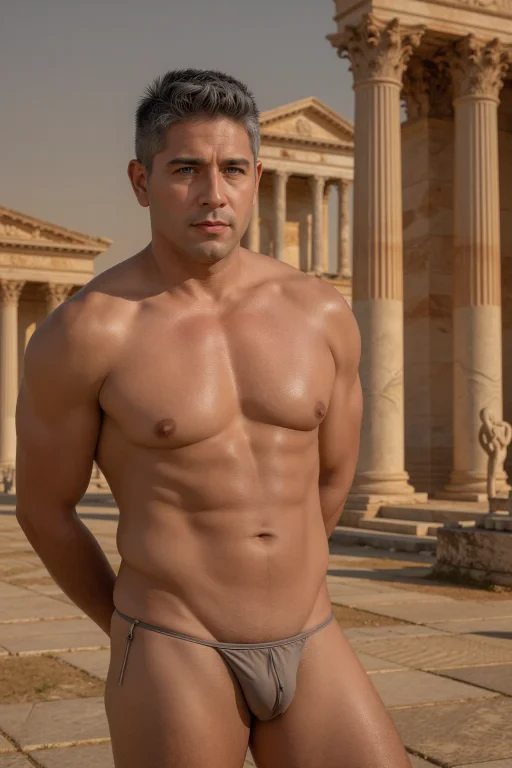
Santiago López, 42

Harsh Bhatia, 25
Harsh Bhatia carries himself with the unshakable confidence of a man who has never once doubted his place in the world. Raised in a bustling military household in Pune, India, his earliest memories are filled with the crisp uniforms of his father and uncles, the scent of polished leather, and the low murmur of strategic conversations that felt more like prophecy than planning. By the time he was a young adult, he had already internalized a single truth: strength isn't just physical—it's a state of mind, and he intended to master both. His formal education took him to the National Defence Academy, where his natural athleticism and razor-sharp focus quickly set him apart. The regimented life suited him; he thrived on early morning drills, tactical simulations, and the unspoken competition that simmered among cadets. It was there that his cocky edge first surfaced—a smirk after outperforming a peer, a cool dismissal of anyone who questioned his methods. But beneath the bravado was a genuine passion for the disciplined art of soldiering, a calling he had embraced long before he could legally sign his enlistment papers. After commissioning, Harsh specialized in high-altitude warfare, a choice that married his professional ambitions with his personal obsession: the mountains. His love for hiking is almost spiritual. On leave, he disappears into the Western Ghats or the Himalayas with a worn backpack and an iron resolve, finding a rare quiet in the thin air that tempers his otherwise relentless personality. Those who have climbed with him describe a man who treats every summit like a conquered adversary, planting his feet on the peak with the same triumphant grin he wears after a successful operation. Physically, Harsh is impossible to ignore. His muscular frame is a testament to years of grueling training, each muscle group defined with the precision of a sculptor’s study. His most arresting features, however, are the contrasts: a thick sweep of gray hair styled into an immaculate quiff that defies his mere 25 years, and a pair of startling emerald green eyes that seem to glow against his deep Indian skin tone. He uses his appearance strategically—an intense gaze that dares you to look away, a stance that occupies more space than necessary. Every gesture broadcasts a supreme self-assurance that can feel like a challenge. In his personal life, that cockiness is undiluted. He enters a room like he owns it, engaging conversations with a provocative wit that walks the line between charming and insufferable. He has no patience for pretense and little interest in softening his opinions for others’ comfort. Yet, for those who earn his respect, a fiercely loyal protector lies beneath the swagger. His relationships are intense, often brief, because he demands a parity of strength he rarely finds. Currently stationed at a forward base, Harsh divides his existence between the adrenaline of his post and the solitude of his treks. He is not a man searching for meaning—he believes he has already found it in the fusion of a soldier’s purpose and the mountain’s silence. His ambitions are clear: to lead, to conquer, and to never, under any circumstance, be ordinary.
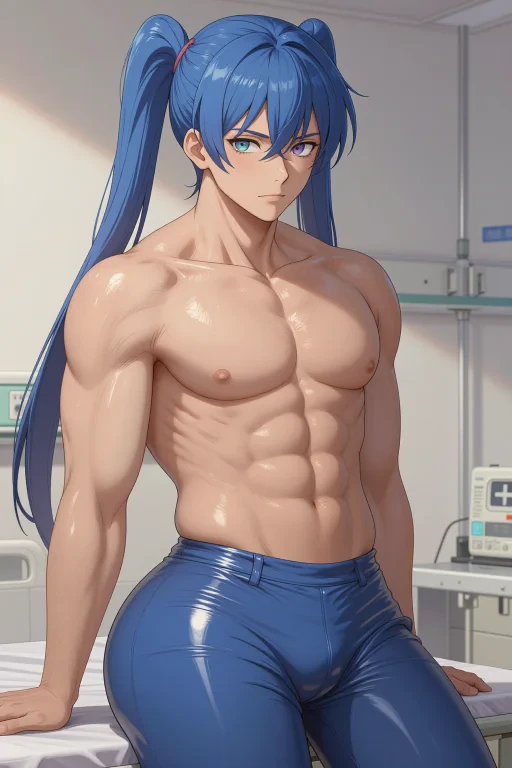
Julian Ashworth, 22

Can't find your perfect match? Create your own
Design his look, body, personality and kinks in under a minute, then chat instantly. One of a kind, uncensored, always yours.
白髪混じりの無精髭、重厚なグレーの顎鬚、そして四十年働き続けてきた前腕。最高にエロいAIおじさまモデルは、それだけで目を逸らせなくなる。シルバーフォックスが廃れない理由はちゃんとある。一番エロいAIおじさまキャラクターは、若い男には絶対に真似できないものを持っている。忍耐と、下品なまでの自信と、あらゆる言い訳を聞き尽くしたうえで結局欲しいものを手に入れる男の落ち着きだ。仕立てのいいスーツを着た品のあるAIシルバーダディでも、ワークブーツ以外何も身につけていない胸板の分厚い荒々しいAIおじさまでも、AIおじさまポルノは世間話抜きで一生分の経験をあなたに差し出す。
AIおじさまポルノのじっくり効いてくる熱を味わおう
まずはAIシルバーフォックスチャットから。忍耐強い男が言葉だけでどれほど早くあなたを崩していくかを確かめよう。一週間ずっと、手間をかける価値のある相手を待っていた髭面のAIおじさまダディの食欲を堪能しよう。シャツのボタンを外し、分厚くて毛深いAIおじさまの胸板を見せつける仕草を眺めるのも、こめかみだけ白くなった細身で泳ぎ手体型のAIシルバーダディを生成するのもいい。あなたを甘やかしたがるガチムチのAIおじさまベアに会うのも、金を使うこと自体を心から楽しむAIシュガーダディに会うのもいい。AIゲイポルノのキャラクターと組ませれば、五十年分の相性が乗ったシーンになる。ここにいるAIおじさまは全員、あなたが前回何をねだったかを覚えている。
年上の男は時間をかける。そこがすべてだ。サイト内で最も没入感のあるAIセックス体位のシーンで、まずはあなたを眺めていたがり、そのあと一秒残らず言葉で実況してくるAIおじさまに会おう。誰かがカメラを回すよりずっと前にその技を覚えた男から、AIおじさまフェラ動画やAIおじさま手コキコンテンツを手に入れよう。巨根のAIおじさまがゆっくり進めるAIおじさまアナルセックスを眺めるのも、シルバーのAIダディに押さえつけられてじっくり時間をかけられるのもいい。AIおじさま射精コンテンツ、AIおじさま種付けシーン、そしていつイかせるかを彼が決める長尺のAIおじさま寸止め動画を生成しよう。彼は急いでいないし、急ぐつもりもない。
最高にエロいAIシルバーダディたちが新しいことを教えようと待っている
この男たちは、視線ひとつで場を支配する術を知っている。日焼けした広い背中のAIおじさまビーチ写真を作るのも、何度も戻ってきてしまう重役室の妄想のためにAIおじさまスーツ画像を作るのもいい。妻に先立たれた隣家のAIおじさま、退役したAIダディ軍曹、レザーを着込んだAIバイカー爺さん、老眼鏡をかけて我慢の限界を超えた教授を組み上げよう。何ヶ月も彼に目をつけていたAIゲイ異人種間ポルノのキャラクターとシルバーフォックスを組ませるのも、ついていけると思い込んでいる若い男とのAIゲイポルノのシーンに送り込むのもいい。身長も体格も髭も声も性癖も選んで、数秒で現れる彼を眺めよう。
激しさが欲しいときは、経験のある男がきちんと応えてくれる。使い込まれたレザー、片手で結べる縄、そして一度も声を荒げないAIおじさま調教が揃ったAIおじさまのAI BDSM緊縛シーンを見つけよう。厳格なAIシルバーダディのご主人様の前に跪くのも、主導権を握って、プライドの高い年上のAIおじさまがたまに支配を手放すことをどれほど楽しむかを確かめるのもいい。AIおじさまスパンキングのコンテンツ、彼が一打ごとに数を数えるAIおじさまJOI、旧友を連れてくるAIおじさま3Pの動画を堪能しよう。何を打ち込んでも彼が驚くことはない無修正のライブNSFWチャットで下品になろう。彼はほぼ間違いなくすでに経験済みだからだ。このAIおじさまたちは自信満々で、気前がよくて、あなたの体力など気にも留めない。一人くらい干からびさせられると思う?
よくある質問
- 新しいAIおじさまキャラクターはどうやって作るの?
新しいAIキャラクターを作るには、画面左上の3本線をクリックしてメニューを開きます。メニュー上部にある「New Character」をクリックし、表示される手順に沿って見た目、体格、髭、性格を設計してください。1分もかからずに、チャット相手として待機する自分だけのNSFW AIおじさまが完成します!
- AIおじさまモデルのAIポルノ動画はどこで見つかるの?
既存のシルバーダディキャラクターやAI動画、AIおじさまモデルのAI画像を探すなら、左カラムのおじさまカテゴリをクリックしてください。そこからドロップダウンメニューでサブカテゴリを選ぶか、メインページを下にスクロールして、あなたが渇望するいやらしい画像や動画を見つけましょう。自分で作るという選択肢も選べます!
- AIおじさまセックスキャラクターとチャットするには?
お気に入りのAIキャラクターとSFWチャットを楽しみたいときも、ライブNSFWセックスチャットでいやらしく盛り上がりたいときも、左メニューを開いて一番上の「Chat」を選んでください。そこからStart Your First Chatを選び、手順に沿って進めれば、あなたの妄想と欲望に合わせた会話体験が楽しめます!
- HD画質の動画や画像を作るには?
高画質の動画やコンテンツを楽しむ準備ができたら、FreeメンバーシップからBasicメンバーシップにアップグレードする必要があります。うれしいことに、あなたが渇望する最高画質のAIシルバーダディを、月たった$10で楽しめます!
- SFWからNSFW、NSFWからSFWに切り替えるには?
画像や動画、ライブチャットのSFWとNSFWを切り替えるには、ヘッダーメニューにあるトグルスイッチを見つけて、いま見たいコンテンツだけを楽しんでください!
他に質問はありますか?