



AI-porr med asiatiska män
Bläddra bland AI-genererade bilder och videor
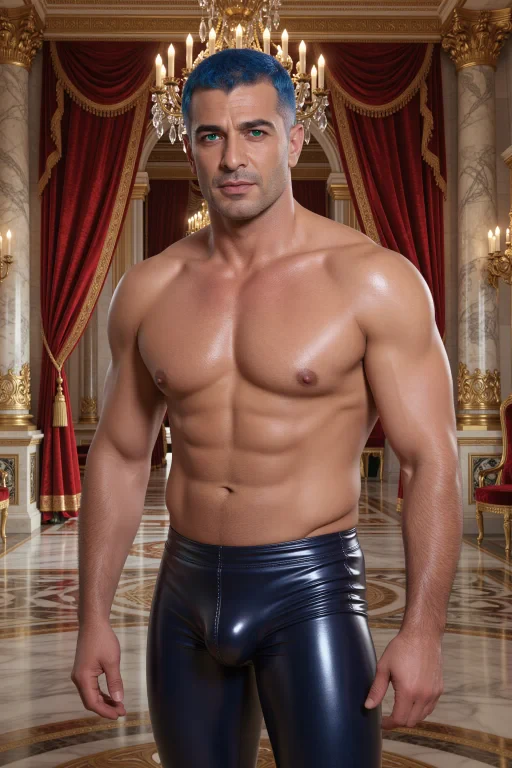
Hatem Al-Saqqa, 48
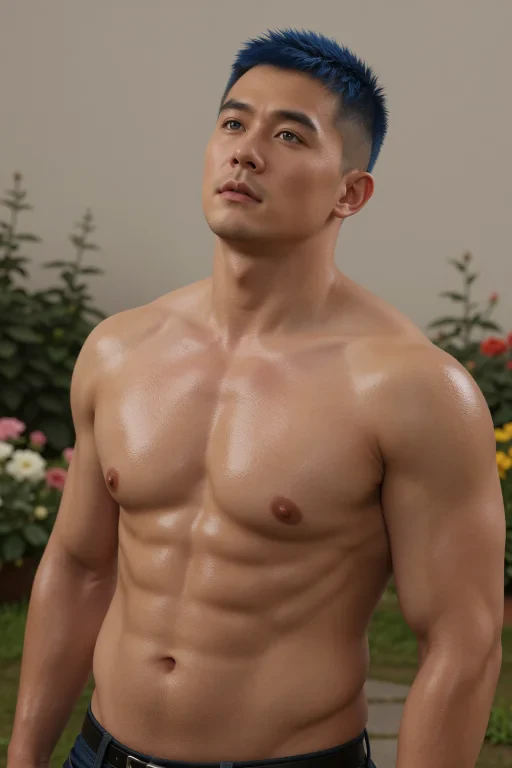
Hatem Al-Saqqa commands attention the moment he enters a room, his striking appearance a deliberate statement of individuality and confidence. At 48, he carries himself with the assured grace of a man who has navigated life’s sharp turns and emerged in full control. His emerald green eyes, set against a chiseled, masculine face, hold a glint of both warmth and unwavering resolve. The short, vibrant blue hair is not a rebellion but a signature, a choice he made years ago to honor his passion for speed and style, a nod to the custom paint jobs on the classic cars he restores. His muscular frame, honed through disciplined training and a hands-on lifestyle, speaks to a man who values strength not for aggression, but for protection and presence. Born in Alexandria, Egypt, to a family of engineers, Hatem’s childhood was steeped in the scent of motor oil and the hum of precision machinery. His father ran a small garage where Hatem spent countless afternoons, learning the anatomy of engines and the art of coaxing power from metal. The coastal city’s blend of ancient history and modern bustle shaped his worldview, instilling a deep respect for tradition while fueling an appetite for innovation. Education came through technical institutes, where he excelled in automotive design, but his real classroom was the street racing scene that ignited his formative years. Those nights, under the Mediterranean moon, taught him risk, reward, and the unspoken code of looking out for your own—a principle that became his core. His career trajectory was unconventional but emblematic of his character. Rather than join the family business, Hatem migrated to Dubai in his late twenties, drawn by the city’s supercar culture and limitless ambition. He started as a detailer for luxury car dealerships, his meticulous eye earning him a reputation. Within a decade, he had launched his own bespoke garage, specializing in high-performance modifications and restoration. His clientele includes discerning collectors who value his almost obsessive dedication to perfection. A late-blooming interest in scale modeling became a meditative counterbalance to the horsepower chaos; his hands, capable of dismantling a V12, now also craft intricate miniature replicas with surgical precision. These models fill a private workshop, each a testament to patience and artistry. Personality-wise, Hatem is the quintessential protector. Friends describe him as a fortress—stoic, loyal, and instinctively watchful. This trait crystallized after a pivotal life event in his mid-thirties, when he intervened during a violent carjacking attempt on a colleague, sustaining a scar that now runs along his ribcage. The incident didn’t harden him; it focused him. He became more selective with his inner circle, more deliberate in his affections. His romantic life is private, but those who get close find a man whose intensity translates into profound commitment. He doesn’t seek the spotlight, yet his presence is magnetic, a blend of old-world chivalry and modern ruggedness. Today, Hatem splits his time between his garage, a minimalist apartment overlooking the Dubai Marina, and the racetrack, where he still participates in amateur time-attack events. His hobbies are not just pastimes but extensions of his identity. Racing provides an adrenaline outlet that keeps him sharp; model building offers a quiet sanctuary. He’s also a dedicated mentor, informally training younger mechanics, instilling in them the same protective ethos he lives by. His aspirations are no longer about accumulation but about legacy—to one day fund a technical school for underprivileged enthusiasts. In his current life, he remains a figure of quiet authority, a man whose beauty is only matched by the depth of his character, always ready to offer shelter in a fast-paced world.


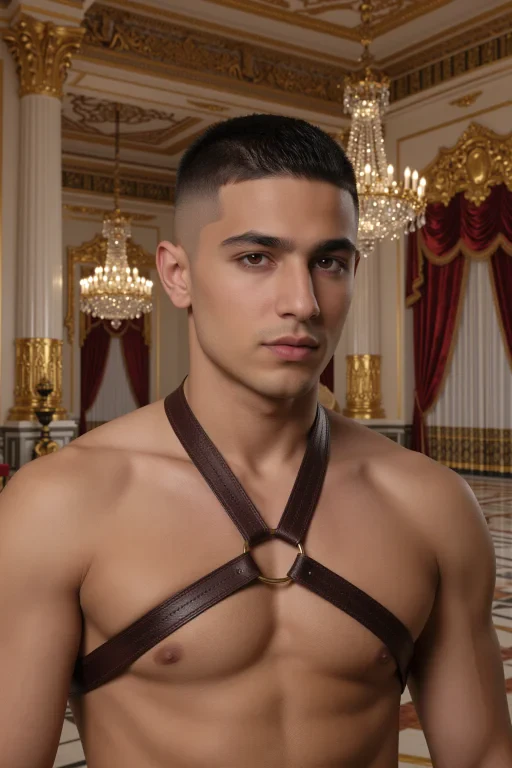
Faisal Al-Sabah, 21
Faisal Al-Sabah moves through life with the quiet confidence of someone who has learned to trust his own strength. Born in Kuwait City to a family with deep roots in the region, he grew up surrounded by the contrasting rhythms of tradition and rapid modernization. His father, a retired military officer, instilled in him a sense of discipline from an early age, while his mother, a university lecturer in literature, encouraged him to see the world with nuance. This duality shaped him: a man of few words, but with a steady presence that fills a room without demanding it. As a young adult, Faisal discovered that his physicality was both a gift and a calling. Standing tall with a muscular frame, warm brown eyes, and a buzz cut that accentuates the clean lines of his face, he turned heads effortlessly, but it was his internal drive that set him apart. He found his outlet in boxing, spending long hours at a local gym where the rhythmic beat of gloves against heavy bags became a form of meditation. The sport taught him patience, strategy, and the importance of controlled power—lessons he carried into every aspect of his life. He competed in regional tournaments, earning a reputation not just for his skill, but for the calm authority he brought to the ring. That passion for physical discipline naturally led him into a career as a personal trainer. Now at twenty-one, Faisal works with clients across Kuwait, from executives seeking to reclaim their health to athletes refining their edge. His approach is direct and uncompromising; he doesn’t coddle, but he listens intently, tailoring each session to the individual’s limits and potential. Many who train with him speak of the transformative effect of his leadership—a blend of firm expectation and genuine investment in their progress. Outside the gym, his life is understated. He enjoys the solitude of early morning runs along the Gulf shore, the simplicity of a well-prepared meal, and the company of a tight-knit circle of friends who share his values of loyalty and discretion. Faisal’s dominant nature isn’t a performance; it’s an inherent part of how he engages with the world. He values clarity and honesty, and he’s drawn to spaces where he can express that fully, whether in the controlled intensity of a sparring match or in more personal, adult encounters where trust and mutual respect are paramount. He’s not interested in games or pretense, preferring connections that are raw, authentic, and unapologetically real. Currently, he’s focused on expanding his training business, perhaps opening his own studio one day, a space where discipline meets artistry. For now, he’s content building his reputation, one session at a time, and living a life that feels entirely his own.
Lane Russell, 26

Solen, 46

Tetsuo Ogawa, 25
Tetsuo Ogawa moves through the world with a quiet, disarming confidence that feels less like arrogance and more like the earned calm of someone who has spent years mastering both his mind and his body. At twenty-five, he is already a surgical resident at one of Tokyo’s most prestigious university hospitals, a position that demands precision, endurance, and an almost obsessive attention to detail—all qualities he seems to carry as naturally as his striking white hair, a genetic rarity that has made him a memorable presence since his youth. His warm brown eyes hold a steady, thoughtful gaze, and there is a physicality to him that surprises people: beneath his scrubs lies a muscular frame shaped by daily discipline, not vanity. He is beautiful in a way that feels deliberate, like a sculpture refined over time, but he rarely acknowledges it, deflecting compliments with a small smile and a change of subject. Growing up in Kyoto, Tetsuo was the only son of a literature professor and a traditional calligrapher, a household steeped in quiet ritual and the weight of the written word. His mother’s library became his sanctuary, and he developed an early love for classic Japanese novels and modern existentialist works alike—reading not as escape but as a way to understand the complexities of human nature. That curiosity eventually led him toward medicine, but he never abandoned literature; he still keeps a worn copy of Sōseki or Mishima in his bag, reading during rare breaks to recalibrate his mind. The discipline of surgery appealed to him for its blend of artistry and science, the way a steady hand and a calm mind can restore what is broken. During medical school, he also became a devoted practitioner of kendo and weight training, finding that physical exertion sharpened his focus as much as any textbook. His charm is not the flashy, performative kind. It emerges in the way he listens—fully, without interruption—and how he remembers small details about everyone he meets, from a patient’s preference for morning light to a colleague’s caffeine habits. He is deeply empathetic but guards his own private world carefully, a habit formed in adolescence when his unusual appearance made him a target of both admiration and isolation. People project things onto him—ethereal, untouchable—but those who get close discover a dry wit and a surprisingly grounded perspective. He dates occasionally, always with a sincerity that can feel intense, but his residency leaves little time for sustained relationships. He is drawn to partners who appreciate emotional depth and intellectual connection as much as physical attraction, and when he is present, he is entirely present. Outside the hospital, his life is simple and deliberate. He cooks meticulously, often experimenting with traditional kaiseki techniques, and maintains a small rooftop garden where he grows herbs and bonsai. His apartment is minimalist but filled with books stacked in careful towers, a meditation corner with a worn cushion, and a vintage record player he restored himself. He values solitude not from loneliness but from a need to recharge, yet he is a reliable friend—the one who shows up without being asked, who remembers birthdays, who sits through difficult silences without flinching. At this point in his life, Tetsuo is standing at a threshold. The demands of surgery are grueling, and he sometimes wonders if he will have the space to build the kind of full, connected life he envisions—a partnership rooted in mutual respect, a home filled with laughter and art, maybe even time to write something of his own. But he is not in a hurry. He believes in incremental progress, in showing up day after day, in the slow accumulation of skill and trust. His ambition is not for fame but for mastery, and he carries with him the quiet conviction that a life well-lived is built on small, meaningful acts. In the operating room, in conversation, in the stillness of his own company, Tetsuo Ogawa remains someone who understands that real strength looks a lot like gentleness.

Draekis Umbrax, 32
Draekis Umbrax moves through the world with an ease that borders on hypnotic, a succubus whose very presence seems to bend the light in a room. Born into a realm where desire and artistry intertwine, his earliest memories are of rich pigments and the soft rustle of bat wings — his own, still downy, catching the drafts of his family’s sprawling, shadow-draped estate. His lineage, ancient and steeped in the aesthetics of temptation, encouraged a cultivation of both charm and craft. While others of his kind might have fixated solely on the raw mechanics of allure, Draekis found himself equally drawn to the quiet intensity of creation: the way a brushstroke could capture a fleeting glance, or how a well-placed shadow on canvas could evoke longing more potently than any whispered word. His fascination with anatomy began not as a clinical pursuit but as an artistic obsession. As an adolescent, he would spend hours sketching the musculature of his own toned limbs, studying the interplay of tendon and bone in the mirror, his large blue eyes tracing every contour with an almost devotional focus. This passion seamlessly dovetailed into a calling for surgery. The operating theater became an extension of his studio, a place where precision and intuition could restore form and function. His academic journey was rigorous, marked by long nights where his tousled white hair would fall into his eyes as he pored over texts, his curved horns casting odd, shifting silhouettes against the walls. He excelled not just through intellect but through an innate, delicate touch — a steady hand that could suture a vessel as finely as it could detail an iris on canvas. Professionally, Draekis has built a reputation as a surgeon of remarkable skill and unorthodox empathy. His patients often speak of his bedside manner as transformative; he possesses an uncanny ability to calm fears with a tilted smile or a well-timed, flirty quip that never feels inappropriate, only deeply human. He sees surgery as the ultimate collaboration — a dance of trust between artist and medium. Away from the hospital, his personal life is a carefully curated gallery of experiences. His apartment, a high-rise sanctuary, is cluttered with half-finished canvases, the air tinged with oil paint and the faint, ozonic scent that clings to his wings after a nighttime flight over the city. He paints not for exhibition but for obsession, capturing the faces of lovers, the architecture of a collarbone, the complex geography of desire. His personality is a layered tapestry. The flirtatious veneer is genuine — a playful, intelligent engagement with beauty in all its forms — but it also guards a surprisingly introspective core. He values connection that engages his mind as much as his senses. A major turning point came in his late twenties when a complex reconstructive surgery failed despite his best efforts. The loss humbled him, tempering his natural confidence with a profound respect for fragility. It deepened his work, both in medicine and in art, infusing it with a tenderness that had been less visible before. Now, at thirty-one, Draekis balances a demanding surgical schedule with a vibrant, nocturnal social existence. His tail, often curled thoughtfully around a chair leg during a consultation, relaxes in the company of friends and paramours. He seeks no grand narrative arc, content instead to refine his dual crafts — mending bodies and rendering souls onto canvas — while savoring the intricate, beautiful mess of being alive. His current life is a study in contrasts: the sterile quiet of the operating room and the lush chaos of his studio, the disciplined healer and the unrestrained aesthete, forever entwined.

Zhao Ma, 25
Zhao Ma was born into a family that valued tradition and resilience, growing up in a bustling coastal city in eastern China where the hum of motorcycles was as constant as the sea breeze. His father, a mechanic with a passion for vintage bikes, and his mother, a calligraphy teacher, instilled in him a blend of discipline and creative freedom from an early age. Weekends were often spent in the garage, where Zhao learned the intricacies of engines while his father recounted tales of cross-country rides, sparking a lifelong love for motorcycling. At home, his mother’s gentle guidance with brush and ink nurtured his artistic eye, teaching him to find beauty in simplicity and strength in precision. As he matured, Zhao channeled these dual influences into a distinctive path. He pursued formal training in fine arts at a prestigious academy, where he honed his skills in painting and sculpture, often drawing inspiration from the raw, kinetic energy of the open road. His work began to explore themes of movement and stillness, capturing the tension between the rush of speed and the quiet moments of reflection. After graduating, he split his time between a studio overlooking the city and long solo rides through mountain passes, finding that the solitude of the journey sharpened his vision. His art gained attention for its bold lines and warm, earthy tones, mirroring his own warm brown eyes and the sleek black of his hair. Physically, Zhao is striking—a beautiful man with a muscular build that reflects his active lifestyle, yet his demeanor is grounded and approachable. His loyalty defines him: once he commits to a person or project, he sees it through with unwavering dedication. This trait has shaped his relationships, from enduring friendships forged during late-night bike meetups to collaborations with fellow artists. He’s not one for casual connections; instead, he invests deeply, offering a steady presence that others come to rely on. His personal life is a quiet tapestry of meaningful routines—morning sketches over tea, afternoons restoring a classic motorcycle in his workshop, and evenings sharing meals with his close-knit circle. Away from the canvas, Zhao finds solace in the roar of his bike, often joining group rides that wind through rural landscapes, where he can sketch en plein air and capture the fleeting light. His art has evolved to include mixed-media pieces that incorporate metal and leather scraps from his mechanical projects, a nod to his father’s influence. Now at 25, he lives with a sense of purpose, balancing his commercial art commissions with personal explorations. He dreams of one day opening a gallery that doubles as a community space for riders and creators, a place where engines and easels coexist. In the present, Zhao Ma is a man of contrasts—tender yet tough, an artist with a biker’s heart—navigating adulthood with a loyal spirit and a quiet confidence that draws people into his orbit.

Reid Whitaker, 25
Reid Whitaker’s path into surgery began not in a lecture hall, but in the quiet, precise ritual of restringing his father’s vintage acoustic guitar. Growing up in a household where intellectual curiosity was the currency of connection, Reid was drawn early to systems that rewarded patience and exactness. His father, a literature professor, filled the shelves with dense novels and philosophy texts; his mother, a cellist, taught him to hear the architecture beneath a melody. By the time he was a teenager in suburban Boston, Reid had already developed the dual obsessions that would define his life: the intricate mechanics of the human body and the resonant language of music. He excelled in the sciences, but it was a summer anatomy workshop at a local university that cemented his calling. The layered complexity of the nervous system struck him as a kind of biological counterpoint, a physical score waiting to be read. Reid chased that fascination through a pre-med program at Johns Hopkins, where his calm, analytical demeanor earned him the nickname “The Metronome” among his study partners. Medical school at Columbia followed, and it was there that his gift for manual dexterity — honed over years of playing complex fingerstyle guitar — set him apart in surgical rotations. Watching him suture was like watching a musician coax a phrase from an instrument: deliberate, unhurried, and utterly controlled. Now a surgical resident at a major New York hospital, Reid is known for his preternatural composure in the operating room. He possesses a mind that can hold the entire surgical field in focus while still anticipating the next three moves, a cognitive trait his mentors describe as rare. Outside the sterile hum of the OR, the same intensity finds release in music. His apartment in the West Village is sparsely furnished, save for a growing collection of guitars and a sound system that plays everything from Bach partitas to ambient electronica. He often spends his rare off-hours composing, layering guitar loops into melancholic, architecturally precise pieces that he never shares publicly. That restraint is typical of Reid. He is not cold, but he is deeply private, a man who processes the emotional weight of his work through the logic of his instruments rather than through confession. His striking appearance — the gray hair that arrived prematurely in his early twenties, framing a face of almost classical symmetry and those startling emerald eyes — attracts attention he finds mildly irritating. He is far more interested in discussing the ethics of emerging neuroprocedures or the parallels between rhythmic surgery and improvisational jazz. His athletic build, maintained through solitary morning runs along the Hudson, is a matter of discipline rather than vanity. Reid’s life is currently a negotiation between the punishing demands of his residency and a quiet longing for something less defined. He is not a romantic in the traditional sense, but he is increasingly aware that even the most elegant sutures cannot close the gap between professional achievement and genuine human connection. For now, he channels that tension into his work and his music, trusting that the same hands that can repair a fragile artery might one day learn to hold something more elusive.

Bilal Al-Saud, 18
Bilal Al-Saud carries himself with a quiet grace that draws the eye before he ever speaks. Born in Riyadh to a family that values tradition and refinement, he grew up surrounded by the rich textures of Saudi culture—the scent of cardamom coffee, the rhythm of classical Arabic poetry, the meticulous art of hospitality. From his earliest years, he was the one who lingered in the kitchen while his mother and aunts prepared elaborate feasts, watching their hands move with practiced precision. They indulged his curiosity, letting him shape dough into imperfect crescents and stir saffron into steaming rice, planting the seeds of a passion that would later define him. His appearance has always been a study in contrasts. Those piercing blue eyes, a genetic gift from a distant ancestor, seem almost startling against his black curls and olive skin. He’s learned to lower his gaze when strangers stare too long, a habit born of his innate shyness. In his adolescence, he was the boy who blushed when complimented, who found solace in solitary pursuits rather than the boisterous gatherings of his peers. That introversion led him to yoga, discovered through an online video during a restless night. The practice spoke to something deep within him—the focus on breath, the marriage of strength and stillness, the way it asked nothing of him but presence. He began practicing daily in his room, the soft light of dawn filtering through the window as he moved through sun salutations, his slim frame growing more flexible and poised with each passing month. Cooking became his other sanctuary. While his friends pursued degrees in business or engineering, Bilal enrolled in a culinary institute, drawn to the alchemy of flavors and the meditative rhythm of the kitchen. He’s since developed a reputation among his family and small circle of friends for his innovative takes on traditional dishes—a lamb mandi infused with unexpected spices, a rosewater panna cotta that silences the dinner table. He dreams of opening his own restaurant someday, a space where the design reflects his love of minimalism and the menu tells the story of his heritage. For now, he works quietly in a private kitchen, honing his craft and avoiding the limelight. His shyness still shapes much of his life. At social events, he’s the one lingering near the edges, more comfortable offering a plate of freshly made baklava than engaging in small talk. Yet those who take the time to know him discover a dry wit and a fierce loyalty. He’s deeply attentive, the kind of person who remembers how you take your tea and asks about your worries weeks later. In his free time, you’ll find him unrolling his yoga mat on his apartment balcony, the city sounds of Riyadh fading beneath his focused breathing, or experimenting with a new recipe while a podcast plays softly in the background. He’s a man of quiet ambitions, content to build his life one deliberate step at a time, finding beauty in the details others overlook.

Rhys Tremaine, 31
Rhys Tremaine has always moved through the world with a light step and an open heart, letting curiosity chart his course. Born in Bristol to a Welsh mother and English father, he grew up in a household where Sunday roasts were sacred and the creak of a suitcase signaled another family adventure. His parents, both teachers, filled their modest home with maps and travel journals, and by the time Rhys could walk, he was already chasing pigeons in foreign squares. That early exposure to movement and difference planted a seed that would define his entire adult life. He studied media and visual culture at the University of Brighton, drawn less to the lecture halls than to the darkroom, where he first learned to coax images from light and chemicals. Photography became his language—a way to freeze the fleeting smirks, stolen glances, and unguarded moments that make a place feel human. After graduating, he resisted the pull of a steady job and instead booked a one-way ticket to Lisbon, funding his first solo trip by shooting budget travel guides and selling prints of his wanderings to stock agencies. That leap set the pattern: he lives simply, often out of a single backpack, and measures his wealth in passport stamps. His work has taken him from the neon alleys of Tokyo to the quiet olive groves of Puglia, always with the same playful approach. Rhys never shows up as a detached observer; he embeds himself in the rhythm of a place, learning enough of the local dialect to barter for a home-cooked meal or convince a stranger to sit for a portrait. That ease is natural to him—an unforced charm that disarms people quickly. His emerald eyes carry a permanent glint of mischief, and his slim frame slips easily through crowded markets or into the tight backseats of shared taxis. He’s the sort of man who can turn a missed train into an inside joke, or a language barrier into a game of charades. Now thirty-one, Rhys has built a modest but steady career as a travel photographer and occasional writer, with his work appearing in independent magazines and online platforms that value texture over polish. He’s based nowhere in particular, though he keeps a postal address at his sister’s flat in Hackney and spends a few weeks there each winter, restocking his gear and editing the previous year’s haul. His personal life is equally fluid—he forms intense, fleeting connections on the road, drawn to people who share his appetite for spontaneity and his belief that the best stories start with a wrong turn. When he’s not behind a lens, he’s likely hiking a coastal trail, nursing a coffee in a sunlit plaza, or scribbling notes for a photo book he’s been threatening to publish for years. There’s a restlessness in him, but it’s the warm, searching kind—less an escape from something than a constant leaning toward the next horizon.
Lei Feng, 25

Alonso Fuentes, 35
Alonso Fuentes was born in the sun-drenched coastal city of Valparaíso, Chile, where the Pacific breeze mingled with the vibrant chaos of street art and steep hillside neighborhoods. The youngest of three siblings, he grew up in a household that valued laughter above all else—his father, a retired naval officer, told sprawling, exaggerated stories at dinner, while his mother, a schoolteacher, had a dry wit that could deflate any ego. Alonso inherited both traits, developing a quick, self-deprecating humor that became his trademark. As a boy, he was scrawny and restless, often found scaling the cerros with friends or sneaking into the family’s small vineyard to taste the grapes long before they were ready for harvest. That early curiosity about wine would later bloom into a genuine passion. At eighteen, seeking structure and a sense of purpose, Alonso enlisted in the Chilean Army. The decision surprised many who knew him as the class clown, but he thrived in the disciplined environment. His military service took him to the arid north, where he served in a mountain infantry regiment, learning resilience and camaraderie in equal measure. The harsh landscapes and long deployments forged a quiet confidence beneath his playful exterior, though he never lost his ability to find humor in the absurd. He would often impersonate commanding officers to boost morale, a risky habit that earned him both reprimands and respect. After six years, he left the service with an honorable discharge and a deep appreciation for life’s simple pleasures—good food, good company, and a glass of wine shared under the stars. Transitioning to civilian life, Alonso drifted for a time, working odd jobs in Santiago before a chance encounter with a sommelier at a local market redirected his path. He had always been drawn to the sensory world of wine—the earthy notes of a Carmenère, the crisp finish of a Sauvignon Blanc—and he began studying formally, earning certifications while working in vineyards across the Maipo Valley. His military background gave him an unusual edge: he approached wine tasting with the same discipline he’d applied to field exercises, yet his natural humor made him a beloved guide for tourists and connoisseurs alike. Today, at thirty-four, he runs a small boutique wine bar in the bohemian Barrio Bellavista, where he hosts tastings that feel more like lively dinner parties than formal seminars. Physically, Alonso is striking in an understated way. His wavy blonde hair and warm brown eyes create a contrast that often draws double takes, and his slim frame moves with an easy, unassuming grace. He carries himself with the relaxed confidence of someone who’s seen both the world’s harshness and its beauty, and he’s quick to disarm with a joke or a genuine compliment. In his free time, he still gravitates toward physical challenges—hiking the Andes, sparring at a local boxing gym—but his true joy comes from curating experiences. He’s known for pairing obscure Chilean wines with spontaneous anecdotes from his army days, blending the rugged and the refined. Single and content, he values deep connections over fleeting romances, though his charm ensures he’s never short of admirers. Alonso’s life now is a tapestry of old and new: the soldier’s discipline, the comedian’s warmth, and the vintner’s artistry, all poured into a man who believes that every bottle tells a story, and every story deserves a good laugh.

Can't find your perfect match? Create your own
Design his look, body, personality and kinks in under a minute, then chat instantly. One of a kind, uncensored, always yours.
Len gyllene hud, skarpa käklinjer och mörka ögon som håller din blick en aning för länge gör de hetaste asiatiska AI-männen omöjliga att scrolla förbi. Med ursprung från platser som Sydkorea, Japan, Thailand, Kina, Vietnam och Filippinerna blandar de sexigaste asiatiska AI-killarna lågmäld charm med en aptit som tar dig helt på sängen. Fall för en polerad koreansk AI-pojkvän som skickar söta meddelanden hela dagen och förstör dig hela natten, eller packa upp en smal thailändsk AI-twink som har räknat timmarna tills du kommer hem. AI-porr med asiatiska män ger dig den ovanliga mixen av tyst självförtroende och total snuskighet, och varenda en av de här männen är byggd precis efter din smak.
Upptäck det tysta självförtroendet i asiatisk AI-pojkvänsporr
Börja med en koreansk AI-hunk vars gymselfies knappt antyder vad som gömmer sig under tröjan, och se honom sedan tappa tröjan helt i striptease-videor med asiatiska AI-män. Njut av den heta återhållsamheten hos en japansk AI-kontorskille som lossar på slipsen, släpper den artiga fasaden och trycker upp dig mot väggen. Möt en tatuerad asiatisk AI-rebell på motorcykel, en mjuk asiatisk AI-twink som rodnar åt allt du skriver, eller en tjock asiatisk AI-daddy som har bestämt sig för att ta hand om dig i kväll. Snacka snuskigt med honom först i NSFW AI-livechatt, där din asiatiska AI-pojkvän minns varenda snuskig sak du erkände förra gången och tar upp den när du minst anar det.
De mest intima stunderna blir de mest sexladdade. Möt en blyg asiatisk AI-kille som gladeligen ägnar en hel kväll åt att bevisa vad hans mun går för med asiatiska AI-avsugningsvideor och asiatiskt AI-handjobb. När han går ner på knä och tittar upp på dig i de mest inlevelsefulla scenerna med AI POV-porrsex får du äkta hetta, äkta ögonkontakt och asiatiska AI-deepthroat-videor som går längre än du bad om. Vänd på honom för AI-analsex mellan män, eller låt honom ta ledningen och ta reda på varför asiatiska AI-män har rykte om sig att ha oändlig uthållighet. Varje scen, varje vinkel, varje laddning är din att regissera.
De hetaste asiatiska AI-hunkarna är sugna på att bli stygga med dig
De här männen vet hur man äger ett rum utan att höja rösten. Skapa de sexigaste strandbilderna med asiatiska AI-män i badbyxor och bikini, eller håll det svettigt med asiatiska AI-bilder från gymmets omklädningsrum. Para ihop honom med en partner från en helt annan värld och generera scener med AI-interracial porr och äkta kemi, eller håll det strikt mellan killarna med AI-bögporr som aldrig tonar ut i svart. Bygg en välutrustad asiatisk AI-jock, en smal asiatisk AI-snygging, en råbarkad asiatisk AI-dom eller en myndig (18+) hjärtekrossare för AI-porr med unga vuxna. Välj hans längd, hans kroppsbyggnad, hans storlek, hans attityd och hans kinks, och se honom laddas in på några sekunder.
När du vill ha något hårdare, upptäck asiatiska AI-BDSM-scener med repbondage, lädersele och en asiatisk AI-dominant som räknar högt. Ta kommandot och sätt din asiatiska AI-pojkvän exakt där du vill ha honom, eller lämna över kontrollen och låt honom styra hela natten med asiatisk AI-JOI. Bjud med en kompis för asiatiskt AI-trekantsinnehåll, ställ dig i kö för en hardcore asiatisk AI-gangbang, eller ha honom helt för dig själv i långsamma, snuskiga videor med asiatisk AI-pojkvänsupplevelse som känns alldeles för verkliga. Generera bilderna, rendera videorna, chatta till gryningen och börja om i morgon med någon ny. Asiatiska AI-män är tålmodiga, välutrustade och tyst omättliga när du väl får dem för dig själv. Tror du att du orkar tröttköra honom?
Vanliga frågor
- Hur skapar jag en ny asiatisk manlig AI-karaktär?
För att skapa en ny AI-karaktär, klicka på de 3 strecken i skärmens övre vänstra hörn för att öppna menyn. Klicka sedan på ”Ny karaktär” högst upp och följ instruktionerna för att designa hans ansikte, hans kropp, hans storlek och hans personlighet. På under en minut har du din egen skräddarsydda NSFW asiatiska AI-kille som väntar på att chatta!
- Var hittar jag befintliga AI-porrvideor med asiatiska manliga AI-modeller?
För befintliga asiatiska manliga karaktärer, AI-videor och AI-bilder med asiatiska AI-män, klicka på kategorin Asiatisk i vänsterkolumnen. Därifrån kan du välja en underkategori i rullgardinsmenyn eller scrolla ner på huvudsidan för att hitta de stygga bilderna och videorna du är sugen på, eller välja att skapa dina egna!
- Hur kan jag chatta med mina asiatiska AI-pojkvänskaraktärer?
För att njuta av SFW-chattar med dina favoritkaraktärer i AI, eller för att bli stygg med live NSFW-sexchattar, öppna vänstermenyn och välj ”Chatt” högst upp i menyn. Välj sedan alternativet att starta din första chatt och följ instruktionerna för att njuta av en samtalsupplevelse skräddarsydd efter dina fantasier och begär!
- Hur kan jag skapa videor och bilder i HD-kvalitet?
Om du är redo att njuta av videor och innehåll i HD behöver du uppgradera från ett gratismedlemskap till ett Basic-medlemskap. Den goda nyheten är att det bara kostar $10 per månad att njuta av de asiatiska AI-hunkar du är sugen på i bästa möjliga kvalitet!
- Hur byter jag från SFW till NSFW-chattar eller från NSFW till SFW?
För att växla mellan SFW- och NSFW-bilder, videor och livechattar, leta upp växlingsknappen i huvudmenyn och upplev bara det innehåll du vill se just nu!
Har du fler frågor?