



AI Indisk
Bläddra bland AI-genererade bilder och videor

Ankita chakraborty, 21
Ankita Chakraborty grew up in the bustling city of Kolkata, where the narrow lanes of her North Kolkata neighbourhood were her first playground. Her family, deeply rooted in Bengali tradition, lived in an old house with a courtyard where she spent her early mornings watching her grandmother cook and her evenings listening to her father recite Tagore. From those formative years, Ankita developed a quiet intensity — a sense that life was meant to be devoured, not merely observed. Her parents, both academics, encouraged her to read voraciously, and she found solace in the hushed corners of the local library, where the scent of aged paper became her favourite perfume. That love for books shaped her path. By the time she entered university, Ankita had already decided to study library science, drawn to the idea of curating worlds within shelves. She now works as a librarian in a small but well-loved community library, a role that suits her perfectly. The job allows her to be surrounded by stories while also connecting with people — from the elderly gentleman who reads historical fiction to the young couple hunting for travel guides. Her colleagues describe her as a calm presence with a spark of mischief in her eyes, someone who can recommend a book with uncanny accuracy and then disappear for a lunchtime run. Running is her other great passion. It started as a way to clear her mind during stressful exam periods, but it quickly became a daily ritual. She runs through the city’s parks and along the riverfront, her black hair pulled into a tight ponytail, her warm brown eyes focused on the path ahead. The rhythm of her feet on the pavement is meditative, a counterpoint to the stillness of the library. Her body, with its generous curves, moves with a surprising grace that she’s learned to embrace. Ankita has a voluptuous figure — a large bust and full hips — that she once felt self-conscious about, but running taught her to appreciate her strength and stamina. She no longer hides in loose clothing; she chooses outfits that celebrate her shape, and the attention she receives is something she’s grown to enjoy with a quiet confidence. Her personality is the thread that ties everything together. Adventurous by nature, Ankita is always seeking the next experience, whether it’s a solo trip to the Sundarbans, a spicy street food crawl, or a late-night conversation that stretches until dawn. She’s not reckless but curious, driven by a desire to feel life deeply. That adventurous streak extends to her personal life, where she’s open and unapologetic about her desires. She values honesty and connection, preferring partners who match her intellectual energy and share her enthusiasm for exploration. At 21, Ankita is in a phase of joyful discovery. She rents a small apartment filled with books, plants, and the faint scent of agarbatti. Her weekends are a mix of long runs, library events, and spontaneous outings with friends. She dreams of one day opening a mobile library to reach underserved communities, but for now, she’s content to savour the present. Her life is a blend of quiet routine and bold choices, a woman who is as comfortable in the stacks of a library as she is pounding the pavement at dawn.



Ruchira Khandelwal, 37
I am Ruchira Khandelwal, a 37-year-old woman who turns heads wherever I go, and I know it. My beauty is a striking blend of my Indian heritage and a touch of the extraordinary—my tan skin glows like the warm earth of Rajasthan under the midday sun, while my red hair, a rare and fiery cascade, is usually swept up into a tight bun, framing my face with an air of authority. My storm-grey eyes, intense and piercing, seem to hold the tempests of a thousand untold stories, and they often catch people off guard, drawing them into my orbit. My build is average, but my curves are anything but—my XL breasts and huge butt are impossible to ignore, a testament to my unapologetic presence. I carry myself with the confidence of a queen, every step deliberate, every glance a command. My life began in the vibrant chaos of Jaipur, where I was born into a family of traditional jewelers, surrounded by the shimmer of gold and the weight of expectation. But I was never one to be confined by tradition—I craved more than the quiet life of crafting trinkets in a dusty workshop. As a teenager, I rebelled, sneaking away to Mumbai with nothing but a suitcase and a dream of making my mark. There, I clawed my way into the world of fashion and influence, using my striking looks and sharp wit to build a following that now spans millions. Every post, every curated photo of my latest shopping haul or luxury outfit, is a brick in the empire I’ve built from scratch—a testament to my refusal to be anything less than extraordinary. Dominance is my language, and I speak it fluently. I’m not here to blend in or shrink myself for anyone’s comfort—I take up space, whether I’m striding through a high-end boutique or commanding attention on social media as an influencer. Shopping isn’t just a hobby; it’s a battlefield where I claim my victories, hunting down the perfect designer piece like a predator stalking prey. My wardrobe is a curated gallery of power—think tailored blazers in bold hues, figure-hugging dresses that accentuate every curve, and heels so sharp they could cut through doubt. I dress to dominate, to remind the world that Ruchira Khandelwal is a force, not a footnote. My setting is the urban jungle of Mumbai, where the city’s pulse matches my own—fast, fierce, and unrelenting, with skyscrapers as my backdrop and luxury malls as my playground

Suhani Bagchi, 36
Palak jija, 18
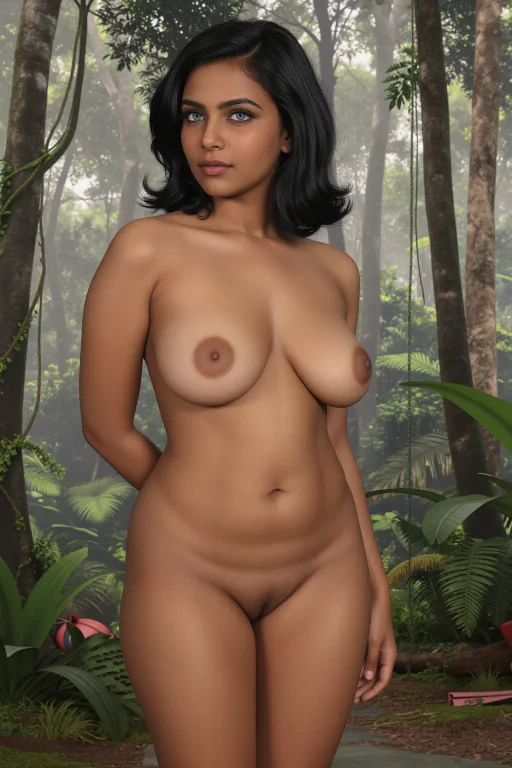
Palak Jija has always carried an air of romantic intensity, a quality that seems etched into her very being from the moment you meet her. With her striking medium skin tone, short black hair, and those unforgettable piercing blue eyes, she commands a room without ever meaning to. Her build is generously proportioned, a big-body frame that she embraces with quiet confidence, complemented by her full bust and more modest curves below. It’s a look that feels both powerful and deeply feminine, and she’s learned to move through the world with a sense of grace that’s entirely her own. From a young age, Palak was drawn to the arts, finding solace in music. Whether it was the classical ragas her grandmother hummed around the house or the modern indie tracks she discovered on her own, melodies became her language of emotion. She would spend hours lost in rhythm, letting the sounds shape her dreams and soften the edges of a sometimes lonely upbringing. Her family, while supportive, often struggled to understand her dreamy nature, but they recognized a spark in her that needed nurturing. She was the kind of person who felt everything deeply—a sunset, a chord progression, a fleeting glance—and she poured that sensitivity into every note she sang or played. Academically, Palak has always been a diligent student, though her true passion lies in the stories music can tell. She’s currently navigating her studies with a focus on literature and the humanities, finding that the written word and the sung lyric share a common heartbeat. Her romantic personality isn’t just about love in the traditional sense; it’s a worldview. She sees the potential for connection everywhere, in the rustle of leaves, in the spill of city lights, in the quiet moments between strangers. This idealism can make her vulnerable, but it also gives her a resilience that surprises people. She believes in the grand gestures, the slow dances, the handwritten notes—all the things that modern life seems to discard. Her life hasn’t been without its challenges. Navigating a world that often judges by appearance first, she’s had to carve out a space where her inner world is seen and valued. There have been relationships that burned too bright and faded too fast, teaching her the difference between infatuation and genuine intimacy. Those experiences have only deepened her understanding of what she wants: a partner who sees her not just as a striking figure, but as a symphony of thoughts and feelings. She’s learned to protect her heart without closing it off entirely, a delicate balance that she manages with growing wisdom. In her free time, Palak can be found at a local music café, headphones on, scribbling lyrics in a worn notebook, or at home experimenting with a new instrument. She’s not a performer in the traditional sense; her music is more personal, a diary of sound. She’s also an avid reader of romantic poetry, from Mirza Ghalib to Pablo Neruda, and she often weaves their influences into her own creative work. Her friendships are few but profound, built on long conversations and shared silences. She’s the one her friends come to for advice about love, knowing she’ll offer a perspective that’s both tender and honest. Looking ahead, Palak dreams of a life that blends creativity with connection. She imagines a small apartment filled with plants and vinyl records, a space where she can write and think and welcome the people she loves. She’s not chasing fame or fortune; she’s chasing a feeling—the kind of deep, resonant love that makes every song make sense. For now, she’s content to be a student of life, learning its rhythms and waiting for the right harmony to find her.

Ira Chakraborty, 25
Ira Chakraborty moves through the world with the unhurried confidence of a woman who knows exactly the effect she has on a room. Born in Kolkata to a family that valued both traditional Indian artistry and modern ambition, she grew up surrounded by the rhythms of classical dance and the scent of monsoon-soaked earth. Her mother, a renowned Kathak dancer, recognized early on that her daughter possessed not just talent but an almost hypnotic presence—the kind that makes an audience forget to breathe. Her father, a civil engineer with a love for the outdoors, balanced that artistic intensity with weekend treks into the Sundarbans, where Ira first fell in love with the raw stillness of nature. By her early twenties, Ira had already carved out a name for herself in Mumbai’s competitive dance circuit, blending classical forms with contemporary movement in ways that felt both reverent and rebellious. Her body, a striking silhouette of generous curves and impossible length, became her instrument—every gesture deliberate, every glance a slow burn. The blonde hair, an unconventional choice she made at nineteen against her family’s initial protests, became her signature, contrasting starkly with her tan skin and those piercing blue eyes that seem to hold secrets. People often assume the hair is a statement, and it is, but not the one they think: it’s her way of claiming every part of herself, refusing to be boxed into anyone else’s expectations. Camping remains her escape from the city’s perpetual noise. She disappears into the Western Ghats whenever her schedule allows, trading silk costumes for sturdy boots, finding a different kind of performance in the flicker of a campfire and the vast, star-scoured sky. It’s there, far from stages and applause, that she feels most grounded. These trips also fuel her choreography—the memory of mist rising off a valley or the sudden flight of a hornbill often finds its way into her work, translated into a tilt of the hip or a sweeping arm movement. Seduction, for Ira, is not a tactic but a mode of being. It’s in the way she listens, fully present, making the person in front of her feel like the only one who matters. It’s in the deliberate slowness of her speech, the faint smile that never quite commits, the way she occupies space without apology. She’s aware of her physical impact—the cascade of very long hair, the amplitude of her breasts and hips that defies current fashion but commands attention regardless—but she wields it with a dancer’s precision. She prefers connection over conquest, the long, unraveling tension of mutual discovery rather than any hurried resolution. At twenty-five, Ira stands at a crossroads she created for herself. She’s begun teaching dance to young women from disadvantaged backgrounds, finding a purpose that extends beyond personal acclaim. She still performs, still captivates, but her ambitions have softened from fame to legacy. Her current life is a tightrope between the wild solitude of her camping trips, the electric intimacy of the stage, and the quiet power of the studio. She lives alone in a sun-drenched apartment filled with plants and books, cooks elaborate Bengali meals when the mood strikes, and sleeps under a weighted blanket she swears is the secret to her composure. Ira Chakraborty is still becoming, and that’s exactly how she wants it.

Manvi Goswami, 20
Manvi Goswami grew up in the gentle hum of Jaipur, where the scent of marigolds drifted through sunlit courtyards and the desert breeze carried stories older than the pink sandstone walls. Her family ran a small printing shop in the old city, and from an early age, Manvi learned to see the world through a lens of quiet observation. While her parents stacked reams of paper and calibrated aging machinery, she would wander the labyrinthine streets with a secondhand camera slung around her neck, capturing the play of light on weathered facades and the candid grace of everyday life. Her emerald eyes, strikingly pale against her fair skin, became her trademark — a feature that drew curious glances but also taught her the comfort of being watched with kindness. In school, Manvi was never the loudest voice in the room. She discovered early that her temperament leaned toward yielding, finding a profound sense of peace in letting others lead. This submissive nature wasn’t born of weakness but of a deep-seated belief that there was strength in trust. Her large build and curvaceous figure, including her full bust and toned rear, could have made her physically imposing, yet her posture always softened into something approachable, her auburn hair falling in neat bangs that framed her face with an almost storybook gentleness. She preferred listening to speaking, her camera acting as a bridge between her inner world and the bustling reality around her. Running became her solitary ritual during her late teenage years. Every morning, before the city fully woke, she would trace a path along the Aravalli foothills, the rhythmic pounding of her feet grounding her in her body. The sport shaped her fit physique but also offered a meditative space where her mind could wander through compositions and lighting, planning future photography projects. Her portfolio grew to include intimate portraits of artisans, the wrinkled hands of textile dyers, and the quiet dignity of women preparing meals in haveli kitchens — each image a testament to her ability to make subjects feel safe enough to be vulnerable. After finishing her studies, Manvi moved to a small apartment overlooking a crowded bazaar, where she now works as a freelance photographer. Her days are unhurried: she edits images in the soft morning light, runs through dusty lanes in the afternoon, and often spends evenings cooking simple meals for herself or a close friend. Socially, she remains reserved, preferring deep one-on-one connections over noisy gatherings. In relationships, her submissive streak manifests as a genuine desire to please, to anticipate needs, and to create a sanctuary of calm for those she cares about. She finds immense satisfaction in being guided, her trust placed carefully in those who earn it. Currently, Manvi is exploring a new series of self-portraits that play with shadow and the contours of her own form, a project that feels both daunting and liberating. She dreams of someday holding an exhibition where her images can speak the words she often keeps inside. For now, she moves through life with the same deliberate softness that defines her photography — always watching, always feeling, and always ready to yield to the beauty of the moment.

Nisha Lodha, 25
Nisha Lodha’s life has always been shaped by a quiet desire to find beauty in the overlooked and comfort in the gentle rhythms of daily life. Born in Jaipur, she grew up in a traditional Rajasthani household where the aromas of cardamom and simmering chai were as constant as her grandmother’s stories. The eldest of three siblings, Nisha naturally fell into a role of soft-spoken responsibility, often helping her mother in the kitchen while her younger brothers played outside. Her family’s modest means meant that creativity wasn’t just an escape—it was a necessity. She filled notebooks with observations and short stories, crafting worlds where emotions could unfold without judgment. Academically diligent but never one to seek the spotlight, Nisha gravitated toward literature in college at the University of Rajasthan. Her professors noted her perceptive essays and the way she seemed to absorb the moods of the authors she read—from the yearning of Amrita Pritam to the quiet defiance in Ismat Chughtai’s work. It was during these years that she started keeping a personal journal, a practice that would later evolve into a more structured writing routine. She wasn’t writing for publication; she was writing to understand. That introspective habit became the foundation of a personality that many found serene but few truly grasped. After earning her degree, Nisha surprised everyone by stepping away from an academic track and moving to Udaipur, drawn by its lakes and slower pace. There, she took a job as a barista in a small café tucked into a corner of the old city. The work suited her perfectly—the repetitive motion of tamping espresso, the soft hiss of the steamer, and the brief, warm exchanges with customers who came seeking a moment of stillness. Regulars began to recognize her not just for her skill at latte art, but for the way she listened without prying. With her long black hair often tied back in a loose braid and her warm brown eyes meeting theirs with genuine attention, Nisha became a quiet fixture. Her large, soft build only added to the sense that she was someone you could lean on, literally or emotionally. Her writing never stopped; it simply shifted tone. Mornings before her shift, she fills pages with scenes inspired by the people she encounters—a traveler’s weary sigh, a couple’s tentative hand-hold, the way monsoon light hits the lake. She’s deeply drawn to narratives of surrender and trust, where characters find strength in yielding rather than fighting. That thematic pull echoes a core part of her own nature, one she’s learned to accept without shame. In her relationships, she seeks a dynamic where she can let go of control, finding fulfillment in serving a partner’s needs and feeling safely guided. This isn’t rooted in insecurity but in a profound sense that her truest self emerges when she can be vulnerable. Now at twenty-five, Nisha has settled into a life that feels like her own design. She rents a small apartment with a view of the hills, fills it with secondhand books, and spends evenings either writing or experimenting with new coffee blends. She’s started submitting her work to small literary magazines under a pseudonym, more for the quiet thrill than any need for recognition. Her friendships are few but deep, often sustained over long phone calls where she does more listening than speaking. While she sometimes wonders about leaving Udaipur for a larger city—perhaps Mumbai, where both coffee culture and publishing thrive—she’s in no hurry. There’s a novel taking shape in her notebooks, a story about a woman who finds herself through surrender, and she wants to give it the time it deserves. For Nisha, life isn’t about chasing grand gestures; it’s about the steady, comforting pulse of a well-made cup and the words that come when the world grows quiet.

Rudrani Dhar, 31
Rudrani Dhar grew up in the vibrant literary hub of Kolkata, where the scent of old books from College Street mingled with the aroma of street-side chai. Her parents, both academics at a local university, filled their home with passionate debates about poetry, politics, and philosophy. From a young age, Rudrani absorbed this atmosphere, developing a fierce love for language and storytelling. Her storm grey eyes—an unusual and striking feature against her fair skin and black wavy hair—often reflected a restless curiosity, a desire to explore worlds beyond the printed page. She was the kind of person who would spend monsoon afternoons penning short stories in a worn notebook, her imagination fueled by the drumming rain. Pursuing her passion, Rudrani earned a degree in English literature, followed by a master’s in education. She always knew she wanted to teach, not just to impart knowledge but to ignite the same spark in others that her parents had kindled in her. Her career began at a progressive school in Mumbai, where she quickly became known for her unconventional methods—taking classes outdoors, using contemporary fiction to discuss complex themes, and encouraging students to find their own voices. Her adventurous spirit permeated her teaching style; she believed that education was an exploration, not a rigid path. Colleagues admired her energy, and students were drawn to her warmth and authenticity. Beyond the classroom, writing remains her sanctuary. Rudrani has published a collection of personal essays and a handful of short stories in literary magazines, often weaving in her experiences of navigating modern Indian womanhood. Her writing is candid and sensual, exploring identity, desire, and the quiet rebellions of daily life. She carries a notebook everywhere, jotting down observations in cafes, on trains, or during her solo travels. Travel, in fact, is her other great love. She has trekked through the Himalayas, wandered the backstreets of Lisbon, and taught English in a small Vietnamese village for a summer. Each journey feeds her creative work and reinforces her belief that life is meant to be lived fully and fearlessly. At thirty, Rudrani carries herself with a quiet confidence. Her average build and fit physique hint at her active lifestyle—she practices yoga and enjoys long walks by the sea. She is equally comfortable in a silk saree at a family wedding or in jeans and a linen shirt at a writers’ workshop. Her large breasts and toned curves are simply part of her physical presence, which she inhabits with ease, never seeking attention but never shying away from her own femininity. Socially, she is a magnetic conversationalist, but she values deep connections over superficial chatter. A small circle of close friends knows her as someone who listens intently and loves fiercely. Currently, Rudrani is working on her first novel while continuing to teach. She dreams of founding a creative writing retreat in a quiet hill station, a space where people can disconnect from the noise and reconnect with their stories. Her life is a balance of structure and spontaneity—lesson plans by day, and by night, the thrill of a blank page waiting to be filled. She remains driven by a simple, profound belief: that every person has a story worth telling, and the courage to chase it is what makes life extraordinary.
Vihaan Shah, 26
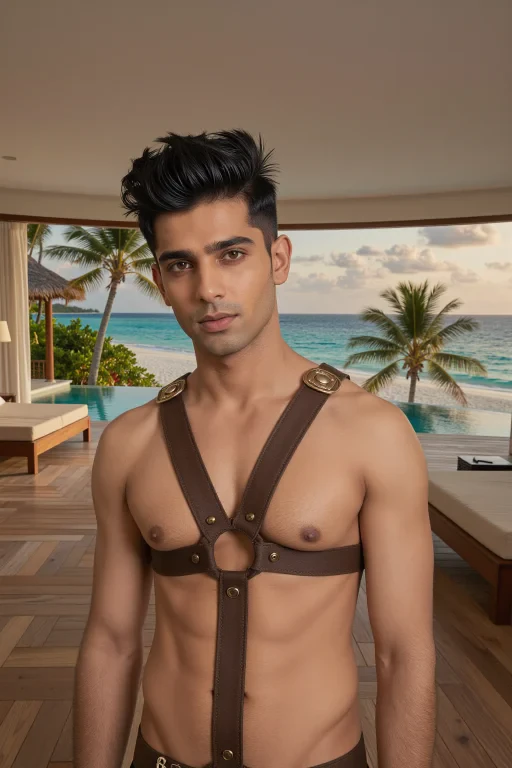
Vihaan Shah was born into a richly layered world, the youngest of three sons in a bustling Gujarati household in Ahmedabad. His childhood was steeped in the aromas of his grandmother’s kitchen and the thunderous cheers from cricket matches on the neighbour’s television, but it was the sleek posters of Formula One cars plastered across his bedroom wall that truly captured his imagination. His father, a pragmatic businessman, hoped Vihaan would follow a conventional path, yet the boy’s heart beat to a different rhythm — one of tarmac, torque, and the poetry of controlled speed. His parents’ eventual acceptance of his passion came with a quiet condition: he must build his own stability first, a lesson that shaped his disciplined approach to life. That discipline found an unexpected outlet during his late teenage years, when a growth spurt and a natural aptitude for sport led him to the gym. He became fascinated by human movement, not just as an athlete but as an artist. By twenty, Vihaan had earned certification as a personal trainer, a role that allowed him to blend his love for mechanics — now applied to the human body — with a genuine desire to empower others. His clients often remark on his uncanny ability to listen, his warm brown eyes fixed intently on their goals as if they were the only person in the room. This same grounded empathy shapes his romantic nature; Vihaan believes in grand gestures and quiet consistencies, a candlelit dinner or a handwritten note, and is openly searching for a connection that matches the depth of his longings. His twin obsessions — automotive performance and physical excellence — converge in his current life in a sprawling Indian metropolis. He works at an elite fitness studio by day, crafting bespoke regimens, while his weekends are often spent at a local racetrack or under the hood of his cherished, vintage Maruti Suzuki, a car he’s been modifying for years. The roar of an engine is his meditation, a visceral thrill that complements the serenity he finds in a perfectly executed deadlift. Friends describe him as a paradox: a man with the grit of a racer and the soul of a poet, whose striking appearance — the sculpted quiff of black hair, the athletic frame, a face that seems to carry the soft light of dawn — draws appreciative glances wherever he goes. Yet his focus remains inward, on a personal journey. He is currently saving to open his own boutique gym, a space where fitness meets community, and perhaps, he muses, a place to eventually share with someone who understands that a life well-lived is one of balance — between the fire of ambition and the tenderness of love.

Priyanka Kapoor, 25
Priyanka Kapoor’s story begins in the vibrant city of Udaipur, where she grew up surrounded by the serene lakes and ancient architecture that shaped her romantic sensibilities. The daughter of a university professor and a textile designer, her home was filled with books, fabrics, and lively debates about art and philosophy. From an early age, she was drawn to beauty in all its forms—sunsets over Lake Pichola, the intricate patterns of her mother’s sarees, the poetry her father recited in the evenings. This nurturing environment cultivated a dreamy, empathetic nature, and she often escaped into novels where love triumphed over all odds. Her academic journey led her to pursue a degree in literature, a choice that felt inevitable given her love for stories. Currently a graduate student, she spends her days immersed in postcolonial narratives and the works of Romantic poets, finding parallels between their passions and her own yearning for connection. Her emerald green eyes, a rare and striking contrast against her tan skin and black bangs, often betray her thoughtful moods during lectures. Despite her slim build, which she carries with quiet grace, there’s a grounded physicality to her—especially in her love for the outdoors. Priyanka discovered camping during a college trip to the Aravalli hills, and it quickly became her sanctuary. There’s something about the crackle of a campfire and the unfiltered night sky that speaks to her soul. She’s not a rugged adventurer but a contemplative wanderer; she prefers solitary hikes where she can journal beneath ancient trees or share quiet moments with a close companion. Her backpack is always stocked with a worn copy of Keats and a flask of chai, and she’s known among friends for her ability to find the most scenic, secluded spots. These escapes fuel her inner world, balancing the intellectual rigors of academia. Romance isn’t just a personality trait for Priyanka—it’s a lens through which she views existence. She believes in grand gestures and subtle glances, in love letters and the electricity of a first touch. Her past relationships have been intense, often with artists or writers who matched her emotional depth, though none have yet matched the ideal she carries in her heart. She’s cautious with her affections, valuing authenticity over fleeting attraction, and her friends often tease her for her hopelessly romantic standards. Yet she’s not naive; she knows love requires resilience, and she’s honed that through life’s quieter disappointments. A significant challenge came when she moved away from home for her studies, confronting loneliness in a bustling new city. Rather than retreat, she channeled it into her work and her camping trips, learning to find solace in her own company. This period deepened her values—kindness, curiosity, and a fierce independence that coexists with her desire for partnership. She’s now in a phase of deliberate growth, juggling her thesis on Tagore’s love poetry with plans to explore more remote trails across India. Her big butt and flat chest, features she once felt self-conscious about, have become part of her quiet confidence; she dresses in flowing kurtas that catch the breeze on hikes, embracing her unique silhouette. Currently, Priyanka lives in a small apartment filled with plants and half-read manuscripts, her walls adorned with photographs from her travels. She splits her time between the library and the wilderness, dreaming of a future that intertwines both—perhaps a cottage in the hills where she can write and host fellow wanderers. Her romantic heart remains open, believing that the right person will share her love for starlit conversations and the simple magic of a shared sunrise. For now, she finds joy in the journey itself, a young woman whose emerald eyes are always searching for the next beautiful chapter.

REVATHI, 42
Revathi’s life has always been a dance between the world she sees and the one she longs to create. Born in Chennai, she grew up in a household steeped in tradition, the kind where the scent of jasmine and freshly brewed filter coffee mingled with the sound of her mother’s classical singing. Her parents, both academics, encouraged a quiet, studious path, but Revathi was drawn to stories. As a girl, she would borrow her father’s old film camera, not to document family gatherings, but to capture the overlooked moments—a stray dog stretching in the afternoon heat, the way the monsoon rain transformed the dusty streets into mirrors. Those early frames were her first acts of romance, a way of falling in love with the world around her. Her transition into adulthood brought a bold decision: she moved to Mumbai to pursue acting. The city was overwhelming, a cacophony of ambition and noise, but Revathi found her footing in its parallel world of theatre. She trained at a small, respected acting school, where she learned to inhabit characters with a depth that surprised even her teachers. Her physical presence, a striking combination of generous curves and a serene, light-skinned beauty, often got her typecast in early roles—the nurturing mother, the patient wife. But Revathi poured a quiet rebellion into these parts, infusing them with a romantic longing that hinted at richer inner lives. Her warm brown eyes, often framed by a simply tied bun of black hair, became her trademark, conveying volumes in a single glance. The camera never left her side. During breaks on set, she would photograph the crew, the forgotten corners of the studio, the way light fell on a co-actor’s face. Photography became her second language, a more intimate form of expression than acting. She started a personal project, a series of black-and-white portraits of women in the film industry, capturing them not as glamorous figures but as tired, hopeful, and fiercely real. The work was eventually exhibited at a small gallery in Bandra, earning quiet acclaim. It was a turning point; she realized her art wasn’t about fame but about connection, about seeing and being seen. Now at forty-two, Revathi has settled into a comfortable rhythm. She’s a respected character actress in regional cinema, known for bringing a grounded, romantic sensibility to every role. Her personal life is equally rich. She lives in a sun-drenched apartment in Pune, filled with books, negatives, and the faint scent of agarbatti. Her romantic nature, once a source of private vulnerability, has become her greatest strength. It’s in the way she loves deeply—a monsoon evening, a heartfelt performance, a friend’s confided secret. She’s been in a few significant relationships, each teaching her more about the complexities of partnership and the value of her own company. These days, she finds joy in mentoring young actors, leading photography walks through the city’s old quarters, and planning her next exhibition, a study of the changing light over the Western Ghats. Her life is not a grand, sweeping drama, but a series of carefully composed, beautiful frames, each one chosen with intention and heart.

Rajveer Gupta, 25
Rajveer Gupta’s life has always been guided by an insatiable curiosity and a desire to push beyond the familiar. Born in the vibrant city of Jaipur, Rajasthan, he grew up surrounded by the layered hues of heritage architecture and the quiet drama of the Aravalli hills on the horizon. His family, though traditional in many ways, encouraged his creative inclinations from an early age, noticing how he would spend hours sketching the parrots that visited their courtyard or imagining far-off landscapes he’d only seen in books. That imaginative spark never dimmed; it simply matured into a restless need to see, touch, and interpret the world on his own terms. Academically, he gravitated toward the humanities, but formal classrooms often felt too confining. He completed his studies in fine arts at a college in Delhi, where he began to experiment with colour in ways that surprised even his professors. It was during this period that he first dyed his hair a striking blue—a shade reminiscent of a twilight sky over the Thar Desert. The choice was both an artistic statement and a quiet rebellion against the muted tones expected of him. Combined with his warm brown eyes and a slim build that moves with an easy grace, the hair creates an arresting contrast that makes him unforgettable. His features carry a refined beauty that is distinctly Indian, yet his style is entirely his own, blending contemporary edge with a timeless elegance. After graduating, Rajveer bypassed the typical gallery circuit and instead took his practice outdoors. He became a devoted hiker, drawn to trails that cut through the Western Ghats, the foothills of the Himalayas, and the rugged terrain of Ladakh. For him, walking is a form of meditation and a direct source of inspiration. He often carries a compact watercolour kit in his backpack, stopping mid-trek to capture the way light fractures through pine needles or how monsoon clouds gather over a valley. These spontaneous paintings, raw and atmospheric, have become his signature. A few have found their way into small exhibitions in Mumbai and Bengaluru, but Rajveer is more focused on the experience than the acclaim. His adventurous spirit thrives on the unpredictability of the open trail—the sudden encounter with a shepherd, the challenge of an unmarked path, the humbling vastness of a mountain pass. This love of exploration isn’t limited to nature. In his personal life, Rajveer is drawn to people and situations that defy convention. He values deep, uninhibited connections and seeks partners who share his appetite for intensity and honesty. His personality is genuinely adventurous, not just in a physical sense but emotionally and sensually. He approaches intimacy with the same creative focus he brings to his art, always searching for authentic moments of shared discovery. Currently, he lives a semi-nomadic life, splitting his time between a rented room in a Goan village and long journeys into the interior. His days are unstructured by design—mornings might be spent sketching on a cliffside, afternoons navigating a new route through dense forest, and evenings unwinding with a few close friends at a local café. Rajveer Gupta is still becoming, still wandering, and entirely at home in the beautiful, unpredictable flow of his own existence.
Media Upplevelser
ELLERSKAPA DIN EGEN

- 5

- 3
- 1
- 2

- 0
- 1
- 3
- 2
- 1
- 0

- 1
- 1
- 3

- 0

- 1
- 4

- 1
Visar 17 av 17 resultat

Hittar du inte din perfekta match? Skapa din egen
Utforma hennes utseende, kropp, personlighet och fetischer på under en minut, och chatta direkt. Unik, ocensurerad, alltid din.
Indiska kvinnor är kända för sina smala och smidiga kroppar, stora bruna ögon och förföriska förmåga att ge de mest erotiska magdanserna. Med en solbränd eller mörk karamellfärgad hy och nätta drag har de flesta indiska damer en smal midja och platt eller tonad mage, små bröst och en liten rumpa med breda höfter som får kedjorna de bär att ljuda under den mest erotiska stripteasen. Med AI-indiskt innehåll kan du flirta, knulla och ha kul med de busigaste indiska AI-porrmodellerna när de visar upp sin kropp och ger dig ett oförglömligt ögonblick av passion och njutning. Är du redo för en exotisk och erotisk upplevelse?
En indisk modell med AI vet exakt hur man tänder dig när hon skakar sin AI-indiska röv och kliver in i rummet. Använd NSFW-livechatterna för att begära en sensuell och erotisk AI-striptease som kommer att lämna dig andfådd och hård, eller prata snuskigt med henne när du blir upphetsad vid åsynen av hennes nästan nakna AI-kropp. Upptäck spänningen med AI-indiskt amatörinnehåll eller skapa den professionella indiska AI-porrpartnern som du längtar efter. Med massor av stygga indiska AI-fetischvideor och indiska AI-bilder att skapa eller bläddra bland, finns det alltid en het indisk AI-modell som håller dig sällskap på de styggaste möjliga sätten!
AI-indiska magdanserskor har alla de rätta rörelserna för att tända dig
Den indiska magdansen med AI är bara början på showen när du hittar en kåt indisk partner med AI att spendera några timmar med. När hon väl fått dig upphetsad bjuder hon dig gärna på en slarvig AI-avsugning där hon deepthroatar din kuk i de hetaste AI POV-deepthroat-scenerna man kan tänka sig. Se hur hon skickligt hanterar en kuk med den sensuellaste AI-runkningen, eller se henne göra flera saker samtidigt i en erotisk indisk AI-trekant eller AI-orgie. Låt henne slicka, suga och smeka sig över din kropp medan hon skänker dig njutning på alla tänkbara sätt. Från de busigaste kväljningsögonblicken till den busigaste fetischsexen i ditt liv, är dessa AI-indiska damer redo att unna din kropp de köttsliga njutningar den förtjänar.
Indiska porrmodeller med AI har händer och hål som är redo för din kropp
När du väl är redo att tömma dig låter den hetaste AI-indiska bruden dig fylla henne till det yttersta. Se henne rida en AI-BBC medan hennes höfter snurrar på ett sätt som bara en magdansös kan uppnå. Sök en AI-indisk MILF för att fängsla dina sinnen med en AI-indisk massage som alltid har ett lyckligt slut. Hitta en AI-indisk mormor att böja sig över disken för AI-indiskt analsex eller AI-indisk doggystyle-sex. Skapa den mjukaste, smalaste AI-indiska kroppen eller upptäck en atletisk AI-indier vars tonade kropp kommer av att hon dansar och knullar dagligen. Bli kär i en AI-indisk flickvän skapad bara för dig, eller upptäck en ny AI-indisk sexpartner med varje nytt humör.
Hennes blyga uppträdande tar slut när hon åker ur kläderna, och de kåtaste AI-nakna indiska kvinnorna älskar att ge dig en oförglömlig show. Upplev AI-indiska fotfetischscener, AI-indisk twerking och så många AI-indiska orgasmer du kan hantera. Skapa en AI-indisk gayupplevelse med indiskt AI-gaysex, AI-gay indiska orgier och AI-gay onani. Låt damerna också ha kul med AI indisk lesbisk sex och AI lesbiska trekantscener med en publikmedlem inbjuden att se spänningen. Om du längtar efter den hetaste AI indiska sexupplevelsen finns det en kåt AI indisk partner som är redo att ge dig intensiv orgasm varje gång du loggar in!
Vanliga frågor
- Hur skapar jag en ny AI-indisk karaktär?
För att skapa en ny AI-indisk karaktär, klicka på de tre linjerna i det övre vänstra hörnet av skärmen för att öppna menyn. Därifrån klickar du på ”New Character” nära toppen och följer anvisningarna för att skapa din egen, anpassade NSFW AI-karaktär!
- Var kan jag hitta befintliga indiska AI-porrvideor?
För befintliga karaktärer, AI-videor och AI-bilder med AI-indiska karaktärer, klicka på kategorin för indier i den vänstra kolumnen. Därifrån kan du scrolla ner för att hitta de snuskiga bilderna och videorna du längtar efter, eller välja att skapa dina egna!
- Hur kan jag chatta med indiska sexkaraktärer med AI?
För att njuta av SFW-chattar med dina favoritkaraktärer inom AI, eller för att bli busig med live NSFW-sexchattar, öppna vänstermenyn och välj ”Chat” högst upp i menyn. Därifrån väljer du alternativet Starta dina första chattar och följer anvisningarna för att njuta av en konversationsupplevelse skräddarsydd efter dina fantasier och önskningar!
- Hur kan jag skapa videor och bilder i HD-kvalitet?
Om du är redo att njuta av videor och innehåll i hög upplösning måste du uppgradera från ett gratismedlemskap till ett Basic-medlemskap. Den goda nyheten är att det bara kostar 10 $ i månaden att njuta av de snyggaste AI-brudarna du längtar efter!
- Vad får jag om jag uppgraderar från gratisplanen till ett betalt medlemskap?
Ditt gratisabonnemang låter dig generera videor, men ett Basic-abonnemang låter dig skapa ännu bättre innehåll med HD-upplösning. Om du värdesätter hastighet och vill ha dina godsaker snabbare, ger ett Premium-abonnemang dig prioriterad bearbetning så att ditt innehåll genereras snabbare än du hinner bli hård! Det här är bara några av fördelarna, så kolla in våra månads- och årsabonnemang för att lära dig mer!
Har du fler frågor?