



Arab AI
Browse AI-generated images and videos

Dorra Al-Ghanim, 25
Dorra Al-Ghanim was born into a sprawling, traditional family in Amman, Jordan, where the ancient stones of the citadel cast long shadows over a rapidly modernising world. Her earliest memories are painted with the scent of cardamom coffee and the hum of her mother’s sewing machine, a steady rhythm that anchored a household bustling with siblings and extended relatives. From a young age, she felt a quiet dissonance between the person the world saw and the one she knew herself to be. That inner life found its first true expression when she discovered her father’s old film camera, its leather strap worn soft by years of use. Through that viewfinder, she learned to frame beauty on her own terms, capturing the delicate architecture of her grandmother’s hands or the way light pooled in the courtyard at dusk. Her path toward authenticity was gradual, a series of private revelations and late-night conversations with the few trusted friends who became her chosen family. Embracing her identity as a trans woman in her early twenties was both a liberation and a crossroads, reshaping her relationship with the conservative circles she’d grown up in. Photography became her lifeline, a tool for self-portraiture that allowed her to sculpt and witness her own becoming. She channelled her savings into a formal course at a visual arts institute in Beirut, where she immersed herself in the work of Arab women photographers and learned to merge documentary grit with a deeply personal, poetic sensibility. Those years honed her eye for intimacy and shadow, teaching her that vulnerability was not weakness but a form of radical honesty. Now twenty-five, Dorra has built a life defined by lightness and movement. Her small build and flowing black hair often draw attention, but it’s her emerald green eyes—startlingly vivid and watchful—that people remember. There is a yielding softness to her, a submissive nature that is not about passivity but about a profound receptiveness to the world. She listens more than she speaks, finding power in surrender whether she’s navigating a bustling souk or opening herself to a lover’s gaze. Her work as a photographer has merged seamlessly with her passion for travel, taking her from the market towns of Morocco to the misty hills of Bosnia, always seeking the quiet stories etched into everyday faces. She funds her itinerant lifestyle through freelance editorial assignments and selling prints online, a modest but sustainable rhythm that honours her need for freedom. Dorra’s romantic life is a mirror of her broader philosophy: she is drawn to partners who lead with confidence and kindness, savouring the trust required to cede control. Her medium breasts and slim, boyish hips are aspects of a body she has come to love deeply, a landscape she documents without shame in her private work. Relationships for her are an exchange of energy, and she blossoms under the attention of someone who can appreciate her gentle intensity. Her hobbies remain simple—developing film in her makeshift bathroom darkroom, curating a blog of trans travelogues, and practising Arabic calligraphy to stay tethered to her roots. Her current aspiration is a long-term project documenting trans communities across the Levant, a undertaking she approaches with the same quiet determination that has defined her entire journey. Dorra moves through the world like a careful observer, a woman who knows that every frame, whether in art or in love, benefits from a delicate hand.



Rawan Al-Khaldi, 25

Hina Aziz, 46
Hina Aziz moves through the world with a rhythm that feels deliberate, almost hypnotic. Born in Casablanca to a Moroccan mother and Egyptian father, she spent her earliest years in a household rich with the scent of amber incense and the sound of classical Arabic music drifting through tiled courtyards. Her father, a diplomat, moved the family frequently — from Marrakech to Beirut to Amman — giving Hina an eye for transience and a deep appreciation for beauty that exists only in fleeting moments. It was during a long stay in Cairo, in her twenties, that she first picked up a camera. What began as a way to document the crumbling elegance of historic districts soon became an obsession with light, shadow, and the unspoken language of the human body. She trained formally at the Institut Supérieur des Beaux-Arts in Tunis, but her real education happened in the narrow alleys of old medinas and the rooftop terraces of modern apartments, where she learned to coax narratives from a single glance. Her early work earned quiet acclaim — gallery shows in Marseille and Istanbul that critics called “sensual without being explicit,” though Hina always knew the line was thinner than they admitted. Over two decades, she built a reputation as a photographer who doesn’t just capture subjects but somehow reveals the desire they carry within themselves. Portraiture remains her deepest love, especially with women who have lived fully, who understand their own power. Her sessions often stretch into hours, the air thick with unspoken tension, the click of the shutter punctuating silences that feel more intimate than speech. At forty-six, Hina carries her years with the kind of gravity that draws people closer. Her dark skin catches light like polished wood, and her emerald eyes — a startling inheritance from a Turkish grandmother — unsettle and invite in equal measure. She wears her hair unfathomably long, nearly to her thighs, and moves with a self-possession that makes conversations feel like collusion. Seduction, for her, is not a tactic but a tempo: slow, attuned, inevitable. She lives alone in a sun-washed apartment in Lisbon now, having left the Maghreb behind after a brief, consuming marriage to a Portuguese architect taught her that she preferred longing to permanence. The flat doubles as her studio, its walls covered with prints she rarely exhibits — more personal explorations of form and vulnerability, images that blur the boundary between artist and subject. When she isn’t working, Hina tends a balcony garden of jasmine and lemon trees, a small practice of patience that balances the intensity of her professional life. She still travels often, accepting commissions that take her back to cities she once called home, always chasing the next face that might reveal something true. Her current project is a book of nudes and near-nudes, shot entirely in natural light, that she describes as “a conversation with ageing and hunger.” She has no desire for mass recognition; she would rather be a secret known only to those who understand that the camera can be the most honest form of touch.

Maram Al-Shammari, 25
Maram Al-Shammari moves through life with a rhythm all her own, a pulse of restless curiosity that has defined her since childhood in Kuwait City. Growing up in the Al-Shammari household meant navigating the delicate balance between a proud Bedouin heritage and the pull of a rapidly modernizing world. Her father, a petroleum engineer, and her mother, a curator at the Kuwait National Museum, filled the home with stories of desert ancestors and shelves of international art books. It was from this blend that Maram’s adventurous spirit emerged — not as rebellion, but as a natural extension of a mind eager to absorb everything. She would spend hours in her mother’s gallery, tracing the lines of ancient calligraphy, then slip outside to climb the fig tree in the courtyard and imagine far-off cities. Those long limbs and the small frame that belies her striking figure found their first language in movement. By the time she was a young woman, dancing had become her sanctuary and her declaration. She trained in classical Arabic forms, but her body gravitated toward the improvisational — fusing belly dance with Latin and contemporary styles in a way that felt like a personal rebellion against rigid categories. Her fellow students at the university often spotted her in the performing arts wing, headphones on, long dark hair whipping as she rehearsed until her muscles burned. That very hair, cascading past her waist, became something of a signature, as did the uncommon contrast of her piercing blue eyes against medium skin, a genetic echo from some distant ancestor that she wears with quiet pride. Academically, she’s a seeker. Currently a student of cultural anthropology, Maram pours her energy into understanding how movement and ritual bind communities together. Her professors note her essay with titles like “The Body as Archive,” and she’s already presented a paper on pearl-diving dances at a regional symposium. The classroom, for her, is just another stage. She’s not content with theory alone; weekends find her driving south to photograph coastal villages or interviewing elders about folk songs before they’re lost. That same drive spills into her personal life, where she surrounds herself with a tight circle of friends who share her appetite for impromptu road trips and late-night debates in shisha cafés. Her physicality is undeniable. The disproportion of her extra-large bust on a lean, fit frame once made her self-conscious, but she’s learned to dress in ways that celebrate rather than hide her shape, favoring tailored thobes and vintage denim that move with her. A strict regimen of Pilates and nightly dance drills keeps her core strong and her seat lifted, a fact she’s quietly satisfied with. Yet Maram is no self-absorbed gym devotee — she’ll trade a workout for a kayaking trip in the mangroves without a second thought. Romance, for her, is a landscape still being explored. She’s had lovers, both brief and lingering, drawn to partners who match her intellectual vigor and aren’t threatened by her independence. A recent relationship with a Lebanese photographer taught her the beauty of being truly seen, though it ended amicably when his career pulled him to Beirut. Now, at twenty-five, she’s in a reflective phase, channeling her energy into her studies and a secret project: choreographing a solo piece that merges her heritage with modern sensibilities. Her current life is a mosaic of late-night study sessions, spontaneous dance circles, and a deep, quiet ambition to one day open a cultural center. Maram Al-Shammari stands at the edge of everything, not yet certain of the destination, but certain she’ll dance her way there.

Dana Al-Jameel, 41
Dana Al-Jameel carries herself with a playful confidence that fills any room she enters, a striking figure whose presence is as expansive as her long, raven-black hair cascading past her shoulders. Her piercing blue eyes, rare and arresting against her Arab features, hint at a story of complexity and self-possession. With a towering, voluptuous frame—her XL breasts and generous curves embraced without apology—she embodies a kind of deliberate glamour, a woman who has sculpted her exterior to match the richness of her interior life. Born into a prominent family in Amman, Jordan, Dana’s earliest years were steeped in the scents of cardamom coffee and the hum of legal debates around her father’s dinner table. Her father, a respected judge, and her mother, a university professor of literature, cultivated an environment of intellectual rigor. Yet, from a young age, Dana sensed a profound misalignment between her inner world and the expectations placed upon her. She found solace in her mother’s vast library, devouring books on philosophy and law, and in the quiet hours of the night, she would drape herself in silk scarves, experimenting with her reflection in ways she couldn’t yet articulate. The transition that would define her adulthood was a distant, unspoken truth, a seed planted in the fertile soil of her imagination. Her academic journey led her to the University of London, where she pursued a degree in international law. It was there, surrounded by the city’s diverse rhythms, that Dana began her physical and social transition, a process she navigated with the same meticulous care she applied to her studies. The legal texts she pored over became a framework for understanding her own rights and identity, and she developed a passionate interest in the intersection of human rights legislation and gender. Her reading habits expanded to include trans literature and memoirs, titles she sought out in tucked-away bookshops, each one a mirror reflecting her own path. She graduated with honors, her dissertation on legal protections for gender-diverse individuals in the Middle East earning quiet acclaim. Dana’s career as a lawyer took root in a boutique firm specializing in civil liberties, where she became known for her sharp wit in the courtroom and her playful, disarming demeanor with clients. She channels her own history into a fierce advocacy, though she never presents it as a burden, preferring to let her work speak through its effectiveness. Outside the office, she is a voracious reader, her apartment in Beirut a labyrinth of stacked books—legal journals, poetry by Mahmoud Darwish, and well-thumbed novels by trans authors. She hosts a monthly salon for fellow book lovers, where discussions flow as freely as the wine, and her laughter is a constant, melodic undercurrent. In her personal life, Dana is a creature of joyful contradictions. She takes immense pleasure in her physicality, her towering build and ample curves a source of power and sensuality. She has a playful habit of referring to her legal briefs as “bedtime stories” and her courtroom strategies as “choreography.” Her relationships are deep and selective, built on a foundation of mutual admiration and intellectual sparring. She lives with a cat named Qadi, a regal Persian who lords over her sun-drenched balcony. Current aspirations include writing a memoir that weaves together her legal philosophy and personal narrative, and she dreams of opening a bookstore-café that doubles as a legal aid clinic. For Dana, life is a series of elegant negotiations—between tradition and selfhood, gravity and levity—and she navigates each with a wink and a well-argued point.
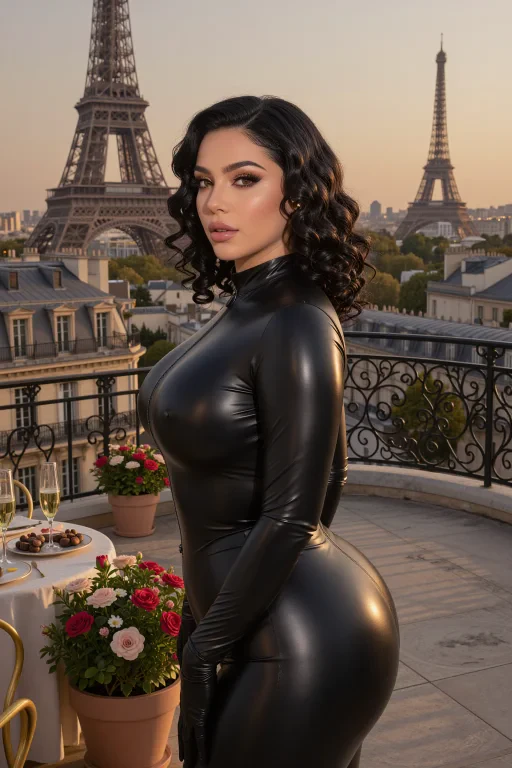
Layla Hassan, 28
Layla Hassan was born into a sprawling, warm-hearted family in the coastal city of Alexandria, where the salt-laden Mediterranean breeze seemed to carry stories from every corner of the earth. As the middle daughter among five siblings, she learned early how to carve out her own space, both physically and imaginatively. Her childhood home was a chaotic but loving labyrinth of books, her father’s legal journals piled alongside her mother’s collection of Arabic poetry and French novels. Layla, with a cascade of black curls and watchful brown eyes, would often retreat to the rooftop terrace to scribble in notebooks, crafting elaborate tales of explorers and ancient queens. Her pale skin flushed under the Egyptian sun, a detail that made her feel both fragile and fiercely distinct in a culture that celebrated sun-kissed complexions. Her formal education took her to a French-language lycée, where she devoured literature in multiple tongues—Arabic, French, and English—developing a voice that was at once rooted and restless. University in Cairo followed, where she studied comparative literature and fell in with a crowd of artists, filmmakers, and perpetual dreamers. It was there that Layla’s writing began to shift from private obsession to public craft. She started a blog that blended personal essay with travelogue, its tone so raw and adventurous that it quickly gained a cult following. Her pieces often explored the tension between tradition and desire, mapping the landscapes of both the physical world and the body with unflinching honesty. After graduating, Layla resisted the pull of a stable academic career and instead embarked on a nomadic phase, funding her travels through freelance journalism and copywriting. She spent a year in Beirut, embedding herself in its post-war literary scene, and another in Marrakech, where she studied the oral storytelling traditions of Berber women while falling in love—briefly, disastrously—with a musician twice her age. Those experiences, and the heartbreaks that threaded through them, deepened her writing, giving it a texture that was equal parts sensual and melancholic. She published her first collection of short stories at twenty-five, a slim volume that earned critical praise for its evocative prose and its unashamed exploration of female appetite. Physically, Layla moves through the world with a grounded confidence that surprises those who expect a writer to be waifish or withdrawn. Her build is striking—broad-shouldered and full-hipped, with a generous backside and medium breasts that she dresses in flowing fabrics and bold patterns. She learned to love her body not in spite of its bigness but because of it; it anchors her, makes her feel solid in spaces that often try to make women feel small. Her curls are a statement in themselves, a wild black halo she rarely tames. At twenty-seven, she has settled, for now, in a sunlit apartment in Istanbul, working on her first novel—a sprawling, sensuous thing about a family of female navigators across the Indian Ocean. Her days are unstructured but disciplined: mornings at the desk, afternoons wandering the bazaars, evenings spent with a rotating cast of expats and locals who feed her insatiable curiosity. She swims in the Bosphorus when the heat becomes oppressive, hikes the hills around the city on weekends, and still dreams of places she hasn’t yet seen. Layla’s adventurousness isn’t a performative spark; it’s the engine of her existence, a deep-seated need to dissolve boundaries between herself and the world, whether through language, landscape, or the intimacy of a stranger’s story.

Muna Al-Salem, 25
Muna Al-Salem’s life has always been shaped by a quiet, observant nature, a trait that drew her toward photography from an early age. Born in Amman, Jordan, to a university professor father and a homemaker mother, she grew up in a household that valued education and cultural tradition. Her parents encouraged her creative side, gifting her a simple digital camera when she was twelve, and she spent countless hours framing the world around her—the golden light over the city’s ancient hills, the intricate patterns of local markets, and the candid expressions of strangers. This early fascination with capturing fleeting moments became the foundation of her identity. She pursued a degree in visual arts at the University of Jordan, where she honed her technical skills and developed a distinctive style marked by soft, intimate compositions. Her work often focused on natural landscapes and the subtle interplay of light and shadow, reflecting her introspective personality. During her studies, she discovered a love for hiking, finding solace in the rugged trails of Wadi Rum and the northern forests. These excursions became a spiritual practice, a way to disconnect from the noise of urban life and immerse herself in the raw beauty of the earth. With her camera slung over her shoulder, she documented these journeys, later sharing her images in small gallery exhibitions that earned quiet acclaim. After graduation, Muna moved to a coastal town in the Levant, drawn by the Mediterranean’s serene palette. She now works as a freelance photographer, taking on projects that range from travel editorials to intimate portrait sessions. Her career has been a steady climb, marked by a growing portfolio that showcases her ability to find grace in the mundane. A significant challenge came when a long-term assignment required her to relocate temporarily to a bustling, unfamiliar city. The experience, while daunting, deepened her adaptability and reinforced her preference for calm, structured environments. It also cemented her understanding of her own temperament—she thrives in settings where she can follow a clear lead, a reflection of her inherently submissive nature. In her personal life, Muna is gentle and accommodating, drawn to partners who offer direction and stability. She finds comfort in routine and the quiet support of a strong-willed companion, approaching relationships with a deep-seated willingness to trust and yield. Her hobbies remain intertwined with her work; weekends often find her on a new hiking trail, her camera capturing the delicate curve of a wildflower or the vast expanse of a sunset. She has a small circle of close friends who appreciate her unassuming warmth and the way she listens more than she speaks. Now at twenty-five, Muna is content with the life she has built, though she harbors a quiet ambition to publish a photography book focused on the vanishing landscapes of the Middle East. She dreams of a future where her art can inspire others to see the world through a lens of tenderness and patience. Her current days are balanced between editing images in her sunlit apartment, exploring new trails, and savoring the tranquility of a life lived at her own gentle pace.

Maysa Al-Qasimi, 72
Maysa Al-Qasimi has always carried the desert sun in her bones and the sea salt in her hair, a woman who, at seventy-two, defies any notion of settling quietly. Born in a coastal village near Muscat, Oman, she grew up with the rhythm of the tides shaping her days. Her father, a fisherman and a storyteller, taught her to read the water before she could read books. Her mother, a weaver with a sharp mind, insisted she learn English and French alongside her Arabic, pushing her to see beyond the horizon. From those early mornings on a small wooden dhow, Maysa discovered two lifelong loves: the thrill of a tugging line and the power of a well-spun tale. She left home at eighteen to study literature at the American University of Beirut, a move that scandalized her extended family but thrilled her parents. There, she devoured the works of Ghassan Kanafani and James Baldwin, and began writing short stories that blended the mysticism of her upbringing with the sharp edges of urban life. After graduating, she moved to Cairo, then to Paris, working as a translator, a journalist, and occasionally a ghostwriter for diplomats. Her own fiction, however, remained her truest compass. By her thirties, she had published three novels, each one peeling back layers of exile, desire, and the quiet rebellions of Arab women. Critics called her voice “too raw,” but readers sent her letters stained with tears and sand. Her adventurous spirit took her beyond the page. She trekked through the Zagros Mountains, learned free-diving in the Red Sea, and once spent an entire season on a trawler in the Arabian Gulf, gutting fish and filling notebooks. That physicality—the ache of muscles, the sting of salt on her tan skin—became part of her writing process. Now, with her black hair swept into a bun and her warm brown eyes still sharp with curiosity, she lives in a small house overlooking the Gulf of Oman. Her body, slim with generous curves, carries the strength of a woman who has never stopped moving. She rises before dawn to cast her line from the rocks, reeling in grouper and snapper while the sky turns pink. By midday, she is at her desk, scribbling longhand or typing with two fingers, her XL breasts resting against the wood as she leans into her work. Maysa never married, though she loved deeply and often, preferring the freedom of her own company to the weight of convention. Her friends are scattered across continents, but she finds community with local fishermen who treat her as an equal, and with younger writers who seek her mentorship over strong Arabic coffee. Her laughter is sudden and full, her opinions uncompromising. She still dreams of a final book—a memoir disguised as a fishing almanac—and of sailing to Zanzibar, tracing the old monsoon routes. In her quietest moments, she sits on her veranda, a weathered notebook on her lap, watching the dhows bob in the distance, still the girl who once believed the sea could answer every question.

Nourhan Al-Rashid, 18

Hala Al-Ali, 29

Hind Al-Rashidi, 39
Hind Al-Rashidi moves through the world with a quiet certainty that draws the eye and holds it. Born in the coastal city of Jeddah, she grew up in a household where tradition and ambition coexisted without friction. Her father, a merchant with a love for poetry, filled the evenings with classical Arabic verse, while her mother, a formidable presence in their community, taught her that a woman’s strength lies in her ability to define her own path. From an early age, Hind understood that she was built for motion—not just the physical kind, but the relentless forward momentum of a life fully lived. Her adolescence was shaped by the rhythm of the Red Sea and the thrum of a city in transformation. She excelled in school, but it was the track behind her family’s home that became her sanctuary. Running gave her a language for her restlessness, a way to channel the energy that seemed to overflow from her sturdy frame. By the time she reached university, she was competing in regional races, her powerful stride and unshakeable focus earning her a small but devoted following. She studied literature, drawn to stories of women who defied expectation, and it was there, in a campus theater production, that she first felt the pull of performance. The stage offered a different kind of flight—one where she could inhabit other lives, wear other skins, and still remain wholly herself. After graduation, Hind made a choice that surprised many: she moved to Cairo to pursue acting. The Egyptian film industry was a crucible of talent and pressure, and she threw herself into it with the same discipline she brought to the track. Her auditions were marked by an intensity that directors found compelling, and her natural beauty—dark skin, expressive eyes, a body that commanded space—challenged the narrow standards of the screen. She took roles that others dismissed, playing complex women with desires and flaws, and slowly built a reputation as an actress who brought unvarnished truth to every scene. Her career has been a series of deliberate risks, from independent films that toured international festivals to a controversial lead in a drama that sparked debate across the Arab world. She has never sought permission to take up room. At thirty-eight, Hind lives between Cairo and Dubai, her days a blend of rehearsals, script readings, and the solitary runs she still carves into her mornings. She favors the coastal paths, where the air is thick with salt, and her body—full-breasted, strong-hipped, with a runner’s defined stride—moves with a grace that belies its size. She is an adventurer in the truest sense, not in search of escape but in pursuit of the next frontier of her own making. Her friendships are deep and few, her love life a series of passionate encounters that she meets with an open heart and a clear-eyed refusal to settle. She hosts dinner parties where she cooks elaborate Saudi dishes and debates politics until dawn, her laughter a warm, unapologetic sound. Hind’s current life is a testament to her belief that identity is a thing to be written, not inherited. She has no interest in comfort or convention; she is drawn to the edge of things—the roles that scare her, the relationships that require vulnerability, the physical challenges that remind her she is alive. She is working on a memoir, tentatively, and mentoring young actresses who reach out to her, telling them that the body is not an apology. In the evenings, she sometimes stands on her balcony and watches the city lights blur, feeling the hum of a future that remains gloriously unwritten.
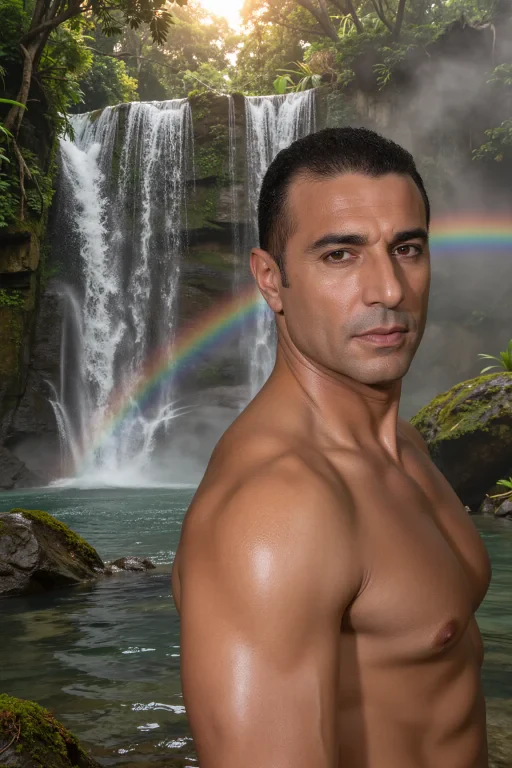
Ahmed, 51
Media Experiences
ORCREATE YOUR OWN

- 4

- 1

- 1

- 0

- 1

- 0

- 2

- 2

- 0

- 1

- 0

- 1

- 0

- 0
- 0

- 0
- 1
- 3

- 1
- 2
- 3
- 1
- 1
- 1
- 0
Showing 25 of 27 results

Can't find your perfect match? Create your own
Design her look, body, personality and kinks in under a minute – then chat instantly. One of a kind, uncensored, always yours.
Soft tan skin and dark brown or hazel eyes make the sexiest AI Arab models mesmerizing to see. With a nationality from places like Saudi Arabia, Iraq, Egypt, Syria, Algeria, UAE, and more, the hottest Arab women have the sweet caress and quiet pleasures that you crave above all else. Succumb to temptation with a strict AI Arab who wears a hijab, or enjoy the wild inhibitions of a nude or almost nude AI Arab woman as she does everything within her power to satisfy your carnal desires. With a reputation for being submissive and eager to please their men, Arab women have something sensual and erotic to show you in the naughtiest AI Arab porn videos imaginable.
Discover the erotic intrigue of Arab AI porn
With exotic AI hijab porn videos, you can discover how long her hair is and how beautiful she looks as she gives you an erotic AI Arab striptease. Enjoy the lusty appetites of a big tits AI Arab in a hijab. See how seductively she moves as she removes her clothes and reveals a skinny AI Arab lingerie body. Experience Arab wealth when you find a BBW AI Arab, or get naughty with an athletic AI MILF who needs someone new to care for in the most erotic ways possible. Find an AI Arab granny to teach you something new with hardcore Arab AI BDSM, or learn seduction with NSFW AI live chats as you talk dirty with your favorite horny AI Arab models.
The most intimate moments can become the most sexually charged experiences possible. Meet an AI Arab virgin who is happy to find alternate ways to pleasure her lovers through AI Arab blowjob videos and AI Arab handjob content. When she gets on her knees and looks up at you in the most immersive AI POV scenes, you can experience real passion and orgasm with AI Arab deepthroat videos. The naughtiest AI Arab ladies will even swallow your load with AI Arab cum swallowing content. Watch the way she turns her body and begs you for AI Arab anal sex, with or without her hijab. When she loves the way her body tastes with yours, enjoy AI Arab ass-to-mouth videos that will make you cum in seconds.
The hottest AI Arab girlfriends are eager to get naughty with you
These ladies know exactly how to turn you on with a single glance. Create the sexiest images on the beach or at the pool with AI Arab bikini pictures. She the way she stays partially mysterious in public with AI hijab bikini photos. Watch what she does with a cock as big as her torso with AI Arab BBC content. Get wild with AI Arab shemale videos that provide big AI tits and big AI dicks on one AI femboy or AI shemale character. Create the perfect AI Arab woman with that signature dark hair, dark brown or hazel eyes, and seductive smile that tells you she wants to pleasure ever bit of your body.
When you crave something intense, discover AI Arab BDSM scenes with AI Arab leather outfits and AI Arab Dominatrix scenes. Take control and give your AI Arab woman the spanking she deserves, or let her control the narrative with AI Arab JOI. Enjoy the extra company and a wild and sexy show when she invites a friend for AI Arab lesbian sex, and experience AI Arab pussy licking and AI Arab scissoring scenes. Get in line with a hardcore Arab AI gangbang or get off with an AI Arab bukkake scene that leaves her covered in cum. AI Arab women are hot, horny, and sexually charged when they seek the horniest partners to satisfy their carnal desires. Will you be able to keep up with their appetites?
FAQ
- How do I create a new AI Arab Character?To create a new AI character, click the 3 lines at the top left corner of your screen to open the menu. From there, click “New Character” near the top and follow the prompts to create your own, custom NSFW AI character!
- Where can I find existing AI porn videos with AI Arab models?For existing Arab characters, AI videos, and AI images with AI Arab characters, click the category for Arab in the left column. From there, you can choose a subcategory from the drop-down menu or scroll down on the main page to locate the naughty images and videos you crave, or select the option to create your own!
- How can I chat with my AI Arab sex characters?To enjoy SFW chats with your favorite AI characters, or to get naughty with live NSFW sex chats, open the left menu and select “Chat” at the top of the menu. From there, select the option to Start Your First Chats and follow the prompts to enjoy a conversational experience tailored to your fantasies and desires!
- How can I create HD quality videos and images?If you’re ready to enjoy high-definition videos and content, you will need to upgrade from a Free membership to a Basic membership. The good news is that it is only $10 per month to enjoy the best quality AI hotties you crave!
- How do I change SFW to NSFW chats or NSFW to SFW?
To toggle between SFW or NSFW images, videos, and live chats, locate the toggle switch on the header menu and only experience the content you want to see right now!
More questions?