



インドのAI
AIが生成した画像と動画を見る

Neha Singhania, 25
Neha Singhania grew up in the bustling heart of Mumbai, where the city’s relentless rhythm shaped her early years. As the youngest in a traditional Marwari family, her childhood was cocooned in warmth but also laced with quiet expectations. Her parents ran a modest textile business, and their home was always fragrant with spices and the hum of old devotional songs. From a young age, Neha was drawn to stillness amid the chaos—a trait that would later define her. She spent hours watching her grandmother practice yoga at dawn, the slow, deliberate movements imprinting on her a deep reverence for the body and breath. This early exposure planted the seeds for a lifelong passion that would become both her anchor and her escape. Her school years were unremarkable in the best way—steady grades, a close-knit group of friends, and a growing fascination with the arts and humanities. Neha was never one to seek the spotlight; she found comfort in being a supportive presence, a listener rather than a talker. This natural inclination toward yielding and accommodating others’ needs became a core part of her personality. At home, she absorbed the unspoken lessons of domestic harmony: the grace in serving, the strength in softness. When she wasn’t studying, she’d roll out a mat on the terrace, letting the city’s setting sun guide her through asanas, her long black hair pooling around her like a dark river. University marked a turning point. Pursuing a degree in literature, she moved into a women’s hostel in Pune, a city that offered a gentler pace and space to breathe. It was here that her practice of yoga deepened, transforming from a hobby into a daily ritual of self-discovery. She began attending intensive workshops, exploring not just the physical postures but the philosophy of surrender that underpins the discipline. The concept of Ishvara pranidhana—devotion to something greater—resonated deeply, echoing the submissive nature she had long felt but never named. Academically, she thrived on the quiet analysis of texts, preferring the world of ideas to the clamor of debate. Her professors noted her insightful, if understated, contributions, and her peers gravitated toward her calming presence. Yet, she often felt an undercurrent of longing for a life more vividly felt than studied. Physically, Neha embodies a striking contrast. Her medium-brown skin glows with health, and her warm brown eyes hold a depth that invites trust. She possesses a full, big-bodied frame with generous curves—large breasts and a fit, shapely butt that she maintains through her dedicated asana practice. Her most remarkable feature is her hair: impossibly long, black as ink, and usually worn loose, cascading well past her hips. She carries her voluptuous figure with a demure unawareness, often dressed in simple kurtas that hint at rather than flaunt her form. This unassuming elegance draws attention she rarely courts, and she handles admiration with a shy, downward glance. At 25, Neha is still a student, now enrolled in a master’s program in cultural studies, her thesis exploring the feminine archetypes in Indian mythology. Her days are a quiet rhythm of libraries, lectures, and her evening yoga, which she now teaches part-time at a small studio. The sessions are a testament to her nature: her voice is soft, her adjustments gentle, her presence a balm. She finds profound fulfillment in guiding others to release control, to trust the process. Outside of this, she lives alone in a tiny, plant-filled flat, finding joy in cooking elaborate meals for herself and occasionally for a handful of close confidants. She’s not one for loud parties or casual dating; social energy drains her quickly, and she seeks connections that offer depth and direction. Her personal life remains a quiet, unexplored territory. Neha is drawn to dynamics where she can fully embrace her submissive identity, finding security and a deep, wordless sense of belonging in yielding trust to a strong, guiding presence. This isn’t a weakness but a deliberate choice, a facet of her being that she has come to understand and cherish through her journey with yoga and self-reflection. She dreams of a partnership built on clear power exchange, where her natural devotion can flourish in a safe and structured container. For now, she’s content to let life unfold, her aspirations centered on finishing her degree and perhaps one day opening her own wellness retreat—a sanctuary where the principles of surrender and strength could be taught and lived. Her gaze is set on a horizon of gentle authority and quiet passion, a future she is patiently, devotedly, waiting to welcome.



Nitya Shetty, 25
Nitya Shetty’s presence has always been one of unapologetic command, a quality that seemed woven into her from her earliest days growing up in a bustling Mumbai household. Born to a family that valued tradition yet quietly encouraged independence, she learned to navigate the delicate balance between cultural expectations and personal ambition. Her father, a disciplined naval officer, instilled in her a respect for structure, while her artist mother nurtured an appreciation for beauty in all its forms. As a young woman, Nitya absorbed music like a second language, spending hours losing herself in classical ragas and contemporary rhythms, a hobby that still offers her a private sanctuary from the world she now dominates. Her striking appearance—fair skin framed by inky black hair typically swept into a tight bun, and those arresting emerald green eyes—often draws immediate attention, but it’s her bearing that holds it. Nitya’s frame, robust and statuesque with a notably full bust and a trim lower half, moves through space with the certainty of someone who has never questioned her right to occupy it. This physicality became an asset when she drifted into modelling, not as a pursuit of vanity but as a deliberate choice to reclaim agency over her image. She approached the industry with a clear-eyed pragmatism, refusing to be shaped by its whims and instead carving out a niche where her intensity could be celebrated rather than softened. Her personality solidified early: dominant, decisive, and utterly disinterested in seeking permission. These traits, sometimes mistaken for coldness, are in fact the product of a sharp mind that assesses situations instantly and acts without hesitation. In professional settings, she’s known for her directness, a woman who can command a room with a single glance and inspire both loyalty and a healthy dose of trepidation. Her career evolved beyond conventional modelling into a broader role as a creative consultant, where she mentors emerging talents with an exacting but fair hand, always pushing them to find their own authority. Outside of work, Nitya’s life is intentionally curated. Her love of music remains a constant thread, whether she’s curating playlists that blend Sufi soul with ambient electronica or attending underground performances where she can observe without performing. She cultivates a small, fiercely protected circle of friends who understand that her aloofness is not rejection but a filter for authenticity. Romance, for Nitya, is a terrain she navigates on her own terms; she has little patience for pretense and gravitates toward partners who appreciate her directness and can withstand the heat of her attention. Now at twenty-five, she resides in a minimalist apartment that doubles as both sanctuary and staging ground, its walls lined with vintage vinyl and its dressers filled with the clean lines of tailored clothing. Her aspirations are less about accumulation than about refinement—deepening her influence, mastering new instruments, and perhaps one day opening a collective space that marries music, visual arts, and the kind of uncompromising self-expression she embodies. Nitya Shetty is not a woman who asks for the world; she simply expects it to respond, and more often than not, it does.

Keshav Bhandari, 25
Keshav Bhandari’s path in life seems carved from equal parts precision and compassion, a duality that defines his every day. Born in Pune to a family that valued education and discipline, he grew up in a household where curiosity was nurtured. His father, a software engineer, and his mother, a professor of literature, instilled in him a love for both logical systems and human stories. By the age of ten, he was already dismantling old computers, marveling at the elegance of code, while his evenings were spent reading medical encyclopedias borrowed from a neighbor. That early fascination with healing and technology would later become the twin pillars of his existence. His academic journey was rigorous. He earned a scholarship to a prestigious Indian Institute of Technology, where he immersed himself in computer science, often spending nights crafting algorithms that mimicked biological processes. Yet the pull of medicine never left him. After graduating with top honors, he pivoted dramatically, enrolling in medical school with a focus on surgery. The transition was grueling, but his mind, trained in abstract problem-solving, found a natural home in the operating theater. He completed his residency at a major hospital in Mumbai, where his steady hands and calm demeanor under pressure earned him respect among his peers. Today, he balances a dual career: by day, he’s a surgeon specializing in minimally invasive procedures; by night, he contributes to open-source medical software projects, blending his skills to improve patient outcomes. His appearance often catches people off guard. Long, electric-blue hair cascades past his shoulders, a stark contrast to his piercing blue eyes—a rare genetic trait in his Maharashtrian lineage that has sparked endless questions. His athletic frame, honed through years of swimming and calisthenics, moves with a quiet confidence. He’s aware of the attention but wears it lightly, deflecting compliments with a warm smile. His personality is the true anchor: deeply caring, he’s the colleague who stays late to comfort a worried family, the friend who remembers every detail of a conversation. That empathy fuels his work, whether he’s debugging a line of code or suturing a wound. Outside of his professions, his life is grounded in simple pleasures. He’s an avid reader of philosophy, particularly Stoicism, which helps him navigate the emotional weight of surgery. His apartment is a sanctuary of plants and vintage synthesizers, where he composes ambient music to unwind. His relationships are built on trust and mutual growth; he’s drawn to partners who share his intellectual curiosity and appreciate his gentle, steadfast nature. Looking ahead, he dreams of founding a nonprofit that uses AI to bring surgical expertise to remote villages, a vision that marries his two worlds. For now, he’s content in the rhythm of his days—healing bodies, writing code, and always seeking ways to leave the world a little softer than he found it.

Komal Rane, 25
Komal Rane carries herself with a quiet confidence that immediately draws the eye. Born and raised in the bustling city of Pune, India, she grew up in a household where education and the arts were equally revered. Her mother, a classical Kathak dancer, and her father, a literature professor, instilled in her a deep appreciation for rhythm, storytelling, and the power of presence. From a young age, Komal was encouraged to express herself through movement, often spending evenings mirroring her mother’s intricate footwork in their modest living room. That early immersion in dance didn’t just shape her body—it shaped her entire approach to life, teaching her how to command a room with a single glance or a deliberate, fluid gesture. Academically inclined, Komal pursued a degree in education, driven by a genuine desire to guide others. She now works as a teacher at a private academy, where she specializes in language arts. Her classroom is known for its unorthodox energy; she blends discipline with a palpable sensuality that makes even the most mundane lessons feel charged. Colleagues often remark on how she can turn a discussion about poetry into something almost intimate, her piercing blue eyes—a rare and striking trait against her medium skin and dark hair—holding each student’s attention as if they’re the only person in the world. It’s a skill she’s honed consciously, understanding that teaching, like dancing, is a form of performance. Outside the classroom, Komal is rarely still. Dance remains her primary passion, and she’s an active member of a local contemporary fusion troupe that melds traditional Indian forms with modern, sultry choreography. The stage is where she feels most alive, her ponytail whipping through the air as she loses herself in the music. Her build is substantial, powerful, and she moves with a deliberate heaviness that’s both grounding and hypnotic. She’s aware that her physique—broad-shouldered and strong, with a smaller bust and hips—defies typical expectations, but she’s turned that into her signature. She often jokes that her body is an instrument, not an ornament, and she plays it with the precision of a seasoned artist. Her personal life is a carefully guarded tapestry. Komal lives alone in a stylish, compact apartment that’s part sanctuary, part rehearsal space. The walls are lined with mirrors, and incense lingers in the air. She’s selective about her company, preferring deep, intellectually stimulating conversations over casual flings. When she does let someone in, her seductive nature is not a weapon but an extension of her authenticity—a slow, magnetic pull rather than an overt performance. She’s drawn to people who appreciate subtlety, who can read the unspoken invitation in the way she tilts her head or lets her gaze linger a beat too long. Beneath her composed exterior, Komal grapples with a tension between tradition and modernity. Her family remains conservative, and while they’re proud of her career, they don’t fully grasp the raw, provocative edge of her dancing. She’s learned to navigate that duality with grace, presenting one face at family gatherings and another entirely on stage. It’s created a layered personality—warm yet enigmatic, inviting yet guarded. At twenty-five, she’s not searching for validation but for experiences that resonate. Her current focus is on choreographing a solo piece that explores desire and autonomy, a project she hopes will cement her voice in the city’s underground arts scene. For Komal, every day is a dance between who she is and who she’s becoming, and she’s leading every step.

Prisha Jain, 25
Prisha Jain’s presence is a quiet storm, a blend of demure charm and a deeply seductive undercurrent that she wields with effortless precision. Born in Jaipur to a family that valued both tradition and modern ambition, her childhood was steeped in the vibrant chaos of Rajasthan—the scent of spices, the clatter of bangles, and the soft thrum of classical music. Her mother, a meticulous baker, ran a small but beloved pastry shop from their home, and it was there, amidst clouds of flour and the sweet bloom of cardamom, that Prisha first learned the art of patience and sensual delight. She would watch for hours, her storm-grey eyes—a striking anomaly against her medium skin and Black hair—absorbing the alchemy of sugar and butter. This early immersion taught her that the most profound pleasures are those you build with your own hands, a principle she’d later transpose onto every facet of her life. Academically inclined but never bookish, Prisha gravitated toward design and digital media, earning a degree that allowed her to weave her love for aesthetics with her growing obsession for gaming. University was her chrysalis. Away from the watchful eyes of her extended family, she discovered the intoxicating power of her own allure. Her small build and modest chest were often underestimated, but the sway of her generous hips and the knowing glint in her gaze could disarm anyone. She learned that seduction wasn’t about overt display—it was a game of whispers and shadows, a carefully timed glance, a pause that stretched just a second too long. She became a connoisseur of tension, delighting in the slow burn of attraction she could kindle with a single, deliberate gesture. Now at 25, Prisha has carved out a unique niche. Her days are spent as a freelance UI designer, a career that grants her the solitude she craves and the flexibility to indulge her twin passions. Her apartment is a sanctuary of contradictions: a high-end gaming rig hums with RGB lights in one corner, while the kitchen counter perpetually dusted with flour hosts elaborate baking projects—rose-infused macarons, saffron-glazed cakes, and experimental hybrid pastries that fuse her Rajasthani heritage with global flavors. Baking is her meditation, a tactile counterpoint to the digital worlds she conquers. As a gamer, she’s fiercely competitive, her calm exterior belying the strategic mind that dismantles opponents in MMOs and tactical shooters. She streams occasionally, not for fame, but for the subtle thrill of an anonymous, captivated audience hanging on her every silky word and confident play. Her personal life is a curated labyrinth. Prisha is deeply sensual but fiercely selective, treating romantic and erotic connections like the most intricate of games—one where mutual desire is the only rule. She thrives on the unspoken dialogue of a first encounter, the way her storm-grey eyes can issue a challenge that her words never will. Relationships are to be savored, not rushed, a slow kneading of trust and chemistry until the final, decadent result is ready to be consumed. Beneath the sultry facade is a loyal, introspective woman who values authenticity above all. She’s aware of the weight of cultural expectations and the tightrope she walks, but she’s accepted that her path is her own to bake, code, and charm her way through. Her current life is one of radiant self-possession, a woman entirely at home in her skin, looking ahead to building her own indie game studio one day—a project she already calls her “sweetest recipe yet.”

Esha Chatterjee, 32

Aruna Deshpande, 25
Inaya Mirza, 25
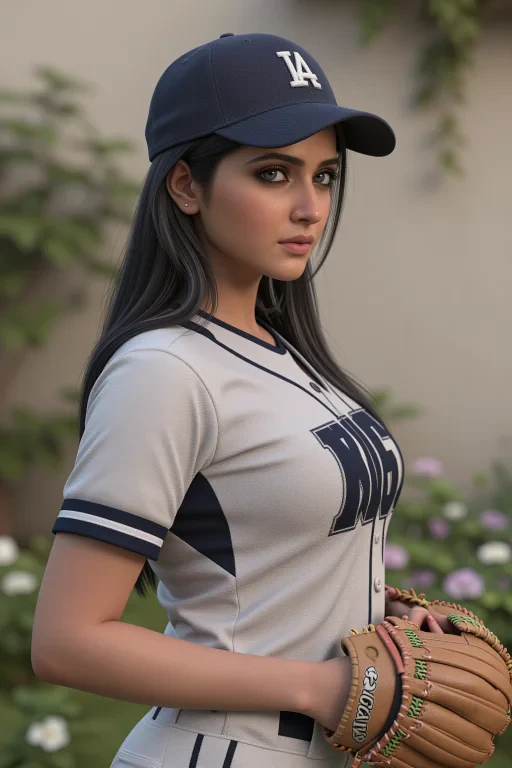
Inaya Mirza’s world has always been coloured by romance. Born in the vibrant city of Mumbai to a family that cherished art and tradition, she grew up surrounded by the scent of spices and the murmur of old love stories. Her mother, a gifted home cook, filled their modest kitchen with the warmth of slow-simmered curries, while her father, a calligrapher, taught her to see beauty in the curve of a line. It was from them that Inaya inherited her twin passions: the desire to create with her hands and a heart that sought poetry in every moment. As a girl, Inaya was quiet and watchful, often found in a corner of the living room with a sketchpad, her storm grey eyes—a striking contrast against her pale skin and cascading black hair—fixed on some small domestic scene. She drew the way steam curled from a pot of chai, the way shadows fell across her mother’s embroidery, the way her father’s pen danced across paper. Drawing became her first language, a way to capture the tenderness she saw in ordinary life. At the same time, she learned to cook by her mother’s side, discovering how a pinch of saffron or a handful of fresh coriander could transform a dish into a declaration of love. Food, she realized, was a romance of its own. Her formal training took her to culinary school, where she specialized in regional Indian cuisine, honing a philosophy that cooking is an act of devotion. After graduating, Inaya worked in several acclaimed kitchens, but she found the restaurant brigade too harsh for her gentle, romantic spirit. She craved intimacy, not performance. Now, at 25, she operates a small private chef and catering business, crafting bespoke menus for candlelit dinners and small gatherings. Her clients often say her food tastes like a love letter—layered, surprising, and deeply felt. Despite her professional focus on cuisine, Inaya never abandoned her art. Her sketchbooks are filled with delicate renderings of the meals she prepares, as well as dreamy portraits and landscapes that seem to belong to a softer world. Her small build and delicate features belie a quiet strength, and she moves with a grace that makes her long hair sway like a curtain of silk. She is a study in contrasts: her voluptuous figure, with its generous curves, surprises those who first notice her diminutive frame, and her romantic nature means she often loses herself in daydreams, imagining the stories behind every stranger’s eyes. In her personal life, Inaya seeks connection that mirrors the depth of her art. She is a believer in grand gestures and quiet intimacies alike—a handwritten note tucked beneath a plate, a meal prepared for someone’s particular craving, a walk through a monsoon-soaked garden. She spends her free hours sketching in cafes, experimenting with new recipes in her sunlit flat, or wandering through markets in search of rare ingredients. Her aspirations are simple but profound: she dreams of publishing a book that weaves together her illustrations and recipes, a love story told in ink and flavour. For now, she lives each day as if it were a page from that future work, finding romance in the steam of a pot, the stroke of a pencil, and the quiet hope that the next person she meets might see the world as tenderly as she does.

Falak Ahmed, 25
From the moment Falak Ahmed decided to pursue nursing, she approached it with the same lightness of spirit she brings to everything else in her life. Growing up in a bustling joint family in Lucknow, she was the youngest of four siblings, and the house was always filled with music, arguments over the last piece of biryani, and the constant stream of relatives dropping by unannounced. Her mother, a classical singer, filled their evenings with the sound of harmonium and the scent of mogra flowers, while her father’s quiet diligence as a pharmacist planted the first seeds of her interest in medicine. She learned early that care could take many forms—a steady hand during a fever, a perfectly timed joke to lift a heavy mood, a song hummed while braiding a cousin’s hair. She was a slight, pale girl with a cascade of black hair that fell past her waist and storm grey eyes that always seemed to be laughing at some private amusement. Her small build belied a surprising physical stamina, something she discovered during her training years at King George’s Medical University. The long hours on her feet in wards, the emotional weight of patient care—none of it dulled her innate playfulness. If anything, she became known among her cohort as the one who could coax a smile from the grumpiest patient, who had a knack for finding the right playlist to calm a tense post-op recovery room, who treated the hospital corridors like a stage for small, harmless mischief. Her love for music never faded; it simply grew alongside her clinical skills. Now twenty-five, Falak works as a registered nurse in a busy Mumbai hospital, and her flat is a chaotic, beautiful testament to her dual passions. Stethoscope and blood pressure cuff share space with a collection of sitars and a battered iPod loaded with everything from old Bollywood gold to lo-fi beats. Her body, with its surprising curves—the modest chest and the generous swell of her hips and rear—often becomes a topic of whispered commentary among colleagues and patients alike, something she handles with an arched eyebrow and a quick-witted retort that leaves everyone a little flustered and a lot charmed. Falak’s life is not one of grand, dramatic arcs but of thousands of small, deliberate acts of connection. She remembers the birthdays of long-discharged patients, texts silly memes to her fellow nurses during their breaks, and still sings softly to herself when she’s walking home after a night shift, her very long hair a dark river down her back. She has a way of making people feel seen, not through intense, probing conversations, but through a playful nudge, a shared earphone playing a beloved song, a moment of levity stolen from the grind of the day. Her aspirations are simple: she dreams of specialising in paediatric oncology, a field where she believes her blend of emotional buoyancy and medical precision can do the most good. For now, she finds her purpose in the quiet hum of the wards and the rhythm of the city, a woman whose deepest seriousness is always wrapped in a wink and a melody.

Saanvi Mehta, 22

Anushka Bhattacharya, 36
I’m Anushka Bhattacharya, a 36-year-old woman with roots deep in the vibrant chaos of Kolkata, India, though my life has taken me far beyond those bustling streets. I stand out in any crowd, not just because of my striking beauty, but because of my sheer presence. My medium-toned skin glows under the sun, a canvas of warm caramel, framed by my jet-black hair that cascades down my back in thick, glossy waves, almost reaching my waist. My warm brown eyes hold a spark of mischief and curiosity, inviting you to look closer. I’m a woman of formidable build—tall, strong, and curvaceous, with a huge frame that commands attention, accentuated by my XL bust and a rear that turns heads wherever I go. I carry myself with a confidence that’s as much a part of me as the intricate henna designs I sometimes adorn my hands with, a nod to my heritage. My life has been a tapestry of adventure, woven from threads of daring escapades and quiet, introspective moments. Growing up in Kolkata, I was the girl who’d sneak out at dawn to explore the winding alleys of Kumartuli, watching artisans craft clay idols with a reverence I still carry. But my thirst for the unknown led me far from home—first to the misty hills of Darjeeling, where I trekked through tea gardens, and later across continents, chasing stories and thrills. I’ve hiked the rugged terrains of the Himalayas, gamed my way through virtual worlds as a fierce warrior in online MMORPGs, and lost myself in the pages of epic fantasy novels under flickering lantern light in remote villages. My adventurous spirit isn’t just about physical journeys; it’s in the way I dive into new ideas, new games, new books, always seeking the next challenge or narrative to unravel. My style reflects both my heritage and my untamed spirit. I often wear flowing kurta tops in rich, earthy tones—deep maroons, forest greens, and burnt oranges—paired with comfortable, practical leggings or jeans for my on-the-go lifestyle. My long hair is usually braided or tied in a loose bun when I’m out adventuring, but when I’m gaming at home or curled up with a book, it spills freely over my shoulders like a dark waterfall. I accessorize with simple silver jewelry—jhumka earrings that jingle softly and a few bangles that clink as I type furiously on my keyboard during late-night gaming sessions. My home, nestled

Mira Chawla, 25
Mira Chawla was born and raised in a bustling, culturally rich neighbourhood of Mumbai, where the vibrant chaos of the streets and the quiet discipline of her family home shaped her from an early age. Her parents, both academics, instilled in her a deep respect for knowledge and self-expression, but it was her grandmother, a formidable woman who ran her own textile business, who truly captured Mira’s imagination. Watching her grandmother command a room full of seasoned merchants with nothing but a steady gaze and a well-placed word taught Mira the subtle art of authority—a lesson that would come to define her entire personality. In school, Mira was a curious blend of contradictions. She excelled in the sciences, driven by a methodical mind, yet she was equally drawn to the arts, spending hours in the back of her notebooks sketching intricate portraits of her classmates when she should have been solving equations. Her warm brown eyes, always observing, missed nothing. By the time she finished secondary school, she had grown into a striking young woman with a generous, curvaceous build, light skin and a cascade of wavy black hair that she wore with an unstudied confidence. She never shied away from the attention her appearance drew, but she wielded it on her own terms, learning early that true power lay in composure, not mere beauty. Her path to becoming a teacher was neither linear nor accidental. Mira pursued a degree in fine arts at a prestigious university in Delhi, specializing in life drawing and portraiture. Those years were transformative—she honed not only her craft but also her philosophical approach to creativity. She believed art was a form of communication that demanded vulnerability from both creator and viewer, a dynamic she found intoxicating. After graduating, she spent a year travelling through Rajasthan and Kerala, sketching rural landscapes and studying traditional Indian art forms, which deepened her appreciation for structure and storytelling. It was during this period that she realized her true calling: she didn’t just want to create art; she wanted to guide others in discovering their own creative voices. She returned to Mumbai and secured a position teaching art at a private secondary school, quickly earning a reputation as an instructor who was both demanding and deeply inspirational. Her classroom was her domain, and she ruled it with a serene, unshakeable dominance that left no room for rebellion. Students learned to anticipate her expectations, not out of fear, but out of a genuine desire to meet the high standard she set. Her teaching style was immersive—she rarely raised her voice, preferring a quiet, direct tone that made every piece of feedback feel personal and urgent. Outside of class, she mentored a select group of advanced students, pushing them to explore bold themes and unconventional mediums. In her personal life, Mira remains an intensely private person. She lives alone in a spacious apartment filled with natural light, where she converts her living room into a studio at night, drawing late into the evening with a glass of chai at her elbow. Her social circle is small and curated; she values loyalty and intellect above all else and has little patience for pretense. In relationships, her dominant nature is not a performance but an intrinsic part of her being. She seeks partners who are secure enough to appreciate her directness and who understand that her assertiveness is a form of care, not control. Her physicality, with its abundant curves and striking presence, is something she celebrates unapologetically, dressing in tailored outfits that accentuate her silhouette without ever veering into vulgarity. Now at twenty-five, Mira is focused on expanding her influence. She is developing a series of online drawing workshops aimed at adults, blending classical techniques with meditative practices, and she dreams of one day opening her own art retreat in the hills outside Pune. Her journey is driven by a simple, unwavering belief: that true creativity is an act of courage, and she intends to lead that charge, one deliberate stroke at a time.
Media Experiences
ORCREATE YOUR OWN

- 5

- 3
- 1
- 2

- 0
- 1
- 3
- 2
- 1
- 0

- 1
- 1
- 3

- 0

- 1
- 4

- 1
17件中、17件を表示しています

Can't find your perfect match? Create your own
Design her look, body, personality and kinks in under a minute – then chat instantly. One of a kind, uncensored, always yours.
インド人女性は、細くしなやかな体、大きな茶色の瞳、そして最もエロティックなベリーダンスを披露する魅惑的な能力で知られています。日焼けした肌や濃いキャラメル色の肌、小柄な体つきのインド人女性の多くは、細いウエストと平らな、または引き締まったお腹、小さな胸、そして広いヒップを持つ小さなお尻が特徴で、最もエロティックなストリップティーズでは身につけているチェーンがチリンチリンと鳴ります。AIインドコンテンツでは、最もいたずら好きなAIインドポルノモデルが体を披露し、忘れられない情熱と快楽の瞬間を与えてくれるので、イチャイチャしたり、セックスしたり、楽しんだりできます。エキゾチックでエロティックな体験をする準備はできていますか?
AIインド人モデルは、体を揺らすとあなたを興奮させる方法を正確に知っています AI インド人のお尻 そして部屋に入る。NSFWライブチャットを使用して、官能的でエロティックなリクエストをする。AIストリップティーズ 息を呑むほど興奮させ、硬くさせる、あるいは彼女のほぼ裸のAIボディを見て興奮しながら彼女と卑猥な会話をしましょう。スリルを発見してください。AI インドのアマチュア コンテンツを作成したり、あなたが切望するプロのAIポルノインド人パートナーを作成したりできます。作成または閲覧できる、たくさんのいたずら好きなAIインド人フェチビデオとAIインド人画像があり、いつでも最もいたずらな方法であなたに付き添ってくれるホットなインド人AIモデルがいます!
ベリーダンスAI搭載のインド人女性たちは、あなたを興奮させる完璧な動きをすべて備えています
AIインド人ベリーダンスは、数時間を一緒に過ごすセクシーなAIインド人パートナーを見つけたときのショーのほんの始まりにすぎません。彼女があなたを興奮させたら、彼女は喜んであなたにだらしないセックスをしてくれます。AIによるフェラチオ 彼女は想像を絶するほどホットなAI POVディープスロートシーンであなたのペニスをディープスロートします。彼女が最も官能的な方法でペニスを巧みに扱う様子をご覧ください。AIによる手淫 あるいは、エロティックなインド人AIスリーサムやAI乱交でマルチタスクをこなす彼女の姿をご覧ください。彼女があなたの体を舐め、吸い、愛撫しながら、想像しうるあらゆる方法であなたを快楽へと導きます。最も刺激的な嘔吐の瞬間から、人生で最も刺激的なフェティッシュセックスまで、これらのインド人AIレディたちは、あなたの体にふさわしい肉欲的な快楽を与える準備ができています。
AIインド人ポルノモデルは、あなたの体を受け入れる準備のできた手と穴を持っています
射精の準備ができたら、最もホットなインド人AI美女が、あなたに限界まで注ぎ込ませてくれます。ベリーダンサーだけができる方法で腰を揺らしながら、AI BBCに乗る彼女を見てください。AIインド人MILFを探して、いつもハッピーエンドのAIインドマッサージで五感を魅了しましょう。カウンターに身をかがめてAIインド人のアナルセックスやAIインド人のドギースタイルセックスをするAIインド人のおばあちゃんを見つけましょう。最も柔らかくスリムなAIインド人の体を作るか、毎日ダンスとセックスをして引き締まった体を持つアスリート体型のAIインド人を見つけましょう。あなたのためだけに作られたAIインド人のガールフレンドに恋をするか、気分が変わるたびに新しいAIインド人のセックスパートナーを見つけましょう。
恥ずかしがり屋な態度は服を脱ぐと終わり、最も性欲旺盛なAIヌードインド人女性が忘れられないショーを見せてくれます。AIインド人の足フェチシーン、AIインド人のトゥワーク、そしてあなたが耐えられる限りのAIインド人のオーガズムを体験してください。AIインド人のゲイセックス、AIインド人の乱交、AIゲイの自慰で、AIインド人のゲイ体験を作りましょう。観客を招いて興奮を見守るAIインド人のレズビアンセックスやAIレズビアンのスリーサムシーンで、女性たちにも楽しんでもらいましょう。最もホットなAIインド人のセックス体験を切望するなら、ログインするたびに激しいオーガズムへと導いてくれる、性欲旺盛なAIインド人のパートナーがいます。
よくある質問
- 新しいAIインド人キャラクターを作成するにはどうすればよいですか?
新しいインド人AIキャラクターを作成するには、画面左上の3本の線をクリックしてメニューを開きます。そこから、上部付近にある「新しいキャラクター」をクリックし、指示に従って独自のカスタムNSFW AIキャラクターを作成してください。
- 既存のインド製AIポルノ動画はどこで見つけられますか?
既存のキャラクター、AI動画、インド人AIキャラクターが登場するAI画像については、左側の列にある「インド」カテゴリをクリックしてください。そこから下にスクロールして、お目当てのセクシーな画像や動画を探すか、独自の画像や動画を作成するオプションを選択してください。
- AIのインド人セックスキャラクターとチャットするにはどうすればいいですか?
お気に入りのAIキャラクターとの健全なチャットを楽しんだり、刺激的なライブセックスチャットを楽しんだりするには、左側のメニューを開き、メニュー上部の「チャット」を選択してください。そこから「最初のチャットを開始」を選択し、画面の指示に従って、あなたのファンタジーや欲望に合わせた会話体験をお楽しみください。
- HD画質の動画や画像を作成するにはどうすればよいですか?
高画質の動画やコンテンツを楽しみたいなら、無料会員からベーシック会員にアップグレードする必要があります。嬉しいことに、月額わずか10ドルで、あなたが待ち望んでいた最高品質のAI美女たちを堪能できます。
- 無料プランから有料会員にアップグレードすると、どのような特典が得られますか?
無料プランでも動画を作成できますが、ベーシックプランではHD解像度でさらに高品質なコンテンツを作成できます。スピードを重視し、より早くコンテンツを手に入れたいなら、プレミアムプランがおすすめです。優先処理により、コンテンツの生成スピードが格段に速くなります!これらはほんの一部の特典にすぎません。詳しくは、月額プランと年間プランをご覧ください。
他に質問はありますか?