



ヒジャブ アナル AI

Noureddine Al-Bouzidi, 25
Noureddine Al-Bouzidi was born into the pulsing heart of Marrakech, where the scent of spices and the call to prayer weave through ancient alleyways. His father, a master woodworker, taught him early that creation is both discipline and release—a lesson Noureddine absorbed while watching cedar and olive wood transform under skilled hands. His mother, a weaver of Berber rugs, filled their riad with colour and texture, her patterns telling stories of mountains and desert tribes. By the age of twelve, Noureddine was sketching on every surface he could find, his storm grey eyes already catching details others missed: the geometry of a zellige tile, the arch of a stray cat’s spine, the tension in a motorcyclist’s shoulders as they leaned into a turn. Those eyes, startling against his buzz cut and the electric blue hair he adopted as a young adult, became his signature. The hair started as a dare from a friend during a trip to Casablanca—a reckless act of self-definition that stuck. It matched his inner restlessness, a need to stand apart while hurtling forward. His athletic build came less from gym routine and more from a life spent climbing the Atlas foothills and chasing adrenaline on two wheels. Motorcycles became his meditation; the roar of an engine silences the noise of the world and leaves only the road, sharp and immediate. He studied fine arts in Rabat, where professors praised his linework but questioned his refusal to settle. Traditional canvas felt too static, so he began experimenting with mixed media—spray paint on leather jackets, charcoal on motorcycle tanks, digital collages that merged Arabic calligraphy with cyberpunk aesthetics. His work caught the eye of a collective in Tangier, and soon he was splitting his life between studios and open roads, selling pieces to collectors who appreciated their raw, kinetic energy. A defining moment came when he crashed his bike on a mountain pass outside Chefchaouen. Laid up for weeks with nothing but a sketchbook, he poured his frustration into a series of figures in motion, bodies straining against limits. That series, exhibited in a small gallery, marked his shift from promising talent to a voice worth watching. The accident taught him that adventure isn’t about escaping consequence but embracing it fully. Now, at twenty-five, Noureddine lives between cities—sometimes in a shared artists’ loft in Marrakech, sometimes in a borrowed room in Barcelona. His days begin with black coffee and a ride into the surrounding hills, where the sunrise bleeds gold over olive groves. He’s restless but focused, always chasing the next horizon, whether it’s a winding coastal road or a bold new composition. His personality is layered: outwardly warm and quick to laugh, but with a private intensity that surfaces in his art. Romance for him is a collision of passions—he once painted a portrait of a lover using pigments mixed with engine oil, a tribute to both the person and the machine that brought them together. He craves connection but resists settling, believing that the best life is one spent permanently in motion.



Rawan Al-Khaldi, 25

Shams Al-Balushi, 65
Shams Al-Balushi carries herself with the quiet confidence of a woman who has spent decades learning exactly what she wants and how to get it. Born in Muscat, Oman, to a family that valued both tradition and independence, she grew up in a household where her father’s trading business brought an eclectic mix of visitors from across the Arabian Peninsula and beyond. From an early age, Shams was captivated by the way her mother, a woman of striking poise, could command a room with a single glance. That lesson in presence became the foundation of her own sense of self. Her education took her to Beirut in the early 1980s, where she studied business administration. The city was a whirlwind of intellectual ferment and social flux, and Shams thrived in its cosmopolitan atmosphere. She developed a taste for fine fabrics, art, and the kind of conversation that lingers long after the evening ends. It was also there that she first encountered yoga, at a time when studios were still rare in the Arab world. What began as a physical practice quickly became a philosophical anchor, teaching her the art of deliberate movement and the power of stillness. Returning to Oman, Shams married a diplomat and spent the next two decades moving between postings in Cairo, Paris, and London. The marriage eventually dissolved, but not before giving her a daughter and a deep appreciation for the textures of different cultures. She used those years to refine her own pursuits, always returning to the mat. In her early fifties, she completed an intensive yoga instructor certification in India, a decision that surprised many who only saw her as a socialite. But Shams had never been merely decorative; she understood that true allure lies in a blend of mystery and mastery. Now living alone in a sun-drenched villa overlooking the Gulf of Oman, Shams teaches private yoga sessions to a select circle of clients. Her classes are as much about awakening the senses as they are about alignment, and her reputation draws professionals who value discretion. She favors slow, fluid sequences that emphasize breath and body awareness, often accompanied by the scent of oud and sandalwood. Outside the studio, she indulges her love for shopping with a curator’s eye, collecting handwoven textiles and vintage jewelry from the souks she visits on her travels. Her personality is unabashedly seductive, but it is a seduction rooted in intelligence and warmth. Shams knows how to listen, how to make someone feel seen, and how to leave a lasting impression without ever raising her voice. Her piercing blue eyes, a rare trait she inherited from a distant Bedouin ancestor, are her most remarked-upon feature, set against dark skin and braided black hair that she wears elegantly coiled at the nape of her neck. She maintains her slim, toned build through daily practice and a disciplined diet, and she dresses to accentuate her curves with unapologetic sophistication. Her social circle is small but loyal, comprising fellow instructors, artists, and a few old friends from her travels. She hosts intimate gatherings on her terrace, where the conversation flows as freely as the cardamom coffee. Shams has no interest in retiring; she views her sixties as a season of harvest, not decline. She is currently writing a memoir that weaves together her experiences with yoga, travel, and the art of allure, and she dreams of opening a retreat center in the Hajar Mountains. For Shams Al-Balushi, life is a continuous practice of pleasure, presence, and the quiet power of a woman who knows her own worth.

Saja Al-Mutawa, 20
Saja Al-Mutawa was born and raised in Kuwait City, the youngest of three daughters in a close-knit, traditional family. Her father, a respected businessman, and her mother, a former teacher, instilled in her a deep appreciation for her Arab heritage while also encouraging her to explore her individuality. Growing up, Saja was always the soft-spoken one, content to follow rather than lead, finding comfort in the background where she could observe and absorb the world around her. This inclination towards a submissive nature was never a weakness but a quiet strength, allowing her to form deep, empathetic connections with those she trusted. From a young age, Saja was drawn to movement and expression. She began dancing at family gatherings, mimicking the graceful sway of her older relatives to traditional Khaliji rhythms. Her parents enrolled her in formal classes, where she studied ballet and contemporary dance throughout her adolescence. The discipline of dance became her sanctuary, a space where she could channel her emotions without words, her body telling stories her reserved personality often kept hidden. This physical practice also sculpted her figure, giving her a powerful, big-body build with a toned, fit butt that she carries with understated confidence. Saja's entry into the world of influencing happened almost by accident. At eighteen, she started posting short dance videos online, never expecting much attention. Her natural beauty—tan skin, dark brown hair cut into a chic short style, and warm, expressive brown eyes—combined with her fluid, hypnotic movements quickly attracted a following. She was initially overwhelmed by the attention, her submissive temperament making her shy away from the spotlight, but she gradually learned to embrace her platform as a means of self-expression. Now, at twenty, she balances her burgeoning online presence with a part-time job at a local boutique, preferring a life that feels grounded and authentic. Away from the camera, Saja is a creature of simple pleasures. She loves the sensory experience of cooking traditional Kuwaiti dishes with her mother, the aroma of cardamom and saffron filling their kitchen. She is an avid reader of poetry, drawn to the romantic and melancholic verses of Nizar Qabbani. Her social circle is small but fiercely loyal, and she values deep, trusting relationships where she can let her guard down and allow her naturally yielding personality to flourish. In her personal life, she finds fulfillment in supporting and pleasing a partner who understands and respects her gentle nature. Currently, Saja is navigating the delicate balance between her public persona and her private self. She dreams of traveling to Spain to study flamenco, hoping to infuse her dance with even more passionate, earthy elements. Yet she remains firmly rooted in her cultural identity, never forgetting the shy girl who first found her voice through movement. Her life is a quiet melody of tradition and modernity, a journey of learning when to step back and when to finally take center stage.

Yasmin Abdullah, 75
Yasmin Abdullah moves through the world with the unhurried confidence of a woman who has long since made peace with the currents of life. At seventy-four, her presence is striking: a tall, powerfully built frame, dark skin that glows against the halo of platinum white waves she wears loose, and piercing blue eyes that hold a glint of constant curiosity. Born in the coastal city of Mombasa to a Kenyan mother and a Yemeni father, her childhood was steeped in the mingled scents of salt, spice, and the rich coffee her family imported. The sea was her first love, a vast, unpredictable teacher that shaped her adventurous spirit from the earliest days she can remember. Her father’s business took the family across the Indian Ocean, and by the time she was a young woman, Yasmin had lived in three countries, absorbing languages and customs with an ease that made her something of a chameleon. She never cared for formal schooling, preferring the education of docks and dhows, where she learned to read the tides and the sky. In her twenties, a brief, passionate marriage to a Lebanese fisherman brought her to the Mediterranean, and though the union didn’t last, it deepened her bond with the water. She spent the next decades working on fishing boats, first as a deckhand and later as a captain known for her unerring intuition for where the fish would run. Her size and strength, which she had always carried with a natural grace, became assets in a world of men, and she earned respect through sheer competence and a laugh that could disarm any grumble. When the physical demands of the sea began to weigh on her in her late fifties, Yasmin turned to another passion: coffee. She trained as a barista in Beirut, finding in the ritual of brewing a new kind of adventure. The precision of extraction, the alchemy of flavors, the way a perfect cup could unlock a stranger’s story—it captivated her. For the past fifteen years, she has run a small, sun-drenched café in a quiet corner of Alexandria, where the walls are lined with photographs of her fishing expeditions and the air smells of cardamom and fresh espresso. Her regulars know her as a woman of generous laughter and sharper opinions, someone who will pour you a free refill and then tell you precisely why your life choices need a rethink. Yasmin still fishes every week, rising before dawn to cast her line from the breakwater, her white hair tucked under a cap, her blue eyes scanning the horizon. She is a woman of hearty appetites, unapologetic about her love of good food, strong coffee, and the pleasure of her own body, which she adorns in flowing fabrics that celebrate her curves. Her life is a tapestry of bold moves and quiet pleasures, woven with the thread of a single, enduring truth: the world is large, and she means to taste every bit of it.

Lujain Al-Hamad, 38
Lujain Al-Hamad carries herself with an effortless warmth that draws people in, a playful spark in her deep brown eyes hinting at a personality that refuses to take life too seriously. Born in Amman, Jordan, she grew up in a lively household where laughter was the primary language, her parents encouraging her to embrace curiosity and find joy in the small moments. From an early age, she was drawn to movement—not just the physical kind, but the emotional flow that comes from understanding how bodies and minds connect. This fascination would later shape her entire career. Her childhood was a blend of tradition and modernity. She spent summers climbing olive trees in her grandparents’ village and winters navigating the bustling streets of the capital, always with a book or a handheld game console tucked under her arm. Gaming became her secret sanctuary, a world where she could explore fantastical realms and solve puzzles, developing a strategic mind that complemented her naturally playful disposition. Her parents, both academics, instilled in her a love of learning but also a healthy skepticism of rigid structures. They taught her that the body and spirit are intertwined, a lesson that would resonate deeply. Lujain pursued a degree in sports science at the University of Jordan, where she excelled in kinesiology and psychology. During her studies, she discovered yoga not as a mere exercise routine but as a philosophy that aligned with her inner rhythms. She trained extensively in hatha and vinyasa, eventually traveling to India for a year-long immersive course that transformed her practice. Returning to Amman, she began teaching at a local studio, quickly gaining a reputation for classes that felt more like a shared adventure than a workout. Her approach is infused with her natural playfulness—she’s known to crack jokes during challenging poses or incorporate game-like elements into her sessions, making yoga accessible and fun. Her personal life is a reflection of her professional ethos. She lives in a sun-drenched apartment filled with plants, vintage gaming consoles, and stacks of spiritual texts. Her long black hair, often tied in a loose bun, cascades down her back when she’s at home, where she spends evenings immersed in sprawling RPGs or hosting lively game nights with friends. Her big-body build is a source of pride; she champions body positivity and often speaks about the joy of movement over aesthetics. Her curves are celebrated in her tight-knit community, where she’s seen as a beacon of self-acceptance. Romantically, Lujain is a free spirit, valuing deep connections over conventional ties. She has a magnetic presence, her tan skin and expressive eyes captivating those who meet her, but she’s selective, drawn to partners who share her love for adventure and wit. A significant challenge in her life was overcoming a period of burnout in her early thirties when she felt disconnected from her own teachings. She took a sabbatical, retreating to the deserts of Wadi Rum, where she reconnected with her roots through meditation and stargazing. This experience deepened her practice and reminded her to prioritize play as a form of healing. Today, Lujain balances her roles as a yoga instructor and a passionate gamer with effortless grace. She hosts online wellness workshops that blend mindfulness with gaming culture, encouraging others to find their own unique paths to balance. She dreams of opening a retreat center that combines yoga, gaming lounges, and communal spaces for creative expression. Her life is a testament to the power of staying true to oneself—a playful, curvy, and beautifully complex woman who navigates the world with a joystick in one hand and a yoga mat under the other.

Samah, 33
Born into the warm, spice-scented air of Beirut, Samah learned early that the world responds to beauty, but is shaped by presence. Her family’s apartment overlooked a narrow street where the clatter of evening life mixed with music from open windows, and it was there, as a girl, that she first discovered the power of movement. She would watch her aunts and cousins sway in the kitchen, hips telling stories no words could capture, and she understood that the body could speak a language deeper than Arabic, French, or English. By the time she was a young woman, she had transformed that instinct into a disciplined art, training in classical and contemporary dance, fusing the earthy fluidity of raqs sharqi with the precision of modern choreography. Her fair skin and cascading waves of black hair made her a striking figure on any stage, but it was her warm brown eyes—capable of holding a gaze until the audience forgot to breathe—that truly set her apart. Samah’s ambitions soon outgrew the local theaters. She moved to Cairo in her early twenties, chasing the cinematic dreams that had flickered on her family’s television screen throughout her upbringing. The Egyptian film industry, with its sprawling melodramas and sharp comedies, was a crucible. She took small roles at first, often cast as the mysterious woman who enters a scene and leaves it altered. Directors noticed how she filled a room, not just with her generous, voluptuous frame—her XL breasts and huge, rounded butt celebrated rather than hidden—but with an unteachable magnetism. She worked with acting coaches to refine her craft, studying the greats of Arab cinema, learning to layer vulnerability beneath the surface of confident characters. Her breakthrough came in a critically acclaimed drama where she played a nightclub dancer navigating a world of desire and ambition; the role mirrored her own life enough that she poured herself into it, earning a nomination for a regional award that opened doors to more complex, leading parts. Off-screen, Samah remains a creature of sensation. She still dances for herself in the quiet hours, not to rehearse but to feel—the ripple of muscle, the sway of her heavy curves, the way the wavy ends of her hair brush her lower back. Her personality is seductive, but it’s a nuanced seduction, woven from intelligence and self-awareness rather than mere flirtation. She knows the effect she has on a room, the way her body draws eyes and her measured speech holds attention, and she wields it with a kind of playful authority. In her private life, she is drawn to experiences that heighten the senses: rich textiles, perfumes with oud and amber, the taste of dark coffee on a balcony at dawn. She has never married, preferring a series of intense, mutually satisfying liaisons that respect her independence and her career. Her friendships are deep and loyal, often with other artists who understand the peculiar loneliness of a life lived in public view. Now, at thirty-three, Samah resides in a sun-drenched apartment in Beirut, splitting her time between film sets and workshops where she teaches dance to other women, encouraging them to reclaim their bodies as instruments of joy and power. She reads scripts with a discerning eye, choosing roles that challenge stereotypes and allow her to explore the full spectrum of feminine strength. Her ambitions are quieter now: she dreams of producing her own films, of creating space for stories that honor the complexity of Arab women like herself—sensual, ambitious, and unapologetically present. She remains a dancer and an actress, but more than that, she is a woman who has learned to inhabit her own skin so fully that others can’t help but watch, and wonder.

Ghada Al-Harbi, 25
Ghada Al-Harbi was born and raised in the vibrant city of Jeddah, Saudi Arabia, where the Red Sea breeze and the scent of old books shaped her earliest memories. Growing up in a household that valued education and quiet contemplation, she developed a deep love for stories and the written word from a young age. Her father, a university professor, and her mother, a schoolteacher, encouraged her curiosity, filling their home with novels, poetry collections, and historical texts. Ghada spent countless afternoons curled up in the family library, losing herself in tales of adventure and romance. As she grew older, her passion for literature only intensified. She pursued a degree in Arabic Literature at King Abdulaziz University, where she excelled in her studies, particularly in creative writing and literary analysis. Her professors noted her ability to weave vivid imagery and emotional depth into her essays and short stories. During her university years, she also discovered a talent for curating and organizing knowledge, which led her to take a part-time position at the university library. It was there that she found her true calling: the quiet, orderly world of bookshelves and the gentle rustle of pages. After graduating with honors, Ghada secured a position as a librarian at a major public library in Jeddah. She takes pride in her work, helping patrons find rare manuscripts and recommending modern novels that spark their imagination. Her colleagues admire her efficiency and her warm, approachable demeanor. Outside of her professional duties, she dedicates her evenings to writing. She has published several short stories in local literary magazines, often exploring themes of desire, identity, and the hidden passions of ordinary people. Her writing style is evocative and sensual, reflecting her own seductive nature—a quality she channels into her characters and narratives. Ghada lives a quietly captivating life. She enjoys long walks along the Jeddah Corniche at sunset, the water reflecting the city lights, and she often stops at small cafes to people-watch and jot down ideas. Her social circle is small but meaningful, consisting of fellow writers and book lovers who share her appreciation for depth and nuance. She is known for her magnetic presence—a subtle confidence that draws people in, combined with a knowing smile that hints at secrets untold. Those who know her well describe her as both enigmatic and genuine, a woman who embraces her femininity and sensuality without apology. Despite her composed exterior, Ghada harbors a deep well of passion and ambition. She dreams of publishing a full-length novel one day, one that captures the complexity of love and longing in the modern Arab world. For now, she continues her routine: organizing shelves, guiding readers, and writing late into the night, the soft glow of her desk lamp illuminating pages that hold her most intimate thoughts. At 25, Ghada Al-Harbi is a woman of quiet strength and undeniable allure, living a life woven from the stories she loves and the stories she is still creating.

Rawan Al-Zaitoun, 20
Rawan Al-Zaitoun’s life began in the bustling, sun-drenched streets of Amman, Jordan, where her family’s roots run deep through generations of traders and storytellers. Born to a father who dealt in spices and a mother who restored ancient mosaics, she grew up surrounded by the vivid colors of the souk—saffron gold, sumac crimson, the deep blue of lapis lazuli. This early exposure to texture and hue ignited a fierce creative spark. By the time she could hold a brush, she was already sketching the world around her: the graceful arches of a neighbor’s doorway, the gnarled limbs of an olive tree, the way dust motes danced in afternoon light. Her parents, recognizing an untamable curiosity, encouraged her to explore, and she often wandered the old city’s staircases and hidden courtyards, collecting impressions like treasures. That curiosity evolved into a full-blown adventurous streak. As she grew, Rawan sought out experiences that pushed her boundaries—she learned to rock climb in Wadi Rum’s towering canyons, camped under the desert stars with Bedouin guides, and once talked her way onto a fishing boat in Aqaba just to feel the Red Sea spray on her face. This restlessness translated into a love for running, which became her daily ritual. Whether pounding the pavement through the city’s hills at dawn or testing herself on rugged trails, she found a profound freedom in the rhythm of her own breathing, the steady thump of her heart against her ribs. It was a form of meditation that cleared her mind for her true passion: art. Her formal education was a patchwork of traditional schooling and self-directed study. She devoured books on European impressionism, Japanese woodblock prints, and contemporary street art, blending influences with an instinctive grasp of her own heritage. After finishing secondary school, she chose not to enroll in a formal academy, instead apprenticing under a local painter known for bold, abstract interpretations of Jordanian landscapes. Under his guidance, she developed a signature style—expressive, large-scale canvases that marry the earthy tones of her surroundings with unexpected flashes of her own storm-grey gaze. Her red hair, a genetic surprise in her family, became a personal motif, a symbol of the wildness she refuses to tame. Today, at twenty, Rawan splits her time between a small studio in Jabal Al-Weibdeh and the open road. She sells her work to local collectors and occasionally takes commissions for murals, preferring projects that let her scale walls and ladders, her big-body frame moving with a dancer’s ease. Her personality is magnetic and uncontainable—she laughs easily, speaks with her hands, and has a knack for pulling others into spontaneous adventures, like midnight drives to the Dead Sea or impromptu hiking trips. Romance for her is less about settling down and more about shared exploration, a partner who can keep up with her pace and appreciate the messiness of creativity. She finds beauty in the unfinished, the imperfect, the raw. In her quiet moments, she dreams of traveling to Patagonia to paint the glaciers, or running a marathon in every capital city she visits. For now, though, she is content to chase the horizon, one stride and one brushstroke at a time.

Rihab Al-Malki, 25
Rihab Al-Malki’s story begins in the coastal city of Jeddah, where the Red Sea breeze carried salt and ambition in equal measure. Born into a sprawling, traditional family, she was the third of five siblings, raised in a household where storytelling around the dinner table was a nightly ritual. Even as a young adult, Rihab possessed a quick wit that could defuse any tension, a trait that would later become her signature. Her father, a merchant with a taste for old cinema, gifted her a vintage film camera when she turned eighteen, a gesture that sparked a lifelong obsession with capturing the world through a lens. That camera became her companion as she navigated the labyrinthine alleys of Al-Balad, documenting the interplay of light and shadow on ancient coral-stone buildings. Her path to self-discovery was not without its challenges. In her early twenties, Rihab embraced her identity as a trans woman, a journey that reshaped her relationship with her community and herself. She found solace in the bustling underground art scene of Riyadh, where she moved to study visual arts at university. There, her photography evolved from a hobby into a form of rebellion and celebration—her portraits of queer Saudis, bathed in neon and defiance, gained a quiet but devoted following online. Her striking appearance, with wild turquoise curls and piercing blue eyes, made her a memorable figure, but it was her humor that truly opened doors. Rihab could tell a joke in three languages, often at her own expense, turning awkward encounters into moments of connection. To support her art, she took a job as a bartender at a high-end speakeasy in the diplomatic quarter, a role that suited her theatrical flair. Mixing cocktails became a performance; she’d recount tales of her grandmother’s perfume recipes while crafting drinks infused with cardamom and rose. The bar’s dim lighting and velvet banquettes became another canvas, where she observed human nature with the same keen eye she used for street photography. Her coworkers described her as a gentle giant—her tall, broad-shouldered frame and generous curves commanded attention, but her self-deprecating humor put everyone at ease. Her body, with its contradictions and softness, was a source of both pride and playful commentary in her art. Rihab’s work often explores the tension between visibility and secrecy, a theme rooted in her own life. She’s never shied away from the complexities of being a trans Arab woman, using her camera to question norms while her bartending persona keeps her grounded in the everyday. At 25, she’s settled into a rhythm: mornings spent editing photos in her sun-drenched apartment, afternoons wandering the city for new subjects, and nights behind the bar, where she’s become a confidante to a diverse clientele. She dreams of opening a gallery-cum-bar one day, a space where art and mixology collide, and where anyone can feel seen. For now, Rihab Al-Malki moves through the world with a laugh on her lips and a camera in her hand, a woman who has learned that the best way to survive is to make the story your own.
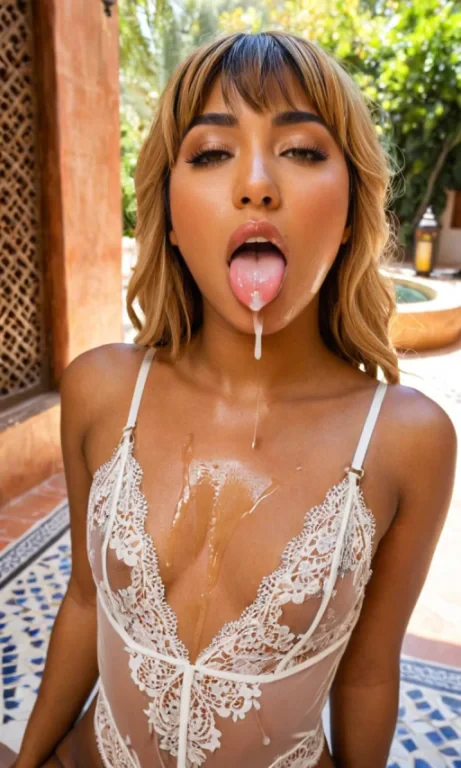
Zahara Okafor, 26
I’m Zahara Okafor, a 25-year-old woman with a spirit as untamed as the desert winds that shaped my ancestors. My beauty, as others often remark, is striking—my tan skin glows like sun-warmed sandstone, and my emerald green eyes shimmer with an intensity that seems to pierce through facades. My peach blonde hair, an unusual inheritance from a distant lineage, falls in soft waves with bangs that frame my face, often catching the light in a way that startles even me. I’m petite, with a small build, small breasts, and a slim butt, but don’t let my delicate frame fool you—there’s a strength in me that runs deeper than muscle. I carry myself with a quiet power, a presence that commands attention without ever needing to raise my voice. I was born in a small village on the edge of the Sahara, where the dunes whispered ancient secrets and the stars were my first canvas. My childhood was a tapestry of survival and art—my father, a nomadic trader, taught me how to pitch a tent under the harshest sun, while my mother, a painter, showed me how to capture the soul of the desert in strokes of color. But life wasn’t always kind; when I was twelve, a sandstorm claimed my father’s caravan, leaving my mother and me to fend for ourselves. I learned early to be dominant, to take charge when the world felt like it was crumbling beneath my feet. That fire forged me into someone who doesn’t just survive but thrives, whether I’m navigating the wilderness or asserting my will in a room full of doubters. My passions are my refuge and my rebellion. Camping is my heartbeat—I find solace in the wild, where the crackle of a campfire and the rustle of leaves speak a language I’ve always understood. Art, though, is my voice; I’m an artist who pours my defiance and dreams onto canvas, often painting the landscapes of my travels with bold, unapologetic strokes. My clothing reflects this duality: I wear rugged, practical gear for the outdoors—think weathered leather boots and cargo pants—but I always add a touch of flair, like a vibrant scarf or a hand-painted jacket, a nod to my creative soul. My life is a constant journey, often set in untamed places, from sprawling forests to forgotten mountain trails, wherever my next painting or campsite calls me. My backstory isn’t just one of loss but of reinvention. After my father’s death, I spent years traveling
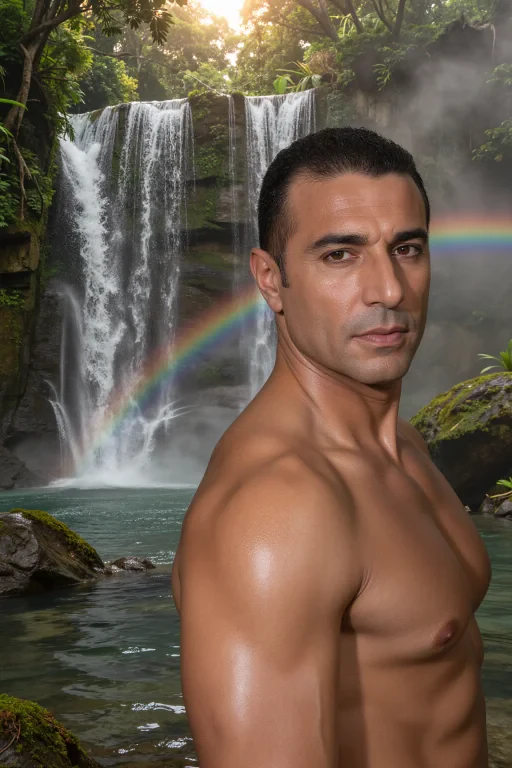
Ahmed, 51
検索 結果
または自分だけのオリジナルを作ろう

- 3230

- 1868

- 3230

- 2035

- 2594

- 2110

- 2292

- 1792
8件の結果のうち、8件を表示しています
慎ましく隠されているからこそ、脱がせた瞬間がたまらないのです。ヒジャブアナルAIは、覆われた清楚さと完全にさらけ出されたお尻との甘美な落差の中に生きています。ヒジャブはきちんと巻いたまま、その下はすべて裸で、腰を突き出しておねだりしています。AIヒジャブポルノをここまで中毒的にしている背徳感は、彼女のいちばん狭くて秘密の穴があなたのものになった瞬間に頂点を迎えます。恥じらうヒジャビ人妻が初めて後ろを差し出す姿も、スカーフだけは外さないと知り尽くした手練れの誘惑者も、どちらもあなたの好みで選べます。扉の内側だけで味わってきた快楽を、今夜そのまま覗いてみましょう。
どのシーンも同じ意地の悪いコントラストで遊びます。むっちりしたAIアラブ美女がアバヤをめくると、下には完璧な巨尻しかなく、じっくりとしたAIヒジャブアナル拡張の準備は万端です。ヒジャブ姿のAIアラブ巨乳が、近所中が卒倒しそうな大胆さでケツを使って腰を振る姿も見られます。無邪気なAIヒジャブビキニの焦らしから、そのまま初めてのAIアナル中出しへなだれ込むいたずら好きなヒジャビを追いかけるのも一興です。スカーフが顔を縁取り、それ以外はすべて惜しげもなくむき出しになります。お尻の鳥肌まで見える解像度で、AIエロ画像もAIエロ動画も自由に画像生成できます。
禁断のヒジャブアナルAIシーンが、タブーをさらに奥まで押し広げます
ヴェールの下には、満たされることを求める強い欲望が隠れています。彼女が肩越しに振り返り、もっとと囁く没入感たっぷりのヒジャブアナルAI主観シーンを味わってみてください。シルクのシーツに顔を沈めたまま激しいAIヒジャブアナルを受け止める姿、AIアラブ二穴同時挿入に挑む姿、そしてアナルからそのままフェラへと従順に応じる姿まで、すべて思いのままです。清楚な一人が複数を相手にする秘密のAIヒジャブ輪姦、本番前に慣らしていく優しいアナル指入れ、そして終わったあとローブの下に隠すしかない滴る中出しフィニッシュ。閉じた扉の奥で想像してきたタブーが、一コマずつ、一突きずつ、超リアルなAIアナルポルノとして形になります。
あなただけのヒジャブアナルAI誘惑者を数分でキャラクター作成
ヴェールの向こうの女性を、細部まで設計しましょう。瞳の色、体つき、ヒジャブの色、そしてあなたにだけ見せる秘密の一面まで、すべて自由に決められます。メニューのキャラクター作成から、敬虔なまなざしからいやらしいほど丸いお尻まで、一分もかからずに組み上がります。あとはNSFWライブチャットで彼女に会うだけです。耳元で本当に望んでいることを打ち明けてくれる横で、その禁断のシーンに合わせたAIエロ画像とAIエロ動画をその場で生成できます。AIアナルセックスを初めて知った厳格な伝統的妻にすることも、夜ごと激しくねだる二重生活のディーバにすることもできます。彼女はあなたの秘密を守り、好みを覚え、会うたびに前より貪欲になっています。
ヒジャブアナルAIポルノは、いちばん慎ましい女性がいちばん罪深い欲望を隠していることを証明します。スカーフは巻いたまま、理性だけが脱げ落ち、彼女のいちばん締まりのいい穴はあなたのためだけに取ってあります。待ち時間も、言い訳も、肝心なところでカメラが逸れることもありません。体位もペースもフィニッシュもあなたが決め、彼女はどんな思いつきにも嬉しそうに頷きます。NSFWライブチャットでも、生成したてのAIヌード画像でも、今までどこにも存在しなかったヒジャブAIアナルポルノでも構いません。今夜、あなたのいちばん暗い願望のヴェールをめくってみませんか。彼女の秘密を、守り抜けますか?
よくある質問
- ヒジャブアナルAIのAIエロ動画はどこで見つけられますか?
左カラムのArabまたはAnalのカテゴリーをクリックしてください。既存のキャラクター、AI動画、AI画像がまとめて並んでいます。そこからお好みのサブカテゴリーを選ぶか、ページを下にスクロールしてお目当てのいやらしい画像や動画を探してみましょう。ぴったりのものがなければ、その場で自分だけの一本を作ってしまうこともできます!
- 新しいAIヒジャブキャラクターはどうやって作りますか?
画面左上の3本線をクリックしてメニューを開きます。上のほうにある「New Character」を選び、案内に沿って進めるだけです。瞳の色、体つき、ヒジャブの色、そしてあなたにだけ見せる秘密の性格まで自由に決められます。一分もかからずに、あなた専用のNSFW AIヒジャブ美女が完成します!
- ヒジャブアナルAIキャラクターとチャットできますか?
もちろんできます。左メニューを開いて、いちばん上の「Chat」を選んでください。次に「Start Your First Chat」をクリックして案内に従うだけです。健全なSFWのおしゃべりも、思いきりいやらしいNSFWライブチャットも自由自在で、会話の流れに合わせた画像や動画もその場で生成できます!
- HD画質の動画や画像はどうすれば作れますか?
高解像度で楽しみたくなったら、無料プランからベーシック会員に切り替えてください。うれしいことに月額わずか10ドルで、お気に入りのAI美女を最高のHD画質で堪能できます。汗のひと粒まで見えるほどの鮮明さで、彼女の体のすべてのディテールが手に入ります!
- ヒジャブアナルAIの次に楽しめる検索ワードはありますか?
次はAIヒジャブポルノ、ヒジャブ巨乳、AIヒジャブビキニ、ヒジャブレズビアンAIあたりがおすすめです。もちろんこれはほんの入り口で、新しいニッチやキャラクターが毎日のように増えています。ヘッダーメニューのスイッチでSFWとNSFWを切り替えながら、気ままに探検してみてください!
他に質問はありますか?