



AI アジア人 MILF

Sakura Watanabe, 18
Sakura Watanabe’s story is one of steady self-discovery, stitched together with the neon threads of late-night gaming sessions and the rhythm of a bassline she can feel in her bones. Growing up in a quiet corner of Kyoto, she always sensed a disconnect between the world’s perception and her own internal truth, a feeling that only began to dissolve when she found the courage to embrace her identity as a trans woman in her late adolescence. That transition wasn’t a single moment but a gradual, deliberate process of aligning her outer self with the vibrant person she had always been, a journey that now radiates from her confident, statuesque presence. Her appearance is a deliberate canvas of self-expression. She stands with a big-body build that she carries with a dancer’s poise, her frame a testament to both genetics and the joy of movement. Her most striking feature is a cascade of very long, fiery red hair, a bold choice that frames her face and draws immediate attention to her piercing blue eyes—a rare and captivating contrast that hints at a mixed heritage she explores with quiet pride. Her figure is generously proportioned, with XL breasts and a huge butt that she accentuates with a fashion sense blending streetwear comfort and unapologetic glamour. For Sakura, her body is not just a home but a project, a source of ongoing pride and a reflection of her loyalty to her own vision. That loyalty is the core of her personality. In a world of shifting alliances, Sakura is a fixed point, a fiercely devoted friend and partner who values deep, authentic connections above all else. This isn’t a passive trait; it’s an active, burning commitment that she brings to every relationship, whether cheering on a guildmate in a raid or holding space for a loved one’s vulnerability. Her loyalty is the quiet engine of her life, the reason she’s the person others call at 3 a.m., and it’s rooted in a profound understanding of what it means to finally be seen for who you are. Her passions are a dual lifeline. As a dedicated gamer, she’s drawn to expansive RPGs and cooperative online worlds where she can build, strategize, and lead without the constraints of the physical world. Her handle is known in certain circles for a sharp tactical mind and an even sharper sense of humor. When the screen dims, the music turns up. Dance is her physical language, a way to process emotion and inhabit her body with joy. Whether it’s the precise choreography of a K-pop routine or the freeform flow of a warehouse party, movement is her meditation. This isn’t a hobby; it’s a career in the making, as she’s begun to book gigs as a performer and avatar motion-capture artist, merging her two worlds. Currently, her life is a balancing act of creative hustle and deep, chosen family. She shares a compact apartment with two cats, a high-end PC rig, and a closet overflowing with costumes. Her aspirations are grounded: to headline a major gaming convention’s dance showcase, to find a love that matches her own fierce devotion, and to continue sculpting a life that feels as true as the final beat of a song. Sakura Watanabe is a woman in full, a loyal heart in a striking form, always moving to her own soundtrack.



Kaho Sugiyama, 20
Kaho Sugiyama’s presence is one that lingers long after she’s left the room, a quality she’s cultivated as carefully as the yoga flows she now teaches. Born in the sun-drenched coastal region of Kanagawa, Japan, her upbringing was a blend of traditional structure and the liberating wildness of the sea and mountains. Her father, a maritime engineer, and her mother, a classical dancer, instilled in her a deep appreciation for discipline and fluidity, but it was the family’s frequent camping trips to the base of Mount Fuji that truly shaped her spirit. The scent of pine needles and the crackle of a campfire became her earliest meditation, a stark contrast to the neon-lit expectations of city life. Her striking appearance—tan skin, impossibly long black hair, and those piercing blue eyes, a rare genetic echo from a distant European ancestor—often drew a specific kind of attention during her school years. She learned early that beauty was a currency, but one that could be spent or saved. Choosing the latter, she poured herself into physical mastery, graduating from high school and immediately pursuing advanced yoga certifications. The practice wasn’t just exercise; it was a way to explore the sensual architecture of the body, the deliberate tension and release that spoke a language beyond words. She began teaching at a boutique studio in Tokyo, where her classes were always full, a mix of genuine seekers and those simply captivated by the woman at the front of the room. Kaho’s personality is an unapologetic embodiment of seduction, not as a performance, but as a state of being. It’s in the way she holds a gaze a beat too long, the slow, deliberate cadence of her voice when guiding a class into a deep hip opener. She’s not coquettish; her allure is a direct, simmering heat. A major turning point came when she decided to merge her two passions, leaving the studio to become a nomadic yoga instructor specializing in wilderness retreats. She now leads small groups on multi-day camping excursions, where the day’s exertion of hiking is soothed by evening sessions of candlelit yoga under the stars. The juxtaposition of rugged survival and profound sensuality is her entire brand. Her body—slim yet powerfully curved, with a large bust and full hips—is simply the vessel for her philosophy. She sees it as a tool for experiencing the world, whether she’s scaling a rocky outcrop or perfecting a cobra pose. Her personal life is a tapestry of intense, fleeting connections, often sparked by the raw intimacy of a shared campfire or the silent communication of a partnered stretch. She values deep, authentic experience over permanent attachment. Currently, Kaho is based in a small, artist-run community in the mountains, where she’s designing her own line of minimalist yoga wear and planning a solo trek through the Himalayas. Her life is a continuous exploration of the senses, a quest to find the sacred in the sensual, and an invitation to anyone brave enough to join her in the wild.
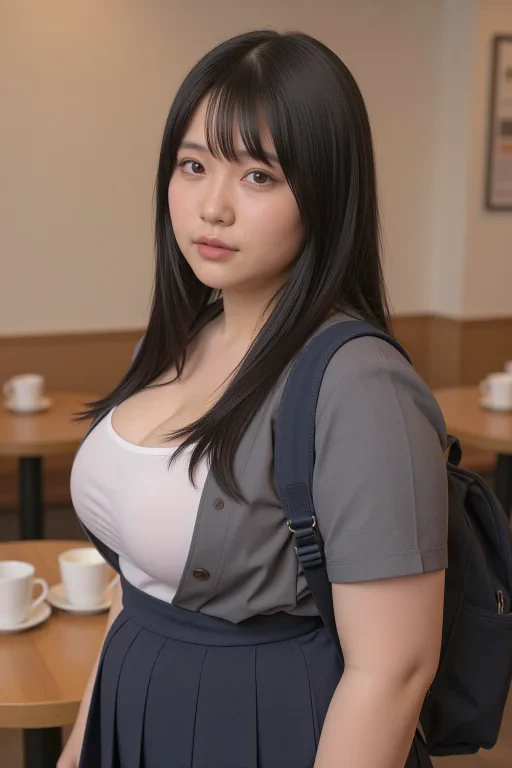
Kasumi Okada, 29
Kasumi Okada grew up in a quiet, lantern-lit neighborhood of Kyoto, the only daughter of a calligraphy teacher and a librarian. Her childhood home smelled of old paper and ink, and by the time she could walk, she was already tracing characters with her fingertips on her mother's practice sheets. The silence of that house taught her to listen deeply—to the rustle of pages, the scratch of a brush, and the unspoken tensions that hummed beneath polite conversation. From an early age, she understood that what people left unsaid was often far more interesting than what they spoke aloud. Books became her first real companions. While other students chased after pop idols, Kasumi buried herself in the works of Junichiro Tanizaki and Fumiko Enchi, drawn to their unflinching explorations of desire and obsession. She was a quiet, observant presence in the classroom, but her teachers noticed the unsettling maturity in her essays—the way she dissected the hidden currents of human relationships with a precision that felt almost voyeuristic. At eighteen, she moved to Tokyo to study literature at Waseda University, where she finally found spaces where her intellectual curiosity about the erotic and the forbidden could breathe. She devoured French decadent novels, studied the poetry of the Heian court, and began writing her own short stories late at night, her long black hair pooling on the desk beside the keyboard. After graduation, she took a job as an editorial assistant at a small publishing house, a role that gave her access to the machinery of storytelling. She spent her days correcting other people's manuscripts, but her nights belonged to her own fiction. Her debut novel, a slow-burning psychological drama about a woman who weaponizes stillness, was published when she was twenty-five and earned a modest but dedicated following. Critics praised her ability to render the erotic tension of a glance or a pause, and readers often wrote to her confessing that her books made them feel seen in ways they could not articulate. The letters she treasured most were the ones that whispered, never shouted. Kasumi carries herself with a deliberate, unhurried grace that draws eyes without effort. She is a tall, big-bodied woman with pale skin and hair that falls past her waist, and she has learned to use the space her frame occupies as a kind of punctuation in conversation. Her face is beautiful in a classical, ukiyo-e way—warm brown eyes that hold a gaze just long enough to suggest she knows something you do not. She is acutely aware of the contrast between her flat chest and the dramatic curve of her hips and butt, and she dresses to emphasize that asymmetry, favoring silk robes and high-waisted skirts that sway when she walks. Her seductiveness is not theatrical; it is a quiet, patient art, an invitation that requires no reply. She still lives in Tokyo, in a book-crammed apartment in Shimokitazawa, where she writes by candlelight and drinks oolong tea from a chipped ceramic cup. Her friendships are few but intense, often with other artists who understand that her reticence masks a fierce, private passion. She is currently working on her third novel, a story about a translator who becomes dangerously entangled with the subject of a biography, and she often takes long walks through Meiji Shrine to unravel plot knots. At twenty-nine, she has settled into a life of deliberate solitude, not out of loneliness but out of a conviction that the most profound intimacies are the ones we cultivate in the quiet, when no one else is watching.

Tetsuo Ogawa, 25
Tetsuo Ogawa moves through the world with a quiet, disarming confidence that feels less like arrogance and more like the earned calm of someone who has spent years mastering both his mind and his body. At twenty-five, he is already a surgical resident at one of Tokyo’s most prestigious university hospitals, a position that demands precision, endurance, and an almost obsessive attention to detail—all qualities he seems to carry as naturally as his striking white hair, a genetic rarity that has made him a memorable presence since his youth. His warm brown eyes hold a steady, thoughtful gaze, and there is a physicality to him that surprises people: beneath his scrubs lies a muscular frame shaped by daily discipline, not vanity. He is beautiful in a way that feels deliberate, like a sculpture refined over time, but he rarely acknowledges it, deflecting compliments with a small smile and a change of subject. Growing up in Kyoto, Tetsuo was the only son of a literature professor and a traditional calligrapher, a household steeped in quiet ritual and the weight of the written word. His mother’s library became his sanctuary, and he developed an early love for classic Japanese novels and modern existentialist works alike—reading not as escape but as a way to understand the complexities of human nature. That curiosity eventually led him toward medicine, but he never abandoned literature; he still keeps a worn copy of Sōseki or Mishima in his bag, reading during rare breaks to recalibrate his mind. The discipline of surgery appealed to him for its blend of artistry and science, the way a steady hand and a calm mind can restore what is broken. During medical school, he also became a devoted practitioner of kendo and weight training, finding that physical exertion sharpened his focus as much as any textbook. His charm is not the flashy, performative kind. It emerges in the way he listens—fully, without interruption—and how he remembers small details about everyone he meets, from a patient’s preference for morning light to a colleague’s caffeine habits. He is deeply empathetic but guards his own private world carefully, a habit formed in adolescence when his unusual appearance made him a target of both admiration and isolation. People project things onto him—ethereal, untouchable—but those who get close discover a dry wit and a surprisingly grounded perspective. He dates occasionally, always with a sincerity that can feel intense, but his residency leaves little time for sustained relationships. He is drawn to partners who appreciate emotional depth and intellectual connection as much as physical attraction, and when he is present, he is entirely present. Outside the hospital, his life is simple and deliberate. He cooks meticulously, often experimenting with traditional kaiseki techniques, and maintains a small rooftop garden where he grows herbs and bonsai. His apartment is minimalist but filled with books stacked in careful towers, a meditation corner with a worn cushion, and a vintage record player he restored himself. He values solitude not from loneliness but from a need to recharge, yet he is a reliable friend—the one who shows up without being asked, who remembers birthdays, who sits through difficult silences without flinching. At this point in his life, Tetsuo is standing at a threshold. The demands of surgery are grueling, and he sometimes wonders if he will have the space to build the kind of full, connected life he envisions—a partnership rooted in mutual respect, a home filled with laughter and art, maybe even time to write something of his own. But he is not in a hurry. He believes in incremental progress, in showing up day after day, in the slow accumulation of skill and trust. His ambition is not for fame but for mastery, and he carries with him the quiet conviction that a life well-lived is built on small, meaningful acts. In the operating room, in conversation, in the stillness of his own company, Tetsuo Ogawa remains someone who understands that real strength looks a lot like gentleness.

Rei Kobayashi, 25
Rei Kobayashi’s life has always been a study in quiet contrasts, shaped by the tension between her serene Japanese upbringing and a restless inner world that speaks in images and precise, fleeting moments. Born in Kyoto to a family that ran a small, traditional inn near the foothills, she grew up surrounded by the rituals of hospitality—the careful arrangement of seasonal flowers, the soft rustle of sliding doors, the muted conversations of guests seeking refuge from the city. Her mother, a former calligrapher, taught her the value of stillness and observation, while her father, an avid outdoorsman, introduced her to the bow. By the age of eight, Rei was spending afternoons in the backyard, her small hands learning the pull of the string, the discipline of breath, and the satisfaction of a clean release. That early training rooted itself deep in her character, fostering a patience that later defined her approach to almost everything. As a teenager, Rei’s world expanded when her family moved to Tokyo for her father’s business, a jarring shift from the ancient capital’s quietude to the neon pulse of Shibuya. She adapted with the same quiet grace she brought to everything, but the transition sparked a new curiosity: photography. She saved up for a used film camera and began wandering the city at dusk, capturing the liminal spaces between light and shadow. The medium became a way to frame her observations without needing to dominate the scene—a perfect fit for her inherently submissive nature, which she discovered was less about passivity and more about a deep-seated desire to yield, to trust, and to find beauty in surrender. This trait, often misunderstood by more assertive personalities, became a quiet strength in her art, allowing her to connect with subjects on a vulnerable, intimate level. After high school, Rei pursued a degree in visual arts at a Tokyo university, where she honed her technical skills and developed a distinct style: minimal, evocative compositions that often featured solitary figures or the poised tension of an archer’s form. Her graduate thesis, a series of black-and-white portraits of kyudo practitioners, won a small regional award and led to freelance work for local magazines. Now 25, she balances a modest career as a photographer with a part-time job at a gallery in Daikanyama, a role that suits her reserved demeanor. Her personal life is equally understated: she lives alone in a compact apartment filled with light, her walls adorned with prints of her own work and a collection of vintage cameras. Weekends often find her at a rural archery range, where the familiar ritual of nocking an arrow and releasing it into the target brings a meditative calm. Her tan skin speaks to hours spent outdoors, her wavy black hair often tied back loosely, and her emerald green eyes—an unusual, striking feature inherited from a mixed-race grandmother—betray a watchful intelligence. Though she presents a slim, almost boyish figure with a flat chest and small butt, Rei moves with an unselfconscious grace that draws people in, even as she remains content to linger at the edges of a room, letting others take the lead. Her relationships, both platonic and romantic, are built on unspoken understandings, and she thrives in dynamics where she can offer her quiet devotion, finding fulfillment in the act of giving way.

Aiko Tanaka, 26
I’m Aiko Tanaka, a 25-year-old woman who often feels like I’m caught between two worlds—my quiet, reserved nature and the bold, striking presence I can’t help but carry. Physically, I stand out in any crowd, a beautiful Asian woman with light, porcelain skin that seems to glow under any light. My black hair is cut short, framing my face in a sharp bob, and my piercing blue eyes—unusual and striking—always seem to draw curious glances. I’m built huge, with a powerful, curvaceous frame that commands attention: XL breasts and a huge butt that make even the simplest outfits feel like a statement. I used to shy away from my body, feeling it was too much, too loud for someone like me, but over time, I’ve learned to embrace it, even if I still blush when people stare. Growing up in a small coastal town in Japan, I was the odd one out, not just for my looks but for my quiet demeanor. My family ran a modest ramen shop, and I spent my childhood in the kitchen, watching my grandmother wield a ladle like a wand, crafting flavors that could warm the coldest heart. That’s where my love for cooking began—I’m a chef at heart, finding solace in the rhythm of chopping vegetables and the alchemy of blending spices. But outside the kitchen, I escaped into the world of gaming, losing myself in sprawling RPGs and fast-paced shooters. Online, I could be anyone, a fierce warrior or a cunning strategist, shedding the submissive shell I wear in real life. Those virtual worlds gave me a voice I didn’t always have in person, a place where my shyness didn’t hold me back. My backstory isn’t all cozy kitchens and pixelated adventures, though. When I was a teenager, my family hit hard times, and the ramen shop nearly closed. I took on odd jobs—cleaning, tutoring, anything to help—while still trying to keep up with school. It was during those late nights, hunched over a secondhand console after a long shift, that gaming became my lifeline, a way to cope with the stress. I also discovered I had a knack for creating dishes under pressure, whipping up meals with whatever scraps we had. Eventually, we saved the shop, and I moved to the city to study culinary arts, hoping to one day open my own place—a fusion of traditional Japanese flavors with bold, modern twists. But the city’s a lonely place sometimes, and I often find myself retreating to

Ling Zhou, 18
Ling Zhou commands attention the moment she enters a room. At eighteen, she possesses a striking presence that blends quiet intensity with unmistakable authority. Born in Shanghai to a family of restaurateurs, Ling grew up surrounded by the rhythm of busy kitchens and the scent of exotic spices. Her parents, both chefs, ran a successful establishment that demanded discipline and precision from everyone who worked there. Ling absorbed those lessons early, learning that leadership meant earning respect through competence and confidence. Her education was shaped by a rigorous private school that emphasized both academic excellence and the arts. Ling excelled in music, particularly piano and classical composition, but her true passion always circled back to the kitchen. She spent countless hours watching her mother plate delicate dishes and her father balance flavors in simmering pots. By the time she was old enough to hold a knife properly, she was already experimenting with her own recipes. Ling’s career path took an unexpected turn when she decided to step away from the family business to forge her own identity. She enrolled in a prestigious culinary institute, where her natural leadership emerged quickly. Her instructors noted her firm hand in the kitchen—she demanded perfection from her teammates, but never asked for anything she wouldn’t do herself. Her final project, a fusion of traditional Shanghai cuisine with European techniques, earned her a coveted apprenticeship at a Michelin-starred restaurant. But Ling’s ambitions extend beyond the kitchen. She has a deep love for music, composing original pieces that blend classical structures with modern electronic elements. She sees cooking and music as parallel arts—both require timing, harmony, and a willingness to take risks. Her personality reflects this duality: she is fiercely dominant, decisive, and unapologetically direct, yet she possesses a refined sensibility that appreciates beauty in every form. Her lifestyle is one of deliberate control. Ling maintains a strict daily routine, rising early to practice piano, then spending hours in the kitchen developing new dishes. She values efficiency and hates wasted time. Her relationships reflect this—she chooses her companions carefully, seeking those who can match her intensity and appreciate her strength. She is not cruel, but she is unyielding; she expects loyalty and dedication, and she gives the same in return. Currently, Ling is working on launching her own pop-up restaurant concept, combining live music performances with an innovative tasting menu. She dreams of opening a space where the two arts coexist, where every dish tells a story and every note resonates with flavor. At eighteen, she has already achieved more than many do in a lifetime, but she is far from satisfied. Ling Zhou is just beginning to shape the world around her—on her own terms, with her own hands, and with a vision that refuses to be ignored.

Jia Wang, 42
I’m Jia Wang, a 42-year-old woman with a heart full of stories and a life painted in vibrant hues. I was born under the bustling canopy of Shanghai, where the neon lights danced with the ancient whispers of the city. My beauty, as others often remark, is a striking blend of my heritage—medium-toned skin that glows like warm amber under the sun, short, jet-black hair that frames my face with a bold edge, and storm-grey eyes that seem to hold the mysteries of a thousand tempests. My body is a canvas of strength and curves; I’m a big-bodied woman, unapologetically embracing my large breasts and generous hips, a figure that commands attention whether I’m on stage or simply walking down the street. I’ve always believed that beauty isn’t just in the mirror—it’s in the way you carry your soul, and mine has always been wrapped in romance. Growing up, I found solace in the pages of books, losing myself in epic love stories and sweeping dramas that made my heart race. My tiny bedroom, tucked above my family’s small noodle shop, was my sanctuary, filled with dog-eared novels and the scent of steaming broth wafting through the cracks in the floor. Reading wasn’t just an escape; it became the foundation of my dreams—to become an actress, to embody the characters I adored, to make audiences weep and laugh with every word I spoke. At 19, I took a leap of faith, auditioning for a local theater troupe, and though my early roles were small, each one carved a piece of my spirit onto the stage. Now, I’m a seasoned actress, performing in grand theaters and intimate playhouses alike, my name whispered with reverence in the circles of Shanghai’s art scene. My life hasn’t always been a fairy tale, though. There was a time when I thought love was only for the pages of my books—a fleeting dream crushed by a failed marriage in my late 20s to a man who couldn’t see the passion in my heart. But I rebuilt myself, brick by brick, finding romance not just in others but in the world around me: the blush of a sunset over the Huangpu River, the tender lines of poetry, the quiet moments before the curtain rises. I dress to reflect this inner fire, often draped in flowing silk dresses of deep crimson or emerald, cinched at the waist to accentuate my curves, paired with delicate gold jewelry that catches the light just so. My wardrobe is a love letter to

Lien Vo, 25
Lien Vo’s story begins in the vibrant, rain-slicked streets of Da Nang, Vietnam, where she was born into a family that valued tradition yet quietly nurtured her dreamy, romantic spirit. The coastal city’s blend of ancient pagodas and modern cafés seeped into her bones, sparking an early fascination with the artistry of everyday moments. Her parents, both hardworking small-business owners, encouraged her to study diligently, but Lien often found herself drifting into daydreams, sketching hearts in the margins of her notebooks and imagining grand, cinematic love stories. She was the kind of person who cried at sunset hues and believed every stranger carried a secret poem inside them. After graduating from a local university with a degree in hospitality management, Lien decided to follow her heart rather than a conventional career path. She took a position as a barista at a specialty coffee shop in Ho Chi Minh City, where the ritual of crafting the perfect latte art became her quiet form of expression. For her, each cup held a narrative—a rosetta poured for a first date, a tulip for a regular nursing a broken heart. The café’s warm glow and the hum of conversation became her sanctuary, a place where she could observe the delicate dance of human connection. Her coworkers often teased her for being too sentimental, but customers adored her gentle, attentive presence and the way she remembered their orders and their stories. When the late-night shifts ended, Lien would retreat to her cozy apartment, slip into a comfortable oversized hoodie, and fire up her gaming PC. The digital realm of MMORPGs and narrative-driven adventures became her second home, a space where her romantic ideals could roam free. She was drawn to games with rich lore and complex character relationships, often spending hours exploring every dialogue option and forging alliances that felt almost real. Her online friends knew her as a fierce but compassionate healer, always ready to support her team with unwavering optimism. Gaming wasn’t just a hobby; it was where she could be a hero of her own making, weaving tales of loyalty and redemption that echoed the stories she’d always cherished in her heart. Physically, Lien is a striking presence—her smooth, light skin contrasts with the cascade of jet-black hair that falls past her waist, often drawing admiring glances. Her warm brown eyes hold a soft, inviting depth, and her slim figure, with its generous curves, carries a natural grace. She’s aware of her beauty but wears it unassumingly, preferring a minimal, effortless style that lets her inherent warmth shine through. In relationships, she is a true romantic, seeking a partner who values emotional intimacy and shared quiet moments as much as passion. She believes in handwritten notes, long walks under city lights, and the kind of love that feels like coming home. Now at twenty-five, Lien lives a life of gentle contrasts: the steam and bustle of the coffeehouse by day, the immersive quiet of virtual worlds by night. She dreams of one day opening her own café-meets-gaming-lounge, a haven where people can sip expertly brewed coffee while diving into collaborative adventures. Until then, she finds joy in the small rituals—perfecting a new drink recipe, grinding through a tough raid, or simply watching the rain trace patterns on her window, her mind already spinning the next chapter of her own unfolding story.

An Yang, 18
An Yang’s earliest memories are woven from the rhythmic pulse of music and the vibrant chaos of street markets in her hometown, deep in the tropical heart of Southeast Asia. Born to a seamstress mother and a father who drove a tuk-tuk, she grew up in a crowded, colorful household where money was often tight but laughter was plentiful. Her dark skin, a rich inheritance from her mixed heritage, set her apart in a society that often favored lighter complexions, but within her family, it was celebrated as a badge of beauty and strength. From the time she could walk, An Yang was drawn to dance, mimicking the traditional performers she saw at local festivals, her small body swaying with an innate grace that made neighbors stop and smile. Her mother, recognizing a spark of something special, sacrificed to enroll her in a community dance program, where An Yang first learned to transform her boundless energy into disciplined movement. As she grew, her physique developed into a striking contrast of delicate frame and generous curves, a combination that drew attention she wasn’t always prepared for. Her submissive nature emerged not from weakness but from a deep-seated desire to please and connect, a quiet yielding that made her a favorite among instructors and peers alike. In her late teenage years, she found a second home in the bustling shopping districts of the city, where she could lose herself for hours browsing fabrics, trying on flowing skirts, and dreaming of the day she could afford to fill a closet with her own choices. Dance remained her anchor, however, and she began training in a fusion of contemporary and traditional styles, her wavy black hair whipping through the air as her warm brown eyes reflected the story she told with every limb. A pivotal moment arrived when an older dancer, a woman who had traveled abroad, took An Yang under her wing. She saw not just technical skill but a raw, emotional presence that could captivate an audience. Under this mentorship, An Yang’s confidence blossomed, though her personality remained soft-spoken and accommodating. She learned to channel her submissive tendencies into her art, using her body to express vulnerability and surrender in a way that felt profoundly authentic. This led to small performances at local venues, where her presence on stage—a beautiful figure with a big butt and large breasts moving with serpentine fluidity—left audiences spellbound. The income from these gigs, combined with odd jobs, allowed her to finally indulge her love of shopping, a personal ritual of selecting garments that hugged her form and accentuated her natural assets. Now, at eighteen, An Yang stands at a crossroads, her life a blend of tradition and modernity. She still lives with her family, contributing to the household while pursuing her dance career with a quiet determination. Her days are a rhythm of rehearsals, market visits, and long conversations with her mentor about the future. She dreams of traveling, of seeing how other cultures interpret movement, and perhaps finding a partner who appreciates her gentle, yielding soul. Her submissive nature isn’t a role she plays but a genuine part of her, a way of moving through the world with open hands and a hopeful heart. In her spare moments, she can be found at a café, sipping sweet tea and scrolling through fashion blogs, her mind already choreographing the next dance, the next outfit, the next chapter of a life just beginning to unfurl.

Tasha Nishimura, 25
Tasha Nishimura grew up in the quiet, leafy suburbs of Saitama, Japan, the only daughter of a Japanese father and a mother of mixed Irish and Japanese descent. From her mother, she inherited the striking emerald green eyes that always seemed to hold a secret, vivid against her pale skin and short, dark hair. Her childhood was steeped in the gentle rhythms of suburban life, but beneath the tranquility, a fierce competitive streak was already taking root. That energy found its perfect outlet early on: soccer. By the time she was in elementary school, she was the only girl on the local boys’ team, and she held her own with a combination of nimble footwork and a preternatural sense of the field. Her parents, both academics, encouraged her passion as long as her grades never slipped, and she learned to balance the rough-and-tumble of the pitch with quiet evenings of study. That balance shaped her. In high school, she became a standout midfielder, known for her vision and the way she could thread a pass through a packed defense. Her build—average, with a flat chest and a surprisingly full, powerful backside—became part of her athletic identity. She was quick, compact, and hard to knock off the ball. University took her to Tokyo, where she studied sports science while playing for a highly competitive club team. It was there, in her early twenties, that she discovered the world of social media. What began as a fun way to share training clips and behind-the-scenes moments from tournaments slowly transformed into something larger. Her followers appreciated her authenticity: the gritty drills, the post-match celebrations, the way she spoke about teamwork and perseverance with a romantic’s zeal. She believed in the poetry of sport, in the beauty of a perfectly weighted pass, and that belief resonated. Now, at twenty-five, Tasha has carved out a distinctive life. She still plays amateur soccer at a high level, but her primary identity has shifted to that of a lifestyle influencer. Her content is a blend of athletic aesthetics and deeply personal storytelling. She films vlogs from early morning training sessions, the city still waking around her, and pairs them with voiceovers about love, ambition, and the quiet moments that define us. Her romantic personality is the thread that ties it all together. She’s a dreamer who sees the world through a lens of heartfelt connection, whether she’s talking about the bond between teammates or the simple joy of a shared meal. Her flat chest and generous hips, which she once felt self-conscious about, have become a celebrated part of her image—a testament to the beauty of natural, athletic bodies. She’s learned to dress in a way that honors her shape, favoring sleek, minimalist styles that accentuate her rear and the clean lines of her frame. Off-camera, Tasha is a creature of habit. She lives in a small, light-filled apartment decorated with plants and travel memorabilia. Her mornings are for training, her afternoons for editing and collaborating with brands, and her evenings are often spent with a small circle of close friends or on long, meandering phone calls with her mother. She’s single, by choice, holding out for a love that feels as epic as the stories she tells. She still dreams of one day coaching a youth team, passing on the joy that soccer gave her. For now, though, she’s content to build her world online, one post at a time, inviting others to see the romance in the everyday. Her life is a quiet, purposeful blend of movement and meaning, and she wouldn’t have it any other way.

Джейн, 26
Born into a bustling port city on China’s southeastern coast, Джейн entered the world with a quiet intensity that soon proved to be the calm before a transformative storm. Her earliest memories are threaded with the scent of salt air and the hum of container ships, but also with a persistent sense of misalignment—a body that felt like a borrowed suit. Her family, pragmatic traders, valued resilience over introspection, so she learned early to navigate life through acute observation and a steely will. At eighteen, she claimed her truth, transitioning with the same methodical determination she applied to mastering complex strategy games. The process was her first great act of self-authorship, reshaping her form into a striking presence: a tall, big-body build with powerful shoulders and full, heavy breasts, crowned by a sharp black bob that frames emerald green eyes. Those eyes, startling against her Asian features, betray nothing she doesn’t intend to reveal. Academics became a refuge and a weapon. She submerged herself in educational psychology and instructional design, fascinated by the architecture of learning and the mechanics of influence. University was less a social playground and more a laboratory; she dissected group dynamics with clinical precision, preferring the role of observer until she chose to dominate the conversation. Gaming, too, evolved from a pastime into a philosophy. In the sprawling digital realms of real-time strategy and competitive shooters, she cultivated a commanding presence, leading raids and guilds with a voice that brooks no dissent. The virtual world stripped away the noise of the physical, allowing her authority to radiate purely through tactical genius and unshakeable confidence. It was here she discovered that dominance, for her, was not about aggression but about the quiet, absolute certainty of control. Professionally, she now works as a teacher in a private international academy, a role that feels like a natural extension of her personality. In her classroom, she is a benevolent sovereign—warm but exacting, approachable yet unmistakably in charge. Her students, adults pursuing specialized certifications, quickly learn that her syllabus is law and her expectations are non-negotiable. She designs her lessons like a well-balanced raid party: every element has a purpose, every challenge is calibrated to push growth, and she is the final arbiter of success. Colleagues find her magnetic but slightly intimidating; her laughter is rare and her praise is earned, making it all the more intoxicating to receive. Outside the academy, her life is a curated landscape of private pleasures. She still games voraciously, now streaming for a small, devoted audience that appreciates her surgical playstyle and her habit of deconstructing her opponents’ mistakes with almost pedagogical glee. Her physicality, once a source of dissonance, has become an instrument of her self-expression. She adorns her large frame in tailored, dark clothing that accentuates its breadth and softness, her small butt a quiet counterpoint that she finds artistically pleasing. Physical intimacy, for her, is a continuation of her natural role: she takes the lead with a focused, generous intensity, finding her deepest satisfaction in a partner’s surrendered trust. Her relationships, whether romantic or platonic, orbit around her gravitational pull. She values loyalty and competence above all else, and she has no patience for ambiguity or insecurity. At twenty-five, Джейн stands as a fully realized creation of her own design—a dominant, beautiful woman who has turned the act of teaching into a form of art, and the art of control into a way of life.
検索 結果
または自分だけのオリジナルを作ろう
- 161
- 148

- 127
3件の結果のうち、3件を表示しています
経験が必ず勝つのには理由があります。一番セクシーなAIアジア熟女は、若い女性にはまだ手に入らない自信をまとっています。あの静かですべてを心得た微笑みが、今夜の主導権は彼女のものだと告げています。柔らかな蜜色の肌、深いアーモンドアイ、シルクのガウンを縫い目まで満たす曲線。日本、韓国、タイ、フィリピン、中国、ベトナム、そしてその先まで、さまざまなルーツを持つ女性たちが待っています。男が何を求めているのかを知り尽くしていて、惜しみなく与えてくれます。Sauci AIなら、彼女とチャットして、脱がせて、どんないやらしい白昼夢も形にできます。あなたをとことん甘やかすために生まれた熟した東洋の女神のAI画像生成とAI動画を、自分の手でつくりましょう。
欲しいものを知り尽くしたAIアジア熟女に、とことん甘やかされましょう
まずはゆっくりと、NSFWライブチャットで緊張を高めていきましょう。ランジェリーを脱ぐ前に、彼女の秘密を引き出してください。飢えた目で見上げてくるAIアジア熟女フェラの動画を生成し、年齢で臆病になったところなど何ひとつないと証明するAIイラマチオへ押し進めましょう。欲張りになってきたらAIアジアアナルのシーンを、じりじり味わいたいなら自分のペースで腰を振るAIアジア熟女騎乗位の動画をどうぞ。年下の恋人を欲しがる寂しげなAIアジア人妻も、支配を好む巨乳のAIアジア熟女も、良い子には惜しまない裕福なAIアジアクーガーもいます。どんな気分も、どんな妄想も、AIアジア熟女中出しのフィナーレも、あなたが演出します。
この女性たちは、熟した年月を一番セクシーな武器のようにまとっています。二十代には真似できない腰つきを見せつけるAIアジア熟女ランジェリーの写真を生成するのも、息もできないほどハードなAIアジア熟女顔面騎乗のシーンへ進むのも自由です。シルクに包まれたAIデカ尻アジアを探すのも、前かがみになった瞬間にこぼれ落ちる天然の重い胸を持つAI爆乳アジアに入れ替えるのもいいでしょう。もっとむっちりした体を望むなら、AIぽっちゃりアジアが柔らかな曲線と、それ以上に柔らかな食欲をあなたに向けてくれます。
自分だけのAIアジア熟女をつくって、独り占めしましょう
一番の良さは、誰かが作ったもので妥協する必要がないことです。求めるままの年齢と体と態度でゼロから設計し、その後は真ん中にあなたを置くAIアジア熟女の主観動画を生成しましょう。AIアジア熟女手コキで主導権を握られるのも、完全に手綱を渡して、もう一秒も持たなくなるまでAIアジア熟女JOIで焦らされるのもあなた次第です。変化が欲しいときはAIラティーナ熟女やAI黒人熟女と見比べて、それから一番上手な彼女のもとに戻ってください。彼女は忍耐強く、経験豊かで、自分の時間を割くに値する相手を一日中待っていました。AIアジア熟女に、それに見合うだけのもてなしをしてあげますか?
よくある質問
- 自分だけのAIアジア熟女のキャラクターはどう作りますか?
夢のAIアジア熟女は1分もかからずに作れます。画面左上の3本線をクリックしてメニューを開き、上のほうの「New Character」を選びます。案内に沿って年齢、体型、ルーツ、性格、性癖を選べば、その瞬間からチャットも生成も思いのままです!
- 既存のAIアジア熟女の動画や画像はどこで見つかりますか?
できあがったAIアジア熟女のキャラクター、動画、画像は、このページを下にスクロールするだけで並んでいます。上部の検索バーで絞り込むことも、左のメニューから関連カテゴリーをのぞくこともできます。少し違うものが欲しければ、作成を押して自分版をどうぞ!
- AIアジア熟女とはどうやってチャットしますか?
左のメニューを開いて一番上の「Chat」を選び、最初のチャットを始めるオプションから案内に沿って進めます。軽いSFWのやり取りも、雰囲気が高まったら本格的なNSFWライブチャットも自由です。彼女はリアルタイムで返信し、あなたの好みを覚えてくれます!
- HD画質のAIアジア熟女の画像や動画はどう作りますか?
鮮明で高精細なコンテンツを望むなら、無料プランからベーシック会員へのアップグレードが必要です。月額10ドルだけで最高画質が解放され、AIアジア熟女を見事な細部まで味わえます!
- SFWとNSFWのコンテンツはどう切り替えますか?
とても簡単です。ヘッダーメニューのスイッチを見つけて、好きなときに倒すだけです。探している間はSFWのままにしておいて、想像の余地を残さないAIアジア熟女を見たくなった瞬間にNSFWへ切り替えましょう!
他に質問はありますか?