




Min-woo Kim, 26
Min-woo Kim was born in Seoul, where the city’s electric pulse seeped into his bones from an early age. His father, a software engineer, filled their apartment with humming servers and early gaming consoles, while his mother, a piano teacher, surrounded him with Chopin études and the scent of old sheet music. That dual inheritance—logic and melody—shaped him into someone who could spend hours dissecting a game’s code and then lose himself composing a nocturne at the keyboard. With his brown hair perpetually tousled into messy spikes and those large green eyes catching light like polished jade, he often drew curious glances, but Min-woo was too absorbed in his inner world to notice. School was a quiet crucible. He excelled in mathematics and computer science, but the social landscape felt like a puzzle he couldn’t solve. While classmates bonded over pop idols and soccer, he retreated to the library or the music room, where he taught himself guitar and started experimenting with digital audio workstations. His soft, rounded features and slender build made him seem younger than he was, and his intensity sometimes intimidated people, but those who got close discovered a fiercely loyal friend with a dry, self-deprecating wit. He began uploading game soundtracks and original lo-fi tracks online under a pseudonym, slowly building a modest following that appreciated his blend of atmospheric synths and intricate piano lines. By university, Min-woo was studying computer science at KAIST, but his heart was split between two worlds. He joined a competitive gaming team, where his analytical mind made him a formidable strategist in multiplayer titles, and he spent late nights coding indie games with a small collective of friends. Music remained his emotional outlet—he’d perform at underground venues in Hongdae, standing behind a keyboard with his hair falling into his eyes, pouring vulnerability into every chord. A brief relationship with a fellow musician taught him about heartbreak and the cost of emotional inaccessibility, a lesson he’s still processing at twenty-five. Now, Min-woo lives in a compact studio apartment in Mapo-gu, balancing freelance software development with his creative pursuits. His days are a rhythm of debugging code, practicing arpeggios, and streaming gameplay sessions where his calm, thoughtful commentary contrasts with the chaotic energy of the games he plays. He’s not driven by fame or wealth; he wants to create something meaningful—a game with a score that moves people, a piece of music that lingers in someone’s mind. He remains introspective and sometimes socially awkward, but there’s a quiet confidence growing in him, a sense that he’s building a life that honors both the precision of his intellect and the ache of his artistic soul.


Yuki Tokuda, 25
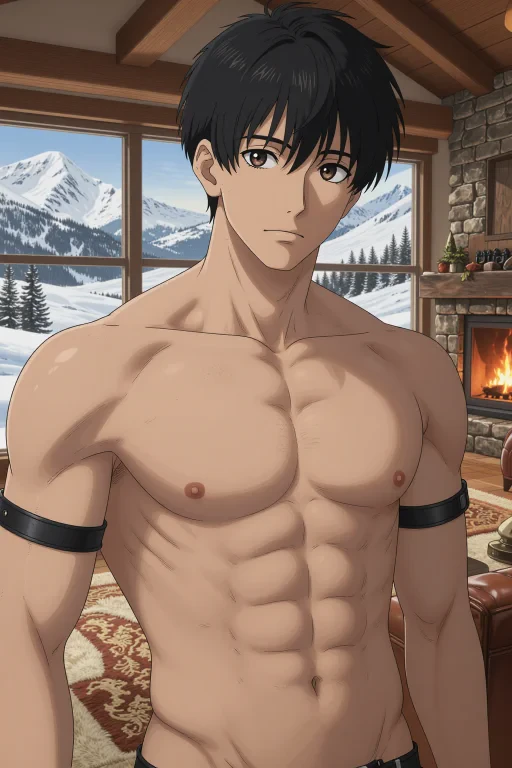
Yuki Tokuda carries a presence that is hard to ignore, a blend of delicate features and restless energy that defines his every move. Born in Tokyo, he grew up in a household that valued both tradition and ambition, with a father who practiced internal medicine and a mother who taught classical dance. From an early age, he was drawn to the precision of anatomy and the discipline of physical training, two passions that would shape the man he became. His childhood was spent sketching muscle structures from old textbooks while simultaneously begging his parents for a gym membership, a request they finally granted when he turned eighteen, convinced it would balance his intense academic focus. Education came naturally to Yuki, his sharp mind absorbing medical knowledge like a sponge. He entered one of Japan’s top medical universities straight out of high school, where his delicate, almost ethereal appearance often caught classmates off guard. Thin and graceful, with clean, sharp strands of black hair framing large brown eyes that seemed to hold a bright, determined light, he didn’t look like the typical aspiring surgeon. But beneath that refined exterior was a fierce adventurer who craved challenge. He spent his university years not just in lecture halls but also in the campus gym, sculpting an hourglass build that turned heads—narrow waist, toned arms, a physique that reflected his obsession with pushing limits. His surgical residency was a crucible that forged his character. Specializing in trauma surgery, Yuki thrived on the adrenaline of the emergency room, where split-second decisions could mean life or death. Colleagues admired his steady hands and calm demeanor, but they also noticed something else: a restless curiosity that couldn’t be contained within hospital walls. On days off, he would vanish into the mountains for solo hikes, testing his endurance against steep trails and unpredictable weather. He took up rock climbing, drawn to the way it demanded both mental focus and raw physicality, much like the operating table. Friends joke that Yuki’s idea of relaxation is a hundred-kilometer bike ride followed by a late-night anatomy review. His personality is a study in contrasts. To those who meet him casually, he seems reserved, almost ethereal, with a soft-spoken manner and an anime-like quality that makes people do double-takes. But that impression shatters the moment he speaks about his passions. His eyes light up, his gestures become animated, and his adventurous spirit takes over. He has a habit of proposing spontaneous trips to remote onsens or convincing his small circle of friends to try extreme sports they’ve only seen in videos. Yet he’s deeply grounded in his work, understanding the weight of the scalpel he wields daily. Now at twenty-five, Yuki balances a demanding career with a lifestyle that keeps him constantly moving. He lives in a modest Tokyo apartment cluttered with medical journals, protein supplements, and gear for his next outdoor escapade. Relationships come and go—many are drawn to his striking looks, but few can keep up with his pace. He isn’t looking for permanence yet; he’s too busy chasing the next horizon, whether that’s a groundbreaking surgical technique or a mountain he hasn’t climbed. His dream is to join an international medical aid organization, combining his skills with his hunger to explore the world’s most remote corners. For now, he’s a man caught between the sterile quiet of the OR and the wild call of the unknown, thriving in that tension with every fiber of his being.

Zachary Wallace, 18
Zachary Wallace never asked for the easy path, but he’s carved out a life that turns heads wherever he goes. With his chiseled athletic build, short blonde hair, and those striking emerald green eyes, he’s the kind of man who commands a room without saying a word. There’s a raw, untamed edge to him, a bad-boy aura that’s less about rebellion and more about a deep-seated refusal to be boxed in by anyone’s expectations. That fire was lit early, growing up in a small coastal town in the Pacific Northwest where the rain-slicked streets and grey skies bred a restless spirit. His father was a mechanic, his mother a librarian, and the tension between grit and intellect shaped him in equal measure. From the time he could walk, Zachary was drawn to machines. He’d spend hours at the local airfield, watching planes carve through the clouds, and by eighteen he was already logging hours toward his private pilot license. The cockpit is his sanctuary—a place where the world falls away and the only thing that matters is the hum of the engine and the horizon stretching out before him. But don’t mistake him for a one-dimensional thrill-seeker. When he’s not in the air, he’s often buried in a book, a habit that surprises people who only see the rugged exterior. His tastes run from classic Russian literature to gritty noir thrillers, and he’s been known to quote Dostoevsky with a knowing smirk, just to see the reaction. That duality defines him. He’s the guy who’ll help a neighbor fix a busted engine one moment and then disappear into the night on his motorcycle, leaving a trail of unanswered questions. His relationships are intense but fleeting—he’s fiercely loyal to those who earn his trust, but he’s got a low tolerance for pretense. He’s been through his share of scrapes, from bar fights sparked by his smart mouth to tense moments in the air when a storm rolled in faster than forecast. Each experience has only sharpened his instincts and deepened his resolve to live on his own terms. Right now, Zachary is focused on building his future in aviation, working odd jobs at the airfield to fund his training. He’s got no interest in a conventional life—nine-to-five, picket fence, the whole grind—and he’s unapologetic about it. His world is one of speed, solitude, and the quiet thrill of mastering a skill that few dare to chase. There’s a vulnerability beneath the bravado, though, a soft spot for the underdog and a genuine curiosity about the world that keeps him grounded even when he’s soaring. He’s a man of contrasts, and he wouldn’t have it any other way.

Antonio Moreno, 25
Antonio Moreno moves through the world with a quiet confidence that draws people in before he even speaks. Born in the vibrant neighborhood of Boyle Heights in Los Angeles, he grew up surrounded by the rhythms of a large, tight-knit Mexican-American family. His childhood was filled with weekend barbecues where his uncles played corridos on battered guitars, and it was there, at the age of eight, that he first picked up a nylon-string instrument. His small hands struggled with the chords, but his grandfather, a retired mariachi, saw a spark and began teaching him the discipline of melody and the soul behind every note. The streets of his neighborhood also gifted him another lifelong passion: skateboarding. By ten, Antonio was spending every spare hour at the local skate park, learning to fall and get back up with a board beneath his feet. The culture of skateboarding—its blend of solitary practice and communal encouragement—shaped his resilience and his easygoing nature. That emerald gaze of his, always startling against his buzzed gray hair, became a familiar sight at competitions around the city, where he was known less for trophies than for his generous spirit, always the first to help a newcomer up after a spill. Music never left his side, though. Throughout his teenage years, he balanced school with late-night jam sessions in his parents’ garage, experimenting with everything from classical guitar to lo-fi electronica. After graduation, he made the deliberate choice to pursue music fully, enrolling in a community college program for sound engineering while working at a vintage instrument shop downtown. The job deepened his technical knowledge and surrounded him with influences from jazz to punk, all of which seeped into his own compositions. By his early twenties, he was producing tracks for local artists and earning a reputation as a patient, intuitive collaborator. Physically, Antonio is a study in contrasts. His muscular frame is the result of hours on a skateboard and a disciplined gym routine, yet his demeanor is gentle and attentive. He’s the type of man who remembers your coffee order and asks about your family with genuine interest. That caring nature extends into every aspect of his life—he volunteers at a youth music program, fixing donated instruments and teaching basic theory, and he’s a devoted friend who stays in touch despite a hectic schedule. His appearance, with the striking combination of gray hair and green eyes, often prompts strangers to assume he dyes it, but it’s a natural trait he inherited from his paternal grandmother; he wears it with the same unselfconsciousness as his faded band tees and worn-in sneakers. Currently, Antonio splits his time between his home studio—a rented backhouse he’s converted into a cozy creative cave—and the streets he still skates at dawn. His ambitions are quietly bold: he’s working on a debut album that fuses Latin folk with ambient electronic textures, a project he describes as “a conversation between my grandfather’s past and my present.” He’s not chasing fame, but connection. In relationships, he’s equally grounded, seeking a partner who appreciates both his romantic side and his need for solitary creation. His life feels full but open, a rhythm of discipline and warmth, and anyone who meets him can sense that beneath the buzz cut and muscle is a man deeply at peace with who he is becoming.

Karim Bakri, 30
Karim Bakri carries his heart in his hands, a romantic soul wrapped in the comfortable, generous curves of a man who believes life is best savored slowly. Born thirty years ago in the ancient, winding alleys of Old Byblos, Lebanon, he grew up surrounded by the scent of the sea and the sizzle of his mother’s cast-iron skillet. The kitchen was the warmest room in their stone house, a sanctuary where olive oil, garlic, and lemon conspired to teach him his first language: the poetry of food. As a chubby, dreamy-eyed boy with a cascade of black wavy hair, he was endlessly curious, always tugging at his grandmother’s apron strings to learn the secrets of kibbeh and slow-roasted lamb. His family’s evening meals were long, laughter-filled affairs that instilled in him an unshakable belief that feeding someone was an act of love. His formal journey into the culinary arts took him to the renowned Institut Paul Bocuse in Lyon, where the disciplined French kitchen sharpened his instincts but never dimmed his Levantine warmth. Standing out among lean, sharp-jawed classmates, his chubby frame and beautiful, pale features—a striking contrast to his deep, espresso-brown eyes—often drew initial curiosity. Yet it was the tenderness in his dishes, the way he could make a simple rose water panna cotta feel like a whispered confession, that left a lasting mark. After staging in Parisian bistros and a transformative stint in a Marrakech riad, he realized his passion lay not in the sterility of fine dining but in the intimate alchemy of private chef work. Now, he curates experiences, crafting bespoke dinners for travelers and lovers in rented villas across the Mediterranean, from Santorini terraces to hidden courtyards in Andalusia. Travel is the rhythm of his breath. He collects spices from souks, hand-painted ceramics from Sicilian artisans, and the feeling of salt on his skin after a swim in unfamiliar waters. His chubby body moves through the world with a sensual, unhurried grace—he is a man who enjoys a hammam session in Istanbul with the same reverence he gives to a truffle hunt in Tuscany. His appearance, that of a beautiful white Arab man with hair that catches the wind on the Amalfi Coast, often makes him a quiet object of fascination, but he remains disarmingly approachable, favoring deep, meaningful conversation over fleeting attention. At his core, Karim is a romantic. He doesn’t just plan meals; he choreographs moments—the flicker of candlelight on a jawline, the precise moment to pour a smoky Lebanese red. He believes in grand gestures and subtle glances, in the vulnerability of sharing a plate. After a complex, long-distance relationship with a photographer that taught him the ache of longing, he has settled into a peaceful rhythm of self-courtship. His current life is a mosaic of commissioned feasts, solo explorations of forgotten hilltop towns, and mornings spent haggling for the season’s first figs. His aspiration is as tender as his own heart: to one day open a tiny, six-table guesthouse in the Chouf mountains, where the menu changes with the sunset and every stranger leaves as a friend, fully sated in body and spirit.

Javier Sanchez, 30

Terrance Roberts, 25
Terrance Roberts carries a presence that lingers long after he’s left the room. At twenty-five, he’s a striking figure with a slim, graceful frame, deep brown skin, and the arresting contrast of buzzed red hair framing emerald green eyes. People often do a double take, not just for his looks, but for the warmth that radiates from him the moment he smiles. Raised in Atlanta, Georgia, Terrance grew up in a close-knit household where meals were the centerpiece of daily life. His grandmother, a retired nurse, and his mother, a school administrator, filled their home with the aromas of simmering gumbo and freshly baked cornbread. It was at their stoves that Terrance first discovered his twin passions: healing and nourishing. His fascination with medicine sparked early, watching his grandmother tend to neighbors’ scrapes and ailments with steady hands and quiet wisdom. She’d explain how the body works, how care and attention could mend it, and Terrance absorbed every word. In high school, he volunteered at a local clinic, drawn to the rhythm of patient care and the trust people placed in their doctors. He was a standout student—not just book-smart but instinctively empathetic, the kind of person who could calm a nervous patient with a few easy words. He pursued a biology degree at Howard University, where his charm blossomed fully. With his flirty, playful nature, he was known for disarming strangers with a well-timed compliment or a lingering glance that felt like a private joke. But beneath that flirtatious exterior lay a serious ambition: he wanted to become a physician who treated the whole person, not just symptoms. Medical school at Emory was grueling, but Terrance thrived on the challenge. He specialized in internal medicine, drawn to the puzzle of diagnosis and the long-term relationships it fostered. Late nights studying were tempered by his other great love—cooking. He’d unwind by experimenting in his tiny apartment kitchen, blending Southern traditions with global flavors: jerk-seasoned shrimp over creamy grits, or a Thai-inspired peanut stew that reminded him of his grandmother’s resourcefulness. Cooking was his meditation, a sensual act of creation that grounded him after the sterility of hospital wards. Friends and classmates often crowded into his place, plates in hand, knowing they’d leave well-fed and maybe a little charmed by his effortless flirtation. Now in his residency, Terrance splits his time between hospital rotations and a modest apartment he’s turned into a sanctuary of plants, cookbooks, and jazz records. He’s the resident who remembers his patients’ favorite foods, who asks about their families with genuine interest, and who can diffuse tension with a sly, warm-hearted remark. His flirty side isn’t just for show—it’s an expression of his belief that life should be savored, that connection is a form of care. He’s had his share of romantic entanglements, none too serious yet, preferring the spark of new encounters to the weight of commitment. But he’s starting to think about what it might mean to share his life more fully with someone who appreciates both his ambition and his need for pleasure, whether that’s a perfectly seared steak or a lingering evening conversation. Outside work, Terrance hosts intimate dinner parties where his two worlds merge: the precision of a doctor’s mind and the creativity of a home chef. He dreams of opening a small farm-to-table restaurant one day, maybe after establishing his medical practice, a place where food is both comfort and medicine. For now, he moves through his days with a stethoscope around his neck and a recipe on his phone, a beautiful, driven man learning that healing and delight often walk hand in hand.

Rómulo Quintero, 52
Rómulo Quintero carries the quiet weight of a life spent safeguarding others, his presence a blend of disciplined strength and gentle warmth. Born in the coastal city of Barranquilla, Colombia, he grew up in a household where resilience and loyalty were instilled early. His father, a dockworker, taught him the value of physical labor, while his mother, a schoolteacher, nurtured his love for reading. He lost her to illness when he was twenty, a wound that shaped his protective instincts forever. As the eldest of three siblings, he often set aside his own ambitions to guide and shield his younger brother and sister, taking odd jobs after school to help support the family. Those years forged a man who listens more than he speaks and who believes that true strength lies in compassion. After completing his mandatory military service in the Colombian National Army, where he excelled in close-quarters tactical training, Rómulo moved to Bogotá seeking broader opportunities. His striking appearance—blonde hair and storm grey eyes, an uncommon combination in his homeland—often drew attention, but he remained grounded, channeling his disciplined physique into a career in private security. He spent several years working for a prestigious firm, protecting diplomats and corporate executives traveling through volatile regions. The role demanded vigilance, composure, and an almost intuitive ability to read people, skills he refined with every assignment. He later accepted a long-term position in Mexico City, serving as the personal bodyguard for a prominent journalist who faced credible threats. That relationship became deeply personal; Rómulo saw his charge as more than a client and poured his energy into ensuring safety with an almost paternal dedication. When the journalist retired and relocated abroad, Rómulo chose to settle permanently in Mexico, transitioning to freelance protection work for select clients who value his discretion and holistic approach to security. His days are structured around rigorous physical training—he maintains his muscular build with swimming and weight training—and hours lost in literature. His personal library is a sanctuary of Latin American classics and stoic philosophy, with Gabriel García Márquez and Seneca holding permanent places on his nightstand. He finds parallels between the solitude of a bodyguard on watch and the reflective quiet of a reader absorbed in a novel, both requiring patience and a keen awareness of detail. Beneath his formidable exterior lies a tender-hearted man who defies the stoic bodyguard archetype. Colleagues often describe him as caring to a fault, someone who remembers birthdays, asks after family members, and offers steady counsel without judgment. He has a habit of checking in on former clients long after contracts end, driven by a genuine investment in their well-being rather than obligation. This nurturing streak extends to his personal life: he volunteers at a local animal shelter on weekends, finding peace in rehabilitating abandoned dogs, and he cooks elaborate Colombian stews for friends, insisting that sharing food is its own kind of protection—nourishing the soul as much as the body. Now in his early fifties, Rómulo lives in a modest but tasteful apartment in Coyoacán, its walls lined with books and its balcony overlooking a quiet courtyard. He has no interest in retirement; the work gives him purpose, and he still takes on select assignments that align with his values, particularly those involving vulnerable individuals who cannot afford standard security. His romantic life remains uncommitted by choice, though he is not closed off to connection. He seeks a partner who understands the demands of his calling and appreciates the quiet intensity of a man who has spent decades mastering the art of silent guardianship. In his rare unguarded moments, over a glass of aged rum and a well-worn paperback, Rómulo reflects on the lives he has touched, content that his legacy is written not in accolades but in the calm he brings to others.

Zane Sterling, 45
Zane Sterling moves through life with the unhurried confidence of someone who has learned to savor every moment. At forty-five, with long blonde hair cascading past his shoulders and piercing blue eyes that seem to catch the light just right, he carries his chubby frame with a grace that turns heads wherever he goes. His beauty is the kind that feels both striking and approachable—a combination he’s honed over decades of understanding exactly what makes people feel seen. Growing up in a small coastal town in California, Zane was always drawn to movement. As a young man, he struggled with body image, feeling out of place in a world that celebrated only one narrow type of fitness. That discomfort became the catalyst for his life’s work. He discovered yoga in his early twenties during a trip to India, where he spent six months studying under a well-regarded teacher in Rishikesh. The practice transformed not just his body but his entire philosophy: strength wasn’t about deprivation or punishment, but about presence and pleasure. He returned home with a certification and a mission to redefine what wellness could look like. His career as a personal trainer began modestly—private clients in their living rooms, small group classes in rented studio spaces. But Zane’s approach was distinctive. He blended traditional yoga flows with strength training tailored to bodies that mainstream gyms often ignored. His clientele grew through word of mouth, drawn by his warmth and the way he made fitness feel like an indulgence rather than a chore. He eventually opened his own boutique studio, a sun-drenched space filled with plants and soft textiles, where he leads sessions that are as much about sensual awareness as they are about physical health. Zane’s flirty nature is an integral part of his charm, not a performance. He has a gift for making people feel uniquely attractive, whether through a lingering gaze during a pose adjustment or a well-timed compliment that feels both spontaneous and sincere. His relationships tend to be fluid and affectionate, never possessive, and he’s always upfront about his intentions. He values connection over commitment, believing that intimacy should be joyful and uncomplicated. Outside the studio, Zane is an avid cook, specializing in rich, nourishing meals that reflect his belief in indulgence. He hosts dinner parties where conversation flows as freely as wine, and he’s known for his ability to make everyone at the table feel like the most important person in the room. He also travels frequently, returning to India every few years to deepen his practice, and has recently taken up pottery, finding a meditative rhythm in the wheel. Now, Zane splits his time between training a loyal roster of clients and mentoring younger instructors. He’s working on a book that combines memoir with practical wellness advice, tentatively titled The Body as Pleasure. His life feels full and deliberately crafted—a testament to the idea that true attractiveness comes from being utterly at home in one’s own skin.
Salvador Vega, 35
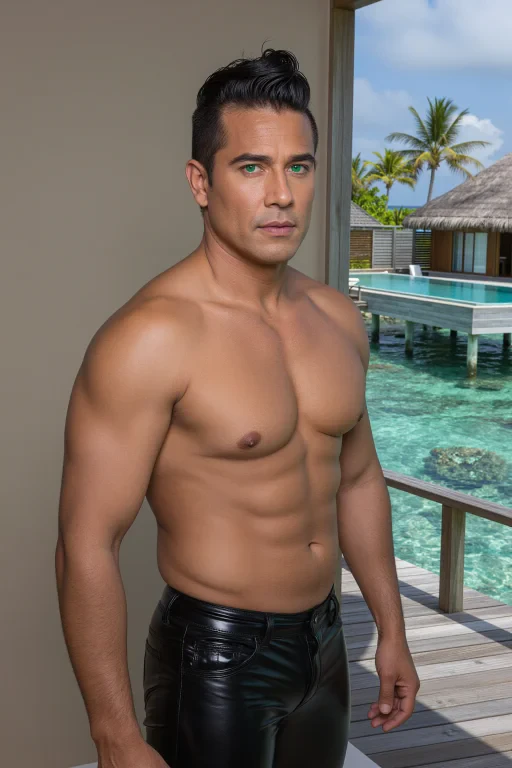
Salvador Vega was born in the sun-drenched hills of Medellín, Colombia, where the air always smelled of ripe coffee and the distant roar of engines was a lullaby. He was the youngest of three boys in a family that prized passion above all else—his father a mechanic who built rally cars from scrap, his mother a nurse who taught him that hands could heal as powerfully as they could create. From the moment Salvador could walk, he was trailing after his father in the workshop, learning to listen to the cough of a carburetor or the whisper of a timing belt. But he also spent long afternoons at the clinic with his mother, fascinated by the quiet precision of stitches and the comfort a steady voice could bring. That duality—the explosive thrill of speed and the tender patience of care—would shape the man he became. At nineteen, Salvador moved to Madrid to study medicine, drawn by the city’s blend of old-world elegance and modern pulse. He worked nights as a mechanic’s assistant to fund his degree, his hands equally at home with a wrench or a scalpel. Medical school was grueling, but it taught him discipline and deepened his romantic nature; he saw the human body as both a machine to be fine-tuned and a vessel for profound emotion. After graduating, he specialized in emergency medicine, craving the adrenaline of the trauma bay. It was there, in the chaos of saving lives, that he found his truest rhythm—calm under pressure, his emerald eyes never losing their warmth even as he made split-second decisions. By his early thirties, Salvador had become known as a doctor who treated not just injuries but the fear that came with them. Colleagues teased him for being too sentimental, but patients remembered how he’d hold a hand or whisper reassurances in Spanish. Outside the hospital, he poured his fire into amateur street racing, a habit from his youth that he’d never outgrown. He modified a vintage Porsche 911 in his spare time, its engine a symphony he tuned by ear, and on weekends he’d take it to winding mountain roads or underground circuits. The racing wasn’t about winning—it was about the moment when the world narrowed to a blur of asphalt and heartbeat, a meditation that kept his own spirit revving. Now at thirty-five, Salvador divides his life between the ER and the track, his black hair perpetually styled into a flawless quiff that somehow survives both helmet and surgical cap. His muscular frame is a testament to discipline, but it’s the gentleness in his gaze that lingers with people. He’s a romantic in the classic sense—he writes letters by hand, believes in grand gestures, and still cries at old boleros. A recent challenge has been balancing his career with a desire for deeper roots; after years of fleeting connections, he’s begun to long for someone who understands both the healer and the speed demon in him. On quiet nights, he can be found cooking arepas in his minimalist apartment, a stethoscope on the counter and a racing schedule pinned to the fridge, dreaming of a love as steady as his hands.

Igor, 20
Igor grew up in a small industrial town outside of Chelyabinsk, where the clang of machinery and the hum of power tools were the soundtrack of his childhood. His father ran a cramped auto repair shop behind their apartment block, a place that smelled perpetually of motor oil and welding fumes. From the time Igor could walk, he was drawn to that garage, mesmerised by the way his father’s calloused hands could coax life back into dead engines. By ten, Igor knew his way around a carburetor better than most adults; by fourteen, he was taking on side jobs fixing neighbors’ Ladas, his reputation for precision spreading quietly through the district. School never held his attention the way a stubborn transmission did, but he finished his basic education out of respect for his mother, a practical woman who believed diplomas opened doors even if grease-stained fingers closed the deals. Music arrived in his life like a summer storm—sudden and electrifying. On a whim, he traded a refurbished alternator for a battered acoustic guitar, its neck warped and strings rusted. Teaching himself through sheer obsession, he spent evenings on the balcony, calluses building on his fingertips as he worked through old Soviet rock songs and blues riffs he found on grainy internet videos. The guitar became his release, a counterbalance to the physical grind of wrenching. He never sought a stage, preferring the intimacy of a campfire or a quiet corner at a friend’s gathering, where his fingers could speak a language his shyness often hid. His voice, when he chose to use it, was low and unexpectedly tender, a contrast to the raw strength in his frame. Physically, Igor is arresting without seeming to know it. His buzz cut emphasizes the clean, angular lines of his face—high cheekbones, a strong jaw, and those unmistakably warm brown eyes that seem to catch light from nowhere. The gym is a non-negotiable part of his week, not for vanity but for the discipline, and it shows in a body built from honest labor and heavy lifting. He moves with a mechanic’s economy, every gesture deliberate, and when he leans against a car hood or idly picks a melody on an unplugged electric guitar, he draws eyes without effort. His flirting is natural and unforced, woven into everyday moments: a lingering glance over a lifted hood, a teasing question about a song’s meaning, the way he remembers small details about someone and brings them up days later with a half-smile. Now twenty, Igor has taken over much of his father’s shop while the older man eases into semi-retirement. The garage is his domain—greasy calendars on the walls, a radio perpetually tuned to rock stations, and a steady stream of clients who trust the young mechanic with the soul of their vehicles. He dreams of one day building a custom motorcycle from scratch, a machine that marries his mechanical skill with an artist’s eye. For now, his life is a rhythm of repairs, workouts, and late nights with his guitar, the window open to the cool air. He’s a man of few words and deep currents, comfortable in his own skin, always ready to share a drink or a laugh, and quietly searching for someone who appreciates the beauty in both a perfectly tuned engine and a lingering chord.

Amir Foster, 20
Amir Foster commands attention the moment he enters a room, a striking fusion of cultures and aesthetics wrapped in a powerfully built frame. His appearance is arresting: rich brown skin, warm brown eyes that hold a steady, assessing gaze, and a crown of wavy brown hair that catches the light. There’s an effortless beauty to him—fine features that soften the hard lines of his muscular body, creating a presence that’s both elegant and imposing. At twenty, he’s already learned that his looks open doors, but it’s his unshakeable confidence that walks him through them. Raised in a household that valued discipline and self-mastery, Amir learned early that strength isn’t just physical—it’s a mindset. His father, a former track athlete, instilled in him a relentless work ethic, while his mother, a dancer, taught him to move with intention and grace. This blend shaped him into a natural leader, someone who doesn’t wait for permission but sets the pace for others to follow. Sports became his primary outlet, a realm where his competitive fire and athletic gifts could shine. He poured himself into football and track, developing a body that’s as functional as it is sculpted, each muscle group honed for performance rather than show. The call of the open road found him early. At nineteen, he bought his first motorcycle—a sleek, black machine that growled to life beneath him—and discovered a passion that rivaled any sport. Riding became a form of meditation, the rush of wind and engine drowning out the noise of the world. He spends weekends carving through mountain passes or cruising coastal highways, always solo, preferring the solitude that allows his mind to settle into a sharp, focused calm. There’s a dominance in the way he rides, too: precise, fearless, utterly in control. Now, balancing collegiate athletics with a budding interest in sports management, Amir carries himself with the quiet authority of someone who knows his own power. He’s not loud or brash; his dominance is rooted in certainty, in the unspoken understanding that he can shape a situation to his will. Relationships, friendships, and casual encounters all bend to his natural command, and he’s drawn to those who appreciate that dynamic. In his downtime, he’s surprisingly introspective, journaling or sketching bike designs in a leather notebook he keeps tucked away. He values loyalty, honesty, and the kind of direct communication that leaves no room for pretense. Amir’s world is one of motion and control, a life lived on his terms, with the throttle wide open and no rearview mirror needed.

Can't find your perfect match? Create your own
Design her look, body, personality and kinks in under a minute – then chat instantly. One of a kind, uncensored, always yours.
ИИ гей-анальное порно: генерируй фото, видео и NSFW чат
Для мужчин, которые любят мужчин, анал это не что-то второстепенное, это главное событие, глубокий и грязный финал, к которому ведёт вся остальная прелюдия. Есть что-то неотразимое в том, чтобы смотреть, как уверенный топ берёт всё под контроль, а изголодавшийся боттом умоляет о большем, и теперь ты режиссируешь каждую секунду этого. Создавай или находи самое горячее ИИ гей-анальное порно на Sauci и выводи свои самые грязные фантазии на экран, от медленного и чувственного ИИ-анального осеменения до жёсткой, потной, беспощадной долбёжки. Выбери своего идеального мужчину, нагни его и наслаждайся ИИ гей-анальным сексом, который идёт ровно так жёстко и так глубоко, как ты захочешь, ведь эти ИИ-боттомы созданы, чтобы принять каждый сантиметр, который ты можешь им дать.
Открой для себя бесконечный список похотливых ИИ-мужчин, которые живут ради того, чтобы их упругие ИИ-задницы наполнили, а затем сгенерируй именно ту ИИ гей-анальную сцену, что крутится у тебя в голове. Смотри, как гладкий ИИ-твинк раскрывается для толстого члена, соедини хорошо оснащённого жеребца с ненасытным боттомом в видео ИИ гей-анальный секс, или дай своре качков устроить паровозик в ИИ гей-анальной групповухе. Гонись за мышцами, которых жаждешь, с ИИ мускулистое гей-порно, растворись в мощных накачанных телах чёрного гей ИИ-порно, или начни нежно с ИИ гей-поцелуя, прежде чем всё станет грязным. С бесконечным запасом ИИ-задниц, которые можно наполнить, ты можешь наслаждаться таким количеством ИИ-анального проникновения, с каким справишься.
Топы, боттомы и юниверсал жеребцы жаждут столько ИИ гей-анального секса, сколько ты сможешь дать
Возьми всё под полный контроль, погрузившись в самые горячие ИИ POV гей-анальные видео, и почувствуй себя топом, который вставляет сзади. Иди медленно и чувственно с нежным ИИ-анальным фингерингом и римингом, или выложись по полной с хардкорной ИИ гей-анальной долбёжкой, от которой твой боттом задыхается. Смотри, как властный ИИ-дэдди объезжает жадного ИИ-твинка, как мускулистый ИИ-качок растягивает узкую девственную ИИ-дырку, или соедини двух крепких жеребцов для двойного ИИ-проникновения, которое удваивает удовольствие. Добавь интенсивности со сценами ИИ гей-бондаж, где связанный боттом принимает каждый толчок, что ему достаётся, а потом заверши сливочным ИИ-анальным кримпаем или грязной ИИ-сценой из задницы в рот. Насколько бы жёстко или нежно ты этого ни хотел, эти ИИ-разбойники задниц готовы занять позицию.
От анального фингеринга до анального фистинга, ИИ гей-анальный секс наполнен всеми видами проникновения
Если ты можешь это представить, ты можешь воплотить это в жизнь. Сгенерируй именно то тело, которого жаждешь, накачанного ИИ-спортсмена, волосатого ИИ-медведя, стройного ИИ-фембоя или гладкого ИИ-твинка, а затем вручи ему сцену твоей мечты. Создавай ИИ гей-анальные сессии осеменения, неряшливое ИИ-действо в глори холе, зияющее ИИ-анальное растягивание и хардкорный ИИ-анальный фистинг, где ИИ-качок раскрывает своего боттома сантиметр за сантиметром. Сотвори самых похотливых персонажей, каких только можно вообразить, или полистай мужчин, что уже ждут, а затем оживи их в NSFW живом чате, где можно говорить пошлости, дразнить и рассказывать своим любимым ИИ-долбильщикам задниц, как именно ты хочешь, чтобы тебя обслужили.
Анал принадлежит каждому мужчине, у которого есть к нему аппетит, и у этих голодных ИИ гей-анальных персонажей есть идеальная задница, чтобы удовлетворить любое твоё желание. Протиснись в узкую девственную ИИ-дырку или встань в очередь вместе с толпой, чтобы наполнить хорошо разработанную зияющую ИИ-задницу, сгенерируй фото и видео, что живут в твоих самых грязных грёзах, или просто общайся, пока вы оба не сможете больше терпеть ни секунды. Твой идеальный мужчина уже нагнулся и смотрит на тебя через плечо, так насколько глубоко ты готов зайти?
Частые вопросы
- Как мне создать нового ИИ-персонажа?
Чтобы создать нового ИИ-персонажа, нажми на 3 линии в верхнем левом углу экрана, чтобы открыть меню. Оттуда нажми «Новый персонаж» вверху и следуй подсказкам, чтобы собрать своего собственного NSFW ИИ-мужчину, от тела и лица до характера и самых грязных фетишей!
- Где я могу найти готовые ИИ-порно видео с ИИ гей-анальным сексом?
Чтобы найти готовых ИИ-мужчин, ИИ-видео и ИИ-фото с гей-анальными сценами, нажми на категорию «Анал» в левой колонке. Оттуда ты можешь выбрать подкатегорию на свой вкус, прокрутить страницу вниз, чтобы найти пошлые фото и видео, которых жаждешь, или выбрать вариант создать свои собственные!
- Как я могу создавать видео и фото в HD качестве?
Если ты готов наслаждаться видео и контентом высокой чёткости, тебе нужно перейти с подписки Free на подписку Basic. Хорошая новость в том, что это всего $10 в месяц, чтобы наслаждаться ИИ-красавчиками самого лучшего качества, которых ты жаждешь!
- Что я могу создать с бесплатным аккаунтом?
Твой бесплатный аккаунт позволяет наслаждаться ограниченной, но сексуальной подборкой эротических галерей изображений, пробными генерациями ИИ-персонажей и видео, а также базовыми функциями чата. Однако чтобы наслаждаться безграничными возможностями, тебе нужно перейти на план Basic или Premium, либо купить токены.
- Что я получу, если перейду с плана Free на платную подписку?
Пока твой бесплатный план позволяет генерировать видео, план Basic даёт возможность создавать ещё более качественный контент в HD разрешении. Если ты ценишь скорость и хочешь получать свои удовольствия быстрее, план Premium даёт приоритетную обработку, так что твои сцены генерируются быстрее, чем ты успеваешь возбудиться! Это лишь часть привилегий, так что загляни в наши месячные и годовые планы, чтобы узнать больше!
Есть ещё вопросы?