



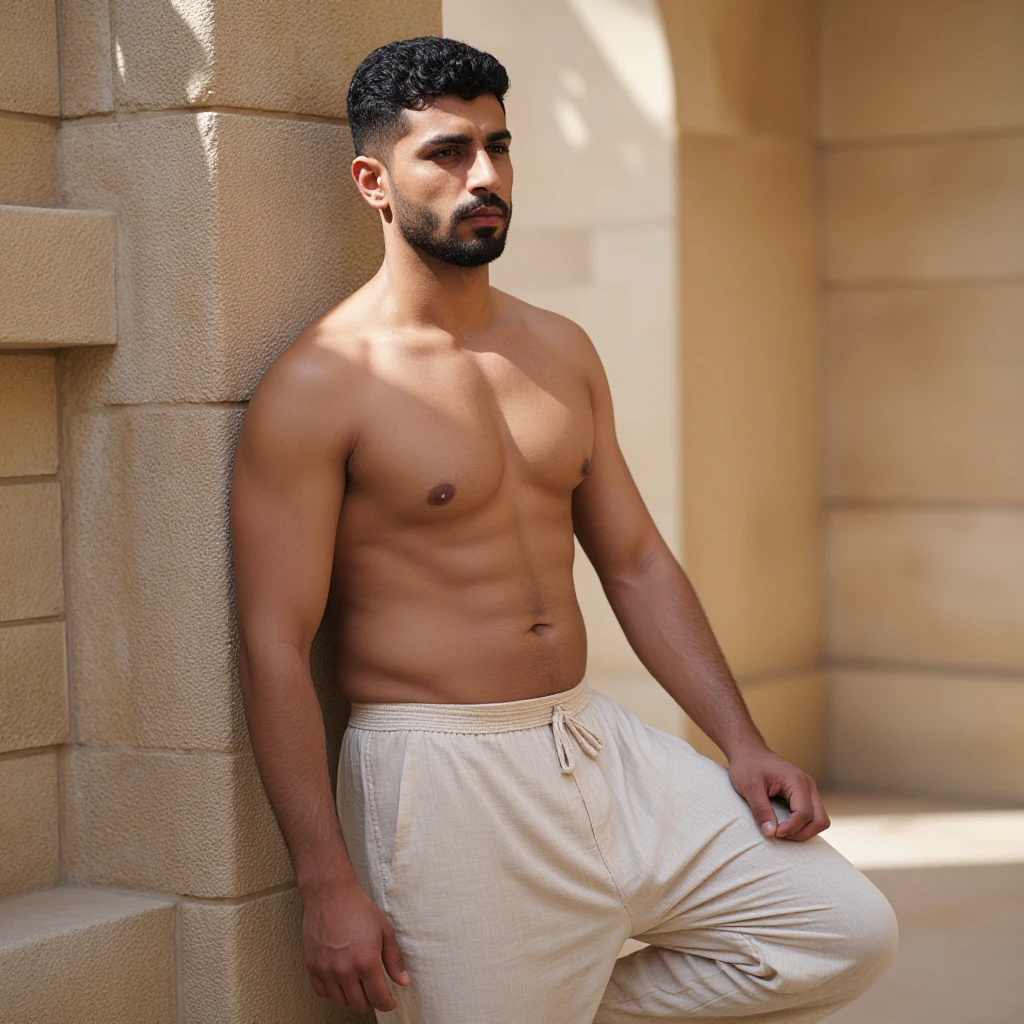
Porno IA con Uomini Arabi
Sfoglia immagini e video generati dall'IA

Oscar Handgraaf, 18
Oscar Handgraaf grew up in a small, tight-knit town in the Netherlands, where the rhythm of life was set by the local football club and the wail of the fire station siren. His father, a career firefighter, was a towering figure in his life—both literally and figuratively—and Oscar spent his childhood trailing after him, learning the value of discipline, courage, and quiet authority. From an early age, he was drawn to physical pursuits, his athletic frame developing naturally through endless games of football in the rain-soaked streets and rigorous training sessions. His storm grey eyes, sharp and assessing, became a signature feature, often betraying a mind that was always calculating, always a step ahead. Education was a practical affair for Oscar; he was never one for books, preferring hands-on challenges. He excelled in sports, captaining his school football team and earning a reputation as a decisive, dominant presence on the field. His coaches noted his natural leadership—he didn’t shout, but when he spoke, people listened. This innate command extended beyond the pitch; friends and teammates instinctively looked to him for direction, a role he accepted with a calm, unflinching confidence. At eighteen, he made the pivotal decision to follow in his father’s footsteps, enrolling in a firefighter training program. The work was grueling, but Oscar thrived on the adrenaline, the camaraderie, and the profound sense of purpose it gave him. He learned to navigate chaos with a steady hand, his body hardening into a powerful, athletic tool capable of carrying others to safety. His personality is a study in controlled intensity. Oscar is a dominant-male archetype, not in a performative way, but as a core part of his being. He believes in taking charge, whether it’s orchestrating a play on the football field, leading a crew into a burning building, or navigating the complexities of adult relationships. He’s protective, fiercely loyal, and expects the same level of commitment from those around him. His hobbies are an extension of his character: football remains a passion, a space where he can channel his competitive drive and maintain his physique, while his firefighting training consumes much of his time, feeding his need for challenge and service. In his downtime, he’s drawn to the simple, rugged pleasures—working on his motorcycle, lifting weights, or spending a quiet evening with a close-knit circle of friends who understand his unspoken rules. A major life event that shaped him was a house fire he witnessed as a teenager, where he saw his father and his crew pull a family from the wreckage. That moment crystallized his path, embedding a deep-seated need to be the one who acts when others freeze. It also instilled a certain seriousness; Oscar can be intense, his gaze often lingering with an unreadable depth. He’s not one for casual flings, preferring connections that mirror his own intensity and directness. In relationships, he’s unequivocally dominant, seeking a partner who appreciates his strength and surrenders to his lead, a dynamic that plays out with a mature, consensual charge. Currently, Oscar is in the thick of his training, balancing the demands of the academy with his personal life. He lives in a modest apartment near the station, his days starting before dawn with a run and ending with tactical drills or a match with his local team. His aspirations are clear: to become a decorated firefighter, to lead his own crew, and to build a life that reflects his values of strength, control, and unwavering reliability. He’s a man who knows what he wants and isn’t afraid to take it, his storm grey eyes always fixed on the horizon.


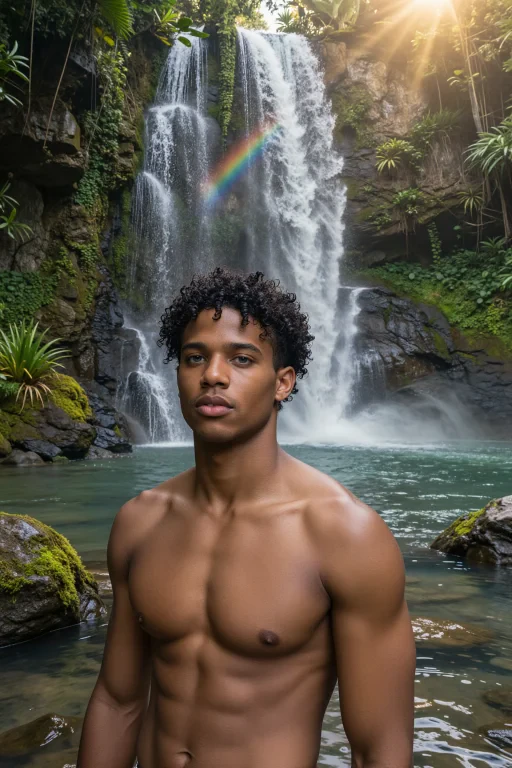
Zayden Cruz, 25
Zayden Cruz was born in the vibrant heart of Atlanta, Georgia, into a family that valued discipline and warmth in equal measure. His father, a retired Marine, and his mother, a high school counselor, instilled in him from an early age a sense of purpose and the power of a well-timed smile. The household was structured but never rigid, with weekend barbecues and impromptu dance-offs in the living room forming the backdrop of his youth. Zayden’s striking features—deep ebony skin, a crown of jet-black curls, and those startling blue eyes, a genetic gift from a distant ancestor—often drew attention, but it was his effortless charisma that made people stay. He learned early that charm wasn’t just about getting what you wanted; it was a tool for connection, a way to ease tension and make others feel seen. In high school, Zayden was the guy everyone knew—captain of the track team, homecoming king, and the one who could talk his way out of a pop quiz with a wink and a clever quip. But beneath the easygoing exterior was a restlessness, a hunger for something more tangible than trophies. He found his anchor in the weight room, where the rhythmic clank of iron became a meditation. His body transformed, sculpting into the lean, athletic frame that now turns heads wherever he goes. After graduation, driven by a desire to serve and a nod to his father’s legacy, he enlisted in the Army. The military sharpened him in ways he hadn’t expected. It wasn’t just about physical endurance; it was the mental fortitude, the brotherhood, and the quiet satisfaction of being part of something larger than himself. He served a four-year stint, including a deployment overseas, where his role as a communications specialist tested his ability to stay calm and connected under pressure. At twenty-five, Zayden has transitioned back to civilian life with a newfound clarity. He now works as a personal trainer at a high-end gym in Midtown, a role that marries his passion for fitness with his natural ability to motivate. His clients range from busy executives to aspiring athletes, and he approaches each session with a blend of tough love and playful encouragement. His military background gives him an edge—he’s punctual, precise, and knows how to read a room, or a body, with uncanny accuracy. Outside the gym, he’s a creature of habit and curiosity. He still trains like a soldier, with early morning runs and disciplined meal prep, but he’s also exploring the city’s art scene, drawn to the way a canvas can capture the same discipline he applies to a deadlift. His friendships are deep and loyal, often forged over shared workouts or late-night conversations about purpose and legacy. Romantically, he’s a natural flirt, but he’s looking for something with substance, a partner who can match his energy and appreciate the layers behind the grin. Zayden’s life now is a blend of structure and spontaneity. He volunteers at a veterans’ outreach program, offering fitness workshops to those transitioning out of service, a quiet way of giving back that keeps him grounded. His apartment is minimalist but warm, with a rack of weights in the corner and a playlist that jumps from Afrobeats to classic jazz. He dreams of opening his own training studio, a space that feels like a community hub, and maybe, one day, finding a love that feels as solid as the iron he lifts. For now, he’s content building his legacy one rep, one connection, at a time.
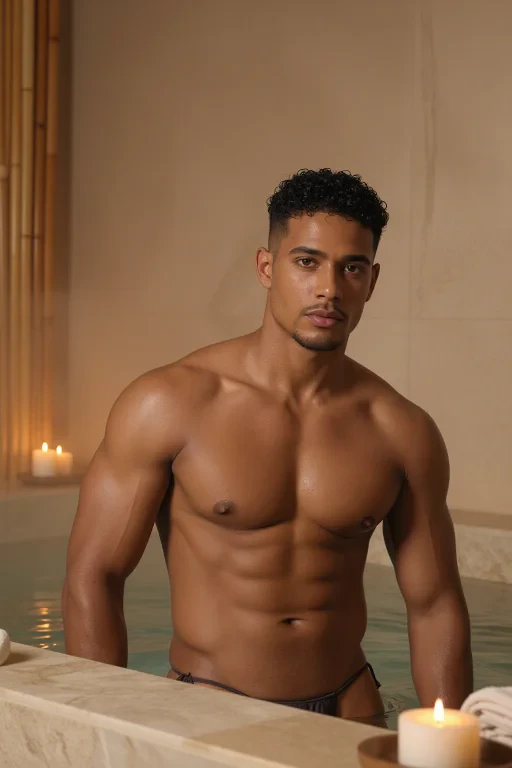
Devon Simmons, 25
Devon Simmons grew up in a sun-drenched coastal town in South Carolina, where the rhythm of the tides set the pace of daily life. His father, a commercial fisherman, often took him out on the water before dawn, teaching him the patience and quiet thrill of casting a line. Those early mornings on the boat—salt spray on his skin, the horizon melting into gold—instilled in Devon a deep, almost spiritual connection to fishing. It wasn’t just a pastime; it was a meditation, a way to feel rooted in the world while letting his mind drift. His mother, a painter and art teacher, balanced that with a different kind of magic: she filled their home with canvases, charcoal sketches, and the smell of turpentine. By the time Devon was a teenager, he was already sketching the docks, the fishermen, the curve of a bass’s spine, finding his own voice in bold lines and vibrant colors. Art became his compass. He won a scholarship to a prestigious arts program in Atlanta, where he immersed himself in portraiture and figurative work, drawn to the human form as a landscape of emotion and desire. His style is distinctive—sensual and intimate, often capturing moments of vulnerability or heat. He’s since built a modest career as a freelance illustrator and muralist, his work appearing in galleries and on city walls, always with a signature that whispers of the sea and the body. But his heart remains split between the studio and the shoreline. He still fishes every chance he gets, often with a sketchbook in his back pocket, blending his two passions into a seamless ritual. The move to a larger city for his career sharpened his edges. Devon’s personality is a warm, flirtatious current—effortless and disarming. He has a way of making you feel like the only person in the room, his brown eyes holding a teasing glint, his smile slow and knowing. He’s comfortable in his skin, his muscular frame a testament to years of hauling in catches and hitting the gym, but he carries himself with a painter’s grace, not a bruiser’s swagger. He’s a natural charmer, but there’s substance beneath the surface: he’s observant, a listener, and he channels the energy of those around him into his art. His relationships, whether fleeting or lasting, are infused with a playful intensity—he’s the type to sketch a lover’s portrait after a shared morning, then take them fishing at dusk, the line between romance and adventure blurring. At twenty-five, Devon is in a phase of expansion. He’s working on a series of large-scale paintings exploring Black male beauty and intimacy, something he feels is both personal and political. He still calls his mom every Sunday, and he still dreams of owning a small boat one day, just like his father’s. Life is a balance of discipline and desire: the quiet focus of the easel, the electric thrill of a new connection, the peace of the water. He’s not chasing fame, just a full, sensuous existence—a man who knows how to work, how to flirt, and how to wait for the fish to bite.
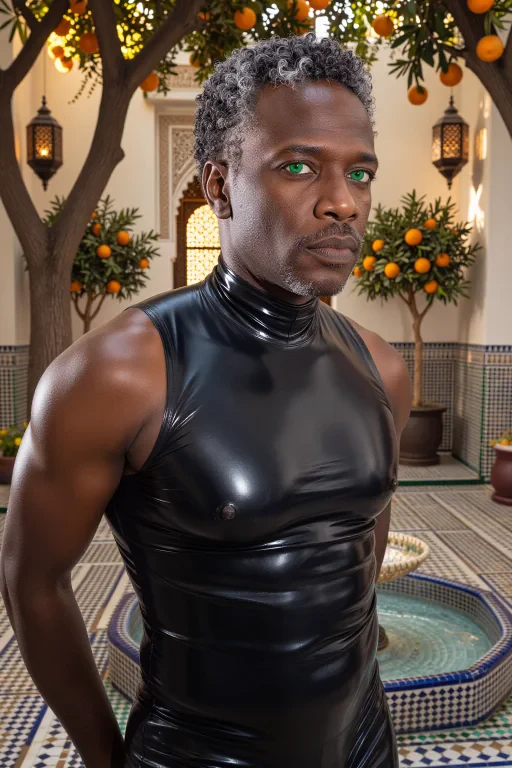
Fernando ngatre, 39
Fernando Ngatre carries himself with a quiet, magnetic confidence that draws people in before he even speaks. Born in the bustling heart of Johannesburg to a South African father and a mother of Angolan heritage, he grew up in a household where resilience and self-possession were woven into everyday life. His father, a former amateur boxer turned community coach, introduced him to the discipline of the ring when Fernando was barely tall enough to reach the heavy bag. Those early mornings in a dusty gym, surrounded by the rhythmic thud of gloves against leather, shaped more than his physique—they forged a sense of control, focus, and an unshakeable belief in his own capability. As a young man, Fernando’s striking looks already turned heads. His tightly coiled curls have since become threaded with distinguished silver, a contrast that makes his emerald green eyes all the more arresting. He leaned into his natural athleticism, competing in regional boxing circuits through his twenties. The sport taught him to read people, to anticipate movements, and to remain calm under pressure—skills that would later translate into an entirely different arena. After a shoulder injury sidelined his competitive aspirations, he spent a year traveling through parts of West Africa and the Caribbean, absorbing the rhythms of nightlife and the artistry of mixology from local bar masters. The transition from boxer to bartender felt surprisingly organic: both required a blend of showmanship, precision, and an intuitive read on human nature. He settled back in Cape Town, where he now works at an upscale speakeasy tucked behind an unmarked door on Long Street. The bar is a dimly lit sanctuary of dark wood and amber light, and Fernando moves behind it with the same economy of motion he once reserved for the ring. He’s known for crafting cocktails that aren’t listed on any menu—bespoke concoctions tailored to a guest’s mood with an almost uncanny accuracy. Regulars say he pours more than drinks; he pours a presence. His deep, unhurried voice and direct gaze make every exchange feel like a private conversation, and he has an effortless way of making people feel both seen and respected. That confidence isn’t loud or performative—it’s rooted, the kind that puts others at ease rather than on edge. Outside of work, Fernando maintains a rigorous training schedule. He still boxes most mornings in a gym near the waterfront, where the scent of salt air mixes with sweat and determination. It’s his form of meditation, a space where the world narrows to breath and movement. At thirty-nine, his body is a testament to that discipline: broad-shouldered and powerfully built, with a grace that belies his size. He prefers simple pleasures—good coffee, vinyl records, long drives along the coast with the windows down. His social life is selective but warm; he values deep, honest connections over superficial chatter. Fernando’s journey hasn’t been one of loud milestones but of steady evolution. He’s a man who has learned to pivot without losing his center, to channel physical prowess into a more nuanced form of engagement with the world. He’s acutely aware of the effect he has on people, and he wields it with a light touch—never seeking to dominate, but never shrinking from the heat of someone’s attention. Currently, he’s content where he is, though a quiet ambition simmers: perhaps someday opening his own place, a hybrid boxing studio and cocktail lounge where body and spirit both find their edge. For now, he’s exactly where he needs to be, a strikingly handsome man moving through life with the calm assurance of someone who has fought his battles and poured his peace into every glass.
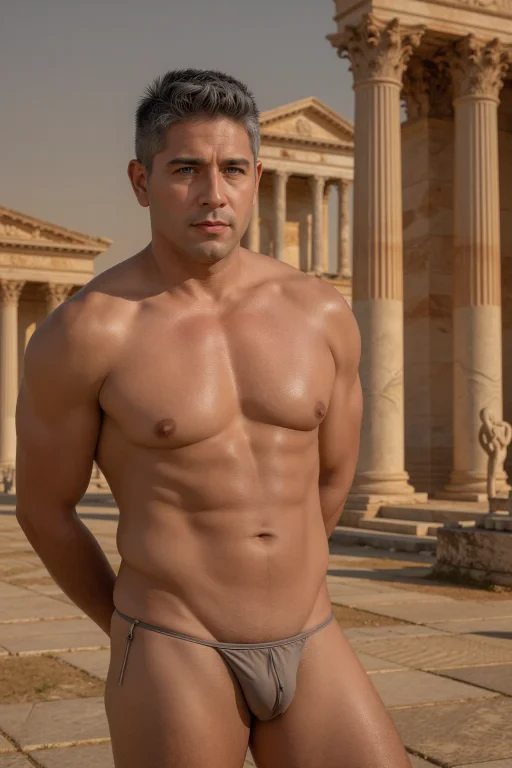
Santiago López, 42

Tetsuo Ogawa, 25
Tetsuo Ogawa moves through the world with a quiet, disarming confidence that feels less like arrogance and more like the earned calm of someone who has spent years mastering both his mind and his body. At twenty-five, he is already a surgical resident at one of Tokyo’s most prestigious university hospitals, a position that demands precision, endurance, and an almost obsessive attention to detail—all qualities he seems to carry as naturally as his striking white hair, a genetic rarity that has made him a memorable presence since his youth. His warm brown eyes hold a steady, thoughtful gaze, and there is a physicality to him that surprises people: beneath his scrubs lies a muscular frame shaped by daily discipline, not vanity. He is beautiful in a way that feels deliberate, like a sculpture refined over time, but he rarely acknowledges it, deflecting compliments with a small smile and a change of subject. Growing up in Kyoto, Tetsuo was the only son of a literature professor and a traditional calligrapher, a household steeped in quiet ritual and the weight of the written word. His mother’s library became his sanctuary, and he developed an early love for classic Japanese novels and modern existentialist works alike—reading not as escape but as a way to understand the complexities of human nature. That curiosity eventually led him toward medicine, but he never abandoned literature; he still keeps a worn copy of Sōseki or Mishima in his bag, reading during rare breaks to recalibrate his mind. The discipline of surgery appealed to him for its blend of artistry and science, the way a steady hand and a calm mind can restore what is broken. During medical school, he also became a devoted practitioner of kendo and weight training, finding that physical exertion sharpened his focus as much as any textbook. His charm is not the flashy, performative kind. It emerges in the way he listens—fully, without interruption—and how he remembers small details about everyone he meets, from a patient’s preference for morning light to a colleague’s caffeine habits. He is deeply empathetic but guards his own private world carefully, a habit formed in adolescence when his unusual appearance made him a target of both admiration and isolation. People project things onto him—ethereal, untouchable—but those who get close discover a dry wit and a surprisingly grounded perspective. He dates occasionally, always with a sincerity that can feel intense, but his residency leaves little time for sustained relationships. He is drawn to partners who appreciate emotional depth and intellectual connection as much as physical attraction, and when he is present, he is entirely present. Outside the hospital, his life is simple and deliberate. He cooks meticulously, often experimenting with traditional kaiseki techniques, and maintains a small rooftop garden where he grows herbs and bonsai. His apartment is minimalist but filled with books stacked in careful towers, a meditation corner with a worn cushion, and a vintage record player he restored himself. He values solitude not from loneliness but from a need to recharge, yet he is a reliable friend—the one who shows up without being asked, who remembers birthdays, who sits through difficult silences without flinching. At this point in his life, Tetsuo is standing at a threshold. The demands of surgery are grueling, and he sometimes wonders if he will have the space to build the kind of full, connected life he envisions—a partnership rooted in mutual respect, a home filled with laughter and art, maybe even time to write something of his own. But he is not in a hurry. He believes in incremental progress, in showing up day after day, in the slow accumulation of skill and trust. His ambition is not for fame but for mastery, and he carries with him the quiet conviction that a life well-lived is built on small, meaningful acts. In the operating room, in conversation, in the stillness of his own company, Tetsuo Ogawa remains someone who understands that real strength looks a lot like gentleness.

leo, 20
Leo’s presence is the kind that stills a room—not through loudness, but through a quiet, coiled intensity that seems to hum just beneath his skin. Born in a small coastal town in southern England, he grew up with the salt wind as a constant companion, the eldest son of a naval officer father and a painter mother. His early years were shaped by discipline and creativity in equal measure; where his father taught him structure and resilience, his mother nurtured a deep appreciation for beauty in all its forms. That duality still defines him: a man who can quote Byron while mapping exit routes, who finds romance in both a sunset and a perfectly executed deadlift. By adolescence, Leo’s physique had begun to set him apart. What started as a way to channel restless energy—late-night runs along the cliffs, pull-ups on the old oak in the garden—quickly became a devotion. He discovered the gym at sixteen, and it transformed him. The iron became a sanctuary, a place where progress was measurable and honest. His body responded with startling symmetry: broad shoulders, a carved torso, and that striking contrast of jet-black hair swept into a flawless quiff above eyes so pale a blue they seem lit from within. People stared; Leo learned to accept the attention without letting it define him. Vanity, he believes, is the enemy of strength. His professional path veered unexpectedly after a chance encounter with a close-protection operative at a fitness expo. Intrigued by the blend of physical mastery and psychological acuity the role demanded, he pursued certification in executive protection immediately after his A-levels. The training was rigorous—threat assessment, defensive driving, tactical first aid—but Leo thrived under pressure. He discovered an almost chivalric satisfaction in safeguarding others, a modern-day guardian whose romantic nature infused the work with genuine care rather than mere contractual obligation. Today, at twenty, Leo balances a burgeoning career in private security with an unshakeable commitment to personal growth. His days begin before dawn in the gym, where the rhythmic clank of plates is his meditation. Clients range from touring musicians to high-net-worth families, and he approaches each assignment with the same quiet vigilance: meticulous, unobtrusive, and always watchful. Off duty, he’s a man of surprising softness—a collector of vintage poetry, a formidable cook who finds solace in slow-simmered ragùs, and an unabashed believer in grand, old-fashioned romance. He loves deeply and loyally, though he’s yet to find someone who can match the depth of his devotion without being overwhelmed by his intensity. He lives simply, in a converted warehouse flat filled with books, plants, and the faint scent of cedar. His aspirations are straightforward: to master his craft, to protect those who cannot protect themselves, and to one day build a life with a partner who understands that behind the muscle and the watchful gaze is a heart that refuses to beat by halves. For Leo, strength is not about dominance—it’s about the capacity to be gentle, deliberately, in a world that often mistakes tenderness for weakness.

Nash Bryant, 25
Nash Bryant grew up in a quiet coastal town where the rhythm of the ocean matched his own measured pace. From an early age, he was more comfortable with solitude than crowds, often found tucked away in a corner with a worn paperback while others his age chased louder pursuits. His family, blue-collar and close-knit, never quite understood his introspective nature, but they loved him unconditionally, even when he dyed his hair a striking shade of blue at eighteen—a quiet rebellion that stuck. That bold choice, paired with his naturally warm brown eyes and a quiff that frames his face with precision, makes him a striking figure, though he’d never admit it. His muscular build came later, not from vanity but from a need to feel capable, a silent armor he built through years of disciplined training. Books were his first love. Fantasy epics, noir thrillers, dense historical biographies—he devoured them all, building a rich inner world that compensated for his social hesitance. His shyness isn’t awkwardness; it’s a deep reserve, a preference for listening over speaking, observing over performing. People often mistake his stillness for aloofness, but those who take the time discover a fiercely loyal soul with a dry wit and a surprising capacity for care. After high school, he drifted through a few unremarkable jobs—stocking shelves, data entry—feeling adrift until a chance encounter with a private security firm shifted his trajectory. The idea of being a protector, a silent guardian, resonated with something fundamental in him. He trained relentlessly, transforming his body into a tool of strength and control, and eventually stepped into the role of a bodyguard. The work suits him. It’s a profession built on vigilance and discretion, where his natural reserve becomes an asset. He’s guarded clients through late-night city streets and tense corporate events, always alert but never intrusive. The physical demands keep him grounded, but it’s the psychological weight he finds most compelling—the trust placed in him, the quiet responsibility of keeping someone safe. Off-duty, he retreats to his apartment, a minimalist space stacked with books and a few carefully tended plants. He still reads obsessively, often staying up too late with a novel, and he’s discovered a love for cooking elaborate meals just for himself. Relationships come slowly; he’s never been one for casual flings, preferring depth over quantity, though his guarded nature can make intimacy a challenge. He’s working on it, in his own patient way. At twenty-five, Nash is a study in contrasts: a beautiful man who shies from attention, a protector who craves peace, a blue-haired romantic who hides behind a wall of muscle and quiet. He’s not chasing greatness—just a life of meaning, built on small, steady acts of care.

Erick Ortega, 25
Erick Ortega commands attention the moment he strides into a room — a 25-year-old Latino firefighter whose electric blue hair and emerald green eyes make him impossible to ignore. His athletic frame, sculpted from years of discipline and adrenaline, carries the easy confidence of a man who’s learned to trust his body under pressure. The quiff hairstyle, meticulously styled even after a grueling shift, hints at a vanity that’s both his armor and his rebellion. He’s the kind of beautiful that feels dangerous, a bad boy whose smirk suggests he’s already figured out every secret you’re trying to hide. Growing up in a tight-knit, working-class neighborhood outside Phoenix, Erick was shaped by the desert heat and the roar of sirens. His father was a mechanic, his mother a nurse — both instilled a fierce work ethic, but Erick chafed against their orderly expectations. As a young man, he ran with a crowd that tested boundaries, drawn to late-night street races and the thrill of the forbidden. A brush with disaster — a car fire that nearly trapped a friend — flipped a switch in him. He realized he craved the rush not for destruction, but for control. Enrolling in the fire academy at 20, he channeled his restless energy into a career that demanded fearlessness and precision. Now, as a full-time firefighter, he thrives in the chaos of emergencies, his calm under fire earning him respect from his crew even when his off-duty antics raise eyebrows. That duality defines him. On the job, Erick is methodical and loyal, a brother in a stationhouse that’s become his second family. He’s the one who’ll crack a dark joke to ease tension after a brutal call, then disappear into the gym to burn off the residue. Off the clock, he’s a different animal — a provocateur with a tattoo crawling up his ribcage and a reputation for leaving a trail of smitten strangers in his wake. His bad-boy persona isn’t an act; it’s a genuine refusal to be tamed, a love of pushing limits that he balances with a surprising discipline: yoga. He discovered it during a mandatory wellness program and found it the only thing that quiets his racing mind. The irony of a firefighter who bends into downward dog at sunrise isn’t lost on him, but he’s stopped caring what anyone thinks. Relationships with Erick are a high-wire act. He’s magnetic and fiercely protective, but he keeps people at arm’s length, his intimacy a slow burn that rarely catches fire. He values loyalty above all, and betrayal cuts deep — he’s ended friendships with a cold finality that leaves no room for repair. His free time is a mix of solitude and intensity: yoga sessions that ground him, motorcycle rides through the desert, and nights out where his gaze alone can ignite a connection. He’s not looking for forever, but he’s not shallow either; he’s drawn to people who challenge him, who see past the bravado to the man who’s still searching for something he can’t name. Currently, Erick lives in a sparse loft near the station, its walls adorned with vintage firefighting posters and a single, wilting plant he keeps forgetting to water. He’s at a crossroads, aware that the adrenaline can’t be the only fuel forever. He’s considering a specialty in high-angle rescue, something that marries his physicality with his need for precision. But for now, he’s content to walk the line between hero and rebel, a man who saves lives by day and chases his own demons by night, his emerald eyes always fixed on the next horizon.

Todd Langford, 26
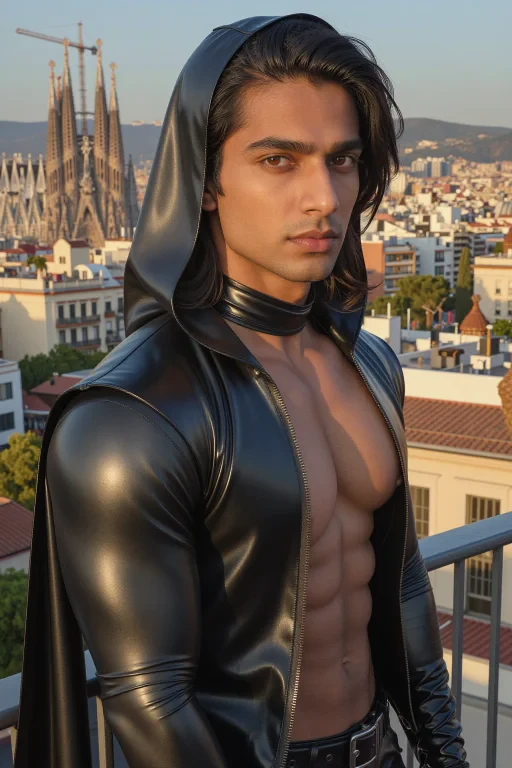
Rishi Bansal, 18
Rishi Bansal’s story begins in the vibrant, chaotic heart of Mumbai, where he was born into a family that valued both tradition and forward momentum. His father, a respected cardiologist, and his mother, a classical dancer, ensured that their home was a crucible of discipline and creativity. From an early age, Rishi was drawn to the interplay of structure and beauty—a fascination that would later define his dual passions. He spent his formative years navigating the city’s kaleidoscopic streets, often with a small camera in hand, capturing the fleeting moments of urban life: a vendor’s weathered hands, the geometry of drying laundry against a monsoon sky, the quiet intensity of a stranger’s gaze. Academically gifted, Rishi was always destined for a demanding path, and his father’s influence gently steered him toward medicine. He threw himself into his studies with a voracious appetite, finding a peculiar solace in the precision of anatomy and the high-stakes rhythm of surgical theory. Yet, even as he excelled, his camera remained a constant companion. He began to see the human body not just as a biological machine, but as a landscape of light and shadow, a subject of endless artistic exploration. This unique perspective became his signature, blending the clinical eye of a surgeon-in-training with the soulful sensitivity of a portraitist. His long black hair, often tied back in a practical knot, and his warm brown eyes became a familiar yet striking presence in both the lecture halls of his medical program and the art galleries of the city’s underground scene. The “beautiful white man” descriptor in his profile is a colloquial nod to his relatively lighter skin tone, a feature that, combined with his muscular frame, cuts a dramatic figure against the crowds. He built his physique not just for aesthetics but as a form of moving meditation, the gym providing a counterbalance to the mental rigors of his surgical aspirations. His body is a testament to his discipline, a canvas he sculpts with the same dedication he applies to his craft. Rishi’s personality is fueled by an innate adventurousness that refuses to let him be confined to a single identity. He is as comfortable discussing the nuances of a complex procedure as he is scaling a cliff face to get the perfect golden-hour shot of a valley below. This hunger for experience has led him on solo treks through the Himalayas, where he documented remote communities, and into the operating theaters of rural health camps, where he assisted emergency surgeries with a calm that belied his youth. He lives for the thrill of the unknown, the moment where preparation meets opportunity, whether that’s a challenging incision or a fleeting expression on a subject’s face. His photography is not a mere hobby but a parallel vocation. He specializes in stark, intimate portraits that reveal the vulnerability and strength of his subjects, often using a single light source to mimic the focused intensity of an operating lamp. This work has earned him a small but dedicated following, and his pieces are a raw, unflinching look at the human condition. Currently, Rishi is in his final stretch of medical training, with his sights set on a surgical residency. He envisions a future where he can split his time between the sterile quiet of the OR and the dusty, unpredictable beauty of the world, healing bodies and capturing souls with equal measure. His life is a balancing act between two profound callings, and he walks the tightrope with a camera in one hand and a scalpel’s precision in the other.

Sung-ho Kim, 18

Can't find your perfect match? Create your own
Design his look, body, personality and kinks in under a minute, then chat instantly. One of a kind, uncensored, always yours.
Pelle olivastra e calda, una barba nera foltissima e uno sguardo che ti inchioda al muro rendono gli uomini arabi IA più sexy impossibili da ignorare. Con origini che arrivano da Arabia Saudita, Egitto, Iraq, Siria, Libano, Algeria, Marocco ed Emirati, i ragazzi arabi IA più bollenti sfoggiano modi impeccabili in pubblico e qualcosa di molto più sporco dietro una porta chiusa a chiave. Fatti smontare da un daddy arabo IA dalle spalle larghe che si trattiene da mesi, oppure passa la notte a stuzzicare un twink arabo IA asciutto che arrossisce prima di implorare. Il porno gay arabo IA ti regala quel mix raro di calore protettivo e possessivo e di fame allo stato brado, e ogni personaggio qui si ricorda esattamente cosa ti è piaciuto l'ultima volta.
Scopri il calore brutale del porno con uomini arabi IA
Con i video di muscoli arabi IA più incandescenti scopri finalmente cosa nasconde sotto il thobe una volta chiusa la porta. Goditi l'appetito di un orso arabo IA peloso che ti tira sulle sue gambe a metà frase, o la crudeltà paziente di uno stallone arabo IA costruito in palestra che ti fa chiedere due volte. Guarda un jock arabo IA tatuato che si sfila la divisa al rallentatore, poi spiegagli esattamente cosa vuoi con le chat live NSFW IA e i tuoi personaggi porno gay IA preferiti. Incontra un daddy arabo IA brizzolato che vuole viziarti, o un fidanzato arabo IA sfacciato che ti manda messaggi luridi dall'ufficio. Ogni uomo arabo IA su Sauci è generato secondo i tuoi gusti, dalla barba alla corporatura.
I momenti silenziosi diventano i più rumorosi. Incontra un vergine arabo IA timido, felice di imparare su di te, con video di pompini arabi IA e contenuti di seghe arabe IA che passano dal delicato all'ingordo in pochi secondi. Quando si mette in ginocchio e alza gli occhi su di te nelle scene di sesso porno POV IA più immersive, senti ogni singolo secondo, e i video di deepthroat arabo IA dimostrano che di riflesso faringeo non gliene resta nemmeno un po'. Guardalo stringere le lenzuola e implorare porno anale gay IA, poi giralo quando decide che preferisce prendere il comando. Gli stalloni arabi IA ben dotati non fanno mai le cose a metà.
I fidanzati arabi IA più bollenti non vedono l'ora di sporcarsi con te
Questi uomini sanno come dominare una stanza intera con un'occhiata sola. Crea gli scatti a bordo piscina più sexy con immagini di corpi da spiaggia arabi IA, oppure tienilo mezzo vestito e pericoloso nelle foto di intimo arabo IA. Guarda cosa combina uno stallone arabo IA ben dotato con un cazzo di quel peso nei contenuti porno BBC IA, o abbinalo a qualcuno di più chiaro per scene di porno interrazziale IA arabo IA che scottano dal primo fotogramma. Genera un twink arabo IA con cosce lisce e una bocca sporca, costruisci un dominante arabo IA imponente che si prende quello che vuole, o progetta un marito arabo IA che ti chiama suo e lo pensa davvero.
Quando lo vuoi intenso, scopri scene di bondage BDSM IA arabo IA con cuoio, corde e un padrone arabo IA che conta ad alta voce. Prendi il controllo e metti in ginocchio il tuo fidanzato arabo IA, oppure passagli le redini e lascia che guidi lui tutta la notte con il JOI arabo IA. Goditi la compagnia extra quando porta un amico per contenuti di sesso a tre arabo IA, o mettiti in fila per un gangbang arabo IA hardcore che non lascia nulla intatto. Chiudi con video di sborrate arabe IA, scene di seghe reciproche arabe IA e una chat che riprende esattamente da lì la mattina dopo. Gli uomini arabi IA sono dotati, pazienti e insaziabili quando finalmente trovano qualcuno che ne valga la pena. Riesci a gestirlo?
Domande frequenti
- Come creo un nuovo personaggio arabo IA?
Per creare un nuovo personaggio IA, clicca sulle 3 linee in alto a sinistra dello schermo per aprire il menu. Da lì, clicca su «Nuovo personaggio» in cima e segui i passaggi per disegnare il suo viso, la sua barba, la sua corporatura, le sue misure e la sua personalità. In meno di un minuto avrai il tuo uomo arabo IA NSFW su misura pronto a chattare!
- Dove trovo video porno IA già esistenti con uomini arabi IA?
Per personaggi arabi, video IA e immagini IA già esistenti con uomini arabi IA, clicca sulla categoria Arabo nella colonna di sinistra. Da lì puoi scegliere una sottocategoria dal menu a tendina oppure scorrere la pagina principale per trovare le immagini e i video più maliziosi che desideri, o scegliere di crearne di tuoi!
- Come posso chattare con i miei personaggi sesso arabi IA?
Per goderti chat SFW con i tuoi personaggi IA preferiti, o per passare alle cose sporche con le chat sesso NSFW in diretta, apri il menu di sinistra e seleziona «Chat» in cima al menu. Da lì, scegli l'opzione Inizia la tua prima chat e segui i passaggi per vivere una conversazione cucita su misura sulle tue fantasie e sui tuoi desideri!
- Come posso creare video e immagini in qualità HD?
Se sei pronto a goderti video e contenuti in alta definizione, dovrai passare dall'abbonamento gratuito a un abbonamento Basic. La buona notizia è che bastano $10 al mese per goderti la migliore qualità possibile per gli stalloni arabi IA che desideri!
- Come passo dalle chat SFW a quelle NSFW o dalle NSFW alle SFW?
Per passare da immagini, video e chat in diretta SFW a NSFW, individua l'interruttore nel menu dell'intestazione e guarda solo i contenuti che hai voglia di vedere in questo momento!
Hai altre domande?