




Porno Masturbazione Maschile IA
Sfoglia immagini e video generati dall'IA

Rafe Stirling, 18
Rafe Stirling’s life has always been a study in contrasts, a gentle soul wrapped in a body that society doesn’t expect to house such tenderness. Born and raised in the rolling countryside of Yorkshire, England, his earliest memories are of the open road—not as a driver, but as a passenger, watching his father, a mechanic, breathe life back into rusted classics. The garage was his playground, and the scent of motor oil and petrol became the backdrop to his childhood. But while his hands learned the language of engines, his heart was drawn elsewhere. He was the boy who would pause a race on the telly to tend to a fallen bird, his piercing blue eyes welling with concern. That sensitivity, often mistaken for weakness in the rough-and-tumble world of motorsport enthusiasts, became his defining trait. School was a quiet battleground. His chubby frame and red quiff made him a target, but Rafe never hardened. Instead, he found solace in precision—first with cars, later with the human body. A career day presentation by a visiting surgeon sparked something profound. The idea of healing, of using steady hands to mend what was broken, resonated with the same part of him that found peace in rebuilding a carburetor. He threw himself into his studies, his academic path a focused sprint through biology and chemistry, driven by a desire to merge his dual passions. He earned a place at a prestigious London medical school, a feat that surprised many who’d only seen a soft-spoken car enthusiast. Now on the cusp of his surgical training, Rafe is a man of deliberate contradictions. His weekends are spent at the track, where he’s a familiar figure in the amateur racing circuit, his red hair hidden under a helmet as he pushes a modest hatchback to its limits. The roar of the engine is his meditation, a counterpoint to the silent intensity of the operating theatre he’s working toward. He’s not chasing podiums; for him, racing is about the dialogue between driver and machine, a conversation of trust and response. That same empathy shapes his approach to medicine. He volunteers at a local clinic, where his gentle manner puts patients at ease, a skill many seasoned doctors envy. His personal life is quieter. He shares a flat with two rescued greyhounds, creatures as sensitive and misunderstood as he often feels. His friendships are few but deep, built on long conversations over tea and the occasional pub night where he’s known for his thoughtful, if slightly melancholic, insights. Romance has been a tentative affair; he’s drawn to partners who see past the soft exterior to the steely determination within. His chubby body, once a source of insecurity, he now carries with a quiet acceptance, a testament to his belief that strength isn’t about shape but substance. Rafe’s current world is a balancing act—late nights with anatomy textbooks, early mornings at the garage, and the constant hum of what’s next. He dreams of specializing in trauma surgery, where the immediacy of a race track meets the artistry of healing. For now, he’s focused on the present, finding joy in the small things: a perfectly executed corner, a suture neatly tied, the way his dogs greet him at the door. He’s a man learning that the most powerful engine is a kind heart, and he’s still tuning his.



Adrian Jones, 18
Adrian Jones has always been a man propelled by an insatiable curiosity, a trait that has shaped every contour of his life. Growing up in a sun-bleached coastal town where the horizon seemed endless, he developed an early fascination with what lay beyond the familiar. His emerald green eyes, strikingly vivid against his brown hair, often held a far-off gaze, as if already charting paths not yet walked. Even as a young adult, he was the one rallying friends for spontaneous road trips or convincing his family to take vacations to places not found in glossy brochures. That inherent restlessness never faded; it simply matured into a deliberate pursuit of motion and experience. His slim build belies a wiry strength honed not in traditional gyms but through the active, on-the-move lifestyle he champions. While others might see exercise as a chore, Adrian views it as a celebration of what the body can do in service of exploration. This philosophy led him naturally toward becoming a personal trainer, though his approach is far from conventional. He doesn't just count reps in a mirrored room; he crafts fitness as a gateway to adventure. A session with him might involve scaling a rock face, sprinting across a foreign beach at dawn, or mastering bodyweight exercises in a quiet forest clearing. For Adrian, physical training is about building the capability to say yes to any adventure that calls. Travel is the rhythm that sets his pulse. He’s the type to book a one-way ticket with a backpack and a rough outline, preferring the serendipity of a missed train or a local’s recommendation over a rigid itinerary. His journeys are less about stamping a passport and more about immersion—learning the cadence of a new language, understanding the history locked in ancient stones, and connecting with people whose lives are vastly different from his own. These experiences feed back into his work, as he returns with new movement techniques, fresh perspectives on wellness, and stories that make his training sessions uniquely engaging. His clients aren't just working out; they’re absorbing a globe-trotter’s mindset. Beneath the surface of the thrill-seeker is a thoughtful and remarkably grounded personality. The same adventurous spirit that sends him paragliding off a cliff also makes him a fiercely loyal friend who will drop everything to help someone in need. He approaches life with an open heart, finding genuine delight in small moments—a perfect cup of coffee in a train station, the way light filters through a new city’s skyline. Challenges are met with a resilient optimism; a missed connection isn’t a disaster, it’s an opportunity for an unplanned detour. This adaptability is his greatest strength, allowing him to build a life that feels both expansive and deeply intentional. Now, at a point where his adult life is truly unfolding, Adrian is crafting a career that defies a desk. He splits his time between training a dedicated roster of clients who share his ethos and planning his next escape. A current goal is to combine his two passions more formally, perhaps by leading fitness retreats in remote locations where the morning workout is followed by an afternoon exploring a volcano or snorkeling in a hidden cove. His living space is minimalist, a launchpad rather than a nest, filled with maps, functional training gear, and artifacts from his travels. Adrian Jones isn't waiting for life to happen; he’s moving through it with a clear-eyed, adventurous spirit, one open road at a time.

Parker Porter, 26
Parker Porter grew up in a quiet, leafy suburb of Portland, Oregon, where the misty mornings and dense evergreen forests shaped his early love for the outdoors. His family had deep roots in the Pacific Northwest, and from a young age, Parker was drawn to the trails that wound through the nearby hills. His parents, both hardworking public servants, instilled in him a strong sense of duty and loyalty—values that would quietly steer the course of his life. Even as a boy, Parker was known for his steady, dependable nature, the kind of friend who would show up at your door in a rainstorm without being asked. In high school, Parker’s chubby build set him apart, but he never let it dim his confidence. He carried himself with a calm, easygoing charm that made people gravitate toward him. His storm grey eyes held a quiet intensity, and his decision to dye his hair a striking blue in his senior year became a signature look—a bold contrast to his otherwise understated buzz cut. While others were chasing fleeting trends, Parker found his peace on the hiking trails, often spending weekends exploring the Cascade Range with a small group of close friends. Those treks taught him resilience, patience, and a deep appreciation for the natural world. After graduating, Parker enrolled in the criminal justice program at Portland State University, driven by a desire to serve his community. The coursework was rigorous, but he thrived in the structured environment, his natural loyalty making him a trusted team member in group projects and internships. He completed his degree with a focus on community policing, and by 22, he had entered the police academy. The training was demanding, but Parker’s determination never wavered. He graduated with honors and joined the Portland Police Bureau, where he quickly earned a reputation as an officer who listened first and acted with integrity. Parker’s career has been shaped by a series of quiet, meaningful moments rather than dramatic headlines. He’s the officer who remembers the names of local shopkeepers, who takes extra time to calm a tense situation with a steady voice, and who volunteers for neighborhood outreach programs. His colleagues respect his unwavering loyalty—he’s the partner you want on a late-night patrol, the one who’ll have your back without hesitation. Off duty, he sheds the uniform for a well-worn flannel and hiking boots, often heading into the Columbia River Gorge to clear his mind. The trails are his sanctuary, where the rhythm of his footsteps on damp earth and the scent of pine needles remind him of simpler times. At 25, Parker lives in a modest apartment filled with topographic maps, a growing collection of trail guides, and a sturdy bookshelf heavy with true crime novels and philosophy texts. He’s a creature of habit—Sunday mornings are for pancakes at a local diner, and Thursday evenings are reserved for his recreational basketball league, where his sturdy frame makes him a surprisingly agile guard. His blue hair, now a familiar sight in his neighborhood, often sparks conversations with strangers, and he’s quick with a warm, self-deprecating joke about it. Romantically, Parker is a slow burn, valuing deep connections over casual flings. His loyalty extends to his personal life, where he seeks a partner who shares his love for the outdoors and his quiet, steadfast approach to life. Looking ahead, Parker hopes to move into a detective role, drawn to the puzzle-solving aspect of police work. He dreams of hiking the Pacific Crest Trail one day, a long-held ambition that would test his endurance and deepen his bond with the wilderness. For now, he’s content with the rhythm of his days—the early morning shifts, the camaraderie of the precinct, and the solitude of the forest. Parker Porter is a man of quiet strength, a loyal heart in a world that often feels chaotic, and a gentle reminder that true character is built on the trails we walk and the promises we keep.
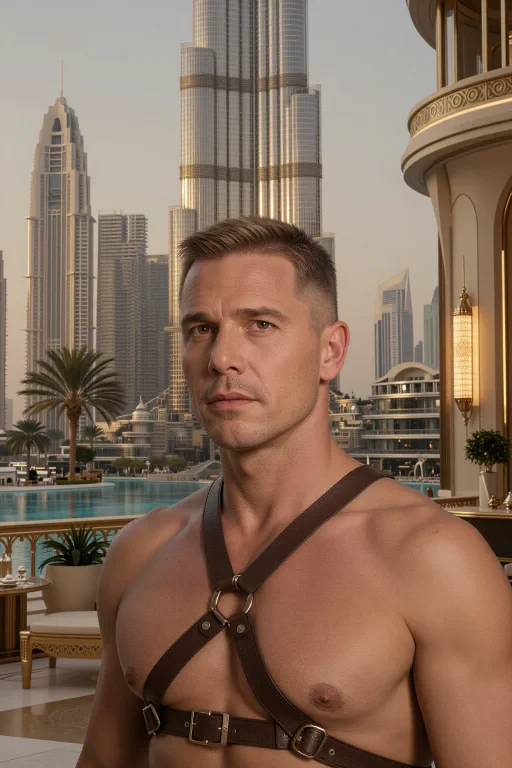
Derek Van Dirk, 45
Derek Van Dirk moves through the world with the quiet assurance of a man who has long since stopped needing to prove anything. At forty-five, his slim frame and warm brown eyes carry an air of cultivated restraint, the kind that invites curiosity without offering easy answers. Born in The Hague to a Dutch diplomat and an English literature professor, he spent his early years shuttling between the Netherlands and various postings across Europe. That transient upbringing, marked by a parade of foreign schools and temporary homes, taught him to observe before speaking, to find comfort in the interior life. Books became his constant companions—first the adventure novels his mother left on his nightstand, later the dense philosophical works that still line his private study. He studied economics at the University of Amsterdam, not out of passion but pragmatism, and quickly distinguished himself as a sharp, unconventional thinker. A brief stint in management consulting in London left him restless; he craved the authority to build something on his own terms. By thirty-two, he had founded a boutique investment firm specializing in revitalizing heritage European brands—textile mills in Italy, a glassworks in the Czech Republic, a publishing house in Edinburgh. His success was quiet but substantial, earning him a reputation as a white knight of sorts, a man who could see value where others saw only obsolescence. Yet colleagues often describe him as elusive, the kind of CEO who prefers handwritten notes to boardroom theatrics, who slips out of galas early to walk the city alone. His personal life is a carefully guarded territory. Those who have glimpsed it speak of a penthouse in Amsterdam’s Jordaan district, spare and meticulously curated, with views of the Westerkerk and shelves overflowing with first editions. He is a voracious reader, his tastes ranging from Stoic philosophy to modernist poetry, and he often spends evenings in a leather armchair, a glass of Bordeaux at his elbow, the only light a single lamp casting shadows across the room. There is a certain melancholy to his stillness, a sense that he is always half-engaged in a conversation with himself. He has had lovers, but they tend to describe him as a riddle—deeply attentive one moment, unreachable the next. He is not cold, but he is guarded, as if intimacy requires a map he has never shared. Now in his mid-forties, Derek has begun to step back from the daily demands of his firm, delegating more to a trusted inner circle. He travels less, preferring the quiet rhythms of his own city. He still reads obsessively, and he has started writing—essays, mostly, that he keeps locked in a desk drawer. There is a sense among those who know him that he is entering a new phase, one marked by reflection rather than acquisition. He remains a man of few words, but his presence is no less magnetic for it. To meet him is to feel you have encountered someone who has lived deeply, made peace with his contradictions, and chosen to keep the most interesting parts of himself hidden in plain sight.

Mitsu Takagi, 26
Mitsu Takagi’s life began in the lively, neon-lit backstreets of a sprawling Japanese city, where the hum of vending machines and distant train announcements formed the soundtrack of his early years. Born into a family that blended the ordinary with the extraordinary, his unique appearance—fiery red hair, expressive cat ears, and a swishing tail—was simply a fact of existence, inherited from a lineage that never saw it as anything but natural. His mismatched eyes, one a warm amber and the other a cool slate gray, drew curious glances, but Mitsu learned early to meet them with a steady, unflinching gaze. His parents, both hardworking and pragmatic, encouraged him to embrace his differences without letting them define him, fostering a self-assurance that would become his hallmark. From the moment he could walk, Mitsu was a whirlwind of restless energy. He climbed everything, chased after stray cats, and turned every space into a playground. That boundless physicality needed an outlet, and he found it in a local boxing gym at the age of eighteen, after a friend dared him to step into the ring. The moment his wrapped fists hit the heavy bag, something clicked. The gym became his sanctuary—a place of sweat, discipline, and the rhythmic thud of leather on canvas. Under the tutelage of a grizzled old trainer who saw past his feline features to the fighter within, Mitsu honed his craft. His slim, slender build, often underestimated by opponents, proved to be an asset: he was fast, elusive, and possessed a dancer’s grace, his tail acting as a natural counterbalance during swift pivots and dodges. His competitive career took off in his early twenties, with a string of amateur victories that showcased his technical prowess and unshakeable confidence. Mitsu never needed to trash-talk or posture; his quiet intensity in the ring spoke volumes. He fought with a cool, analytical mind, reading opponents like a chess player, his slit pupils narrowing as he calculated his next move. A regional championship win at twenty-three cemented his reputation, but it also brought a moment of reflection. The adrenaline of victory was sweet, yet Mitsu craved more than trophies. He began coaching younger athletes at the gym, discovering a deep satisfaction in guiding others toward their own potential. His confident demeanor shifted from a personal shield to a tool for inspiring those around him. Outside the ring, Mitsu’s life is a study in contrasts. His messy, spiky hair—often tousled from a workout or a careless run of his fingers—gives him a perpetually windswept look, but his habits are meticulously organized. He starts each day with a predawn run along the river, his ears twitching at the city’s awakening sounds, followed by a meal prep routine that borders on obsessive. His interests are laser-focused: boxing remains his core, but he’s developed a passion for classic Japanese cinema, drawn to the stoic heroes and moral complexity of samurai films. He lives alone in a modest apartment, its walls adorned with vintage fight posters and a single, treasured photograph of his first gym. Relationships come and go, often marked by a playful charm that masks his difficulty in letting anyone too close; his confidence is a fortress, but it’s built on a foundation of solitude he’s only beginning to question. Now, at twenty-five, Mitsu stands at a crossroads. The competitive fire still burns, but he’s eyeing a transition into professional training, perhaps opening his own gym someday. His catlike features, once a source of isolation, have become a signature—a reminder that strength wears many forms. He moves through the world with a quiet, magnetic presence, his tail flicking with amusement at life’s absurdities, his heterochromatic eyes always looking ahead. Mitsu Takagi is a man defined not by his appearance, but by the relentless, confident spirit that drives him to keep fighting, keep growing, and keep discovering who he might become.

Quinn Cassidy, 26
Quinn Cassidy’s life is a study in joyful contradictions—a man who moves as easily between a sterile operating room and a grease-stained garage as he does between a punchline and a moment of genuine warmth. Born in Cork, Ireland, to a nurse and a mechanic, he grew up in a household where compassion and practicality were twin pillars. His mother’s stories of healing and his father’s love for engines shaped him early, instilling both a steady hand and an instinct for speed. By the time he was eighteen, he’d earned a scholarship to study medicine at Trinity College Dublin, driven by a fascination with the human body and a desire to ease suffering. At twenty-five, Quinn is a freshly qualified junior doctor, splitting his shifts between a bustling A&E department and weekend track days. His athletic build, honed through years of rugby and a disciplined gym routine, serves him well during long hours on his feet and the physical demands of racing. The striking contrast of his blue quiff—a bold dye job he adopted during a particularly grueling exam season as a dare—has become his signature, paired with warm brown eyes that seem to hold a private amusement. Patients often find their anxiety melting under his easy grin and quick wit; he has a gift for delivering bad news with a gentleness that never feels rehearsed, and good news with a joke that catches you off guard. His humour is his primary lens on the world—dry, self-deprecating, and occasionally absurd, it’s the glue that holds his disparate worlds together. In the hospital, he’s known for lightening the tension with a perfectly timed quip, but never at the expense of his professionalism. He’s the doctor who remembers the names of the cleaning staff and trades car maintenance tips with the porters. Outside work, that same energy translates to the racetrack, where he’s building a reputation in amateur saloon car circuits. There’s a meditative quality to his racing: the roar of the engine, the precision of a gear shift, the split-second decisions that echo the triage bay. He often says fixing a carburetor isn’t so different from suturing a wound—both require patience, knowledge, and the humility to know when you’re in over your head. Relationships for Quinn are a blend of spontaneity and depth. He’s drawn to people with passion, whether that’s a fellow doctor, a rival driver, or someone who simply makes him laugh. He lives in a modest Dublin flat cluttered with medical journals, racing trophies, and a half-disassembled engine on the kitchen table—a decision his landlord tolerates with resigned amusement. His circle is small but tight: a few childhood mates, a mentor from medical school, and a sister who sends him care packages of tea and homemade socks. He’s openly bisexual, a fact he navigates with the same casual confidence he brings to everything else, never making it a headline but never hiding it either. At his core, Quinn is driven by a need to connect and to heal—whether that’s a frightened patient, a broken car, or his own restless spirit. He dreams of eventually specialising in emergency medicine while also competing in a semi-professional racing league, believing that both paths honour his parents’ legacies. For now, he finds meaning in the small moments: a patient’s grateful smile, a perfect apex on a wet track, the shared laughter after a long shift. His life is a balancing act between adrenaline and empathy, and he wouldn’t have it any other way.

Karim Bakri, 30
Karim Bakri carries his heart in his hands, a romantic soul wrapped in the comfortable, generous curves of a man who believes life is best savored slowly. Born thirty years ago in the ancient, winding alleys of Old Byblos, Lebanon, he grew up surrounded by the scent of the sea and the sizzle of his mother’s cast-iron skillet. The kitchen was the warmest room in their stone house, a sanctuary where olive oil, garlic, and lemon conspired to teach him his first language: the poetry of food. As a chubby, dreamy-eyed boy with a cascade of black wavy hair, he was endlessly curious, always tugging at his grandmother’s apron strings to learn the secrets of kibbeh and slow-roasted lamb. His family’s evening meals were long, laughter-filled affairs that instilled in him an unshakable belief that feeding someone was an act of love. His formal journey into the culinary arts took him to the renowned Institut Paul Bocuse in Lyon, where the disciplined French kitchen sharpened his instincts but never dimmed his Levantine warmth. Standing out among lean, sharp-jawed classmates, his chubby frame and beautiful, pale features—a striking contrast to his deep, espresso-brown eyes—often drew initial curiosity. Yet it was the tenderness in his dishes, the way he could make a simple rose water panna cotta feel like a whispered confession, that left a lasting mark. After staging in Parisian bistros and a transformative stint in a Marrakech riad, he realized his passion lay not in the sterility of fine dining but in the intimate alchemy of private chef work. Now, he curates experiences, crafting bespoke dinners for travelers and lovers in rented villas across the Mediterranean, from Santorini terraces to hidden courtyards in Andalusia. Travel is the rhythm of his breath. He collects spices from souks, hand-painted ceramics from Sicilian artisans, and the feeling of salt on his skin after a swim in unfamiliar waters. His chubby body moves through the world with a sensual, unhurried grace—he is a man who enjoys a hammam session in Istanbul with the same reverence he gives to a truffle hunt in Tuscany. His appearance, that of a beautiful white Arab man with hair that catches the wind on the Amalfi Coast, often makes him a quiet object of fascination, but he remains disarmingly approachable, favoring deep, meaningful conversation over fleeting attention. At his core, Karim is a romantic. He doesn’t just plan meals; he choreographs moments—the flicker of candlelight on a jawline, the precise moment to pour a smoky Lebanese red. He believes in grand gestures and subtle glances, in the vulnerability of sharing a plate. After a complex, long-distance relationship with a photographer that taught him the ache of longing, he has settled into a peaceful rhythm of self-courtship. His current life is a mosaic of commissioned feasts, solo explorations of forgotten hilltop towns, and mornings spent haggling for the season’s first figs. His aspiration is as tender as his own heart: to one day open a tiny, six-table guesthouse in the Chouf mountains, where the menu changes with the sunset and every stranger leaves as a friend, fully sated in body and spirit.

Holden Croft, 26
Holden Croft has always been a man who commands a room, and he knows it. Growing up in a well-to-do suburb of Manchester, he was the only son of a consultant cardiologist and a former model, a pairing that gifted him both razor-sharp intellect and a face that turns heads. From the moment he could walk, he was kicking a football around the garden, and by his teenage years, he was the star striker of his academy team, swaggering onto the pitch with a confidence that bordered on arrogance. His coaches called him a natural, but Holden preferred to credit his own relentless drive. The black quiff he sports now was already a signature look back then, meticulously styled even after a gruelling match, and his storm grey eyes always held a glint of mischief, daring anyone to challenge him. Despite his athletic prowess, the pressure to follow in his father’s footsteps was immense. Holden balanced gruelling training sessions with top marks in biology and chemistry, a dual life that forged his cocky demeanour—he learned early that he could outplay and outthink most people. At eighteen, he earned a scholarship to a prestigious London university to study medicine, but the transition wasn’t seamless. An injury sidelined his semi-professional football ambitions, a blow that stung his pride deeply. Rather than wallow, he channelled that frustration into his studies, graduating near the top of his class and securing a residency at a busy city hospital. The experience hardened him; he’d swagger into the ward, stethoscope draped around his neck, and deliver a diagnosis with a smirk that somehow reassured patients more than a gentle bedside manner ever could. Now twenty-five, Holden is a junior doctor, specialising in sports medicine—a perfect fusion of his two passions. He still plays football in a competitive local league, where his muscular frame and aggressive playstyle make him a formidable forward. The camaraderie of the team is his release, but he’s equally at home in the sterile corridors of the clinic, where his cockiness is tempered by a genuine skill that earns grudging respect from senior colleagues. His life is a whirlwind of early morning rounds, gym sessions, and weekend matches, all navigated with an unshakeable belief in his own abilities. He lives in a sleek flat that he keeps immaculate, a reflection of his disciplined yet image-conscious nature, and he’s rarely seen without a tailored jacket or a knowing grin. Beneath the bravado, Holden is fiercely loyal to those few who crack his exterior. He’s the friend who’ll stitch up a cut after a bar fight and then brag about it for weeks. His romantic life is a series of passionate, fleeting entanglements—he’s drawn to intensity but often gets bored once the chase is over. Currently, he’s focused on ascending the medical ranks while secretly eyeing a return to football, perhaps as a team physician for a premier league club. That ambition fuels his every move, and he pursues it with the same vigour he applies to a penalty kick. Holden Croft is a man who’s never met a challenge he didn’t think he could conquer, and he’s rarely wrong.

Gabriel, 25
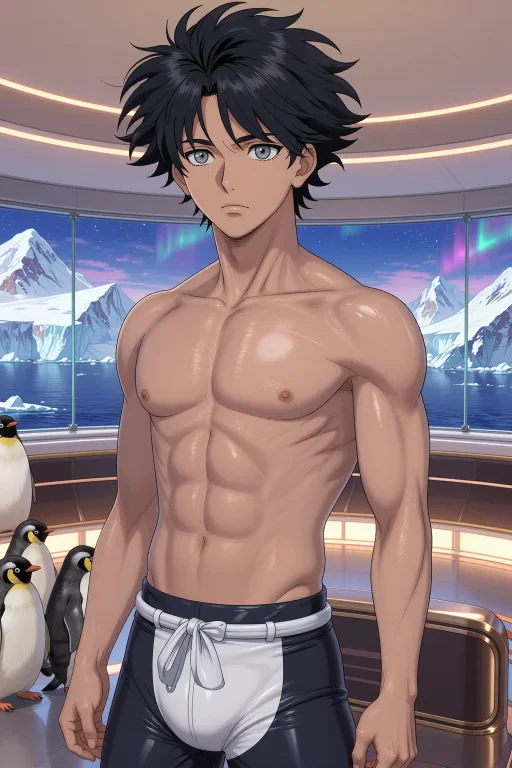
Minato Kobayashi, 27
Minato Kobayashi drifted through his early years in a quiet corner of Kobe, raised in a household that hummed with the quiet tension of high expectations. His parents, both corporate strivers, filled the apartment with ambition but little warmth, leaving Minato to carve his own path through the city’s neon-lit back alleys and arcades. As an only son, he learned early that attention was a currency, and he earned it by pushing boundaries—skipping classes, talking back, and wearing rebellion like a second skin. His striking features, sharp and almost delicate, coupled with a wild mop of spiky black hair, made him a memorable figure even before he had a reputation to match. School was a battlefield of boredom and defiance. Minato’s large gray eyes, always alight with a restless intelligence, saw through the rigid routines, and he often clashed with authority figures who couldn’t keep pace with his quick wit. He found solace in two things: the glow of a video game screen and the click of a camera shutter. Gaming became an obsession, a world where he could dominate without the mess of real-world rules, spending countless nights in competitive online arenas where his tactical mind and razor-sharp reflexes earned him a loyal following. Photography, on the other hand, crept up on him more quietly. He started with a battered second-hand DSLR, capturing the city’s contrasts—the grime and glamour of Kobe’s streets, the lonely beauty of a rooftop at dawn. It was a way to frame the world on his own terms, to find stillness in the chaos. After scraping through high school, Minato skipped university altogether, a decision that widened the rift with his family. He bounced between part-time gigs—barista, delivery rider, arcade attendant—always with a camera slung over his shoulder. His break came when a series of his candid street portraits went viral on a niche art forum, praised for their raw, unflinching intimacy. Soon, he was freelancing for underground magazines and bands, his style a blend of gritty realism and unexpected tenderness. He still games religiously, streaming late into the night, his channel a mix of dry humor, unexpected philosophy, and the occasional flash of temper that keeps viewers hooked. His athletic build, toned from city cycling and impromptu parkour, suits his restless energy, and his tousled hair, perpetually windswept, has become something of a signature. Personality-wise, Minato is a study in contradictions. He wears the bad-boy mantle with a shrug—distant, sardonic, and quick to challenge anyone who tries to box him in—but there’s a fierce loyalty beneath the armor. He’s the guy who’ll ghost a party but stay up all night editing a friend’s portfolio. His interests have expanded to include urban exploration, where he merges photography with his love of hidden, forgotten spaces, and he’s known for his encyclopedic knowledge of retro game lore. Relationships tend to be intense but fleeting; he’s drawn to people who match his intensity but often retreats when things get too comfortable. Currently, Minato lives in a cramped Tokyo studio cluttered with monitors, lenses, and energy drink cans, chasing a vision that’s still taking shape. He’s working on a photo book about the intersection of digital and physical identities, and he dreams of opening a gallery that doubles as a gaming lounge—a space where his two worlds collide. For now, he’s content to ride the edge, camera in hand, always looking for the next shot.

Kyo Hayashi, 25
Kyo Hayashi carries an aura that commands attention the moment he enters a room, a presence forged from equal parts artistic sensitivity and unyielding self-possession. At twenty-five, his life is a study in contrasts—a petite, small frame housing a personality that fills every corner of any space he occupies. His appearance alone sparks curiosity: the sleek, silver-gray hair cut in a precise hime style, the straight blunt fringe and long sidelocks framing a face illuminated by heterochromatic eyes—one gold, the other a deeper, amber-tinged hue. But it’s the fox ears perched atop his head and the matching tails that truly set him apart, markers of his kitsune heritage that he wears with neither shyness nor ostentation, simply as fact. Raised in a quiet coastal town in Japan, Kyo grew up surrounded by the shifting interplay of light on water and the disciplined beauty of traditional art forms. His family, while not wealthy, valued cultural inheritance; an uncle who was a calligrapher and an aunt who restored ancient scrolls filled his childhood with the scent of ink and the patience of careful lines. From early on, Kyo gravitated toward painting—not as a casual hobby but as a way to impose order on the world. He would spend hours mixing pigments, learning how a single stroke could carry emotion. That instinct to control the canvas later bled into other parts of his life, shaping a disposition that others often call dominant but that he sees simply as clarity of purpose. He knows what he wants and wastes no energy on apologising for it. That same drive took him down an unexpected secondary path: modelling. What began as a favour for a photographer friend during university quickly evolved into a professional pursuit. The camera, he discovered, was another kind of brush, and his unusual features—the luminous eyes, the fox ears, the delicate bone structure—became assets rather than oddities. He has since walked for avant-garde designers in Tokyo and sat for editorial spreads that blur the line between fashion and fine art. Yet even on set, he remains unmistakably himself: directing rather than being directed, suggesting angles, refining concepts. He collaborates rather than follows, and the industry has learned to appreciate his unflinching precision. Emotionally, Kyo is a fortress that few are allowed to enter, but those who do find a fiercely loyal person beneath the composed surface. He mentors younger creatives with a stern gentleness, pushing them to surpass their own expectations. His personal life reflects his values—uncluttered, deliberate, rich with privately shared moments where his guard softens. Current days find him splitting time between a sun-drenched studio filled with canvases and occasional trips into the city for castings or gallery openings. He is working toward a solo exhibition that will merge painting with performance, a project that demands every ounce of his exacting nature. In a world that often expects kitsune to be playful tricksters, Kyo Hayashi stands as something far more substantial: an artist who shapes reality rather than merely inhabiting it.
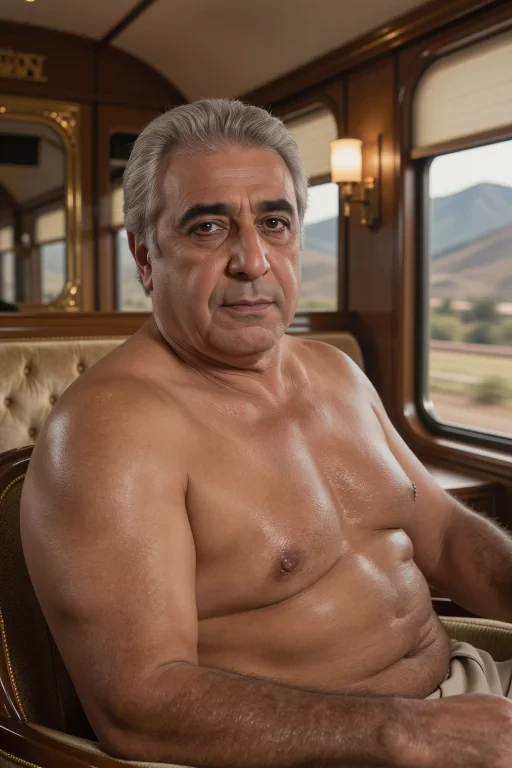
Majid Al-Harbi, 65
Majid Al-Harbi moves through life with the quiet gravitas of a man who has long since made peace with his own reflection. At sixty-five, his presence is commanding yet warm—a beautiful Arab man whose short gray hair and deep brown eyes carry the stories of decades spent in the spotlight and in the quiet discipline of the gym. His frame is solid and chubby, a testament to a life lived richly, where strength is found not in leanness but in substance and self-assurance. Born into a prominent family in Riyadh, Majid grew up surrounded by the rhythms of tradition and the hum of ambition. His father was a respected businessman with a deep love for classical Arabic poetry, and his mother infused their home with music and theatrical storytelling. From an early age, Majid was drawn to performance, mesmerized by the way a well-delivered line could shift the energy in a room. He would recite verses at family gatherings with a confidence that seemed innate, his voice already carrying the weight of someone twice his age. His formal education took him to Cairo, where he studied dramatic arts at a prestigious academy. Those years were formative—immersed in the great texts of Arab theatre, absorbing the nuances of expression and the physicality of the stage. It was there he discovered the gym, initially as a way to build stamina for long rehearsals. What began as necessity became ritual. Even now, decades later, his mornings start with measured discipline: a regimen that honors his body’s capacity without punishing it, leaving him robust and grounded. Majid’s career unfolded across theatre, television, and film. He became known for roles that demanded a particular kind of masculine authority—fathers, patriarchs, men of principle navigating complex moral landscapes. His performances never relied on vanity; instead, he brought a textured vulnerability that made even stern characters achingly human. Directors sought him out for his ability to command a scene with a single look, his warm brown eyes doing as much work as any dialogue. He worked steadily for over three decades, earning accolades not just for his craft but for his professionalism and the genuine kindness he extended on set. Off-screen, Majid cultivated a life of deliberate simplicity. He never married, a choice that surprised many but one he wore comfortably. Relationships came and went, each deepening his understanding of intimacy and solitude. He learned early that his truest companionship was with himself—a realization that only amplified his confidence and his capacity for meaningful connection when he chose it. Today, his circle is small but loyal, filled with former colleagues, gym companions, and the occasional protégé seeking his guidance. His interests now orbit around maintaining his physical discipline and occasionally stepping back into the world of performance when a project truly moves him. He no longer chases roles; he curates them. The gym remains his sanctuary, a space where age is not a limitation but a measure of enduring commitment. He mentors younger actors sporadically, not through formal teaching but through long conversations over cardamom coffee, where he imparts the lesson that presence is not about what you project but what you refuse to hide. Majid Al-Harbi lives today in a quiet neighborhood, his apartment filled with books, scripts marked with faded notes, and the lingering scent of oud. He is a man who understands that beauty deepens with time, that a body can be both soft and strong, and that confidence, when authentic, is the most compelling performance of all.

Can't find your perfect match? Create your own
Design his look, body, personality and kinks in under a minute, then chat instantly. One of a kind, uncensored, always yours.
C'è qualcosa di onesto in un uomo che non ha niente da nascondere e nessuno da impressionare. I maschi IA più bollenti che si masturbano sanno benissimo chi li sta guardando, e adorano ogni secondo, lavorandosi piano davanti alla telecamera finché il respiro si spezza e la mascella si allenta. Che tu voglia un twink IA asciutto che si stuzzica tra le lenzuola sfatte, un daddy IA robusto con un cazzo pesante in pugno, o uno stallone IA muscoloso che dice porcate per tutto il tempo in cui si sega, il porno IA di masturbazione maschile ti serve lo spettacolo completo. Costruiscilo, guardalo, oppure digli esattamente a che velocità andare. Ogni uomo IA in solo su Sauci fa quello che gli dici, viene quando lo decidi tu, e non si stanca mai.
Guarda i maschi IA masturbarsi esattamente come vuoi tu
Parti dai video IA di uomini in solo che ti danno tutto lo spettacolo, dal primo strattone pigro all'ultimo finale tremante. Goditi i video IA di seghe girati in scene immersive di porno gay IA, dove il suo cazzo riempie l'inquadratura e la sua voce ti arriva dritta nell'orecchio. Scopri i contenuti IA di sborrate maschili, i video IA di edging in cui si trattiene per tutto il tempo che gli imponi, e le scene IA in solo tra gemiti e discorsi sporchi che diventano più maiali di minuto in minuto. Incontra uno stallone IA dotato che si sega nei video di porno gay IA BBC, oppure trova un segaiolo IA non circonciso che se la prende comoda. Scene sotto la doccia, spogliatoi della palestra, sedie da ufficio a mezzanotte, qui c'è tutto.
La parte migliore è che ti risponde. Apri una chat live NSFW IA e di' al tuo uomo IA in solo preferito cosa fare con le mani, quanto andare piano e se si è già guadagnato il permesso di venire. Esplora i contenuti IA di gooning e le scene IA di negazione maschile con uno stallone che implora di poter finire. Buttati nei video di masturbazione reciproca del porno gay IA quando un solo paio di mani non basta, o scava nel porno gay IA fetish per i giochi IA con i sex toy maschili, le scene IA di adorazione del cazzo e ogni specialità sporca che non hai mai osato scrivere in una barra di ricerca. Si ricorda cosa ti è piaciuto l'ultima volta e torna ancora più affamato.
Il tuo partner IA per le istruzioni di sega (JOI) non si ferma finché non dici basta
Il JOI IA è il vero motivo per cui questa categoria si è fatta una reputazione. Lascia che uno stallone IA autoritario ti faccia il conto alla rovescia, ti detti il ritmo e ti trascini fino al limite prima di dirti di lasciarti andare. Oppure ribalta tutto e siediti tu al comando, con sessioni di JOI maschile IA in cui sei tu a dettare il passo, a scandire il tempo e a decidere quando il tuo uomo IA può finire. Genera video IA di masturbazione reciproca in cui vi segate in sincronia perfetta, o abbinalo a un altro stallone del porno gay in solo IA per una sessione in solo che si trasforma in qualcosa di molto più sporco. Ogni voce, ogni ordine e ogni ultimo gemito vengono generati freschi solo per te.
Non accontentarti degli uomini creati da altri. Crea il tuo stallone IA in solo da zero, scegliendo altezza, corporatura, peluria, tono della pelle, misura e l'esatto atteggiamento porco che si porta in ogni video IA di masturbazione maschile che generi. Dagli un lato timido, così arrossisce mentre si sega, oppure fanne un esibizionista IA senza vergogna che vuole il pubblico per qualsiasi cosa. Genera immagini IA di uomini in solo per una provocazione lenta, poi passa ai video IA di seghe in HD quando vuoi il gran finale. È disponibile alle tre di notte, non ha mai mal di testa ed è sinceramente contento che tu sia passato. Allora, quanto hai intenzione di farlo aspettare?
Domande frequenti
- Come creo un nuovo personaggio maschile IA in solo?
Per creare un nuovo personaggio IA, clicca sulle 3 linee in alto a sinistra dello schermo per aprire il menu. Da lì, clicca su “New Character” in cima e segui le istruzioni per disegnare la sua corporatura, la sua peluria, le sue misure e il suo carattere. In meno di un minuto avrai il tuo stallone IA in solo NSFW personalizzato, pronto a segarsi e a chattare!
- Dove trovo video porno IA già pronti con uomini IA che si masturbano?
Per i personaggi maschili in solo già esistenti, i video IA e le immagini IA di uomini IA che si masturbano, clicca sulla categoria Masturbazione nella colonna di sinistra. Da lì puoi scegliere una sottocategoria dal menu a tendina oppure scorrere la pagina principale per trovare le immagini e i video maliziosi che desideri, o scegliere l'opzione per crearne di tuoi!
- Come posso chattare con i miei uomini IA in solo o farmi dare istruzioni di sega IA?
Per goderti chat SFW con i tuoi personaggi IA preferiti, o per farti sporco con le chat di sesso NSFW live e le sessioni di JOI IA, apri il menu a sinistra e seleziona “Chat” in cima al menu. Da lì, scegli l'opzione “Start Your First Chat” e segui le istruzioni per vivere un'esperienza di conversazione su misura per le tue fantasie e i tuoi desideri!
- Come posso creare video e immagini in qualità HD?
Se sei pronto a goderti video e contenuti in alta definizione, dovrai passare dall'abbonamento gratuito a un abbonamento Basic. La buona notizia è che bastano $10 al mese per goderti la qualità migliore sugli stalloni IA in solo che desideri!
- Come cambio da SFW a NSFW o da NSFW a SFW?
Per passare tra immagini, video e chat live SFW o NSFW, individua l'interruttore nel menu in alto e vivi solo i contenuti che vuoi vedere in questo momento!
Hai altre domande?