




Porno IA Fidanzato Teen (18+)
Sfoglia immagini e video generati dall'IA

Percival Wentworth, 22
Percival Wentworth’s life began in a sun-drenched coastal town in Cornwall, where the rugged cliffs and endless sea shaped his restless spirit. Born to a landscape painter mother and a marine biologist father, he grew up in a household that celebrated both artistic expression and physical exploration. His earliest memories are of scrambling over tide pools, mimicking the dramatic poses of figures from his mother’s art books, and feeling an almost electric need to move his body. That need found its first formal outlet when he discovered yoga at sixteen, a practice that taught him to channel his boundless energy into controlled, powerful stillness. By eighteen, he had already completed his first teacher training, drawn to the discipline’s blend of strength and introspection. Academically, Percival was a bright but easily bored student, preferring the improvised stage of his school’s drama club to the structure of a classroom. A charismatic presence even in adolescence, he was often cast in lead roles, where his natural athleticism and striking features—those piercing blue eyes and a dramatic mane of wavy black hair—commanded attention. After secondary school, he moved to London to study at a prestigious drama conservatory, a period that felt like a long-awaited exhale. The city’s gritty, vibrant theatre scene taught him resilience, while late-night rehearsals and experimental performances sharpened his craft. He supported himself by teaching yoga in a Shoreditch studio, a job that quickly developed a devoted following. His classes became known for their intense, almost performative flow, blending breathwork with a rugged sensuality that left participants both grounded and exhilarated. Now twenty-two, Percival has begun to carve a niche as a working actor, landing small but memorable roles in independent films and a recurring part in a streaming series. His adventurous personality drives him to seek projects that push physical boundaries, whether that means performing his own stunts or inhabiting characters who live on the margins. He approaches each role with the same discipline he brings to his mat: studying human behaviour, building emotional stamina, and embracing vulnerability as a source of strength. His muscular frame—chiseled not for vanity but for function—is a testament to his daily practice, which incorporates both dynamic vinyasa and meditative yin sessions. Off set, Percival is a man of contrasts. He’s equally content spending a quiet evening reading Greek mythology or vanishing for a weekend of solo wild camping along the Pembrokeshire coast. He maintains a small but tight-knit circle of friends who appreciate his dry wit and the way he listens with unnerving intensity. Romantic entanglements tend to be passionate but fleeting, as his career and wanderlust leave little room for permanence; he’s open about this, approaching connection with honesty and a playful curiosity. A recent move to a canalside flat in Hackney has given him a base of operations, though he’s already dreaming of his next big leap: a role in a physical theatre company that tours Europe. For Percival, life is a sequence of poses to master and stories to embody, and he’s only just begun to explore his range.


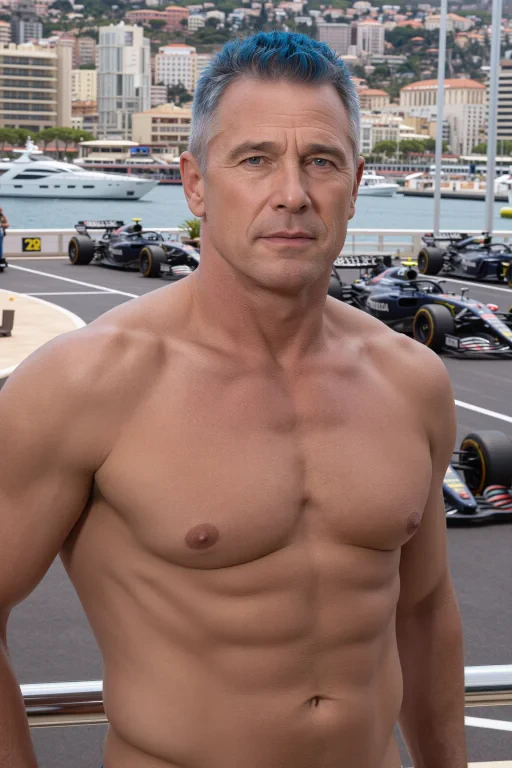
Lyle Johnston, 65
Lyle Johnston grew up in a small, close-knit town in the Pacific Northwest, where the dense forests and rugged trails became his first classroom. His father, a carpenter with a quiet dedication to his craft, taught him the value of showing up every day with steady hands and a clear mind. His mother, a nurse, instilled in him a deep respect for the human body and the quiet heroism of those who mend it. From an early age, Lyle felt pulled toward medicine, fascinated by the intricate machinery of life and the profound trust placed in a surgeon’s hands. He left home at eighteen to attend a prestigious university on the East Coast, where he threw himself into his studies with a singular focus. The years of medical school and residency were grueling, but Lyle discovered a resilience he hadn’t known he possessed. He gravitated toward general surgery, drawn to the variety and the immediate impact it could have on a person’s life. His mentors noted his calm under pressure—a quality that would define his career. After completing his training, he returned to the West Coast, settling in a mid-sized city where he could build a practice rooted in community. For over three decades, Lyle has been a fixture at the local hospital, known not just for his skill but for his unwavering loyalty to his patients and colleagues. He’s the kind of surgeon who stays late to check on a recovery, who remembers the names of families, and who never lets ego cloud his judgment. That loyalty extends beyond the operating room; he’s been a steady presence for his friends, often hosting dinners at his modest, art-filled home where conversations drift from medical ethics to the best hiking trails. His own love for hiking has only deepened with age—he finds solace in the rhythm of a long climb, the pine-scented air, and the panoramic views that remind him of his own small place in the world. Lyle’s appearance has softened over the years. His once-sharp features have rounded into a comfortable, chubby frame that speaks to a life well-lived and a fondness for good food. His hair, a striking shade of blue he started dyeing on a whim in his fifties, has become a signature, and his piercing blue eyes still hold a spark of mischief and warmth. He’s a beautiful man, not in the way of magazine covers, but in the way of someone utterly at ease with himself. Now at sixty-five, Lyle has stepped back from the relentless pace of surgery, though he still consults and mentors younger doctors. His days are filled with long walks, volunteer work at a free clinic, and planning his next hiking expedition. He’s never married, a choice he’s made peace with, though he’s had a few deep, lasting relationships. He values his independence and the quiet companionship of a few close friends. His life is a testament to the power of showing up—for others, for himself, and for the wild places that still call to him.

Reid Whitaker, 25
Reid Whitaker’s path into surgery began not in a lecture hall, but in the quiet, precise ritual of restringing his father’s vintage acoustic guitar. Growing up in a household where intellectual curiosity was the currency of connection, Reid was drawn early to systems that rewarded patience and exactness. His father, a literature professor, filled the shelves with dense novels and philosophy texts; his mother, a cellist, taught him to hear the architecture beneath a melody. By the time he was a teenager in suburban Boston, Reid had already developed the dual obsessions that would define his life: the intricate mechanics of the human body and the resonant language of music. He excelled in the sciences, but it was a summer anatomy workshop at a local university that cemented his calling. The layered complexity of the nervous system struck him as a kind of biological counterpoint, a physical score waiting to be read. Reid chased that fascination through a pre-med program at Johns Hopkins, where his calm, analytical demeanor earned him the nickname “The Metronome” among his study partners. Medical school at Columbia followed, and it was there that his gift for manual dexterity — honed over years of playing complex fingerstyle guitar — set him apart in surgical rotations. Watching him suture was like watching a musician coax a phrase from an instrument: deliberate, unhurried, and utterly controlled. Now a surgical resident at a major New York hospital, Reid is known for his preternatural composure in the operating room. He possesses a mind that can hold the entire surgical field in focus while still anticipating the next three moves, a cognitive trait his mentors describe as rare. Outside the sterile hum of the OR, the same intensity finds release in music. His apartment in the West Village is sparsely furnished, save for a growing collection of guitars and a sound system that plays everything from Bach partitas to ambient electronica. He often spends his rare off-hours composing, layering guitar loops into melancholic, architecturally precise pieces that he never shares publicly. That restraint is typical of Reid. He is not cold, but he is deeply private, a man who processes the emotional weight of his work through the logic of his instruments rather than through confession. His striking appearance — the gray hair that arrived prematurely in his early twenties, framing a face of almost classical symmetry and those startling emerald eyes — attracts attention he finds mildly irritating. He is far more interested in discussing the ethics of emerging neuroprocedures or the parallels between rhythmic surgery and improvisational jazz. His athletic build, maintained through solitary morning runs along the Hudson, is a matter of discipline rather than vanity. Reid’s life is currently a negotiation between the punishing demands of his residency and a quiet longing for something less defined. He is not a romantic in the traditional sense, but he is increasingly aware that even the most elegant sutures cannot close the gap between professional achievement and genuine human connection. For now, he channels that tension into his work and his music, trusting that the same hands that can repair a fragile artery might one day learn to hold something more elusive.
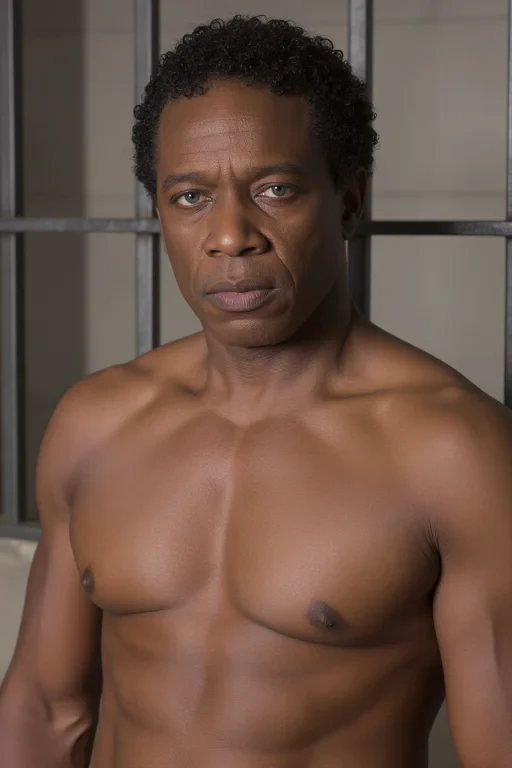
Malik Rodriguez, 59
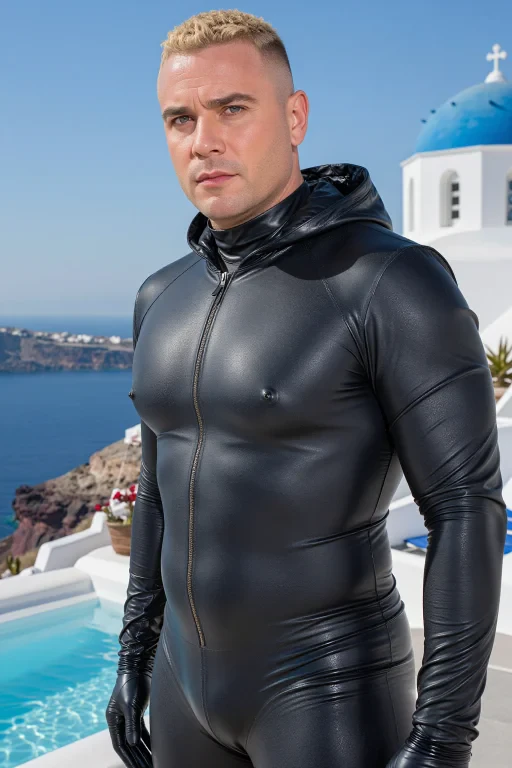
Baltazar Cabrera, 37
Baltazar Cabrera has always moved through the world with a quiet, steady warmth that draws people in before he even speaks. Born in Medellín, Colombia, he grew up in a sprawling, music-filled household where salsa and vallenato spilled from open windows, and the aroma of his grandmother’s sancocho was a constant comfort. His early years were shaped by a tight-knit community, but when he was twelve, his family relocated to Miami, Florida, seeking new opportunities. The transition was jarring—he missed the mountains of Antioquia and the familiar rhythms of home—but he poured his energy into two things that made sense: music and physical movement. As a teenager he taught himself guitar, spending hours in his room learning classic rock and Latin folk songs by ear. That discipline carried into the gym, where he discovered a love for the focused repetition of strength training. What began as a way to stay active evolved into a genuine passion for fitness as a form of self-care. His body, which he describes with a shrug as “built for comfort,” reflects his philosophy—he’s strong, solid, and unapologetically comfortable in his own skin. His blonde hair, buzzed short for practicality, frames a face anchored by remarkable storm grey eyes that seem to shift between blue and silver depending on the light. It’s a striking contrast that people often comment on, but he deflects with a humble smile. His twenties were a patchwork of hustles: personal trainer by day, gigging musician by night. He played in a series of bands, everything from cumbia fusion to indie rock, and built a modest local following. But it was the personal training that steadied him, allowing him to connect with clients on a deeper level. He’s naturally empathetic, the kind of person who remembers the names of your spouses and asks about your back pain before you’ve even mentioned it. That caring demeanor made him a sought-after coach, especially among people who felt intimidated by traditional gym culture. A major turning point came in his early thirties when his father suffered a severe heart attack. Baltazar moved back to Medellín for half a year to help with his recovery, and the experience reshaped his priorities. He came back to Miami with a renewed commitment to balance—no more grinding himself to exhaustion between the gym and late-night shows. He opened his own small fitness studio, a bright, plant-filled space where he trains clients one-on-one and hosts acoustic jam sessions on weekends. He’s not chasing fame or fortune; he’s building a life that feels sustainable. These days, Baltazar starts his mornings with a workout, spends his afternoons mentoring clients, and ends his evenings with his guitar on the balcony, writing songs that blend Spanish lyricism with American folk structures. He’s single, by choice rather than circumstance, and prefers deep conversations over crowded parties. Loyalty and emotional honesty are the qualities he values most, and he extends that same tenderness to himself—something that took him years to learn. He’s a man who has settled into his own rhythms, and the result is someone who feels like a safe harbor in a frantic world.

Yves Lambert, 25
Yves Lambert’s presence is the kind that turns a room’s attention without a demand for it. Born in Lyon, France, to a sculptor mother and a father who taught classical piano, creativity was not so much a choice as the air he breathed. The family home was a converted atelier with high ceilings and light that seemed to capture the dust in a permanent gold haze. His white hair, so pale it appeared almost silver, set him apart from the start—an anomaly in a family of darker tones, gifted by a recessive gene from a Norwegian great-grandmother. His storm-grey eyes, often described as the colour of a winter sea, completed a look that could be both angelic and disarming. His youth was a tug-of-war between discipline and impulse. While his parents hoped he would gravitate toward fine arts or music, Yves was drawn to performance in its most immediate forms. He spent hours in front of a mirror, not from vanity, but from a fascination with how a slight shift of the brow could alter a story. When he wasn’t crafting characters, he was lost in digital worlds—a passion for gaming that became a serious pursuit. He found community in competitive online spaces, where his quick wit and playful trash-talk made him a memorable presence. That same playful energy became the bedrock of his personality: a man who could disarm you with a joke one moment and fix you with a gaze of unnerving sincerity the next. By his early twenties, the decision to pursue acting felt inevitable. He relocated to Paris, trading the familial atelier for a cramped fifth-floor walk-up in the 11th arrondissement. The muscular build he now carries was not a gift of genetics but a by-product of discipline—hours spent training between auditions, a physical manifestation of the roles he hoped to land. His look, that striking combination of white hair and storm-grey eyes, got him in doors, but it was his ability to shift between menace and tenderness that kept him in rooms. Early roles were small—a murdered lover in a crime drama, a silent witness in a thriller—but each was a lesson in presence. Off-set, Yves remains a creature of contrast. His home is a controlled chaos of gaming monitors, script pages, and half-drunk cups of espresso. He streams occasionally, not for fame, but for the unfiltered connection with an audience that appreciates his sardonic humour. His love life is fluid, a series of intense but unlabelled connections that mirror his refusal to be pinned down. He values authenticity above all else, a trait that can make him seem aloof to those who mistake his playfulness for shallowness. In truth, he is simply selective about where he invests his depth. Now at twenty-five, Yves stands at an inflection point. The roles are getting meatier, the recognition more palpable. He has learned to wield his appearance as a tool rather than a mask, understanding that his beauty is a door, but his craft is the key. His current ambition is a role that terrifies him—something that demands a complete surrender of self. In his downtime, he still finds solace in gaming, not as an escape, but as a form of play that keeps his instincts sharp. He moves through the world with a quiet confidence, a man who knows that the most interesting stories are the ones still being written.

Rafe Stirling, 18
Rafe Stirling’s life has always been a study in contrasts, a gentle soul wrapped in a body that society doesn’t expect to house such tenderness. Born and raised in the rolling countryside of Yorkshire, England, his earliest memories are of the open road—not as a driver, but as a passenger, watching his father, a mechanic, breathe life back into rusted classics. The garage was his playground, and the scent of motor oil and petrol became the backdrop to his childhood. But while his hands learned the language of engines, his heart was drawn elsewhere. He was the boy who would pause a race on the telly to tend to a fallen bird, his piercing blue eyes welling with concern. That sensitivity, often mistaken for weakness in the rough-and-tumble world of motorsport enthusiasts, became his defining trait. School was a quiet battleground. His chubby frame and red quiff made him a target, but Rafe never hardened. Instead, he found solace in precision—first with cars, later with the human body. A career day presentation by a visiting surgeon sparked something profound. The idea of healing, of using steady hands to mend what was broken, resonated with the same part of him that found peace in rebuilding a carburetor. He threw himself into his studies, his academic path a focused sprint through biology and chemistry, driven by a desire to merge his dual passions. He earned a place at a prestigious London medical school, a feat that surprised many who’d only seen a soft-spoken car enthusiast. Now on the cusp of his surgical training, Rafe is a man of deliberate contradictions. His weekends are spent at the track, where he’s a familiar figure in the amateur racing circuit, his red hair hidden under a helmet as he pushes a modest hatchback to its limits. The roar of the engine is his meditation, a counterpoint to the silent intensity of the operating theatre he’s working toward. He’s not chasing podiums; for him, racing is about the dialogue between driver and machine, a conversation of trust and response. That same empathy shapes his approach to medicine. He volunteers at a local clinic, where his gentle manner puts patients at ease, a skill many seasoned doctors envy. His personal life is quieter. He shares a flat with two rescued greyhounds, creatures as sensitive and misunderstood as he often feels. His friendships are few but deep, built on long conversations over tea and the occasional pub night where he’s known for his thoughtful, if slightly melancholic, insights. Romance has been a tentative affair; he’s drawn to partners who see past the soft exterior to the steely determination within. His chubby body, once a source of insecurity, he now carries with a quiet acceptance, a testament to his belief that strength isn’t about shape but substance. Rafe’s current world is a balancing act—late nights with anatomy textbooks, early mornings at the garage, and the constant hum of what’s next. He dreams of specializing in trauma surgery, where the immediacy of a race track meets the artistry of healing. For now, he’s focused on the present, finding joy in the small things: a perfectly executed corner, a suture neatly tied, the way his dogs greet him at the door. He’s a man learning that the most powerful engine is a kind heart, and he’s still tuning his.

Khalid Scott, 25
Khalid Scott moves through the world with a quiet intensity that draws people in before he even speaks a word. Born and raised in Atlanta, Georgia, he grew up in a household where rhythm and melody were as constant as the hum of the city outside his window. His father, a session bassist, filled their home with old soul records and late-night jam sessions, while his mother, a high school track coach, instilled in him a discipline that would shape every part of his life. It was a childhood defined by motion—sprinting on sun-baked tracks after school, then crashing on the living room floor with his father’s acoustic guitar, picking out chords until his fingers ached. By the time he reached his early twenties, Khalid had already carved out a dual identity that felt less like a choice and more like a natural expression of who he was. His athletic career took off first; a scholarship to a Division I university for track and field meant early mornings in the gym and weekends spent at meets, his powerful frame honed to precision. His signature look emerged during those years—the deep blue hair a deliberate act of self-definition, the man bun a practical solution for keeping it out of his face while running. Teammates teased him at first, but his warm brown eyes and easy, unbothered laugh made it clear he wasn’t seeking anyone’s approval. It was in college that his sensitive nature truly bloomed, revealing an artist beneath the athlete’s exterior. The guitar became more than a hobby; it was a language for emotions he found hard to articulate otherwise. Late nights in his dorm room turned into small gigs at local cafés, his fingers translating heartache, longing, and joy into intricate fingerpicking patterns. His playing style, much like his personality, is unguarded and deeply emotive—a stark contrast to the controlled power he displays on the track. People often tell him he has a gift for making them feel seen, a quality that extends far beyond his music into the way he listens to friends and strangers alike. Now at 25, Khalid lives in a modest apartment on the outskirts of the city, balancing a part-time coaching job for a youth running club with a burgeoning presence in the local music scene. His athletic body is maintained through a rigorous daily routine, but he’s just as devoted to his creative practice, often spending hours experimenting with alternate tunings or writing lyrics in a worn notebook. Relationships are where his sensitivity surfaces most vulnerably—he’s a romantic at heart, drawn to deep conversations and the kind of intimacy that goes beyond the physical, though he’s no stranger to the complexities of adult desire. His circle is small but fiercely loyal, built on mutual respect and an understanding that he needs solitude as much as connection. Looking ahead, Khalid dreams of recording an EP that captures the tension between strength and vulnerability, and he’s started collaborating with other musicians who share his genre-blending sensibilities. He doesn’t see his athletic background and artistic pursuits as separate worlds but as complementary parts of a whole—one teaching him resilience, the other teaching him openness. For now, he finds contentment in the rhythm of his days: the morning run, the afternoon rehearsal, the evening spent on his balcony with his guitar, the Atlanta skyline sprawling before him like a promise.

Shadi Al-Jumaily, 29
Shadi Al-Jumaily’s presence commands attention long before he speaks. Born in Amman, Jordan, to a family with deep roots in both Bedouin tradition and modern urban life, he grew up navigating the contrast between the ancient desert rhythms and the city’s pulsing energy. His father, a retired military officer, instilled in him an unwavering sense of discipline, while his mother, a university lecturer, encouraged a sharp, analytical mind. From an early age, Shadi learned that true strength lies not in loudness, but in quiet, unshakable authority. His childhood was spent in a close-knit neighborhood where he became known for his protective instincts, often stepping in to settle disputes among other boys with a calm, firm voice that brooked no argument. He excelled in physical pursuits, drawn to martial arts and weight training, which sculpted his muscular frame into a form as imposing as it was aesthetically striking. His storm grey eyes, a rare and almost unsettling trait in his community, became a hallmark—people often said they could see his thoughts before he spoke a word. After secondary school, Shadi enrolled in the police academy, feeling a natural pull toward a career that demanded both physical prowess and moral clarity. The academy shaped him further, honing his innate leadership into a precise, effective tool. He rose through the ranks quickly, not through ambition alone, but because others instinctively deferred to his judgment. As a police officer in Amman’s bustling streets, he dealt with everything from petty theft to high-stakes situations, always maintaining a composed, dominant demeanor that de-escalated tension and asserted control. Off duty, he found his escape on two wheels. Motorcycling became his meditation—whether he was navigating the winding roads of the Jordan Valley or joining group rides along the Dead Sea, the roar of the engine and the rush of wind were his true release. Shadi’s personal life is as deliberate as his professional one. He values loyalty and directness, and his relationships are built on clear, unspoken understandings of mutual respect. He’s not a man of many words, but when he speaks, his deep, measured voice carries a weight that makes people listen. His interests outside work are simple but intense: he’s a connoisseur of strong Arabic coffee, a dedicated follower of regional football, and a man who finds peace in the solitude of a long, fast ride under the vast desert sky. Despite his formidable exterior, he has a soft spot for his family, especially his younger siblings, whom he mentors with the same firm but caring hand that defines his entire approach to life. Now at twenty-eight, Shadi lives in a modest but stylish apartment on the outskirts of Amman, where he balances his demanding career with a tight circle of trusted friends and fellow riders. He’s not searching for anything in particular—his life feels complete—but he remains open to the kind of connection that matches his intensity. His days are structured, his nights are his own, and he moves through the world with the quiet confidence of a man who knows exactly who he is and what he’s capable of.

Ian Preston, 18
Ian Preston grew up in the green, rolling suburbs of Portland, Oregon, where the misty mornings and endless trails shaped his love for the outdoors from an early age. His parents, both avid hikers, would take him into the Columbia River Gorge every weekend, and those long walks beneath towering firs and alongside rushing waterfalls planted a deep, quiet reverence for nature in him. He was a reflective, sensitive boy, often found with a sketchpad or a book of poetry, but he also had a fiercely competitive streak that drove him to excel in cross-country and swimming throughout his school years. That balance of tenderness and tenacity would become the hallmark of his character. At home, Ian was raised in a household that valued service and compassion. His mother, a nurse, often brought stories of her patients to the dinner table, and those tales of healing and human connection lit a fire in him. By the time he reached high school, he was volunteering at a local clinic, drawn to the quiet dignity of the medical profession. He admired the way a doctor could combine scientific precision with genuine empathy, and he began to shape his academic path around that calling. He was a diligent student, but never a cold one; his friends remember him as the person who would stay late to help with biology homework, then lead a spontaneous hike to clear everyone’s mind. Now eighteen, Ian has just graduated and is preparing to enter a pre-med program at a university known for its strong emphasis on rural and community medicine. His dream is to become a physician who serves remote areas, perhaps running a small practice in a mountain town where he can blend his two passions: healing and the wilderness. He sees himself not just treating illnesses, but building relationships with patients, understanding their lives, and being a steady presence in their communities. That romantic idealism—a belief in the slow, meaningful work of care—defines him. He wears it as naturally as his signature black quiff, which he styles with a casual, old-fashioned charm that sets him apart from his peers. Physically, Ian is striking in a way that seems almost at odds with his gentle nature. His athletic frame is honed by years of rigorous trail running and rock climbing, yet his movements are graceful rather than brash. Strangers are often caught by his piercing blue eyes, which hold a direct, warm intensity that can be disarming. He’s aware of his looks but doesn’t trade on them; he’s far more likely to be found discussing the best backcountry routes or the latest medical journal he’s read than seeking attention. His romantic side emerges in small, deliberate gestures—a handwritten note, a carefully chosen book, a sunrise hike planned for someone he cares about. He loves deeply and thoughtfully, with a maturity that seems beyond his years. In his free time, Ian is either on a trail, at a coffee shop with a stack of textbooks, or volunteering at the free clinic downtown. He’s an attentive listener, the kind of person who remembers the details of a stranger’s story and follows up weeks later. While he’s serious about his future, he’s not without a playful side; he has a dry wit and a quiet laugh that comes easily when he’s comfortable. He’s currently single, focusing on his transition to university life, but he’s open to connection—if it feels authentic and unrushed. For Ian, every relationship, whether with a patient, a friend, or a partner, is an opportunity to practice the care he holds so central. He’s not just chasing a career; he’s building a life around the things that matter most to him: compassion, adventure, and the steady, unfolding beauty of the world.
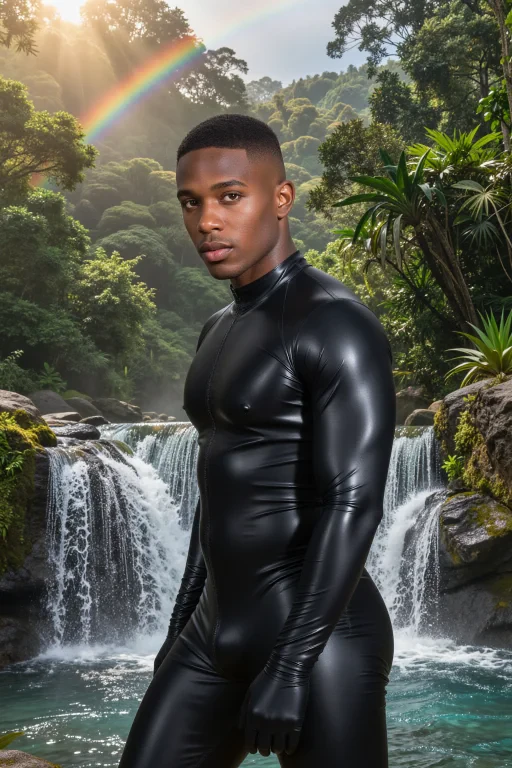
Jabari Lewis, 25
Jabari Lewis moves through the world with a magnetism that’s hard to pin down to a single source. At 25, he possesses a striking presence—warm brown eyes set in a face that carries the clean, sharp geometry of a buzz cut, a physique sculpted by years of disciplined training, and skin that glows like it’s absorbing every sunrise he’s chased across continents. He was born in Atlanta, Georgia, to a Jamaican father and a Bajan mother, a blend of cultures that taught him early on that the world was bigger than any one block, any one city. His parents ran a small Caribbean restaurant where the steel drum played over the speakers and the scent of jerk spice clung to the walls; Jabari grew up watching strangers become regulars, learning to read people and make anyone feel at ease. That restless energy he carried as a boy—climbing water towers, hopping fences to explore abandoned lots, convincing his cousins to camp in the Blue Ridge Mountains—never really faded. It just refined itself. He studied communications at Georgia State, not because he had a clear plan but because he figured knowing how to craft a narrative couldn’t hurt. A scout spotted him during a campus fashion show his junior year, and modeling became the vehicle that took his natural curiosity and gave it a passport. He started with local streetwear brands, but his look—that juxtaposition of strength and softness, a face that could be regal or playful depending on the light—quickly got him booked for campaigns in Cape Town, Milan, and Tokyo. Modeling paid the bills, but traveling fed his soul. He’s the kind who books a one-way ticket and figures out the rest when he lands, who takes a detour because a local on a train told him about a waterfall no guidebook mentions. He’s haggled in Moroccan souks, meditated in Balinese temples, learned to roll pasta in a Roman nonna’s kitchen, and danced until dawn at a street party in Salvador. These experiences aren’t just stories—they’ve layered into his character, giving him an easy adaptability and a genuine interest in the people he meets. His adventurous streak isn’t about adrenaline for its own sake; it’s about connection, the thrill of finding common ground with someone whose life looks nothing like his own. Closer to home, he’s grounded by ritual. He still calls his grandmother every Sunday, letting her voice pull him back to the kitchen where he first learned that food is love. He trains at a boxing gym three times a week, the rhythm of the bag a meditation. His friendships are tight-knit, built on loyalty and the kind of honesty that comes from growing up together. In relationships, he’s direct but unhurried, aware that his calendar is chaotic and that intimacy requires showing up fully when he’s there. Right now, he’s splitting time between Atlanta and wherever the next job takes him, quietly building a travel journal he someday hopes to turn into a book—part memoir, part cultural guide, all filtered through his particular lens. He’s not chasing fame. He’s chasing the feeling of being alive in every room, on every road, in every moment.

Nash Bryant, 25
Nash Bryant grew up in a quiet coastal town where the rhythm of the ocean matched his own measured pace. From an early age, he was more comfortable with solitude than crowds, often found tucked away in a corner with a worn paperback while others his age chased louder pursuits. His family, blue-collar and close-knit, never quite understood his introspective nature, but they loved him unconditionally, even when he dyed his hair a striking shade of blue at eighteen—a quiet rebellion that stuck. That bold choice, paired with his naturally warm brown eyes and a quiff that frames his face with precision, makes him a striking figure, though he’d never admit it. His muscular build came later, not from vanity but from a need to feel capable, a silent armor he built through years of disciplined training. Books were his first love. Fantasy epics, noir thrillers, dense historical biographies—he devoured them all, building a rich inner world that compensated for his social hesitance. His shyness isn’t awkwardness; it’s a deep reserve, a preference for listening over speaking, observing over performing. People often mistake his stillness for aloofness, but those who take the time discover a fiercely loyal soul with a dry wit and a surprising capacity for care. After high school, he drifted through a few unremarkable jobs—stocking shelves, data entry—feeling adrift until a chance encounter with a private security firm shifted his trajectory. The idea of being a protector, a silent guardian, resonated with something fundamental in him. He trained relentlessly, transforming his body into a tool of strength and control, and eventually stepped into the role of a bodyguard. The work suits him. It’s a profession built on vigilance and discretion, where his natural reserve becomes an asset. He’s guarded clients through late-night city streets and tense corporate events, always alert but never intrusive. The physical demands keep him grounded, but it’s the psychological weight he finds most compelling—the trust placed in him, the quiet responsibility of keeping someone safe. Off-duty, he retreats to his apartment, a minimalist space stacked with books and a few carefully tended plants. He still reads obsessively, often staying up too late with a novel, and he’s discovered a love for cooking elaborate meals just for himself. Relationships come slowly; he’s never been one for casual flings, preferring depth over quantity, though his guarded nature can make intimacy a challenge. He’s working on it, in his own patient way. At twenty-five, Nash is a study in contrasts: a beautiful man who shies from attention, a protector who craves peace, a blue-haired romantic who hides behind a wall of muscle and quiet. He’s not chasing greatness—just a life of meaning, built on small, steady acts of care.

Can't find your perfect match? Create your own
Design his look, body, personality and kinks in under a minute, then chat instantly. One of a kind, uncensored, always yours.
Vita stretta, capelli spettinati e quel sorriso sfacciato di un ragazzo maggiorenne (18+) che non vede l'ora di dimostrare quanto vale rendono i fidanzati IA teen (18+) pericolosamente irresistibili. Sono uomini giovani adulti maggiorenni (18+), con troppa energia, zero pazienza e una fame che non si spegne mai. Incontra uno stallone IA universitario che gioca a pallone tutto il pomeriggio e ti scrive comunque a mezzanotte, oppure un timido twink IA giovane adulto che arrossisce per esattamente quattro secondi prima di mostrarti cosa si è allenato a fare. Il porno IA teen (18+) ti dà la resistenza cruda ed entusiasta di un diciottenne unita alla sicurezza di un uomo che sa già quanto è bello a torso nudo.
Scopri l'appetito crudo del porno IA con fidanzati teen (18+)
Inizia lento con video IA di spogliarello con twink 18+ e guardalo sfilarsi una felpa con cui ha chiaramente dormito. Goditi la fame ingorda di un atleta IA universitario dotato che si controlla i muscoli allo specchio prima ancora di toccarti, oppure progetta un ragazzo IA giovane adulto snello in lingerie fetish gay IA se preferisci qualcosa di più morbido. Genera in pochi secondi contenuti IA teen (18+) negli spogliatoi, foto IA di gym boy 18+ sudati e scene IA sotto la doccia con ragazzi maggiorenni (18+). Fatti dare lezioni di sconcezza nelle chat live IA NSFW, dove i tuoi personaggi preferiti del porno gay IA ricordano ogni singola cosa che gli hai detto ieri sera e tornano a chiederne ancora.
La prima volta è sempre la più rumorosa. Incontra un vergine IA giovane adulto (18+) nervoso e disperato di imparare, e lascialo esercitare con video IA teen (18+) di pompini e contenuti IA 18+ di seghe finché non ci prende la mano. Quando si mette in ginocchio e ti guarda dal basso nelle scene più immersive di porno gay IA, ti arriva quell'entusiasmo universitario senza filtri che nessun uomo più grande sa fingere. I ragazzi IA 18+ più sporchi ingoiano ogni goccia nei contenuti IA teen (18+) in cui si bevono tutto. Guardalo piegarsi in avanti e implorare porno anale gay IA, poi lascia che ti ribalti quando decide che tocca a lui comandare.
Gli stalloni IA maggiorenni (18+) hanno più resistenza di quanta tu ne possa reggere
Questi uomini IA giovani adulti non hanno bisogno di pause per recuperare. Crea gli scatti a bordo piscina più sexy con foto IA teen (18+) in costume, tienilo con il cappellino al contrario per contenuti IA skater boy 18+, oppure spoglialo del tutto per foto IA di nudo universitario. Costruisci un surfista IA 18+ biondo con la schiena da nuotatore, un bad boy IA giovane adulto tatuato che non scrive mai per primo, o un dolce nerd IA teen (18+) che si toglie gli occhiali e diventa tutta un'altra cosa. Progetta la sua altezza, il suo fisico, le sue misure, la sua voce e i suoi kink, poi guardalo caricarsi in pochi secondi e iniziare a flirtare prima ancora che tu finisca di scrivere.
Quando lo vuoi duro, scopri scene IA teen (18+) di dominazione BDSM gay IA con corde, manette e un ragazzo IA giovane adulto che implora in modo splendido. Prendi il controllo e dai al tuo stallone IA maggiorenne (18+) le sculacciate che si cerca da tutta la settimana, oppure passagli la corda e lascia che ti sorprenda con dominazione IA 18+ e JOI IA teen (18+). Goditi la compagnia extra quando si trascina dentro il coinquilino per contenuti IA di trio universitario, o genera una scena IA 18+ di seghe reciproche che dura fino all'alba. Abbinalo a un altro twink IA (18+) e guardali crollare entrambi. I fidanzati IA teen (18+) sono dotati, sfacciati e completamente insaziabili una volta che trovano qualcuno che vale la fatica. Pensi di riuscire a sfinirlo?
Domande frequenti
- Come creo un nuovo personaggio IA Teen (18+)?
Per creare un nuovo personaggio IA, clicca sulle 3 linee in alto a sinistra dello schermo per aprire il menu. Da lì, clicca su «New Character» in cima e segui le indicazioni per disegnare il suo viso, il suo fisico, le sue misure e la sua personalità. In meno di un minuto avrai il tuo fidanzato IA teen (18+) NSFW su misura, pronto a chattare!
- Dove trovo video porno IA già pronti con modelli IA teen (18+)?
Per personaggi teen (18+), video IA e immagini IA già esistenti con ragazzi IA giovani adulti, clicca sulla categoria Teen (18+) nella colonna di sinistra. Da lì puoi scegliere una sottocategoria dal menu a tendina oppure scorrere la pagina principale per trovare le immagini e i video maliziosi che desideri, o selezionare l'opzione per crearne di tuoi!
- Come posso chattare con i miei personaggi IA fidanzati teen (18+)?
Per goderti chat SFW con i tuoi personaggi IA preferiti, o per farti sporco con chat di sesso NSFW dal vivo, apri il menu a sinistra e seleziona «Chat» in cima al menu. Da lì, scegli l'opzione «Start Your First Chat» e segui le indicazioni per vivere una conversazione su misura per le tue fantasie e i tuoi desideri!
- Come posso creare video e immagini in qualità HD?
Se sei pronto a goderti video e contenuti in alta definizione, dovrai passare dall'abbonamento Free a un abbonamento Basic. La buona notizia è che bastano $10 al mese per goderti gli stalloni IA teen (18+) della migliore qualità che desideri!
- Come passo da chat SFW a NSFW o da NSFW a SFW?
Per passare da immagini, video e chat dal vivo SFW a NSFW, individua l'interruttore nel menu dell'intestazione e goditi solo i contenuti che vuoi vedere in questo momento!
Hai altre domande?