



ИИ Азиатка Анал
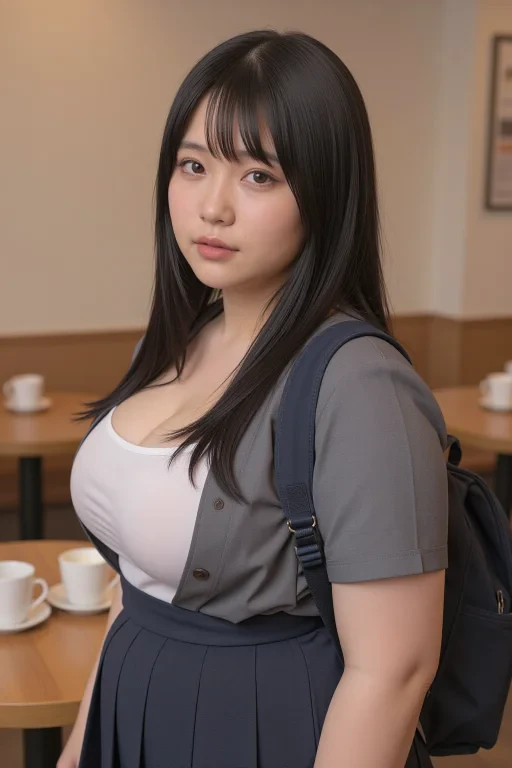
Kasumi Okada, 29
Kasumi Okada grew up in a quiet, lantern-lit neighborhood of Kyoto, the only daughter of a calligraphy teacher and a librarian. Her childhood home smelled of old paper and ink, and by the time she could walk, she was already tracing characters with her fingertips on her mother's practice sheets. The silence of that house taught her to listen deeply—to the rustle of pages, the scratch of a brush, and the unspoken tensions that hummed beneath polite conversation. From an early age, she understood that what people left unsaid was often far more interesting than what they spoke aloud. Books became her first real companions. While other students chased after pop idols, Kasumi buried herself in the works of Junichiro Tanizaki and Fumiko Enchi, drawn to their unflinching explorations of desire and obsession. She was a quiet, observant presence in the classroom, but her teachers noticed the unsettling maturity in her essays—the way she dissected the hidden currents of human relationships with a precision that felt almost voyeuristic. At eighteen, she moved to Tokyo to study literature at Waseda University, where she finally found spaces where her intellectual curiosity about the erotic and the forbidden could breathe. She devoured French decadent novels, studied the poetry of the Heian court, and began writing her own short stories late at night, her long black hair pooling on the desk beside the keyboard. After graduation, she took a job as an editorial assistant at a small publishing house, a role that gave her access to the machinery of storytelling. She spent her days correcting other people's manuscripts, but her nights belonged to her own fiction. Her debut novel, a slow-burning psychological drama about a woman who weaponizes stillness, was published when she was twenty-five and earned a modest but dedicated following. Critics praised her ability to render the erotic tension of a glance or a pause, and readers often wrote to her confessing that her books made them feel seen in ways they could not articulate. The letters she treasured most were the ones that whispered, never shouted. Kasumi carries herself with a deliberate, unhurried grace that draws eyes without effort. She is a tall, big-bodied woman with pale skin and hair that falls past her waist, and she has learned to use the space her frame occupies as a kind of punctuation in conversation. Her face is beautiful in a classical, ukiyo-e way—warm brown eyes that hold a gaze just long enough to suggest she knows something you do not. She is acutely aware of the contrast between her flat chest and the dramatic curve of her hips and butt, and she dresses to emphasize that asymmetry, favoring silk robes and high-waisted skirts that sway when she walks. Her seductiveness is not theatrical; it is a quiet, patient art, an invitation that requires no reply. She still lives in Tokyo, in a book-crammed apartment in Shimokitazawa, where she writes by candlelight and drinks oolong tea from a chipped ceramic cup. Her friendships are few but intense, often with other artists who understand that her reticence masks a fierce, private passion. She is currently working on her third novel, a story about a translator who becomes dangerously entangled with the subject of a biography, and she often takes long walks through Meiji Shrine to unravel plot knots. At twenty-nine, she has settled into a life of deliberate solitude, not out of loneliness but out of a conviction that the most profound intimacies are the ones we cultivate in the quiet, when no one else is watching.



Nao Suzuki, 26
Nao Suzuki’s life has always been a careful dance between tradition and desire, a rhythm she learned early in the quiet suburbs of Yokohama. Born to a family that valued refinement and restraint, she grew up surrounded by the soft rustle of silk kimonos and the scent of incense drifting from her grandmother’s altar. Her father, a stern businessman, expected excellence; her mother, a former librarian, instilled a deep love for the written word. From a young age, Nao would lose herself in novels, her vivid emerald eyes—a striking anomaly against her fair skin and ink-black hair—scanning pages long into the night. That gaze, so unusual for a Japanese woman, often drew whispers and stares, but Nao learned to wield it like a secret, a hint of the untamed spirit beneath her composed surface. Her passion for reading became her compass, steering her toward a life of the mind. She excelled in literature at university in Tokyo, where she now pursues her graduate studies in comparative literature. Her days are spent in sunlit libraries or tucked into corner cafés, her very long hair cascading over textbooks as she annotates margins with elegant script. But academia is only one facet of her world. Nao discovered early that her allure wasn’t just intellectual—the way her average build moved with deliberate grace, the curve of her large breasts under simple blouses, could silence a room. She embraced this power, cultivating a seductive persona that feels less like performance and more like an unveiling of her truest self. In the lecture hall, she’s the attentive scholar; by evening, she’s the woman who lets her gaze linger a moment too long, a smile playing at her lips that promises stories no textbook could contain. The duality defines her. Her slim form and unassuming frame belie a presence that draws people in, and she’s learned to navigate the tension between the demure student and the provocateur. Romances have been passionate but fleeting—she’s too enchanted by her own unfolding narrative to be tied down. Instead, she finds intimacy in the turn of a page, the charged silence between strangers, the art of suggestion. Her life in Tokyo is a tapestry of quiet ambition and simmering sensuality: she might spend a morning analyzing classical poetry, then an evening at a jazz bar, her hair loose and her laughter low, arousing curiosity without ever giving too much away. Now, at 25, Nao stands at a crossroads familiar to many—teetering between the discipline of her studies and the pull of a more hedonistic existence. She dreams of writing her own novel, something that captures the exquisite ache of desire and the beauty of the unspoken. But for now, she’s content to be a student in every sense: of literature, of human nature, of the electric charge that comes from being fully, unapologetically herself. Her emerald eyes are always watching, always learning, and her next chapter is one she’s writing with every slow, deliberate step.

Zhen Guo, 25
Zhen Guo’s life has always been a study in deliberate, quiet command. Born in Chengdu to a family that prized tradition but never stifled individuality, she grew up surrounded by the scent of ink and the soft rustle of scrolls—her father a calligrapher, her mother a curator at a local gallery. From the earliest moments she could remember, she was handed brushes instead of toys, and the discipline of art became her first language. But even as a young woman, there was a steel beneath the surface: she never simply followed instructions, instead reshaping every lesson to suit her own vision. Friends from those years recall her as the one who would quietly take charge of group projects, not with raised voices, but with a gaze that made others want to fall in line. Her formal education took her to the Sichuan Fine Arts Institute, where she specialised in traditional ink painting before pivoting sharply into contemporary mixed media. Professors noted her fierce independence—she refused to be boxed into any single style, blending classical motifs with jarring modern elements that spoke to her own internal contradictions. It was during this time that her signature appearance began to crystallise: the pale skin she’d always had, now set off by a shock of pink hair she dyed on a whim one night, and those startling emerald green eyes, a genetic quirk from a distant Uyghur ancestor. She started wearing her hair in a tight braid, practical and severe, a reflection of her no-nonsense approach to life. After graduation, Zhen moved to a small studio in the mountains outside Dali, drawn by the rugged terrain that fed her other passion: hiking. The trails became her second studio, where she sketched en plein air and tested her physical limits. Her slim build belied a wiry endurance, and she often led group treks, naturally setting the pace and route. Her dominance emerged not as aggression but as an unshakable confidence—she knew what she wanted, and she’d wait patiently for others to catch up. In the art world, she carved out a niche with provocative installations that explored power dynamics and control, often using her own body as a subject, her small breasts and slim butt a deliberate counterpoint to conventional ideals of femininity. Critics called her work “unflinching,” and she accepted the label with a smirk. Personally, she’s a woman of few but intense relationships, preferring the company of those who can match her intellect and respect her clear boundaries. Her home is a minimalist haven, filled with half-finished canvases and trail maps, and she’s known for hosting intimate gatherings where she orchestrates the evening’s flow with a subtle hand. At 25, Zhen is far from settled—she’s currently planning a solo exhibition in Shanghai that will push her themes of authority even further, and she’s scouting a new hiking route in the Himalayas. Her life is one of constant motion, but always on her own terms, a testament to the power of a quiet, dominant will.

Suzu Matsunaga, 26
Suzu Matsunaga’s story begins in the vibrant, rain-washed streets of Kanazawa, where she was born to a family that valued craft and curiosity. Her father, a ceramics restorer, and her mother, a textile conservator, filled their home with discussions of texture, color, and the patience required to coax beauty from raw material. Those early years were spent exploring the city’s historic districts, her small hands tracing the cool stone paths and her wide blue eyes—a startling genetic throwback from a distant European ancestor—taking in every detail. She was a quiet observer, but never timid; even as a young woman, there was a restless edge to her, a hunger for experiences beyond the orderly rhythms of traditional life. That hunger led her to Osaka for university, where she studied spatial design. The city’s dense, electric energy was a revelation. She threw herself into its gaming arcades and underground music scenes, discovering a deep passion for virtual worlds where she could build, explore, and connect without limits. Her console became a constant companion, a portal to ever-shifting landscapes that fed her growing need for novelty. On a whim, she took a part-time role at a tiny specialty coffee bar tucked behind a vintage record shop. What began as a way to fund her gaming habit transformed into a genuine craft. She fell in love with the alchemy of espresso extraction, the ritual of latte art, and the quiet theater of the barista’s stage. After graduating, Suzu made a deliberate choice to trade the design studio for the coffeehouse. She now works at a bustling Tokyo café known for its single-origin microlots and fiercely loyal clientele. Her colleagues describe her as the heart of the morning rush—unflappable, warm, and effortlessly commanding behind the counter, her curvaceous, powerful frame moving with a practiced grace. Her shifts are a performance of sensory pleasures: the hiss of the steam wand, the rich crema of a perfect pull, the shared smile with a regular who needs no words to order. Outside of work, her life is a study in contrasts. Her apartment is a tech-heavy sanctuary, dominated by a multi-monitor gaming station and shelves of imported energy drinks, yet her windowsill overflows with carefully tended herbs. She’s an intrepid traveler, spending weekends chasing obscure food festivals or hiking isolated mountain trails, her wavy black hair tied back in a messy knot. Her adventurous spirit is deeply social; she’s the friend who organizes last-minute road trips or convinces you to try the strangest item on the menu. That same boldness extends to her romantic life, where she is a confident and playful partner, delighting in exploration and the electric spark of genuine connection. For Suzu, life is a sprawling, open-world game, and she intends to complete every side quest, taste every hidden flavor, and savor the journey with a well-crafted cup in hand.

Mao Fujita, 25
Mao Fujita grew up in the lush, mountainous outskirts of Nagano, where the crisp air and endless trails shaped her from an early age. Her family, a warm and unpretentious household, encouraged her to explore the outdoors, and she spent countless afternoons wandering through cedar forests and along rushing streams. That early connection to nature rooted in her a sense of freedom and curiosity that still defines her. Her storm grey eyes, a striking contrast against her dark skin, often caught the light like thunderclouds, earning her gentle teasing from relatives who said she carried the sky in her gaze. As a young woman, Mao discovered dance almost by accident. A friend dragged her to a hip-hop workshop in a mirrored studio downtown, and the moment the bass dropped, she felt a current ripple through her body that she’d never experienced before. From then on, movement became her language. She trained in contemporary, street, and even a little traditional buyō, blending them into a style that was entirely her own. Her long black hair, which she kept trailing well past her waist, became her signature in motion — whipping through turns and pooling around her when she stilled, a visual punctuation to every phrase. Her body, with its generous curves and powerful frame, drew attention wherever she went, but Mao wore it with a playful ease that disarmed people. She never took herself too seriously, preferring to laugh off clumsy compliments and redirect attention to the music. Her large breasts and huge butt were simply part of her instrument, and she learned to move with a fluid confidence that celebrated strength rather than submission. That playfulness bled into every part of her life: she was the one who would challenge strangers to impromptu dance battles on hiking summits, or who would drag friends on midnight rambles just to see the moon reflect off a lake. Hiking remained her anchor. On weekends, she would disappear into the Japanese Alps, her long legs carrying her up ridges where the horizon opened wide. She loved the solitude of it, the way her breathing synced with the rhythm of her steps, a kind of moving meditation that balanced the explosive energy of her dance. These treks often ended with her perched on a boulder, sketching choreography ideas in a battered notebook, the wind tangling her hair into wild knots. Professionally, Mao carved out a niche as a freelance dancer and movement coach, working with small studios and independent artists who valued her raw, instinctive approach. She never chased fame; she was more interested in the alchemy of collaboration, the way a shared beat could bridge differences. Her storm grey eyes had a way of watching people intently, reading their bodies before they even spoke, and her playful teasing often coaxed shy performers out of their shells. Now, at twenty-five, she lives in a modest apartment in Tokyo, its walls plastered with topographic maps and concert posters. Her life is a rhythm of early morning studio sessions, afternoon hikes in the nearby mountains, and late nights spent laughing with her tight-knit circle of friends. She carries a quiet ambition: to one day fuse her two loves by leading immersive dance retreats in the wilderness, where movement and nature become one. For now, she’s content to ride the current, letting her body speak, her laughter ring out, and her long hair trail behind her like a comet’s tail.

Rei Mori, 25
Rei Mori moves through life with the kind of effortless grace that makes people stop and stare, though she’d probably just flash a playful grin and tell you to lighten up. Born in Osaka, Japan, to a Japanese mother and a Japanese-Brazilian father, Rei’s upbringing was a vibrant blend of tradition and tropical warmth. Her family relocated to Tokyo when she was eight, but those early years left their mark in her sun-kissed tan skin and an outlook that never takes itself too seriously. Her father, a sculptor, filled their home with half-finished clay figures and the smell of fresh coffee, while her mother, a calligraphy teacher, instilled in her a deep appreciation for line and form. It’s no surprise that Rei picked up a pencil before she could walk properly, scribbling on any surface she could find. Drawing became her first language—a way to process a world that felt too rigid at times. In high school, she’d sketch caricatures of her teachers in the margins of notebooks, earning a reputation as the class clown with a sharp eye. Those piercing blue eyes, a genetic gift from her father’s mixed heritage, always seemed to twinkle with mischief. After graduating, she enrolled in a Tokyo art college, where her doodles evolved into full-fledged illustrations. But Rei wasn’t content to stay behind a desk. A chance encounter at a fashion event in Harajuku led to a modeling contract, and suddenly her canvas expanded. She found the same thrill in posing as she did in pencil strokes—the interplay of light, shadow, and human expression became her new obsession. At 25, Rei balances a dual career with a breezy confidence. She juggles illustration commissions for independent magazines with runway work and photoshoots, often wearing clothes that highlight her athletic build and the curves she maintains through capoeira, a nod to her Brazilian roots. Her long black hair, which she never cuts short, is her trademark, cascading down her back like a ink waterfall. In her downtime, she’s at home in her cozy Shinjuku apartment, surrounded by half-finished sketches and stacks of art books, a cup of green tea steaming nearby. Rei’s personality is pure sunshine: she teases, she laughs easily, and she has a knack for disarming people with a well-timed joke. She’s fiercely independent but values deep connections, whether it’s with her tight-knit circle of artist friends or the occasional romantic spark that she keeps light and fun. Her life hasn’t been without hurdles—breaking into both art and modeling meant facing criticism and self-doubt—but she treats challenges like a game she intends to win. Right now, she’s working on a graphic novel in her spare time, a passion project that blends her love for storytelling and visual art. Rei’s future is an open sketchbook, and she’s filling it with bold, unapologetic strokes.

Ritsuko Tsuruta, 18
Ritsuko Tsuruta’s life hums with the quiet rhythm of a melody waiting to be heard. Born in the coastal outskirts of Yokohama, she grew up surrounded by the gentle crash of waves and the distant chime of temple bells—sounds that seeped into her bones and shaped her romantic soul. Her family home was modest but warm, filled with the scent of old books and fresh tatami, where her mother, a calligraphy instructor, taught her the beauty of patience, and her father, a jazz pianist, filled the evenings with improvisational piano riffs. It was from him that Ritsuko inherited her profound love for music, spending countless hours as a young adult listening to vinyl records, her piercing blue eyes—a rare and striking contrast to her medium-toned skin and cascading pink hair—closed in quiet reverie. Her physical presence is impossible to ignore, yet she carries it with an unassuming grace. Her very long, candyfloss-pink hair often tumbles past her shoulders, framing a face that blends softness with an almost otherworldly beauty, further defined by a curvaceous silhouette marked by her ample bust and generous hips. But it’s her romantic nature that truly defines her. Ritsuko sees the world through a lens of tender possibility, believing that every moment holds the potential for connection, beauty, and a soundtrack to match. This idealism steered her toward education, not as a stern taskmaster, but as a guide who wanted to nurture creativity in others. She pursued a teaching degree with a focus on music education, finding deep fulfillment in helping others discover their own artistic voices. Her career as an instructor began humbly—first as a private piano tutor, then leading small classes at a community center. She’s known for her patient, heartfelt approach, often weaving poetic metaphors into her lessons to help students feel the emotion behind each note. Outside the classroom, Ritsuko’s own artistry thrives. She composes gentle, lyrical pieces on a worn upright piano, filling notebooks with half-finished songs about love, longing, and the serene landscapes of her youth. Her hobbies are extensions of her inner world: she collects vintage sheet music, practices traditional Japanese incense ceremonies to ground her senses, and takes solitary walks along the shore, finding inspiration in the moon’s reflection on the water. Romance isn’t just an abstract concept for her—it’s the air she breathes. She dreams in waltzes, imagines heartfelt confessions beneath cherry blossoms, and keeps a stack of handwritten letters she’s never sent, each one a testament to her belief in profound emotional bonds. Though her appearance often draws attention, she yearns for a connection that transcends the physical—someone who can match the depth of her feeling and share quiet evenings listening to crackling records. Now, at eighteen, Ritsuko stands at the threshold of her adult life, balancing a budding career with a heart wide open to the world. Her current days are a blend of lesson plans and daydreams, a young woman shaped by art and affection, ready to compose the next movement of her own unfolding story.

Yua Takagi, 25
Yua Takagi’s presence commands attention before she even speaks, a fact she’s cultivated with the same precision she brings to everything in her life. Born in a quiet coastal town in Kanagawa Prefecture, she grew up where the sea met the mountains, a landscape that instilled in her an early appreciation for patience and self-reliance. Her father, a stoic commercial fisherman, often took her out on his boat during long summer breaks, teaching her to read the water, mend nets, and understand that nature doesn’t negotiate. Those formative mornings on the deck, salt spray in her face and a rod in her hands, shaped her core: a deep, almost meditative love for fishing that remains her most private escape. Academically restless, Yua left her hometown for Tokyo at eighteen, enrolling in a media studies program that she found more stifling than stimulating. She dropped out after a year, not from failure, but from a burning certainty that she could build her own platform on her own terms. The early days were lean—she worked part-time at a tackle shop in Shibuya, her storm grey eyes and sharp, short-cropped black hair already turning heads among customers who expected a different kind of expertise. She started posting online out of a blend of boredom and defiance, filming herself not in cutesy cafes, but in waders in a river, expertly filleting a catch while explaining gear ratios in a voice that left no room for debate. The contrast was magnetic. Her following grew not from chasing trends, but from dictating them. Now, at twenty-five, Yua is a fully independent influencer whose brand is built on uncompromising authenticity. She produces content that fuses outdoor skill with a sleek, urban aesthetic, often directing her audience to specific lures or challenging them to catch-and-release challenges. Her dominance isn’t a performance; it’s the structure of her life. She manages her own schedule, negotiates her own sponsorships, and has walked away from deals that tried to soften her edges. In her personal relationships, she gravitates toward the same dynamic, seeking partners who understand that her control is not a request. Off-camera, she still fishes alone at dawn, finding clarity in the cast and reel, a ritual that keeps her grounded amid the noise of her career. Her current life is a deliberate balance of solitude and influence, a woman who knows exactly what she wants and has the steady hands to reel it in.

Miu Tani, 25
Miu Tani’s life began in the quiet coastal town of Kamakura, where the scent of saltwater and the sight of ancient temples filled her earliest memories. Her mother, a weaver of traditional textiles, and her father, a maritime cartographer, raised her in a home where silence was valued and observation was a form of communication. From a young age, Miu learned to find comfort in stillness, preferring the company of books to the clamor of playgrounds. Her strikingly dark skin, inherited from her maternal grandmother who hailed from Okinawa, set her apart in her neighborhood, but it was her piercing blue eyes—a rare genetic fluke from a distant Dutch ancestor—that truly made people pause. While these features drew curious stares, Miu internalized the attention as a reason to retreat further into worlds of ink and paper, where she could be invisible yet infinitely present. Her love for libraries began as a sanctuary. Throughout her school years, she volunteered at the local public library after classes, methodically reshelving returned volumes and repairing torn dust jackets. The librarians became her mentors, teaching her the quiet art of cataloging knowledge and the gentle efficiency required to maintain a space of collective solitude. She pursued a degree in Library and Information Science at a university in Yokohama, where she further honed her organizational skills and developed a deep appreciation for archival preservation. During these years, Miu often spent her evenings on the university rooftop, lying on a worn blanket as she gazed at constellations. Stargazing became her private ritual—a way to feel small in a universe that asked nothing of her, a counterpoint to the structured demands of her academic life. Now at twenty-five, Miu works as a full-time librarian in a sprawling metropolitan library, a role that suits her inherently submissive nature. She finds profound satisfaction in facilitating the needs of others, whether it’s guiding a patron to a rare manuscript or quietly ensuring the reading rooms remain perfectly ordered. Her submissiveness isn’t a lack of will but a deep-seated orientation toward harmony and service; she thrives when she can anticipate and fulfill unspoken requests, her pleasure derived from the comfort and ease of those around her. This trait permeates her personal life as well, where she gravitates toward relationships that allow her to relinquish control, finding security in well-defined roles and gentle authority. Outside of work, Miu’s life remains unassumingly rich. She still visits the coast whenever she can, the rhythmic crash of waves mirroring the methodical turning of pages. Her apartment is a minimalist haven, with a single telescope positioned by the window and stacks of books organized by emotional resonance rather than genre. She has a particular fondness for celestial cartography, often combining her father’s legacy with her own passion by studying ancient star maps and noting how the heavens have guided human stories for millennia. Her appearance is understated yet memorable—her very long black hair is usually tied back in a simple ribbon, and she dresses in soft, flowing fabrics that complement her average build without seeking attention. Despite her reserved demeanor, Miu possesses a dry, perceptive wit that she shares sparingly, making those rare moments of candor feel like a gift. As she looks to the future, Miu imagines a life of continued quiet devotion. She dreams of curating a specialized collection of astronomical literature, perhaps in a smaller, more intimate library setting, where she can merge her professional skills with her celestial fascination. She harbors a secret, tender longing to find a partner who understands the language of her submission—someone who sees her quietness not as weakness but as a profound strength, a space to be explored with care. For now, she is content with her orderly days and her nights under the vast, indifferent stars, a woman who has learned that true belonging often comes from letting the universe unfold around her while she softly, steadily, holds her place.

Natasya Bishop, 26
Natasya Bishop moves through the world with a rhythm that is entirely her own. Born in Kuala Lumpur to a Malaysian mother and an English father, her childhood was a tapestry of contrasts—humid monsoon afternoons spent in her grandmother’s kitchen, the scent of lemongrass and ginger clinging to her clothes, and the structured quiet of her father’s study, where classical piano sonatas drifted through the house. Her parents, both academics, encouraged curiosity, but it was the pull of music and movement that shaped her. By the time she was a young woman, she had already spent years training in traditional Malay dance, her body learning to speak a language of controlled grace before she ever considered the more provocative forms she would later explore. Her family relocated to London when she was in her early twenties, a move that cracked open a new world. The city’s underground music scene became her cathedral. She discovered deep house, sultry R&B, and the hypnotic pulse of electronic beats that seemed to resonate somewhere low in her spine. Nights blurred into dawn at warehouse parties and intimate clubs, where she wasn’t just a spectator but a presence—someone who drew eyes without demanding them. Her dancing evolved into something more fluid, more instinctive. It wasn’t performance in the traditional sense; it was a conversation with the music, her body tracing every bassline with a deliberate, unhurried sensuality. That sensuality became her signature. Friends describe her as magnetic, the kind of woman who can make a room rearrange itself around her simply by walking in. She wears her wavy black hair loose, often with a single strand falling across her warm brown eyes, and favours silhouettes that skim her medium build and fit frame without shouting for attention. Her beauty is striking but approachable—medium skin, an easy smile that never quite reaches a full grin, as if she’s always holding something back. That restraint is part of her allure. She knows the power of a paused glance, a lingering touch on someone’s wrist during conversation, the way silence can sometimes say more than words. Professionally, she drifted into a creative but pragmatic career—she runs a small boutique talent agency that represents underground DJs and dancers, a role that lets her bridge her love of music with a sharp business sense. It’s not glamorous work, but it keeps her connected to the pulse of nightlife while giving her independence. Her own aspirations are quieter: she wants to eventually open a multidisciplinary studio space, part dance school, part listening lounge, where people can explore movement without judgment. For now, though, she’s content to shape her days around late mornings, long walks through East London markets, and nights that feel like possibility. Relationships, for Natasya, are rarely casual but never rushed. She moves through them with the same deliberate tempo she brings to dancing—aware of every nuance, every unspoken desire. She’s not interested in games, but she’s also not in a hurry to define things. The seductive edge to her personality isn’t an act; it’s authenticity, a way of being present and fully engaged with whoever she’s with. She can read a room, read a person, and adapt her energy to draw them out. Music remains her anchor through it all, a constant companion whether she’s cooking alone in her flat or leaning against a speaker at 2 a.m., eyes closed, lost in the beat.

Van Le, 25
Van Le’s life has always been guided by a quiet, persistent romanticism, a belief that the world is filled with small, meaningful moments waiting to be savored. Growing up in a close-knit Vietnamese community on the outskirts of Houston, Texas, she was the daughter of a seamstress and a mechanic, parents who worked long hours to build a stable life. Their modest home was always filled with the scent of fresh pandan leaves and the sound of her mother humming old folk songs. Van often helped in the kitchen, standing on a step stool to stir pots, learning early that baking was an act of love—a way to transform simple ingredients into something that could make someone’s day brighter. That feeling of creating joy through food never left her, and it would later become one of her defining passions. In school, Van was drawn to the arts, but her path wasn’t immediate. She was a thoughtful observer, often losing herself in films and television series, captivated by the way a single performance could evoke deep emotion. She saw acting as an extension of that same romantic impulse: the desire to connect, to understand others, and to tell stories that resonate. After graduating, she enrolled in a community college theater program, but the structured environment felt stifling. She dropped out after a year, deciding instead to pursue practical experience. She moved to Los Angeles at twenty-two, carrying a suitcase of clothes and a notebook filled with handwritten recipes. The transition was jarring—the city was loud, competitive, and often indifferent—but Van persisted, finding work as a barista in a café that doubled as a small-event venue. It was there she began to blend her two loves: baking intricate desserts for the café’s menu and performing in short, independent plays staged in the back room. Her romantic personality is not a naive optimism but a deeply held belief in the beauty of vulnerability. She approaches relationships and creative work with the same tenderness, always seeking genuine connection over surface-level interaction. This comes through in her acting, where she favors roles that explore intimacy, longing, and the complexities of love. Her slim build and expressive, warm brown eyes make her a compelling presence on stage or screen, though she is often cast in roles that emphasize her quiet intensity rather than her physicality. She is self-conscious about her small breasts and butt, but she has learned to embrace her body as an instrument for her craft, focusing on how she moves and emotes rather than conforming to unrealistic standards. In her personal life, Van is a devoted homebody when she isn’t working. Her small apartment is a sanctuary of soft lighting, stacks of film scripts, and a kitchen that perpetually smells of vanilla and butter. She bakes to decompress, experimenting with fusion desserts like matcha tiramisu or lychee rose cookies, often gifting them to neighbors and fellow actors. Her romantic nature makes her a deeply affectionate partner, though she has been hurt in the past by those who mistook her idealism for fragility. She is learning to be more guarded with her heart, but she still longs for a love that feels like the films she admires—passionate, meaningful, and enduring. Now at twenty-five, Van is on the cusp of a modest breakthrough, having landed a recurring role in a web series that explores modern relationships. She continues to balance auditions with her baking, occasionally selling custom cakes to make ends meet. Her aspirations are simple but profound: to earn a living as a working actress, to open a small bakery one day, and to find someone who sees the world with the same hopeful, romantic gaze. She carries her mother’s resilience and her father’s quiet determination, knowing that every step, however small, is part of a larger story she’s still writing.

Tini Blood, 25
Tini Blood’s quiet presence is the first thing people notice — a slender, pale figure with striking white hair swept into a neat quiff, his warm brown eyes often fixed on something just beyond the immediate conversation. Born in a modest coastal town in South Korea, he grew up as the only son of a librarian mother and a marine biologist father. Their home was filled with books on oceanography and art, and from an early age Tini learned to observe the world with a patient, almost reverent attention. He spent countless afternoons along the shore, watching the light shift over the water, a habit that would later shape his entire creative life. Shyness clung to him through adolescence like a second skin. In school he was the boy who sat at the back of the classroom, speaking only when called upon, his gaze often drifting to the window. Social gatherings exhausted him, and he found far more comfort in the pages of a novel than in the noise of a crowd. His parents encouraged his introspective nature, gifting him a second-hand film camera when he turned eighteen. That small, mechanical object became an extension of his eye. He began to document quiet moments — the curl of steam from a teacup, the geometry of shadows on a concrete wall, the unguarded expressions of strangers lost in thought. He moved to Seoul to attend university, where he studied visual arts but spent most of his free time in the library or wandering the city with his camera. The anonymity of a big city suited him; he could disappear into the flow, capturing images without the pressure of interaction. His work began to attract attention online, not through loud self-promotion but through a slow, steady accumulation of followers drawn to his ability to find poetry in the ordinary. After graduation he was offered a role as a junior editor at a small publishing house, where he now spends his days proofreading manuscripts and designing book covers. The job feeds his love of literature while allowing him to work in a calm, solitary environment. Tini’s personal life remains as understated as his public one. He lives in a compact studio apartment filled with bookshelves, vintage photography equipment, and the faint scent of green tea. Weekends are reserved for long walks with his camera, often returning to the same streets at different hours to study how the light transforms them. He has a small circle of friends — fellow photographers and writers — who understand his need for silence and don’t mistake his reserve for aloofness. Romantic encounters have been few and fleeting; his temperament makes him a hesitant pursuer, though he carries a deep, unspoken longing for connection. In his quieter moments he imagines a partner who might sit beside him in the darkroom, someone who finds intimacy in stillness rather than constant chatter. Now at twenty-five, Tini Blood is a man suspended between two worlds: the internal landscape of his own thoughts and the external beauty he so meticulously captures. He dreams of publishing a photo book that pairs his images with original short stories, a fusion of his two great passions. But ambition for him is a quiet flame, not a roaring fire. He moves through life with the gentle deliberation of someone who has learned that the most profound truths are often found in the spaces between words, in the soft click of a shutter, in a glance held just a moment too long.
Поиск Результаты
ИЛИСОЗДАЙТЕ СВОЙ СОБСТВЕННЫЙ

- 2065
- 2579

- 2640

- 1974

- 2806
- 3063

- 2715

- 3003

- 2277

- 2125

- 2519

- 2882
Показано 12 из 12 результатов
Миниатюрные фигурки, шелковистые чёрные волосы и невинная улыбка, за которой прячутся самые грязные намерения: самые горячие любительницы ИИ азиатского анала точно знают, как сделать запретную фантазию уютной, как дом. Анальный секс и так заигрывает с табу, а когда к нему добавляется экзотическое очарование самых сексуальных ИИ азиаток, искушению уже невозможно сопротивляться. Создавай или открывай самые дикие ИИ порно видео с азиатским аналом и смотри, как узенькая ИИ азиатская попка растягивается вокруг каждого сантиметра. От застенчивой новички ИИ азиатского анала (18+), которая впервые пробует задний вход, до ненасытной ИИ королевы анала, которая умоляет поглубже, твоя идеальная партнёрша для ИИ азиатского анала уже готова нагнуться и принять позу.
Каждый уголок Азии приносит свой вкус анального возбуждения. Смотри, как японская ИИ милашка стонет на своём первом ИИ анальном кримпае, или как корейская ИИ красавица скачет спиной к тебе, пока не достигнет полного ИИ анального оргазма. Сгенерируй китайскую ИИ анальную шлюшку, которая обожает, когда её нагибают над столом, тайскую ИИ анальную богиню с трюками, каких ты ещё не видел, или филиппинскую ИИ подружку, которая бережёт свою самую узкую дырочку только для тебя. В NSFW чате в реальном времени ты скажешь своим любимым персонажам ИИ азиатского анала, какими именно хочешь их видеть, а потом увидишь, как они подчиняются в ИИ картинках и видео, созданных под твои самые грязные желания.
Узенькие ИИ азиатские попки готовы к растяжке аналом
Когда нежности уже не хватает, жёсткая сторона ИИ азиатского анального секса даст всё, что выдержит твоя фантазия. Погрузись в ИИ POV анальные сцены, где миниатюрная ИИ азиатская попка сама насаживается на твой член. Посмотри, сколько она выдержит, когда ты сведёшь её с самыми крупными партнёрами в сценах ИИ BBC анала, или удвой её удовольствие ИИ азиатским двойным анальным проникновением. Выстрой их в очередь для дикого ИИ азиатского анального гэнгбэнга или оставь всё интимным с медленным ИИ азиатским анальным фингерингом, который заканчивается мокрым кримпаем. Смотри, как она послушно идёт от попки ко рту, или любуйся раскрытой ИИ азиатской дырочкой, которая доказывает, как жёстко она играла. Каждую сцену режиссируешь ты.
Создай фантазию об ИИ азиатском анальном сексе своей мечты
Фантазия не заканчивается на девушках. Исследуй ИИ хентай анальные сцены, где милашки в стиле аниме принимают невозможные размеры, или поменяй роли и позволь строгой ИИ азиатской госпоже надеть страпон для беспощадного ИИ пеггинга. Открой гладкую попку ИИ фембоя, которая жаждет твоего внимания, или познакомься с опытной ИИ азиатской милфой, которая проводит каждый урок через задний вход. Любишь формы? Сгенерируй пышную ИИ азиатскую PAWG, чьи ягодицы шлёпают при каждом толчке. Собери своего уникального персонажа меньше чем за минуту, выбери её внешность, тело, характер и фетиши, а потом сразу отправляйся с ней в анальное приключение в NSFW чате, который оживляет любую ролевую игру.
От деликатной ИИ анальной растяжки до самых грязных хардкорных марафонов ИИ анального секса, эти ИИ азиатские анальные шлюшки созданы с одной целью: удовлетворить каждый сантиметр твоего желания. Они никогда не говорят «нет», никогда не устают, и их узенькие попки всегда готовы к новому раунду. Выбери свою любимицу, шепни ей самую грязную команду и смотри, как она нагибается для тебя. Как глубоко ты зайдёшь?
Часто задаваемые вопросы
- Где найти готовые ИИ порно видео с ИИ азиатским анальным сексом?
Чтобы найти готовых персонажей, ИИ видео и ИИ картинки со сценами ИИ азиатского анального секса, нажми на категорию Anal или Asian в левой колонке. Оттуда можно выбрать подкатегорию по вкусу, просто прокрутить страницу вниз и найти пикантные картинки и видео, которые тебе нужны, или выбрать вариант создать свои!
- Как создать нового ИИ азиатского персонажа?
Чтобы создать нового ИИ персонажа, нажми на 3 полоски в левом верхнем углу экрана и открой меню. Затем нажми «New Character» вверху и следуй подсказкам, чтобы создать своего собственного NSFW ИИ азиатского персонажа!
- Как общаться со своими персонажами ИИ азиатского анала?
Чтобы насладиться SFW чатами с любимыми ИИ азиатскими персонажами или оторваться в живых NSFW секс-чатах, открой левое меню и выбери «Chat» вверху. Затем выбери «Start Your First Chats» и следуй подсказкам, чтобы получить общение, созданное под твои фантазии и желания!
- Как создавать видео и картинки в HD качестве?
Если ты готов наслаждаться видео и контентом в высоком разрешении, нужно перейти с членства Free на членство Basic. Хорошая новость: всего 10 долларов в месяц, и самые качественные ИИ красотки, о которых ты мечтаешь, твои!
- Какие ещё запросы могут мне понравиться помимо ИИ азиатского анала?
Несколько запросов, которые стоит изучить дальше: ИИ BBC анал, ИИ хентай, ИИ фембой и ИИ пеггинг. Это лишь несколько вариантов, так что исследуй и находи что-то новое для удовольствия каждый день!
Есть ещё вопросы?