



Хиджабе Лесби ИИ

Jana Salem, 21
Jana Salem moves through the world with a quiet, magnetic confidence that turns heads without her ever needing to demand attention. Born and raised in the bustling heart of Casablanca, Morocco, she grew up in a vibrant household filled with the scent of spices, the sounds of traditional music, and the constant hum of extended family gatherings. Her parents, both academics, instilled in her a deep appreciation for knowledge and culture, though Jana always gravitated toward the more sensual, aesthetic dimensions of life. Her childhood bedroom overflowed with fashion magazines and secondhand novels, a private sanctuary where she cultivated her eye for beauty and her love of storytelling. As a young woman, Jana’s imposing frame and striking features set her apart, but she learned early to wield her presence with intention. Her dark skin, often accentuated by flowing fabrics and gold jewelry, became a canvas for self-expression, and her very long black hair—rarely cut, always meticulously cared for—became something of a signature. She pursued formal education in information sciences at the Université Hassan II, a choice that surprised many who expected her to chase a more glamorous path. But Jana found a peculiar thrill in the hushed order of libraries, the smell of old paper, the weight of collected human thought. By day, she works as a librarian in a private cultural archive, where she moves between towering shelves with a deliberate, almost choreographed grace, her warm brown eyes meeting patrons with a knowing look that lingers just a moment too long. Her personality reveals itself in layers. On the surface, she is poised and professional, but beneath that is a seductive nature that she wields with precision—a slow smile, a lingering gaze, a way of listening that makes the other person feel utterly consumed. She doesn’t chase; she attracts. Shopping is her other great love, not as a frivolous pastime but as a ritual of self-celebration. She haunts the souks and designer boutiques of Casablanca, curating a wardrobe that hugs her generous curves and amplifies her confident stature. Her big-body build is something she adorns, never hides, and she takes pleasure in the way fabric drapes over her large breasts and huge butt, turning the street into her runway. She lives alone now in a sunlit apartment filled with books, plants, and the faint trace of oud perfume. Relationships, for Jana, are a dance—intense, intimate, but rarely defined by convention. She moves through romantic entanglements with the same selectivity she applies to her bookshelf, preferring quality over quantity, depth over casual flings. Her current life is a blend of solitary mornings in the archives and evenings spent at rooftop lounges or private gatherings, where her presence is always felt even before she speaks. Aspirations still simmer beneath the surface: she dreams of opening a hybrid space that combines a rare book shop with a curated fashion atelier, a salon where intellect and sensuality can mingle freely. For now, she is content to be the woman others can’t quite define—learned yet carnal, soft-spoken yet utterly commanding.



Najat Ouaj, 18
Najat Ouaj was born to the warm, sun-drenched rhythms of Casablanca, where the Atlantic breeze carries the scent of salt and spices through the narrow streets of the old medina. Her parents, both artisans in their own right—her mother a textile designer, her father a woodcarver—instilled in her an early appreciation for form, texture, and the interplay of light and shadow. As the youngest of three daughters, she grew up in a household that valued creative expression, but Najat quickly distinguished herself not through the family crafts, but through a magnetic presence that made people turn their heads. Even as a young woman, she possessed a quiet, knowing confidence, a seductive quality that was less about overt action and more about the way she held a gaze a moment too long, or the deliberate, unhurried way she moved through a room. Her fascination with photography began not with a camera, but with observation. She would spend hours by the window, watching how the late afternoon light changed the faces of passersby, how a subtle shift in posture could tell an entire story. At sixteen, she saved enough from helping at a local boutique to buy her first second-hand DSLR, and it became an extension of her vision. She was drawn to portraiture, but not the sterile, posed kind. Najat wanted to capture the moment just before a smile, the breath held in anticipation, the raw, unguarded sensuality that exists in the space between people. Her work, dark and luminous, often focused on the female form, exploring themes of vulnerability and power. Her own transition from observer to subject was organic. Friends who modeled for her would often turn the camera around, insisting that her beauty—the cascade of jet-black curls, the warm brown eyes that seemed to hold secrets, the striking contrast of her tan skin against a simple white backdrop—demanded to be documented. Her small build, with its surprising, generous curves, challenged conventional beauty standards, and she found a burgeoning community of photographers and artists online who celebrated her look. Modeling became a natural extension of her artistic practice, a way to understand the dialogue between photographer and muse from both sides. She approaches it with the same seductive, deliberate energy she brings to everything: a slow, confident unfolding that suggests rather than reveals, promising more than it ever fully gives. Now at eighteen, Najat has recently moved to Marrakech, drawn by its vibrant contemporary art scene and the city's timeless, sensory allure. She shares a small riad in the Mellah with two other creatives, a space that doubles as a makeshift studio where she continues to develop her photography portfolio while booking selective modeling assignments. Her personal life is a series of intense, fleeting connections—she values her independence and guards her inner world fiercely, preferring the charged ambiguity of a flirtation over the demands of commitment. Despite her seductive persona, she is deeply disciplined, spending her mornings editing photos and studying the works of Arab feminist artists who inspire her. Her current aspiration is to mount her first solo exhibition, a series of self-portraits and intimate studies of her female friends that reclaim the narrative of Arab women’s bodies from the Western gaze, presenting them as complex, powerful, and entirely self-possessed. She is, at her core, a woman who understands the power of what is seen and, more importantly, what is withheld.

Oliwia, 25
Oliwia’s presence is the kind that rearranges a room before she utters a single word. Born to a family that prized both tradition and intellectual rigor, she was raised in a household where the scent of cardamom and baking bread drifted through rooms lined with books in three languages. Her mother, a historian, filled their home with manuscripts and oral tales from across the Arab world, while her father’s quiet discipline as an architect taught her the power of structure—both physical and social. By the time she was a adolescent, Oliwia had learned that quiet authority was more potent than noise, a lesson that would shape every relationship she’d ever hold. Her academic path was as deliberate as her temperament. She pursued a dual degree in library sciences and culinary arts, a combination that baffled her advisors but felt inevitable to her. Books were her first language, and the controlled, sacred atmosphere of a library gave her a sense of dominion that she cherished. After graduating, she secured a position as a head librarian at a private research institution, where her word was law among the stacks. Patrons quickly learned that her storm-grey eyes could silence a whisper from across the room, and her meticulously organized systems left no room for negotiation. Baking became her counterbalance—a private, sensual world of dough and precision. In her kitchen, she commands every element: the yeast must rise at her pace, the oven heat is non-negotiable, and the final creation is served on her terms. Friends describe her pastries as revelations, but they know better than to ask for the recipe; Oliwia offers, and you accept. Her long black hair, often tied back only when she’s working, becomes a focal point in her quieter moments, a cascade she’ll let a trusted companion brush only if the moment feels right. Socially, she moves with the confidence of someone who has never needed to raise her voice. Her tan skin and average build are carried with a relaxed poise that suggests she’s already assessed every angle of a room and found it wanting. Intimacy, for her, is an art of direction, never demand; she sets the tempo, the boundaries, and the rewards. Her partners are chosen for their willingness to follow, drawn into her orbit by the promise of structure and the rare, earned privilege of seeing her guard lower over a shared plate of baklava. Today, at twenty-five, Oliwia lives in a spacious apartment that serves as both sanctuary and stage. The shelves are alphabetized to her exacting standards, the kitchen is immaculate, and her social calendar is carefully curated. She hosts small gatherings where intellectual debate is punctuated by her latest culinary experiments, and she’s known among her circle as the one who decides when the evening ends. Her aspirations are simple but absolute: to expand her library’s rare manuscript collection, to perfect a sourdough that rivals any artisan bakery, and to continue a life where her quiet dominance is simply the natural order of things.

Noureddine Al-Bouzidi, 25
Noureddine Al-Bouzidi was born into the pulsing heart of Marrakech, where the scent of spices and the call to prayer weave through ancient alleyways. His father, a master woodworker, taught him early that creation is both discipline and release—a lesson Noureddine absorbed while watching cedar and olive wood transform under skilled hands. His mother, a weaver of Berber rugs, filled their riad with colour and texture, her patterns telling stories of mountains and desert tribes. By the age of twelve, Noureddine was sketching on every surface he could find, his storm grey eyes already catching details others missed: the geometry of a zellige tile, the arch of a stray cat’s spine, the tension in a motorcyclist’s shoulders as they leaned into a turn. Those eyes, startling against his buzz cut and the electric blue hair he adopted as a young adult, became his signature. The hair started as a dare from a friend during a trip to Casablanca—a reckless act of self-definition that stuck. It matched his inner restlessness, a need to stand apart while hurtling forward. His athletic build came less from gym routine and more from a life spent climbing the Atlas foothills and chasing adrenaline on two wheels. Motorcycles became his meditation; the roar of an engine silences the noise of the world and leaves only the road, sharp and immediate. He studied fine arts in Rabat, where professors praised his linework but questioned his refusal to settle. Traditional canvas felt too static, so he began experimenting with mixed media—spray paint on leather jackets, charcoal on motorcycle tanks, digital collages that merged Arabic calligraphy with cyberpunk aesthetics. His work caught the eye of a collective in Tangier, and soon he was splitting his life between studios and open roads, selling pieces to collectors who appreciated their raw, kinetic energy. A defining moment came when he crashed his bike on a mountain pass outside Chefchaouen. Laid up for weeks with nothing but a sketchbook, he poured his frustration into a series of figures in motion, bodies straining against limits. That series, exhibited in a small gallery, marked his shift from promising talent to a voice worth watching. The accident taught him that adventure isn’t about escaping consequence but embracing it fully. Now, at twenty-five, Noureddine lives between cities—sometimes in a shared artists’ loft in Marrakech, sometimes in a borrowed room in Barcelona. His days begin with black coffee and a ride into the surrounding hills, where the sunrise bleeds gold over olive groves. He’s restless but focused, always chasing the next horizon, whether it’s a winding coastal road or a bold new composition. His personality is layered: outwardly warm and quick to laugh, but with a private intensity that surfaces in his art. Romance for him is a collision of passions—he once painted a portrait of a lover using pigments mixed with engine oil, a tribute to both the person and the machine that brought them together. He craves connection but resists settling, believing that the best life is one spent permanently in motion.

KH, 18
Khadeeja’s laughter often arrives before she does—a rich, rolling sound that fills whatever room she enters. Born and raised in Jeddah, she grew up in a household where music was the pulse of daily life. Her father, a devoted oud player, filled their evenings with classical Arabic melodies, while her mother curated a collection of vinyl records spanning Fairuz to Erykah Badu. By the time she was old enough to reach the kitchen counter, Khadeeja was already tapping rhythms on its surface, her curly dark brown hair bouncing with every beat. She inherited more than a love for music. From her grandmother, she learned the art of truly seeing people—the way a gaze can hold a story, the way a posture betrays a hidden emotion. That sensitivity became the foundation of her other great passion: photography. She saved for months to buy her first proper camera, a second-hand Canon, and began documenting everything. The old city streets at dawn. Fishermen hauling their nets. Her younger cousins spinning in circles until they collapsed into giggles. She found that behind the lens, she could capture the playful, unguarded moments that most people missed. Her appearance often draws a second look. She stands tall with a huge, confident build, her tan skin glowing against the deep brown of her curls. Her warm brown eyes are alive with mischief, always scanning for the next joke, the next shared glance. She’s learned to move through the world with a natural ease, her huge butt and hips a part of her bold, unapologetic presence. She favors loose, flowing fabrics that move with her, and she never leaves the house without her camera bag slung over one shoulder. At eighteen, Khadeeja is in a season of passionate exploration. She splits her time between a small photography studio where she assists a wedding photographer, and her own projects—portraits of friends, spontaneous street sessions, and a growing collection of self-portraits that explore identity and sensuality. She’s playful by nature, quick to tease and slow to take offense. Friends describe her as the person who will drag you onto a dance floor or convince you to pose dramatically against a graffiti-covered wall at sunset. Her energy is infectious, but it’s never shallow; she listens deeply, and her curiosity about people is genuine. Her playlists are chaotic and heartfelt, spanning everything from vintage Arabic pop to experimental electronic. She often hums while she edits photos, the music a constant thread running beneath her days. She dreams of traveling, of capturing faces and landscapes far from home, but for now, she’s content to find the extraordinary in the ordinary. To her, every person holds a secret rhythm, and she’s determined to hear it.

Sawsan Al-Muqbel, 46
Sawsan Al-Muqbel moves through the world with a quiet, unhurried confidence that draws the eye before the mind can fully register why. Born in Amman to a Jordanian father and a Lebanese mother, she grew up in a household where traditional hospitality and sharp wit were both prized currencies. Her parents ran a small textile import business, and from an early age she learned to read people — noting how a slight shift in posture or the cadence of a greeting could reveal entire emotional landscapes. That instinct for observation would later become the foundation of her uniquely seductive presence. As a young woman, Sawsan was drawn to disciplines that demanded precision and stillness. She discovered archery during a university trip to the outskirts of Petra, where a local instructor handed her a recurve bow and watched her loose three arrows in rapid succession, each one clustering tight near the center. The sport became a daily ritual — the controlled breathing, the tension in the string before release, the absolute focus required to tune out everything except the target. That same meditative clarity led her to yoga, initially as a way to counterbalance the repetitive strain of drawing a bow. She trained first in Beirut, then spent two years in India studying with old-school teachers who emphasized the union of breath and intention. By her early thirties, Sawsan had returned to Jordan and established herself as a sought-after yoga instructor, teaching private sessions to clients who valued her ability to tailor each practice to their body’s needs. Her studio, a sunlit space in a quiet Amman neighborhood, became something of a sanctuary — a place where stressed professionals shed their armor. Sawsan never raises her voice; she commands attention through the economy of her movements and the deliberate, almost intimate way she adjusts a student’s alignment. Her dark hair is always pulled back in a neat ponytail, and her warm brown eyes seem to hold a private joke, as if she understands desires you haven’t yet admitted to yourself. That seductive quality isn’t a performance — it’s an outgrowth of genuine self-possession. Sawsan believes that allure stems from presence rather than display. She can make a conversation over mint tea feel like a slow, deliberate dance, her attention so complete that the rest of the room fades. Her small, wiry build carries a tensile strength earned from years of holding warrior poses and drawing a bowstring to her cheek, and she dresses simply — loose linens, a thin bracelet, nothing that distracts from the person she is meeting. Outside her work, she maintains a rigorous personal practice: sunrise yoga to greet the day, archery drills at a range on the city’s edge three times a week. She finds the paradox between the two disciplines endlessly fascinating — one expansive and fluid, the other compressed and singular. At forty-six, Sawsan has no interest in chasing youth; she’s more concerned with deepening her craft and exploring the quiet power that comes from knowing exactly who she is. Her current life is a careful balance of teaching, training, and occasional travel to workshops across the Mediterranean, where she shares her philosophy that true attraction begins with being fully at home in one’s own skin.

Salma Tariq, 38
I am Salma Tariq, a 38-year-old woman with a heart full of stories and a lens always ready to capture the world’s fleeting beauty. My Arab heritage paints my features with a timeless grace—pale skin that glows like the desert moon, warm brown eyes that shimmer with curiosity, and dark brown hair so long it cascades past my waist in silken waves. I’m of average build, but my curves are generous, with large breasts and a big butt that I’ve learned to carry with a playful confidence. I’ve never shied away from the mirror; I see my reflection as a canvas of my ancestors’ strength and allure, a reminder of the women who came before me, fierce and unapologetic. My life began in the bustling souks of Damascus, where the air was thick with the scent of jasmine and the chatter of a thousand voices. I grew up weaving through those vibrant markets, my father a spice merchant and my mother a poet whose verses danced like the wind over the dunes. From her, I inherited my love for writing—words became my refuge, a way to paint the world when my camera wasn’t in hand. Photography came later, during a restless teenage summer when I borrowed an old Nikon from a family friend and discovered I could freeze moments of chaos into eternal stillness. I’ve since traveled far from those ancient streets, chasing light and stories across continents, but the rhythm of the souk still beats in my blood. Now, I find myself in a quaint coastal town in southern Spain, where the Mediterranean Sea whispers secrets against the shore and the cobblestone streets are bathed in golden light. My home is a small, sunlit studio apartment cluttered with vintage cameras, stacks of notebooks, and prints of my favorite photographs pinned to every wall. My wardrobe mirrors my playful spirit—flowing maxi dresses in bold patterns, often in shades of saffron and teal, paired with dangling silver earrings that jingle as I move. I love the way fabric sways with my steps, almost like a dance, and I’m never without a wide-brimmed hat to shield my eyes while I’m out framing the perfect shot or scribbling lines of poetry inspired by the sea’s endless murmur. My backstory is a tapestry of contrasts—joy and loss, wanderlust and longing. After losing my mother to illness in my early twenties, I threw myself into my passions, using photography and writing to heal. I’ve photographed Bedouin tribes in Jordan, written essays on the hidden lives of street vendors in Marrakech
Salem Al-Mutairi, 18
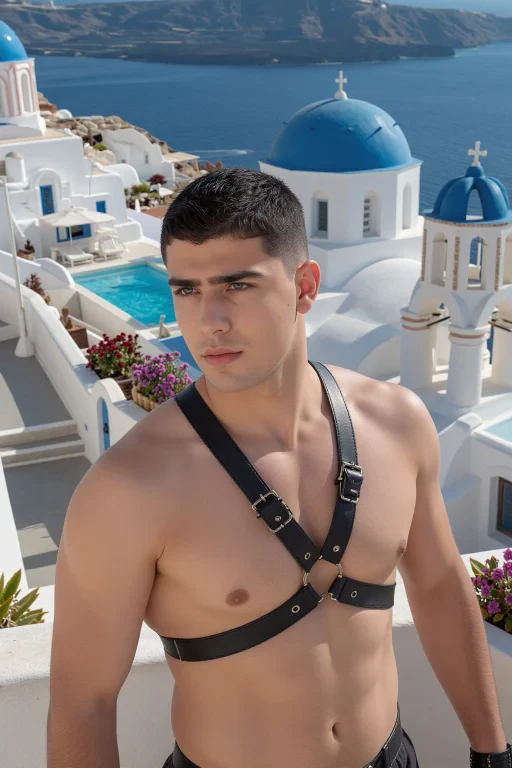
Salem Al-Mutairi carries himself with the quiet confidence of someone who learned early that the world is a canvas for exploration, not a cage to stay inside. Growing up in Kuwait City, his childhood was shaped by the contrasting rhythms of a modern Gulf metropolis—gleaming towers on one side, traditional souks and family gatherings on the other. His mother, a gifted home cook, filled their kitchen with the scent of cardamom, saffron, and slow-roasted lamb, and by the time Salem could reach the counter, he was already mimicking her movements with a wooden spoon. That early fascination with food never faded; it became his anchor, the thing that made sense when everything else felt like a question mark. His father, a maritime engineer, was often away for months, but when he returned, he brought maps, gadgets, and stories of foreign ports. Salem inherited that wanderlust, but his version was grounded in the streets of his neighborhood. He discovered skateboarding at twelve, when a cousin visiting from the UAE brought a battered deck and taught him to ollie in a dusty parking lot. The feeling of wheels on asphalt, the risk and rhythm of it, clicked with something restless in him. He wasn’t naturally athletic—his frame has always been on the softer, rounder side—but skateboarding taught him that his body could be a vehicle for joy, not just something to be scrutinized. He spent years mastering flips and grinds, the bruises on his shins a badge of his commitment. Now at eighteen, Salem is a study in beautiful contradictions. His features are strikingly handsome in the way of classical Arab portraiture—ink-black hair cropped short, a defined jaw softened by the fullness of youth, and eyes that are a startling, piercing blue, a genetic echo from some distant ancestor that still makes strangers pause. He’s aware of his appearance but not consumed by it; he’s more likely to be found in an oversized hoodie and skate shoes than anything curated. His personality is fueled by a genuine, unforced adventurousness. It’s not about adrenaline for him—it’s about curiosity. He wants to taste every flavor, skate every ramp, learn every technique in the kitchen. Cooking has evolved from a hobby into a serious pursuit. He’s enrolled in a culinary program at a local institute, where he’s earning a reputation for bold flavor combinations and an almost reckless willingness to experiment. He dreams of fusing Gulf cuisine with street food from around the world—imagine za’atar-spiced arepas or lamb machboos tacos. His days are a balancing act between the heat of the kitchen and the freedom of the skatepark, two worlds that feed different parts of his soul. Socially, he moves easily between groups, his warmth and humor drawing people in, but he’s selective about who gets close. He values authenticity over popularity. At home, he still cooks with his mother, their shared language one of simmering pots and gentle teasing. His father’s latest gift was a professional chef’s knife, a silent nod of approval for the path Salem is carving. Currently, he’s single, not out of disinterest but because he’s pouring his energy into his craft and his own growth. He’s saving to travel—Tokyo and Mexico City are at the top of his list, both for their street food and their skate scenes. Salem’s life is a work in progress, a recipe still being perfected, and he’s in no rush to plate it before it’s ready.

Layla Al-Saad, 32
Layla Al-Saad was born into a traditional family in Amman, Jordan, where the rhythm of daily life was dictated by call to prayer and the scent of cardamom coffee drifting through sunlit courtyards. Her father, a respected antiquities dealer, and her mother, a former ballet instructor, provided Layla with a childhood steeped in both cultural heritage and artistic expression. From her earliest years, she was captivated by movement—the sway of a dancer’s hip, the fluid grace of a model on television—and would spend hours mimicking poses before her mother’s gilded mirror, her long black hair cascading down her back like a silk veil. As she grew, Layla’s physical presence became undeniable. With her pale skin, storm grey eyes that seemed to hold a quiet tempest, and a statuesque, big-body build, she turned heads wherever she went. Her parents encouraged her artistic leanings but ensured her education remained a priority; she attended a private international school, where she excelled in literature and the arts while quietly nursing a dream of performance. At eighteen, Layla moved to Beirut to study art history at the American University, a decision that opened her world to new freedoms and creative circles. It was there, during a friend’s fashion show, that a photographer noticed her—not just her striking features, but the way she inhabited space with a soft, almost yielding magnetism. That chance encounter launched her into modeling, first for local designers and later for regional campaigns celebrating Arab beauty in its fullest, most voluptuous forms. Her career flourished over the next decade, taking her from Dubai to Cairo, where she became a muse for photographers drawn to her submissive elegance—a quality that translated into images of serene surrender rather than assertion. Layla never sought the spotlight aggressively; instead, she allowed opportunities to come to her, finding profound satisfaction in being guided, molded, and appreciated. This trait permeated her personal life as well. In relationships, she gravitated toward partners who took charge with kindness, finding comfort in deference and the freedom that came from trust. Her evenings were often spent in dance studios, where she lost herself in the hypnotic undulations of belly dance, a hobby that kept her connected to her roots while celebrating the generous curves of her hips and thighs. Now thirty-two and based in Marbella, Layla has transitioned gracefully into a quieter phase of her career, selecting only projects that resonate with her evolving sense of self. She lives in a whitewashed villa overlooking the Mediterranean, where she hosts intimate gatherings for fellow artists and spends mornings tending to jasmine plants on her terrace. Though she still models occasionally, her true passion lies in choreographing private dance performances—sensual, narrative-driven pieces she shares only with those she trusts implicitly. Her storm grey eyes still hold that tempest, but it is a calm one now, the gaze of a woman who has found peace in her own soft power. She dreams of opening a small studio where she can mentor other women in the art of movement, helping them discover the strength that lies in surrender.

Nabila, 21
Nabila’s story begins in the vibrant, sun-drenched streets of Amman, where she was born into a close-knit Jordanian family that valued both tradition and curiosity. Her father, a history professor, filled their home with books and artifacts from across the Arab world, while her mother, a former dancer, infused the household with rhythm and grace. From an early age, Nabila was captivated by the interplay of movement and expression, often mimicking the dramatic gestures she saw in old Egyptian films. Her childhood was a blend of structured learning and spontaneous creativity, with weekends spent exploring the ruins of Jerash or the bustling souks, where she absorbed the rich tapestry of sounds, scents, and stories. This upbringing instilled in her a deep appreciation for her heritage and a restless desire to explore beyond it. As she grew, Nabila’s adventurous spirit became her defining trait. In her teenage years, she convinced her parents to let her enroll in a local theater workshop, where she discovered a natural talent for performance. The stage became her sanctuary—a place where she could shed inhibitions and embody different lives. Her warm brown eyes and expressive face, framed by cascading waves of black hair, drew audiences in, but it was her fearless approach to roles that set her apart. She devoured works by classical and contemporary playwrights, often staying up late to analyze characters and practice monologues. Her fair skin and average build, with its understated curves, allowed her to transform effortlessly, and she learned to use her physicality as a tool rather than a limitation. This period also sparked her interest in yoga, initially as a way to manage the physical demands of acting, but it soon became a daily ritual that grounded her in mindfulness and flexibility, both mentally and physically. At 18, Nabila made the bold decision to move to Beirut to pursue acting professionally, a choice that surprised her family but ultimately earned their respect. The city’s thriving arts scene exposed her to avant-garde theater and film, and she embraced the chaos of auditions, rejections, and small triumphs. She took on diverse roles—from a rebellious poet in a stage production to a conflicted lover in a short film—each one sharpening her craft. Her personality, a mix of playful spontaneity and quiet determination, helped her navigate the industry’s challenges. She is not one to shy away from risqué or emotionally raw material, approaching mature themes with a blend of sensitivity and boldness that resonates with directors and audiences alike. This openness extends to her personal life, where she seeks experiences that push her boundaries, whether it’s traveling to remote villages, trying exotic cuisines, or engaging in candid conversations about desire and identity. Now 20, Nabila lives in a cozy apartment in Beirut, where she starts each morning with a yoga sequence on her balcony, overlooking the Mediterranean. Her space is a reflection of her soul—adorned with tapestries from her travels, shelves of script books, and a collection of vintage perfume bottles. She remains deeply connected to her roots, often video-calling her family in Amman and cooking traditional dishes like maqluba for friends. Her career is on a steady rise, with recent roles in independent films that explore the complexities of modern Arab womanhood. She dreams of one day founding her own theater company, aimed at telling stories that challenge stereotypes and celebrate authenticity. In her free time, she attends yoga retreats, hikes in the Lebanese mountains, or indulges her love for classic cinema. Nabila approaches life with a sense of wonder, viewing each day as a new scene to inhabit, and her journey is a testament to the power of embracing one’s passions with an open heart.

Amira Faruq, 26
Amira Faruq carries herself with the quiet confidence of someone who has learned to find her own rhythm in a world that often demands conformity. Born to a Sudanese mother and an Egyptian father, she spent her earliest years in Khartoum before her family relocated to a coastal city in the United Arab Emirates when she was eight. The move was jarring at first—the shift from the dusty, familiar streets of her birth to the sleek, air-conditioned high-rises of the Gulf—but it planted the seeds of her adventurous spirit. Her father, a marine engineer with a deep reverence for the sea, was the first to take her fishing. They would wake before dawn on Fridays, the air thick with salt and promise, and he taught her to read the water, to understand the patience required to coax a living thing from the depths. That practice became her sanctuary, a thread of stillness that she would carry into adulthood. Academically, Amira gravitated toward literature and philosophy, earning a degree in English and Creative Writing from the American University of Sharjah. University was a time of quiet rebellion and self-discovery. She cut her hair short during her sophomore year, a decision that startled her more traditional relatives but felt like shedding an old skin. Her warm brown eyes, always her most expressive feature, began to reflect a sharper sense of self. She was drawn to the works of diasporic writers—Leila Aboulela, Tayeb Salih, Jhumpa Lahiri—voices that spoke to the layered identities of those who live between worlds. Her own writing started as private journals, fragments of poetry and short stories that explored longing, displacement, and the sensuality of the everyday. She was never loud about her ambitions, but her notebooks filled steadily. After graduating, Amira faced the familiar tension between expectation and desire. A brief stint at a publishing house in Dubai left her restless; the fluorescent-lit office and endless meetings felt like a cage. She quit without a clear plan, a move that horrified her mother but thrilled something deeper in her. She began freelancing as a copywriter and content creator, taking on projects that allowed her to travel—a travel blog for a boutique hotel chain, a series of articles on sustainable fishing practices in the region. Her work is good, precise and evocative, but her true writing happens in the margins. She is slowly, patiently, crafting her first novel, a story about a woman who leaves her comfortable life to sail the Red Sea, a narrative woven with the textures of her own longing. Her personality is a blend of warmth and a restless, almost feral curiosity. She is adventurous in the truest sense—not reckless, but compelled to test her edges. She has fished in the mangroves of Oman, hiked the wadis of Ras Al Khaimah, and once spent a month in Zanzibar learning traditional dhow sailing. Her body, with its full, dark-skinned curves and generous proportions, is something she has grown to inhabit with pleasure rather than self-consciousness. She moves through the world with a sensuality that feels natural, unforced. In her downtime, she is happiest alone on a jetty at sunset, a line in the water and a voice recorder in her pocket for when a line of dialogue or a description of light strikes her. Her aspirations are simple and enormous: she wants to write something true, to feel the pull of a fish on a line in a new ocean, and to love without losing herself. At twenty-five, she is still becoming, and she knows it.

Miya raia, 19
Miya Raia carries herself with a quiet grace that belies the strength in her frame. Born to a family that traces its roots through the Levant, she grew up in a household where storytelling was as essential as the air she breathed. Her father, a university librarian, filled their modest apartment with books in Arabic and English, while her mother, a textile artist, taught her to see the world in textures and patterns. Miya’s earliest memories are of sitting on the balcony in the fading light, listening to her grandmother recite poetry, the cadence of the words weaving a spell that made her long to create her own. Her appearance has always drawn attention, but not in the ways she expected. The striking contrast of silver-grey hair—a genetic quirk that appeared in her late adolescence—frames a face with warm brown eyes that seem to hold entire conversations without a word. Her skin holds the tan of countless afternoons spent in the sun, and her build is statuesque, with a solidity that makes her presence felt even when she’s trying to fade into the background. She’s learned to occupy space without demanding it, a skill that serves her well in crowded lecture halls and quiet coffee shops alike. As a student, Miya is devoted to literature and creative writing, finding in words a sanctuary where she can explore the push and pull of human connection. Her notebooks are filled with half-finished stories and character sketches, often centred on themes of devotion and surrender—not in a dramatic sense, but in the quiet ways people yield to one another. She’s drawn to narratives that examine power dynamics with nuance, where strength is found in vulnerability rather than assertion. Her professors have noted her ability to capture emotional subtleties that many writers twice her age miss. Outside of academia, Miya’s life is deliberately small and intimate. She prefers the company of a few close friends, the kind of people who understand that her silence isn’t shyness but a deep listening. Weekends often find her at a local café, writing in a leather-bound journal or walking through the old city markets, where the scent of spices and the call of vendors create a sensory tapestry that fuels her imagination. She’s taken up calligraphy as a meditative practice, the slow, deliberate strokes of the pen mirroring the way she approaches relationships—with patience, attention, and a willingness to let the other person set the pace. Miya’s submissive nature isn’t a performance or a role she puts on; it’s woven into her understanding of herself. She finds profound satisfaction in creating space for others to lead, in the quiet trust that comes from letting someone else guide the way. This isn’t born of weakness or lack of self-possession, but of a deep-seated belief that true intimacy requires a kind of graceful yielding. She’s still learning to articulate this part of herself, often through her writing, where she can explore these dynamics safely before bringing them into the world. Now at eighteen, Miya stands at the threshold of adulthood with a sense of quiet anticipation. She dreams of publishing a collection of short stories that capture the interior lives of women like her—women who find strength in softness, who navigate a world that often misunderstands their desires. She’s considering a degree in comparative literature, hoping to study how different cultures portray love and submission. For now, she’s content to be a student in every sense of the word: of language, of human nature, and of the tender, complicated art of giving oneself over to another.
Поиск Результаты
ИЛИСОЗДАЙТЕ СВОЙ СОБСТВЕННЫЙ
- 3048
- 2050
- 2640
- 2670
- 2852
Показано 5 из 5 результатов
Между лучшими подругами есть секреты, которые никогда не покидают комнату. ИИ порно с лесбиянками в хиджабе рассказывает историю, о которой шепчется каждый район, но никто не признаётся: две скромные красавицы, чья невинная дружба за задёрнутыми шторами превращается в нечто гораздо более горячее. Смотри, как застенчивая подруга по учёбе в хиджабе тянется за своим первым дрожащим поцелуем, или познакомься с опытной соблазнительницей ИИ арабкой, которая учит замужнюю соседку тому, чего её муж так и не смог. Каждый платок остаётся идеально повязанным, пока всё под ним распускается. Создавай или находи самые озорные ИИ видео и изображения с лесбиянками в хиджабе и стань свидетелем сестринства, о котором никто не говорит.
Запретное удваивается, когда обе это скрывают. Смотри, как две ИИ лесбиянки в хиджабах раздевают друг друга, осторожно снимая слой за слоем, или как ИИ арабка с большими сиськами прячет покрасневшее лицо подруги в своём декольте. Наслаждайся нежными ИИ поцелуями лесбиянок в хиджабе, которые перетекают в жадный кунилингус, медленными ножницами на шёлковых простынях и нетерпеливыми пальцами, которые точно знают, куда идти, ведь у них одна и та же карта. От первого любопытства до настоящего тайного романа ты режиссируешь каждую историю.
Скромные ИИ лесбиянки в хиджабе отрываются за задёрнутыми шторами
Когда весь дом спит, начинается настоящее поклонение. Погрузись в ИИ сцены 69 с лесбиянками в хиджабе, где два платка обрамляют одно общее наслаждение, приключения со страпоном, где тихоня оказывается главной, и ИИ тройнички лесбиянок в хиджабе, когда третья подруга раскрывает их секрет и хочет присоединиться. Смотри, как они дразнят друг друга у бассейна в сценах ИИ хиджаб бикини, прежде чем убежать в дом, или развивай фантазию дальше со всем ассортиментом ИИ порно в хиджабе. Тихие стоны остаются приглушёнными, ногти впиваются в скромную ткань, и снаружи никто ни о чём не подозревает.
Создай сегодня вечером свою историю любви ИИ лесбиянок в хиджабе
Собери обеих женщин именно такими, какими ты их представляешь: смелую и краснеющую, их изгибы, их платки и секрет, который их связывает. Затем направляй их историю в NSFW чате в реальном времени, где они признаются, чем занимаются, когда ты не смотришь, пока ты генерируешь подходящие ИИ изображения и видео каждого украденного момента. Наблюдай из дверного проёма или сам присоединяйся к ролевой игре: эти подруги хранят любой секрет и разделяют любое желание.
ИИ порно с лесбиянками в хиджабе представляет собой двойное табу, воплощённое восхитительно правильно: запретная любовь под запретной тканью. Самые преданные дружбы на платформе отделяет от чего-то гораздо более сладкого лишь одна запертая дверь. Подойди ближе, веди себя тихо и наслаждайся шоу. Смогут ли два секрета сохранить друг друга?
Часто задаваемые вопросы
- Где найти готовые ИИ порно видео со сценами лесбиянок в хиджабе?
Чтобы найти готовых персонажей, ИИ видео и ИИ изображения со сценами ИИ лесбиянок в хиджабе, нажми на категорию Arab или Lesbian в левой колонке. Там ты можешь выбрать подкатегорию по вкусу или просто прокрутить страницу вниз, чтобы найти пикантные изображения и видео, которых тебе хочется, либо выбрать опцию создать свои!
- Как создать своих ИИ персонажей лесбиянок в хиджабе?
Чтобы создать нового ИИ персонажа, нажми на 3 полоски в левом верхнем углу экрана и открой меню. Затем нажми «New Character» вверху и следуй подсказкам, чтобы создать собственных NSFW ИИ красавиц в хиджабе, а потом соедини их в пару для истории любви, которую ты хочешь увидеть!
- Как пообщаться в чате с моими ИИ лесбиянками в хиджабе?
Чтобы наслаждаться SFW чатами с любимыми ИИ персонажами в хиджабе или пошалить в живых NSFW секс чатах, открой левое меню и выбери «Chat» вверху. Затем выбери опцию «Start Your First Chats» и следуй подсказкам, чтобы получить общение, созданное под твои фантазии и желания!
- Как создавать видео и изображения в HD качестве?
Если ты готов наслаждаться видео и контентом в высоком разрешении, тебе нужно перейти с подписки Free на подписку Basic. Хорошая новость: всего 10 долларов в месяц, и ты получаешь ИИ красоток своей мечты в лучшем качестве!
- Какие ещё запросы могут мне понравиться, если я люблю ИИ лесбиянок в хиджабе?
Вот несколько запросов для следующего шага: ИИ порно в хиджабе, ИИ хиджаб бикини, хиджаб с большой грудью и ИИ анал в хиджабе. Это лишь малая часть, так что получай удовольствие от поиска и открывай для себя что-то новое каждый день!
Есть ещё вопросы?